









Customers rarely remember their entire experience with a brand. Instead, their memory is a summary of just two key moments. This is the core concept of the Peak-End Rule, a psychological principle with profound implications for customer experience (CX).
It posits that people judge an experience primarily based on how they felt at its most intense point (the peak) and at its conclusion (the end). This is not merely a psychological quirk; it is a powerful framework that strategic businesses use to design memorable experiences that foster loyalty and drive growth. Understanding and applying this rule shifts the focus from perfecting every touchpoint to orchestrating unforgettable moments that leave a lasting positive impression.
Key Takeaways: The Peak-End Rule in CX
- Memory is Selective: The Peak-End Rule, developed by Nobel laureate Daniel Kahneman, states that our memory of an event is not an average of every moment. Instead, we disproportionately remember the most emotionally intense moment (the “peak”) and the final moment (the “end”).
- Focus on What Matters: Instead of spreading resources thinly to optimize every customer touchpoint, businesses can achieve a greater impact by concentrating on creating positive peaks and ensuring a strong, positive conclusion to the customer journey.
- Peaks Can Be Positive or Negative: A peak is the moment of highest emotional intensity. This can be an instance of extreme delight (a positive peak) or significant frustration (a negative peak). The objective is to minimize negative peaks while amplifying positive ones.
- Service Recovery is a Peak Opportunity: A customer complaint or issue represents a potential negative peak. However, exceptional service recovery can transform it into a highly memorable positive peak, often creating a more loyal customer than if the problem never occurred.
- The End is a Lasting Impression: The final interaction a customer has with your brand heavily influences their overall memory of the experience. A smooth, pleasant, and reassuring ending solidifies a positive perception.
- Technology is a Strategic Ally: Modern CX tools are essential for applying the Peak-End Rule. Platforms for collecting reviews help identify existing peaks and ends, while loyalty programs provide a framework for creating new, positive ones.
What Is the Peak-End Rule and Why Does It Matter in CX?
Consider a recent vacation. It is unlikely you remember every single minute. You probably recall a few standout moments: the view from a scenic overlook, an exceptional meal, or the frustration of a delayed flight. You also likely remember the last day and the feeling of returning home. This illustrates the Peak-End Rule in action.
Coined by Nobel Prize-winning psychologist Daniel Kahneman, the rule explains a cognitive shortcut our brains take when recalling events. We do not average our feelings across an entire experience. Instead, we create a summary based on two specific points:
- The Peak: This is the most emotionally intense point of the experience. It can be intensely positive (a moment of delight) or intensely negative (a moment of frustration).
- The End: This is the final moment of the experience.
The duration of an experience has a surprisingly small impact on our memory of it. A five-hour flight with a few minutes of severe turbulence (a negative peak) and a rough landing (a negative end) will be remembered more negatively than an entirely smooth six-hour flight.
The Impact on Customer Experience
In CX, this principle is transformative. Customers interact with a brand across numerous touchpoints, from browsing a website to unboxing a product and contacting support. It is impractical to make every second of that journey perfect. Fortunately, that is not necessary.
By focusing on the peak-end rule in cx, you can direct resources toward the moments that genuinely influence customer memory. A customer may not remember the functional process of adding an item to their cart, but they will remember the delight of receiving an unexpected free gift with their order (a positive peak) and the well-designed thank-you card included in the package (a positive end). Conversely, they will also remember the frustration of a website error during checkout (a negative peak) and an unhelpful response from a support agent (a negative end).
These remembered moments shape the customer’s overall perception of the brand, influencing their loyalty, purchase frequency, and willingness to make referrals.
Identifying Your Peaks and Ends: Mapping the Customer Journey
Before you can orchestrate memorable moments, you must first understand where they are most likely to occur. This requires a thorough mapping of the customer journey to identify all key touchpoints.
A customer journey map is a visual representation of the entire process a customer goes through with your company, from initial awareness to post-purchase support and beyond.
Steps to Identify Peaks and Ends
- Map All Touchpoints: Begin by listing every point of interaction. This includes digital touchpoints (website visits, social media interactions, emails) and physical ones (in-store visits, product delivery, packaging).
- Identify Emotional Highs and Lows: For each touchpoint, consider the potential for an emotional response. Distinguish which moments are purely functional and which have the potential to create strong feelings.
- Potential Negative Peaks: These are often points of friction. Common examples include long wait times, a confusing checkout process, a product failing to meet expectations, unexpected fees, or a slow-loading website.
- Potential Positive Peaks: These are moments where you can exceed expectations. This might be the unboxing experience, a highly personalized and helpful recommendation, a remarkably efficient and friendly customer service interaction, or the moment a customer achieves their desired outcome using your product.
- Pinpoint the “End” Moments: The “end” is not always the absolute final interaction. A customer might experience several “ends” for different journeys.
- The end of a shopping journey is the order confirmation page.
- The end of a support inquiry is the final communication confirming issue resolution.
- The end of an in-store experience is the customer exiting the premises.
Each of these moments is an opportunity to leave a lasting, positive final impression. Once this map is complete, you can begin to strategically allocate your efforts.
How to Engineer Positive Peaks in Your Customer Experience
Creating positive peaks involves more than just providing good service; it requires delivering unexpected value and delight. It is about turning a functional interaction into a memorable one. Here are proven strategies to create these emotional high points.
Go Above and Beyond: The Power of Exceeding Expectations
The most direct way to create a positive peak is to deliver more than the customer anticipates. In an environment where basic service is the standard, a small amount of extra effort can feel monumental.
- Surprise and Delight: Include a small, unexpected gift with an order. Offer a surprise discount on a future purchase. Upgrade a customer’s shipping at no cost. These small gestures can create a powerful emotional response because they are unforeseen.
- Proactive Support: Do not wait for a customer to report a problem. If you identify a potential issue, such as a shipping delay, reach out to them first with an apology and a solution. This action turns a potential negative peak into a positive one by demonstrating proactive care.
The Magic of Personalization
Personalization makes customers feel seen and valued as individuals, not just as transaction numbers. When executed correctly, it is a powerful driver of positive emotion.
- Use Their Name: Go beyond automated name insertion in an email subject line. Train support staff to use the customer’s name in conversation. A handwritten note that includes their name can be incredibly impactful.
- Remember Their Preferences: If a customer frequently purchases a certain type of product, acknowledge it. Send them a personalized recommendation for a new item that aligns with their tastes. If they have previously mentioned a birthday, send a special offer to mark the occasion.
- Tailor the Experience: Utilize data to customize the website experience. Display products related to their past purchases. This not only simplifies their shopping process but also demonstrates that you understand their needs.
Turning Negatives into Unforgettable Positives
One of the most significant opportunities to create a positive peak arises directly from a negative one. A customer complaint is a moment of high emotional intensity. The customer is frustrated, angry, or disappointed. While this presents a risk to your brand, it is also a tremendous opportunity.
This is where the concept of service recovery is critical. An effective service recovery does not just fix the problem; it leaves the customer with a more favorable opinion of your brand than they had before the issue occurred.
Imagine a customer receives a damaged product—a clear negative peak.
- Standard Recovery: You apologize and send a replacement. The customer is satisfied, but not delighted. The negative memory is neutralized but not replaced.
- Peak-End Recovery: You immediately apologize and send an overnight replacement. You also include a handwritten apology note and a generous gift card for the inconvenience. You follow up a week later to ensure their satisfaction with the new product.
In the second scenario, the customer’s memory is no longer defined by the damaged item. It is defined by the incredible, rapid, and generous response from your company. You have replaced a negative peak with an overwhelmingly positive one. Research consistently shows that customers who experience a successful service recovery are often more loyal than those who never had a problem at all.
Don’t Forget the End: Crafting a Powerful Final Impression
You may have successfully created a positive peak, but it can be undermined by a poor conclusion. The end of the experience is your final chance to shape the customer’s memory. A strong ending should feel effortless, reassuring, and leave the customer with a feeling of satisfaction.
Make the Last Step the Easiest
Whether it is the final click in a checkout process or the last step of an installation, the end should be as frictionless as possible.
- Seamless Checkout: A complicated, multi-page checkout with unexpected fees is a classic example of a negative end. Aim for a single-page checkout, offer multiple payment options, and ensure complete cost transparency.
- Clear Next Steps: After a purchase, do not leave the customer on a generic “Thank You” page. Inform them of exactly what to expect next. For instance: “Your order is confirmed. You will receive a shipping notification within 24 hours.” This provides reassurance and a sense of closure.
A Fond Farewell
The way you conclude an interaction matters.
- Thoughtful Follow-Up: A post-purchase email is standard, but it can be optimized as a positive end. Instead of just a receipt, send a helpful guide on how to get the most out of their new product. Request feedback in a manner that shows you genuinely value their opinion.
- Human Touch: In a retail setting, a genuine “Thank you for shopping with us; we hope to see you again soon!” can make a difference. In a support interaction, ending with “Is there anything else I can help you with today?” demonstrates a continued commitment to their satisfaction.
The end does not need to be spectacular. It needs to be positive, simple, and reassuring. It is the final note that the customer will remember, so ensure it is a high one.
Using Technology to Master the Peak-End Rule
Applying the Peak-End Rule at scale is nearly impossible without the right technology. You need tools to listen to your customers, identify what they consider to be peaks and ends, and then create systems to consistently deliver positive moments. This is where best-in-class solutions for reviews and loyalty are indispensable.
Using Customer Reviews to Uncover Peaks and Ends
The most direct way to understand customers’ emotional high points is to solicit their feedback. Customer reviews are an incredible source of data for identifying peaks and ends in your current experience. Customers will write about what they remember, and according to the Peak-End Rule, that will be the moments that stood out the most.
Yotpo Reviews provides a robust solution specifically designed for eCommerce brands to collect and analyze this crucial feedback. By examining your reviews, you can begin to see patterns.

- Identifying Negative Peaks: Recurring complaints about slow shipping, a confusing website, or a faulty product are your negative peaks. Yotpo Reviews helps you pinpoint them with powerful analytics and sentiment analysis. By analyzing topics mentioned in reviews, you can quickly see which areas of your business are causing the most frustration.
- Discovering Positive Peaks: Your 5-star reviews indicate what you are doing right. Whether it is your packaging, your responsive customer service, or your product quality, these are the positive peaks you should amplify. Yotpo’s tools allow you to filter and search reviews to understand your strengths so you can build upon them. Yotpo customers who interact with reviews have a 183% higher conversion rate, demonstrating just how powerful this feedback is.
- Evaluating the End: Reviews often mention the final steps of the process. Comments like “checkout was a breeze” or “the follow-up email was so helpful” provide direct insight into the effectiveness of your “end” moments.
By systematically analyzing customer feedback through a tool like Yotpo Reviews, you move from guessing what matters to your customers to knowing what matters.
Creating New Peaks with a Loyalty Program
Once you have identified your existing peaks, you can start to engineer new ones. Loyalty programs are an ideal mechanism for this because they provide a structured way to deliver unexpected value and delightful moments.
A well-designed loyalty program is not just about earning points; it is about creating a cycle of engagement that builds an emotional connection with your customers. Yotpo Loyalty is a best-in-class solution that gives brands the flexibility to design a program that creates these memorable peak moments.

- Surprise Point Drops: Randomly adding points to a loyal customer’s account simply to say “thank you” is a classic surprise and delight tactic that creates an instant positive peak.
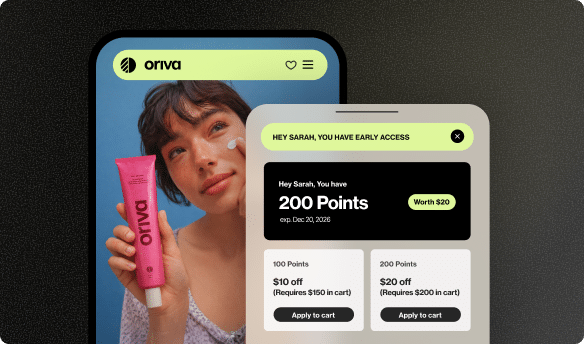
- Exclusive Access: Offering your best customers early access to a new product or an exclusive sale makes them feel special and valued. This sense of exclusivity is a powerful emotional driver.
- Experiential Rewards: Go beyond discounts. Offer rewards that create a memory, such as a free ticket to a partner event or a one-on-one consultation with a product expert.
- Positive Endings: A loyalty program can also enhance your “end” moments. Every purchase can end with a satisfying notification: “You’ve just earned 50 points!” This adds a layer of positive reinforcement to the end of the transaction. With Yotpo Loyalty, you gain a team of eCommerce loyalty experts to help you build a dynamic program that maximizes customer lifetime value.
By combining insights from reviews with the capabilities of a loyalty program, you can create a powerful CX strategy based on the Peak-End Rule. You listen to your customers to understand their peaks and then create new ones to build lasting emotional connections.
Conclusion: Small Moments, Big Impact
The customer experience is not a single, monolithic entity. It is a collection of moments, but not all moments are created equal. The Peak-End Rule teaches us that the memory of that experience is forged by its most intense points and shaped by its final impression.
By embracing this principle, you can move from the impossible task of perfecting everything to the strategic goal of creating excellence where it counts the most. Start by mapping your customer journey and listening to your customers. Use tools like Yotpo Reviews to find your existing peaks and ends. Then, use that knowledge to eliminate points of friction and amplify what delights your customers. Use a flexible solution like Yotpo Loyalty to proactively design new, positive peaks that build emotional connections and foster true, lasting loyalty.
Ultimately, building a memorable customer experience is not about grand, expensive gestures. It is about understanding human psychology and focusing your efforts on creating a few, brilliant moments that shine brightly in your customers’ memories long after the interaction is over.
Frequently Asked Questions: The Peak-End Rule in CX
What is the most common mistake companies make with the Peak-End Rule?
The most common mistake is focusing exclusively on fixing negative peaks while ignoring the power of creating positive ones. While eliminating friction is crucial, it only achieves a neutral baseline. True loyalty and memorable experiences are built by proactively designing moments of delight that exceed expectations. Another frequent error is neglecting the “end.” Many companies invest heavily in the beginning and middle of the journey but allow the final impression to falter with a clunky checkout or poor follow-up.
Can the Peak-End Rule apply to B2B businesses?
Absolutely. The Peak-End Rule is based on fundamental human psychology, which remains consistent in a business context. A B2B customer journey also has peaks and ends. A negative peak could be a difficult onboarding process or a software bug during a critical task. A positive peak could be an insightful report from an account manager or a new feature that saves their team hours of work. The “end” could be the renewal process or the successful completion of a major project. The principles of creating memorable moments are equally applicable.
How can I measure the emotional peak of an experience?
Measuring emotion can be challenging, but several methods can approximate it. The most direct approach is through customer feedback. Tools that analyze the sentiment in customer reviews, surveys, and support tickets can help identify language associated with strong positive or negative emotions. You can also use targeted surveys, like Net Promoter Score (NPS) or Customer Satisfaction (CSAT), deployed immediately after key touchpoints to gauge the emotional response to that specific interaction.
Is it better to have a single amazing peak or several smaller positive moments?
According to the Peak-End Rule, a single, intensely positive peak will be more memorable than several mildly positive moments because the rule is not about the average of the experience. Therefore, it is often more effective to focus resources on creating one or two “wow” moments that truly stand out, rather than making dozens of minor, unnoticeable improvements. However, this does not mean the rest of the journey should be ignored; a consistent, friction-free experience is a necessary foundation.
Can a good end save an experience with a negative peak?
A good end can certainly help, but it may not be enough to completely erase the memory of a strong negative peak. The end is powerful because of its recency, so a positive final impression can soften the memory of earlier frustration. The ideal strategy is to both address the negative peak (ideally through excellent service recovery) and ensure a strong, positive end. This combination offers the best chance of reshaping the overall memory into a positive one.
How does the Peak-End Rule relate to employee experience (EX)?
The relationship is direct and powerful. Happy, engaged employees are far more likely to create the positive emotional peaks that customers remember. An employee who feels valued and empowered is more likely to go the extra mile to resolve a customer’s issue or add a personal touch that creates a “wow” moment. Therefore, improving the employee experience is a foundational step to improving the customer experience, as it directly impacts your team’s ability to be peak-makers.
What’s an example of a low-cost way to create a positive peak?
One of the most effective and low-cost ways to create a positive peak is through a handwritten thank-you note. In a digital world, this personal, human touch stands out dramatically. It shows genuine care and appreciation, costs very little in materials and time, and is often mentioned by customers as a highly memorable moment.
Does the Peak-End Rule apply to digital products like apps or software?
Yes, it is highly relevant. For a software product, a negative peak could be a crash that causes a user to lose work or a confusing interface that prevents them from completing a task. A positive peak could be the moment a user discovers a shortcut that saves a significant amount of time, or the satisfaction of successfully completing a complex project using the tool. The “end” of an interaction might be exporting the final product or logging out, which should be a simple and reassuring process.
How often should I review my customer journey map for peaks and ends?
Your customer journey is not static, as customer expectations change and your business evolves. It is good practice to formally review your customer journey map at least once or twice a year. However, you should continuously monitor customer feedback (reviews, surveys, support tickets) on a weekly or monthly basis. This continuous listening will alert you to new points of friction or new opportunities for delight as they emerge.
Can advertising and marketing create peaks?
While advertising and marketing shape expectations, the most powerful peaks typically occur during the actual customer experience with the product or service. Marketing can create an “anticipation peak,” but if the experience itself does not deliver a corresponding positive moment, the customer will be left disappointed. The most effective use of marketing in this context is to accurately set the stage for the peaks you have designed into your actual customer experience.
If my product is great, do I still need to worry about the Peak-End Rule?
Yes. A great product is an excellent starting point and can certainly be the source of a positive peak. However, the overall customer experience surrounds that product. A customer can love your product but retain a negative overall memory of your brand due to a frustrating delivery process (negative peak) or a difficult return policy (negative end). To build true loyalty, you must consider the entire journey, not just the product itself.
Where should a small business with limited resources start?
A small business should begin by focusing on two areas: one negative peak and the end. First, use customer feedback to identify the single biggest point of frustration for your customers and dedicate resources to fixing it. This will have the largest immediate impact. Second, perfect your “end” moment. Whether it is your checkout process or your thank-you email, ensure the final impression is always positive, professional, and reassuring.
Can you give an example of the Peak-End Rule in a physical retail store?
A classic example is IKEA. The shopping experience can be long and sometimes overwhelming, a potential negative peak for some. However, they have strategically placed the food court and bistro near the end of the journey. Finishing the trip with a low-cost, satisfying snack like a hot dog or ice cream creates a positive end moment that helps to favorably shape the memory of the entire shopping trip.











 Join a free demo, personalized to fit your needs