


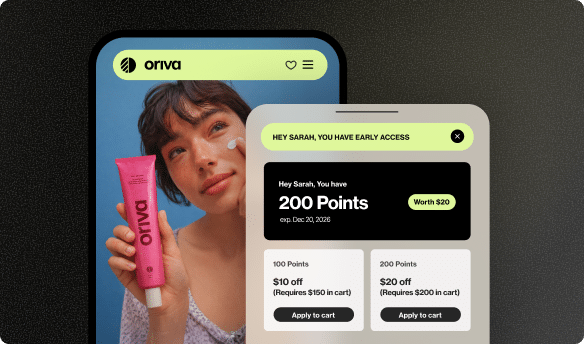






The endless cycle of customer acquisition is expensive. Leading e-commerce brands now recognize that sustainable growth is rooted in retention, with a well-executed loyalty program as the most effective tool. However, a program’s value is directly tied to its integration. When treated as a siloed application, it creates fragmented customer experiences and misses significant opportunities.
Key Takeaways
- Deep Integration Drives ROI: A fully integrated loyalty program directly boosts key metrics like Customer Lifetime Value (LTV) and Average Order Value (AOV) while reducing Customer Acquisition Costs (CAC).
- Siloed Systems Create Problems: A non-integrated loyalty program leads to a fragmented customer experience, inaccurate data, missed personalization opportunities, and excessive manual work for your team.
- Integration Means Real-Time Data Flow: True integration involves real-time data synchronization, automated workflow triggers, and a consistent user experience that makes the loyalty program feel native to your site.
- Connect to Your Core Tech Stack: The most critical integration points for your loyalty software are your e-commerce platform, email & SMS platforms, customer helpdesk, reviews platform, and subscription management tools.
- Strategy First, Technology Second: The most common mistake is focusing on the tech without a clear strategy. Define your goals, map the customer journey, and choose your rules before you select and implement a platform.
This guide details the high-level strategy and technical specifics for a successful loyalty software integration. We will demonstrate how to build a seamless, revenue-driving asset that converts one-time buyers into dedicated brand advocates.
Why a Deeply Integrated Loyalty Program is a Game-Changer
A modern loyalty program is far more than a simple rewards system. When deeply woven into your technology stack, it becomes a core business strategy that directly and positively impacts your most critical metrics. This is the distinction between simply distributing points and building genuine, lasting customer loyalty.
When every component of your e-commerce ecosystem communicates with your loyalty software, you can create a unified, personalized experience that drives measurable results.
Key Benefits of an Integrated System:
- Elevate Customer Lifetime Value (LTV): An integrated system provides access to a customer’s complete purchase history, enabling you to offer meaningful rewards. It allows you to segment customers based on behavior and VIP status, delivering personalized offers that foster engagement and increase spending over time.
- Boost Average Order Value (AOV): Integration powers strategic upselling and cross-selling. For example, you can display dynamic messages like, “You are only $20 away from reaching the Gold Tier and unlocking free shipping,” directly within the shopping cart. This tactic is only possible when your e-commerce platform and loyalty software are in constant, real-time communication.
- Reduce Customer Acquisition Costs (CAC): Your most loyal customers are also your most effective marketers. An integrated program simplifies the process of rewarding customers for referrals, social shares, and product reviews. This strategy turns your satisfied customers into a powerful, cost-effective acquisition channel, thereby reducing your dependency on costly paid advertising.
- Improve Customer Retention: At its core, a loyalty program is about making customers feel seen and valued. An integrated system ensures a smooth, consistent experience at every touchpoint. Points appear instantly, VIP status is recognized by customer support teams, and reward reminders are delivered at the optimal moment. This consistency builds trust and provides a compelling reason for customers to choose your brand repeatedly.
The High Cost of a Siloed System
What are the consequences of a loyalty software solution that is not properly integrated? While it may speed up the initial setup, the long-term costs are substantial.
- Fragmented Customer Experience: Imagine a customer earning points but being unable to view their balance while they browse your site. Or consider a customer contacting support, and the agent has no visibility into their VIP status. These disconnects create friction and erode customer trust.
- Inaccurate Data and Weak Reporting: Without proper data synchronization, you can’t trust your analytics. You will be unable to determine the true ROI of your program or identify which campaigns are performing effectively. Consequently, strategic decision-making becomes speculative.
- Missed Personalization Opportunities: Without integration, your email marketing platform is unaware of a customer’s points balance or VIP tier. This eliminates the ability to send highly targeted, effective campaigns—such as point expiration reminders or tier-upgrade congratulations—that are designed to drive specific actions.
- Excessive Manual Work: Your team will be forced to perform manual data reconciliation using CSV exports and imports. Your support agents will need to switch between multiple applications to resolve a single customer inquiry. This operational inefficiency consumes valuable time and resources.
In essence, a non-integrated loyalty program is a liability. A fully integrated program is a strategic asset that fuels growth across the entire business.
Understanding Loyalty Software Integration
Let’s examine the technical components. What does “integration” truly mean in the context of loyalty software? It is about creating a seamless, bidirectional data flow between your loyalty platform and the other critical tools in your technology stack.
What “Integration” Actually Means in This Context
A genuine integration is built on three core components:
- Real-Time Data Synchronization: This is the foundation. It ensures that when an event occurs in one system, the relevant data is immediately and automatically updated across all connected systems. This includes customer data, order history, points balances, and VIP tier status.
- Automated Workflow Triggers: An effective integration leverages data from one system to trigger automated actions in another. For instance, a “purchase completed” event in your e-commerce store should automatically initiate the “calculate and award points” workflow in your loyalty software, which in turn might trigger a “points earned” notification from your email platform.
- Consistent User Interface (UI) and Experience (UX): The loyalty program shouldn’t feel like a third-party application. A proper integration means that loyalty elements—such as point balances, reward sections, and redemption options—appear as native components within your existing website design. This creates a cohesive and trustworthy brand experience.
The Anatomy of a Loyalty Tech Stack: Key Integration Points
To build a high-performance loyalty engine, you must establish connections between your software and several key systems. Each integration point serves a distinct purpose, contributing to a holistic customer view and enabling more effective engagement strategies.
1. The E-commerce Platform (The Foundation)
This is the most critical integration. Your e-commerce platform serves as the source of truth for all point-earning activities. The integration syncs customer accounts and order data. When a customer creates an account, completes a purchase, or returns an item, this information must flow instantly to the loyalty software for accurate point adjustments. A robust integration relies on webhooks for real-time event tracking and requires comprehensive API access.
2. Email & SMS Platforms (The Communication Layer)
How do you notify customers when they earn points or leverage their loyalty status in your marketing? This is the role of your email and SMS platforms. This integration pushes crucial loyalty data—like points balance, VIP tier, and referral links—into your marketing platform, enriching customer profiles for powerful segmentation and automated flows.
3. Customer Support & Helpdesk Platform (The Service Layer)
Your customer support team is on the front lines. Equipping them with loyalty data empowers them to deliver exceptional service. The integration displays a customer’s complete loyalty profile directly within the helpdesk interface. This allows agents to prioritize high-value customers and resolve issues more effectively, even adding bonus points as a gesture of goodwill.
4. Reviews & User-Generated Content (UGC) Platform (The Social Proof Layer)
Product reviews are essential for driving conversions. The most effective way to generate them is to incentivize them through your loyalty program. This integration connects content creation with your rewards system, allowing you to offer points for reviews, especially those that include photos or videos. This creates a self-perpetuating cycle: you reward customers for creating social proof, which in turn helps acquire new customers.
5. Subscription Management Platform (The Recurring Revenue Layer)
Your subscribers are often your most valuable customers. The integration ensures that loyalty is a core part of the subscription experience by rewarding customers for their recurring payments. You can allow customers to redeem points for discounts on future orders or for free one-time product add-ons, significantly increasing subscriber retention.
Data Flow and Synchronization: A Step-by-Step Look
Let’s trace a single customer action through a fully integrated system.
A customer named Jane, who is in your “Silver Tier,” makes a $75 purchase.
- The e-commerce platform’s orders/create webhook immediately fires, sending the complete order data to your loyalty software.
- The loyalty software’s rules engine processes the event. It calculates that Jane earned 75 points, advancing her to the “Gold Tier.”
- The loyalty software updates Jane’s profile with her new status.
- An API call is instantly made to your email platform, updating Jane’s custom properties with her new points balance (510) and VIP tier (“Gold”).
- This property change triggers an automated “Tier Upgrade” workflow. An email is sent congratulating Jane on reaching the Gold Tier.
- Simultaneously, an API call updates Jane’s profile in your helpdesk. The next time she submits a ticket, the support agent will immediately see she is a Gold Tier member.
This entire sequence occurs automatically and in seconds. That is the power of a deeply integrated loyalty system.
Exploring Seamless Integration with Yotpo Loyalty

Understanding the theory is essential, but implementation requires a platform engineered with integration as a core principle. This is where Yotpo Loyalty excels. Yotpo provides a powerful, flexible solution that performs exceptionally as a standalone tool.
Why Yotpo Excels at Integration
Yotpo is more than a software provider; it is a strategic partner for e-commerce brands. The platform is built on years of market experience and is designed specifically to address the complexities of online retail. This focus results in a mature, flexible, and robust architecture that simplifies deep integration.
Yotpo provides extensive, well-documented APIs and a wide array of pre-built, one-click integrations with the tools you already use, allowing your team to focus on strategy rather than complex development.
One-Click Integrations with Your Core Stack
A major advantage of Yotpo Loyalty is its library of official, deep integrations with leading e-commerce platforms and tools. These are reliable, fully supported solutions that provide the real-time data sync necessary for a high-performing program.
- Yotpo & E-commerce Platforms: Yotpo offers best-in-class, official integrations for Shopify, Shopify Plus, BigCommerce, Adobe Commerce, and other major platforms. Installation is streamlined, often requiring just a few clicks.
- Yotpo & Helpdesks: The Gorgias and Zendesk integrations are prime examples of strengthening your service layer. You can empower your support agents to view a customer’s VIP tier and points balance directly within the helpdesk.
- Yotpo & Subscription Platforms: The official ReCharge integration creates a cohesive experience for your subscribers. You can reward them for their continued loyalty and allow them to apply points toward their recurring orders.
The Native Integration Advantage: Yotpo’s Products
While Yotpo Loyalty integrates seamlessly with third-party tools, a significant advantage is realized when used with Yotpo Reviews. In this ecosystem, data doesn’t just sync between products; it exists in a single, unified customer data profile. This native connection eliminates data latency and complexity.
This synergy is powerful. You can automatically award loyalty points to customers who leave reviews and offer bonuses for including photos or videos. This strategy creates a virtuous cycle: your loyalty program fuels the creation of authentic social proof, and that social proof helps drive new sales.
It is important to note that a phased approach is possible. Yotpo Loyalty is an extremely powerful and effective solution when used as a standalone product. It is designed to be a valuable partner within any modern technology stack.
Step-by-Step Guide to Integration
A successful integration project is built on meticulous planning. Follow this blueprint to ensure a smooth rollout.
Step 1: Strategy & Planning (Before Implementation)
This is the most critical phase. Your strategy will ultimately determine your program’s success.
- Define Your Goals: Establish specific, measurable objectives, like “increase the repeat purchase rate from 25% to 30% within six months.”
- Map Your Customer Journey: Identify every touchpoint where the loyalty program can enhance the customer experience.
- Choose Your Rules: Define how customers will earn points and what they can redeem them for. Start with a simple, clear structure.
- Audit Your Tech Stack: List all platforms that need to connect to your loyalty software.
- Create a Project Plan: Document steps, assign roles, and establish a realistic timeline.
Step 2: Choosing Your Loyalty Rewards Software
With your strategy defined, you can evaluate platforms. Create a checklist of non-negotiable features and ask vendors these key questions:
- “Can you provide a live demo of your native integration with our e-commerce platform?”
- “How does data synchronize with our email platform? Is it in real-time?”
- “What level of strategic support do you offer?”
- “How comprehensive is your API documentation?”
Step 3: The Technical Implementation Phase
Once you have selected a platform, it’s time to connect it.
- E-commerce Platform Connection: Begin by installing the loyalty software’s application from your platform’s marketplace.
- On-site Display & UI Configuration: Configure on-site widgets and landing pages to align with your brand’s style guide.
- Connecting Marketing & Service Channels: Authenticate your email, SMS, and helpdesk tools, typically by exchanging API keys.
Step 4: Testing, Testing, and More Testing
Never launch without thoroughly testing every scenario. A minor bug can erode customer trust. Create a detailed checklist for earning points, redeeming rewards, data flow, and automated workflows.
Step 5: Launch & Promotion
After testing confirms flawless operation, you are ready to go live.
- Internal Training: Train your customer service team on the new system.
- Phased Rollout (Optional): Consider a soft launch to a small customer segment first.
- Full Program Launch: Announce the program across all channels to drive enrollment.
- Monitor Analytics: Closely monitor your key performance indicators and be prepared to make swift adjustments.
Conclusion: Integration is the Engine of Modern Loyalty
The success of a modern e-commerce loyalty program depends on seamless, deep integration. When your loyalty software communicates effortlessly with your technology stack, you create a superior customer experience that fosters genuine affinity and drives measurable business results. A well-integrated system helps you build lasting, profitable customer relationships.
By focusing on a clear strategy and selecting a platform engineered for this connected ecosystem, you can build a powerful growth engine. Solutions like Yotpo Loyalty offer the standalone power to integrate into any tech stack and the synergistic benefits of a unified platform, making a sophisticated retention strategy more achievable than ever.
Frequently Asked Questions
How long does a typical loyalty software integration take?
The timeline can vary. With a platform like Yotpo that offers pre-built, one-click integrations, the core connection to your e-commerce platform can often be done in minutes. A full-stack integration, including configuration and testing across all channels, may take a few days to a week.
Do I need a developer to integrate loyalty software?
Not always. For most native integrations, like connecting Yotpo to Shopify, a developer is typically not required. However, for custom API work or significant UI customizations, the expertise of a web developer will likely be necessary.
Can I integrate my loyalty program with my physical retail stores (POS)?
Yes, many modern loyalty platforms are designed for omnichannel retail. Yotpo Loyalty, for instance, offers solutions to connect your online store with physical point-of-sale systems, ensuring a unified brand experience.
What is the biggest mistake brands make when integrating loyalty software?
The most common error is focusing exclusively on the technology while neglecting the strategy. A poorly designed program with confusing rules will not succeed, regardless of how well it is integrated. Always begin with a clear, customer-centric strategy.
How do I measure the ROI of my loyalty program integration?
Use a platform with robust reporting. Key metrics to track include repeat purchase rate, customer lifetime value (LTV), redemption rate, and program-influenced revenue. Comparing these metrics for program members versus non-members will show your return on investment.
What is the difference between points and tiers?
Points are the currency of your loyalty program that customers earn for actions like purchases or reviews. Tiers are levels of membership (e.g., Silver, Gold, Platinum) that customers unlock by reaching certain milestones, granting them exclusive, ongoing benefits.
Should I offer product discounts or free products as rewards?
Both can be effective. Product discounts are flexible and appeal to a wide audience. Free products can create a sense of exclusivity and encourage customers to try new items, which can be particularly effective for higher-value rewards.
How do I prevent loyalty program fraud?
A robust platform will have built-in fraud prevention measures. Look for features like the ability to cap the number of points earned in a specific period, review high-risk referrals, and adjust points manually if you suspect abuse.
Is it better to have an exclusive, paid loyalty program or a free one?
A free program is excellent for broad customer acquisition and engagement. A paid or VIP program (like Amazon Prime) works well for brands with a highly engaged customer base, as it provides immediate, high-value benefits in exchange for a fee, fostering a stronger sense of community.
How often should I communicate with my loyalty program members?
You should communicate regularly but not excessively. Send automated notifications for key events like earning points, reaching a new tier, or when points are about to expire. Also, incorporate loyalty status and points balances into your regular marketing emails to keep the program top-of-mind.
What role does an API play in loyalty software integration?
An API (Application Programming Interface) is a set of rules that allows different software applications to communicate with each other. A flexible and well-documented API is crucial for creating custom integrations or connecting your loyalty software to systems that don’t have a pre-built connection.
Can a loyalty program help me collect customer data?
Absolutely. A loyalty program is a great tool for gathering valuable zero-party data. You can reward customers with points for providing information like their birthday, product preferences, or social media handles, allowing you to create more personalized marketing campaigns.
How can I make my loyalty program feel unique to my brand?
Customization is key. Use a platform that allows you to fully brand all on-site elements, from the loyalty landing page to pop-ups and emails. Give your VIP tiers creative names that reflect your brand’s personality, and offer unique, experiential rewards that customers can’t get anywhere else.











 Join a free demo, personalized to fit your needs