


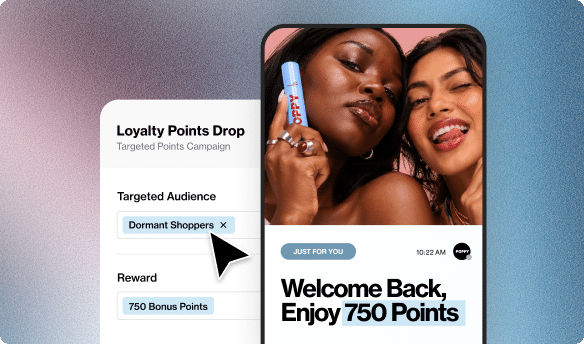







Of all the metrics e-commerce brands watch, Customer Acquisition Cost (CAC) often presents the biggest challenge. Getting new customers is an expensive task with costs that keep going up. A smart shift from the costly chase for new buyers to nurturing the customers you already have is the foundation of modern loyalty marketing. This isn’t just about offering points. It’s a full strategy for building real, lasting relationships that turn one-time shoppers into profitable, lifelong brand fans.
This guide gives you an in-depth look at the goals, benefits, and steps for putting a powerful loyalty strategy into action.
Key Takeaways: Loyalty Marketing Strategy
- Retention is Profitable: Keeping an existing customer costs up to five times less than acquiring a new one. A small 5% boost in retention can increase profits by 25% to 95%.
- Focus on Key Metrics: A strong loyalty strategy directly improves Customer Lifetime Value (LTV) and helps lower your overall Customer Acquisition Cost (CAC).
- Build Brand Advocates: Loyalty goes beyond repeat sales. It creates a community of advocates who provide valuable feedback, drive word-of-mouth marketing, and are more likely to try your new products.
- First-Party Data is Gold: Loyalty programs are one of the best ways to ethically collect first-party data, which is crucial for personalizing marketing in a privacy-focused world.
- Choose the Right Tech: The success of your strategy depends on having the right software. A dedicated loyalty solution provides the flexibility, analytics, and support needed to build and manage an effective program.
Why a Loyalty Marketing Strategy is Critical for E-commerce Growth
In the crowded e-commerce world, a loyalty marketing strategy isn’t just a nice-to-have—it’s a core driver of sustainable growth. Relying only on getting new customers creates an expensive, endless cycle. An effective loyalty strategy turns the focus inward to unlock the huge value within your existing customer base. This approach directly boosts profitability, builds a stronger brand, and creates a priceless first-party data asset.
The Powerful Economics of Customer Retention
The data is clear: acquiring a new customer can cost five times more than keeping an existing one. This fact alone should change how you think about allocating your marketing budget for the best results. While acquisition is needed for growth, retention is the engine of profitability.
Think about the impact on two of the most important metrics in e-commerce:
- Customer Lifetime Value (LTV): This is the total revenue a business can expect from a single customer over time. Loyal customers buy more often and tend to have a higher average spend. By improving retention, you directly increase the LTV of your customer base.
- Customer Acquisition Cost (CAC): When you keep more customers, you don’t have to rely as much on expensive acquisition channels like paid ads. Better yet, loyal customers often become brand advocates who bring in new customers through word-of-mouth, which lowers your overall blended CAC.
Research shows that a 5% increase in customer retention can lead to a profit increase of 25% to 95%. This happens because repeat customers cost less to market to, spend more, and provide a stable revenue base for your business.
From One-Time Buyers to Brand Advocates
The benefits of a loyalty strategy go far beyond just repeat sales. The real goal is to build a community of advocates who feel a genuine connection with your brand.
This leads to these practical results:
- Increased Spending: Loyal customers trust your products more and are more likely to make larger purchases.
- Word-of-Mouth Marketing: Happy, loyal customers are a powerful marketing channel, telling friends and family about your brand. This is one of the most trusted forms of advertising.
- Valuable Feedback: Engaged customers are more willing to give honest reviews and feedback. This user-generated content (UGC) builds social proof, and direct feedback offers great insights for product and service improvements.
- Higher Conversion on New Products: When you launch a new product, your loyal customers are the most likely group to buy it first, giving you key sales momentum and early feedback.
The First-Party Data Goldmine
In a world with changing data privacy rules and the end of third-party cookies, first-party data is more valuable than ever. First-party data is info you collect directly from your audience. A loyalty program is one of the most effective ways to collect this data ethically and at scale.
When a customer joins your loyalty program, they agree to share information and let you track their behavior in exchange for value. This gives you insights into their purchase habits, product preferences, and engagement. You can then use this data to create more relevant marketing campaigns, targeted product recommendations, and better customer experiences.
The Anatomy of a Modern Loyalty Strategy
An effective loyalty strategy isn’t built on guesswork. It’s a structured plan with clear goals, a well-defined program model, and key parts that work together to create value for both the customer and the business. Let’s break down the essential elements.
Setting Clear Loyalty Program Goals
Before you design anything, you must define your objectives. Vague goals like “increase loyalty” aren’t enough. Instead, use the SMART framework to set targets that are Specific, Measureable, Achievable, Relevant, and Time-bound.
Here are some common and effective goals for an e-commerce loyalty program:
- Increase Repeat Purchase Rate: “Increase the repeat purchase rate among loyalty members by 15% within six months.”
- Boost Average Order Value (AOV): “Introduce tiered rewards to increase AOV by 10% for loyalty members by the end of Q3.”
- Grow Customer Lifetime Value (LTV): “Increase the average LTV of loyalty members by 25% over the next 12 months.”
- Drive Customer Engagement: “Increase the number of product reviews submitted by loyalty members by 50% in the next quarter.”
- Collect More First-Party Data: “Achieve a 40% sign-up rate to the loyalty program for all new customers.”
- Reduce Customer Churn: “Decrease the churn rate of first-year customers by 20% by incentivizing second purchases.”
Choosing the Right Type of Loyalty Program
Not all loyalty programs are the same. The model you pick should fit your brand, products, and what motivates your customers.
- Points-Based Programs: This is the classic model. Customers earn points for actions, mainly purchases, and redeem them for rewards. It’s simple to understand and implement. However, it can sometimes feel purely transactional.
- Tiered Programs: These programs create a sense of status. Customers unlock better benefits as they spend more and move up through levels (e.g., Bronze, Silver, Gold). This “gamifies” loyalty and encourages more spending to reach the next exclusive tier.
- Value-Based (VIP) Programs: These programs focus on shared values and community access over simple discounts. They are great for building a powerful, emotional bond with customers who identify with your brand’s mission.
- Hybrid Programs: Many of the best programs today are hybrids. They might use points as the main currency but also have tiers that unlock better point-earning rates and exclusive perks. This approach offers both immediate gratification and long-term aspirational goals.
Key Components of a Winning Program
No matter which type of program you choose, these core components are essential for success.
- Earning Mechanisms: Offer a mix of ways for customers to earn. Reward not just purchases, but also engagement-based actions like creating an account, writing a product review, following your brand on social media, or celebrating a birthday.
- Redemption & Rewards: Your rewards must be exciting. Offer a mix of monetary rewards (discounts, free shipping) and non-monetary rewards (early access to products, exclusive items, special event invites).
- Program Branding and Communication: Give your program a cool, branded name that fits your identity. Create a dedicated landing page on your site that clearly explains how it works. And communicate regularly with members about their points and status through email and other channels.
How to Implement a Loyalty Strategy with Yotpo

Understanding the theory is the first step. Putting it into action effectively is the next. Building, managing, and optimizing a high-performance loyalty program requires sophisticated technology. A specialized solution like Yotpo Loyalty gives you the tools and strategic guidance to turn your vision into a successful reality.
Step-by-Step: Building Your Program with Yotpo Loyalty

Yotpo’s platform is designed to be both powerful and user-friendly, letting brands launch a sophisticated program efficiently.
- Define Your Structure with Flexibility: Yotpo Loyalty gives you the freedom to create the exact program you imagine. Whether you need a simple points system, a multi-level tiered program, or a complex hybrid model, the platform supports it. You can fully customize the look and feel of on-site widgets and dedicated loyalty pages for a seamless customer experience.
- Set Up a Variety of Earning Campaigns: With Yotpo, you can easily set up over 15 pre-built campaigns to reward customers for a range of actions beyond just buying. Popular campaigns include Points for Purchases, Refer-a-Friend, Birthday Rewards, Write a Review, and Follow on Social Media.
- Design Compelling and Flexible Rewards: Yotpo gives you full control over your rewards. Create various redemption options like percentage-off coupons, fixed dollar-off discounts, free shipping, or even free products. A key feature is setting flexible point expiration rules, which can create a powerful incentive for customers to return before their points expire.
- Measure and Optimize with Robust Analytics: Yotpo Loyalty includes an accurate reporting dashboard that makes tracking KPIs simple. You can instantly see your program’s ROI, the lift in repeat purchase rate, and the increase in LTV. The platform also offers dynamic segmentation to analyze the behavior of different customer groups, giving you the data-driven insights needed to continuously optimize.
The Yotpo Advantage: Synergy Between Products
While Yotpo Loyalty is a powerful standalone solution, it works even better when paired with Yotpo Reviews. While each is a best-in-class product on its own, their synergy creates a powerful cycle.
You can automatically reward customers with loyalty points for submitting reviews. You can even offer bonus points for including photos or videos, helping you generate high-impact UGC that drives conversions. This creates a loop: loyalty drives reviews, and reviews build the trust that attracts new customers who then join the loyalty program.
Actionable Strategies for a High-Performing Loyalty Program
Launching your program is the first step. To make sure it thrives, follow these best practices.
- Ensure Simplicity and Visibility: Your program should be easy to find and simple to understand. Promote it on your homepage, create a dedicated landing page, and mention it on product pages and in post-purchase emails.
- Offer a Mix of Aspirational and Attainable Rewards: Provide some rewards that are easy to earn for quick gratification. At the same time, offer high-value, exclusive rewards for top tiers to give members a long-term goal.
- Reward Engagement, Not Just Transactions: The best programs build communities. Reward customers for actions like writing reviews, sharing on social media, and referring friends.
- Personalize the Experience: Use the rich data your loyalty program collects. Address customers by name and VIP tier. Send triggered notifications when they have enough points for a reward or are close to the next tier.
- Continuously Test and Optimize: Treat your loyalty program as a living part of your marketing strategy. Use your analytics to see what’s working. Don’t be afraid to A/B test different reward values or messages to improve performance over time.
Conclusion
A well-run loyalty marketing strategy is one of the most reliable paths to profitable, long-term growth for an e-commerce brand. By shifting focus from high-cost acquisition to value-driven retention, you build a resilient business based on strong customer relationships. This approach turns marketing from a cost center into a profit engine, boosting key metrics like LTV while building a community of passionate brand advocates.
Executing this strategy requires clear goals, a deep understanding of your customers, and the right technology. A flexible and strategic solution like Yotpo Loyalty provides the tools, expert support, and insights needed to build a program that not only rewards customers but also delivers a measurable return on investment.
Frequently Asked Questions
What’s the difference between a loyalty program and a rewards program?
Think of “loyalty marketing” as the overall strategy and “rewards” as the tactics you use. A basic rewards program might just offer a discount after a few purchases. A true loyalty strategy is bigger. It uses a mix of rewards, tiered benefits, exclusive access, and personalized communication to build a long-term, emotional connection with the customer.
How much should we budget for a loyalty program?
You should see your loyalty program as an investment, not an expense. A successful program should be a profit center. Costs include the software subscription and the value of redeemed rewards. But these costs should be easily covered by the increased revenue from higher LTV, more frequent purchases, and larger order values from members.
When is the right time to start a loyalty program?
For most brands, the sooner, the better. You can start a loyalty program even when your brand is relatively new. Starting early lets you begin collecting valuable first-party data from day one and helps get customers in the habit of repeat purchasing. Your program can then grow and evolve with your business.
How do we effectively promote a new loyalty program?
Use a multi-channel approach. Announce the program to your email and SMS lists with a special launch offer. Use a banner on your homepage and create a dedicated landing page explaining the benefits. Mention the program on product pages (e.g., “Earn 50 points with this purchase!”) and include info in your order confirmation and shipping emails.
Can a loyalty program work for any type of e-commerce business?
Yes, a loyalty strategy can be adapted to fit almost any e-commerce model. The key is to tailor the program’s structure and rewards to your audience and business goals. For example, a store selling high-value, infrequently purchased items might focus more on engagement and referral rewards. A store selling consumables might focus more on transactional points.
What are the most common mistakes brands make with loyalty programs?
The biggest mistakes are making the program too complicated, offering boring rewards, and hiding it on their website. If customers can’t easily understand how to earn and redeem, or if the rewards aren’t valuable to them, they won’t participate. Visibility is key.
How can I make my loyalty program feel less transactional?
Focus on rewarding engagement, not just purchases. Offer points for writing reviews, sharing on social media, or referring friends. Also, use non-monetary rewards like early access to new products or exclusive content. This shows you value the entire relationship, not just their wallet.
What kind of rewards are most effective?
A mix is best. Monetary rewards like discounts and free shipping are popular because their value is clear. But non-monetary, experiential rewards—like exclusive access, free gifts, or special recognition—often build a stronger emotional connection and make your top customers feel truly valued.
How long does it take to see results from a loyalty program?
You can see some results, like an increase in sign-ups and engagement, almost immediately after launch. However, the bigger impacts on metrics like repeat purchase rate and customer lifetime value typically become clear within 3 to 6 months as members start to actively participate and redeem rewards.
Should my loyalty program be free to join or a paid VIP club?
For most e-commerce brands, a free-to-join program is the best way to maximize participation and data collection. A paid VIP program can work for brands with a very strong community and exclusive benefits that are compelling enough for customers to pay a subscription fee. Some brands even use a hybrid model with a free base program and a paid top tier.
How do I use data from my loyalty program to improve marketing?
The data is a goldmine for personalization. You can segment customers by their VIP tier, purchase history, and point balance. Use this to send highly targeted emails and offers. For example, send a special offer to your top-tier members or notify customers when they’re just a few points away from their next reward.
What’s more important: rewarding purchases or rewarding engagement?
Both are important, but they serve different purposes. Rewarding purchases is the foundation that drives repeat sales. Rewarding engagement (like reviews and referrals) builds a community and turns customers into brand advocates. A balanced program that encourages both is the most effective.
How do I keep my loyalty program exciting over the long term?
Don’t just set it and forget it. Keep it fresh by introducing new rewards, running limited-time double-points promotions, and adding new ways to earn. Use your analytics to see what’s popular and what’s not, and be willing to adjust your strategy over time based on customer feedback and behavior.











 Join a free demo, personalized to fit your needs