


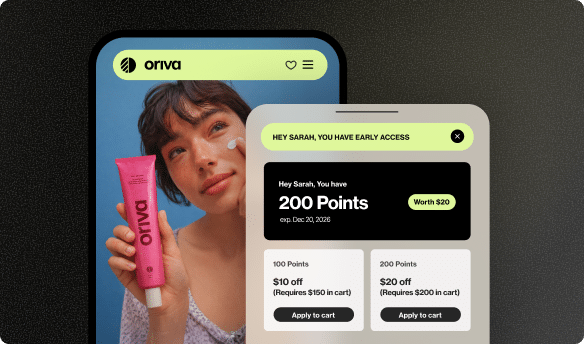







Getting a new customer is just the first step. The real challenge, and where the opportunity truly lies, is in turning that first-time buyer into a repeat customer. Eventually, you want them to become a loyal brand advocate. This is where ecommerce rewards programs come in. They are no longer a simple “nice-to-have” but a strategic necessity for sustainable growth.
Key Takeaways
- Boosts Customer Value: Rewards programs are proven to increase customer lifetime value (LTV) and encourage repeat purchases.
- Reduces Costs: Focusing on existing customers through loyalty initiatives lowers your reliance on expensive new customer acquisition channels.
- Builds Brand Advocacy: Rewarded customers are more likely to become brand advocates, spreading positive word-of-mouth.
- Requires Strategy: A successful program needs clear goals, a deep understanding of your audience, and the right technology partner.
- Promotion is Crucial: A program’s success depends on effective and consistent promotion across all your marketing channels.
What Are Ecommerce Rewards Programs (And Why Do They Matter)?
At its core, an ecommerce rewards program is a customer retention strategy that incentivizes shoppers to make repeat purchases. By offering points, discounts, exclusive access, or other perks, you give customers a compelling reason to choose your brand over a competitor. But a modern program goes far beyond a simple digital punch card.
Defining the Modern Rewards Program
Today’s rewards programs are sophisticated marketing engines. They are designed to build an emotional connection with customers by recognizing and rewarding them not just for what they buy, but for how they engage with your brand. This can include everything from writing a review and following you on social media to referring a friend. The goal is to create a community of engaged customers who feel valued, making them more likely to stick with your brand.
The Core Benefits: Why Invest in a Rewards Program?
Implementing a well-designed rewards program is a strategic investment that can pay big dividends. It’s a powerful tool for influencing customer behavior and driving key business metrics. Let’s look at the primary benefits.
- Increase Customer Lifetime Value (LTV): By encouraging repeat purchases and fostering loyalty, rewards programs directly increase the total revenue a customer generates. Loyal customers simply spend more, more often.
- Boost Repeat Purchase Rate: The promise of earning and redeeming rewards gives customers a tangible reason to return. This is crucial, as even a small increase in customer retention can have a major impact on profitability.
- Lower Customer Acquisition Costs (CAC): Acquiring new customers is expensive. A rewards program helps you maximize the value of your existing ones, reducing your reliance on costly acquisition channels. Referral bonuses can even turn your loyal customers into an effective, low-cost acquisition channel themselves.
- Foster Brand Advocacy: Happy, rewarded customers are more likely to talk about your brand. They become advocates who share positive experiences, generating powerful word-of-mouth marketing that builds trust.
- Gather Valuable Customer Data: A rewards program provides a wealth of first-party data. You can learn about your customers’ purchasing habits and preferences. This information is invaluable for personalizing marketing, improving products, and making smarter business decisions.
In short, a rewards program is a fundamental strategy for building a more resilient and profitable ecommerce business.
The Anatomy of a Successful Rewards Program: Key Components
A successful rewards program is built on a clear and compelling value exchange. Customers need to easily understand how to earn rewards and feel that the rewards themselves are valuable and attainable. This balance comes from three core components: earning mechanisms, redemption options, and the program structure.
Earning Mechanisms: How Customers Get Rewarded
The ways customers can earn rewards should be diverse enough to encourage different types of engagement.
- Transactional Rewards: This is the most common method. Customers earn points for every dollar they spend. The formula should be simple (e.g., “1 point for every $1 spent”).
- Engagement Rewards: These rewards incentivize actions beyond just making a purchase. This can include creating an account, signing up for your newsletter, following your brand on social media, or writing a product review.
- Referral Rewards: Encourage your best customers to become brand advocates by rewarding them for referring new customers. Typically, both the referrer and the new customer receive a bonus.
Redemption Options: Making Rewards Worthwhile
Earning points is only half the story. The rewards themselves must be appealing enough to motivate customers. The best programs offer a variety of redemption options.
- Discounts: Customers can redeem their points for a dollar-off coupon, a percentage-off discount, or free shipping.
- Free Products: Allow customers to exchange points for specific products. This can be a great way to introduce them to new items.
- Exclusive Access: Offer non-monetary rewards that make customers feel special. This could include early access to new product launches or entry into members-only sales.
Program Structure: Points-Based vs. Tiered Systems
How you structure your program will define the customer’s journey. The two most common structures are points-based and tiered, though many brands use a hybrid approach.
- Points-Based Programs: This is the simplest model. Customers earn points for actions and redeem them for rewards. It’s easy to understand and manage, making it a great starting point.
- Tiered Programs: Tiered programs create a sense of aspiration. Customers unlock new levels of benefits as their spending or engagement increases. Each tier offers progressively better rewards, which encourages customers to spend more to reach the next level.
- Hybrid Models: Many successful programs combine elements of both. They use a points-based system for earning rewards but also add tiers to provide ongoing, status-based benefits to their most loyal customers.
Types of Ecommerce Rewards Programs (With Real-World Examples)
Rewards programs are not one-size-fits-all. The best approach depends on your products, margins, and customer behavior. Let’s explore some popular program types.
- The Points-for-Purchases Program: This is the most traditional type. Customers earn points for every dollar spent, which they can redeem for discounts or products. Example: Sephora Beauty Insider. Members earn one point per dollar and can redeem them for various rewards. As they spend more, they move up through tiers to unlock better perks.
- The Tiered VIP Program: These programs make your most valuable customers feel special. Customers progress through levels based on their spending, unlocking more exclusive benefits at each stage. Example: Nike Membership. Nike’s program is less about points and more about access. Members get benefits like free shipping, exclusive product drops, and special events.
- The Paid Membership Program: In this model, customers pay a fee to join an exclusive club that offers significant ongoing benefits. This works best for brands with highly engaged customers who make frequent purchases. Example: Amazon Prime. For an annual fee, members get fast, free shipping and other perks that effectively lock them into the Amazon ecosystem.
- The Value-Based Program: Some brands build loyalty by connecting with customers on a deeper, value-based level, often by incorporating a charitable mission. Example: Bombas. For every pair of socks purchased, Bombas donates a pair to someone in need. This model builds immense customer loyalty and an emotional connection to the brand.
- The Referral Program: A standalone referral program can be incredibly effective. It focuses on rewarding existing customers for bringing new customers to your business. Example: Rothy’s. Rothy’s offers a straightforward program: give a friend $20 off their first purchase, and you get $20 off your next one.
Building Your Ecommerce Rewards Program: A Step-by-Step Guide
Launching a successful rewards program requires careful planning. It’s about designing an experience that resonates with your customers and aligns with your business goals.
Step 1: Define Your Goals and KPIs
First, you need to know what you want to achieve. Are you trying to increase customer retention, boost average order value, or drive more repeat purchases? Set specific and measurable Key Performance Indicators (KPIs).
- Increase repeat purchase rate by 15% within the first year.
- Boost Customer Lifetime Value (LTV) by 20% over 18 months.
- Achieve a 25% program adoption rate in the first six months.
Step 2: Understand Your Audience
Who are your best customers, and what motivates them? Use your customer data to understand their purchasing behavior. Consider sending a survey to ask them directly what kind of rewards they would find most valuable.
Step 3: Choose the Right Program Structure
Based on your goals and audience, decide on the best structure. A points-based program is great for simplicity, while a tiered program is more effective for fostering aspiration. For many brands, a hybrid model offers the most flexibility.
Step 4: Design Your Earning and Redeeming Rules
This is where the details matter. Keep the rules simple and the value clear. Decide how many points customers earn per dollar spent and create a clear conversion rate for points to rewards (e.g., 100 points = $10 off).
Step 5: Select the Right Technology Platform
Your rewards program will only be as good as the technology powering it. You need a robust platform that can handle the complexity and integrate with your ecommerce store.
The Importance of a Strategic Loyalty Partner
When evaluating platforms, look for more than just features. You need a partner who understands ecommerce loyalty and can provide strategic guidance.
Yotpo Loyalty is designed to be that strategic partner for growth. With deep market experience since 2011, Yotpo provides not just software but also expert guidance to build a successful program. The platform is built with flexibility at its core, allowing you to create unique loyalty experiences that reflect your brand. You can design earning rules and redemption options tailored to your customers. Yotpo Loyalty also provides robust, accurate reporting, so you can track key metrics and prove the ROI of your program. This data-driven approach is backed by a dedicated Customer Success Manager who works with you to refine your strategy.

The loyalty technology space includes several other providers. Loyalty Lion and Smile offer tools to set up rewards programs. Other options include Okendo, Stamped, and Rivo. When choosing a solution, it’s important to consider factors like the level of strategic support, the depth of customization available, and the platform’s ability to provide clear, actionable insights. A platform offering dedicated strategic guidance can be a significant advantage in designing a program that is not only functional but also highly effective at driving business goals.
Step 6: Promote Your Program Effectively
Once your program is built, you need to promote it. A program no one knows about won’t deliver results.
- Launch a dedicated landing page explaining how it works.
- Use on-site banners and pop-ups to encourage sign-ups.
- Announce the launch to your email list and on social media.
- Train your customer service team to promote the program.
Best Practices for Maximizing Your Rewards Program’s ROI
Launching your rewards program is just the beginning. To maximize its return on investment, you need to actively manage and optimize it over time.
- Make It Visible and Easy to Join: Your rewards program should be one of the most visible elements of your online store. Promote it on your homepage and create a dedicated landing page. Ensure the sign-up process is as frictionless as possible.
- Communicate Value Consistently: Remind your members about the program’s value regularly. Send automated emails notifying members of their current point balance and trigger notifications when they are close to earning a reward.
- Personalize the Experience: Use the data from your rewards program to create personalized experiences. A strong loyalty solution allows you to segment customers based on their tier or point balance to send them targeted offers. For instance, when Yotpo Loyalty is used, you can leverage its synergy with Yotpo Reviews. You can automatically reward customers with loyalty points for submitting a review, which incentivizes the creation of valuable user-generated content and strengthens their connection to your program.
- Gather Feedback and Iterate: Your customers’ needs will evolve, and so should your program. Survey your members periodically to ask what they like. Analyze your program data to see which rewards are most popular and test new promotions.

Common Pitfalls to Avoid
Even with the best intentions, ecommerce rewards programs can miss the mark. Be aware of these common pitfalls.
- Overly Complicated Rules: If customers need a spreadsheet to figure out how your program works, you have already lost. The earning and redemption process should be intuitive and simple.
- Low Perceived Value of Rewards: The rewards must be desirable and feel attainable. If it takes too long to earn a small discount, customers will lose interest.
- Poor Communication and Promotion: This is one of the most common failures. You can build the best program, but if nobody knows it exists, it will fail.
- Disjointed Customer Experience: A rewards program that operates in isolation is a missed opportunity. Without connecting loyalty data to your other marketing efforts, you create a fragmented experience and can’t personalize communications effectively.
Conclusion: Turning Transactions into Relationships
In today’s crowded ecommerce landscape, competing on price alone is not a sustainable strategy. The most successful brands build lasting relationships with their customers. A well-executed rewards program is one of the most effective tools for doing just that. It transforms the transactional nature of online shopping into a relational, value-driven experience. By strategically rewarding customers for their loyalty, you give them a powerful reason to choose you again and again.
Frequently Asked Questions
How do I make my rewards program stand out from competitors?
Focus on creating a unique, branded experience. Use custom naming for your program and tiers that reflects your brand’s personality. Offer exclusive, non-monetary rewards that competitors can’t easily replicate, such as early access to products, invitations to special events, or access to a members-only community.
What’s a good starting point for a points-to-dollar earning ratio?
A simple and effective starting point is offering 1 to 5 points for every dollar spent. The key is to make it easy for customers to understand. For redemption, a common value is setting 100 points equal to a $1 reward. This makes the math simple and the value clear.
Should I offer rewards for actions other than just purchases?
Absolutely. Rewarding customers for actions like creating an account, signing up for your newsletter, following you on social media, or writing a review is a fantastic way to increase engagement. These actions help build a stronger community around your brand and deepen the customer relationship beyond transactions.
How can I prevent customers from abusing my rewards program?
A robust loyalty platform should have built-in fraud prevention measures. This can include limiting the number of times certain actions can be rewarded (e.g., only one reward for a social follow), flagging suspicious point accumulations, and setting rules to prevent self-referrals or referring fake accounts.
What is the main difference between a tiered program and a points program?
A points program is purely transactional: you spend money or perform an action to earn points, which you then redeem for a reward. A tiered program is aspirational. It provides ongoing status and benefits to customers who reach certain spending thresholds, making them feel like VIPs and encouraging them to spend more to maintain their status.
How should I promote my rewards program when I first launch it?
A multi-channel promotional blitz is your best bet. Announce the launch with a dedicated email campaign to your existing customer base. Use prominent banners on your homepage and create a dedicated landing page. Promote it heavily on your social media channels and consider running a launch-specific promotion, like offering bonus points for signing up in the first week.
Can a rewards program be effective for a B2B ecommerce business?
Yes, they can be highly effective. While the rewards might differ, the principle is the same. B2B rewards could include discounts on bulk orders, early access to new product lines, dedicated account manager support, or free training and resources. The goal is to reward continued business and build a strong partnership.
How long should it take for a customer to be able to earn their first reward?
Customers should be able to earn their first reward relatively quickly to experience the value of the program and stay engaged. A good rule of thumb is to set the first reward threshold at a point value that an average customer could reach within their first two or three purchases.
What are some examples of valuable non-monetary rewards?
Non-monetary rewards make customers feel special and part of an exclusive club. Great examples include early access to new product launches, invitations to members-only online or in-person events, free entry into contests or giveaways, and access to exclusive content like tutorials or style guides.
How do I accurately measure the ROI of my loyalty program?
To measure ROI, track key metrics and compare the behavior of program members to non-members. Key indicators include Customer Lifetime Value (LTV), Average Order Value (AOV), and Repeat Purchase Rate. A strong loyalty platform will provide detailed analytics dashboards to help you track these metrics and demonstrate the program’s financial impact.
Is it a good idea for loyalty points to have an expiration date?
Yes, point expiration can be a powerful motivator. It creates a sense of urgency, encouraging customers to redeem their points and make a purchase before they lose them. However, you must be transparent about your expiration policy. A common practice is to have points expire after 12 months of account inactivity.
How does a loyalty program help with collecting valuable first-party data?
A loyalty program is a goldmine for first-party data. By signing up, customers willingly provide you with information like their email, birthday, and preferences. As they engage with the program, you learn about their purchase frequency, what products they like, and what rewards motivate them, allowing you to personalize their experience further.
Is it better to offer a percentage-off or a dollar-off discount as a reward?
This often depends on your average order value (AOV). Dollar-off discounts (e.g., “$10 off”) are often perceived as more valuable and are easier for customers to understand. Percentage-off discounts (e.g., “15% off”) can be more appealing for customers making larger purchases. It’s a good idea to test both or even offer both at different reward tiers.











 Join a free demo, personalized to fit your needs