









Getting a customer’s attention is just the first step. The real challenge? Keeping it. Forward-thinking brands know that sustainable growth isn’t built on a revolving door of one-time buyers. Instead, it comes from building lasting relationships. This is where loyalty marketing becomes essential.
It’s a strategic plan to nurture your existing customers, encourage them to shop again, and turn them into your biggest fans. This guide gives you a clear overview of loyalty marketing, why it matters, and how to build a strategy that delivers real results for your business.
Key Takeaways
- Loyalty Drives Retention: Loyalty marketing is the proactive strategy you use to improve customer retention, which is a key measure of business health.
- Boosts Key Metrics: A strong loyalty strategy directly increases Customer Lifetime Value (CLV) and repeat purchase rates while helping to lower Customer Acquisition Costs (CAC).
- Builds Brand Advocates: Effective programs turn happy customers into a powerful, organic marketing force that refers new business.
- Program Fit is Crucial: The best loyalty program—whether it’s points-based, tiered, or value-driven—is one that aligns perfectly with your brand identity and what motivates your customers.
- Data is Your Guide: Success depends on setting clear goals (KPIs), understanding your customers deeply, and using data to continuously analyze and optimize your program.
What is Loyalty Marketing? A Clear Definition
At its core, loyalty marketing is a strategic approach focused on keeping and growing your existing customer base through structured incentives. The main goal is to make customers feel valued, encouraging them to consistently choose your brand over competitors. It builds a relationship that benefits everyone: customers get real value for sticking with you, and your brand earns their long-term business.
Beyond Points and Discounts: The Core Concept
Many people think loyalty marketing is just about points or punch cards, but it’s much more than that. A great loyalty strategy goes beyond simple rewards to build a real emotional connection with the customer.
A well-run program makes customers feel like they’re part of an exclusive club. It recognizes their value beyond just what they buy, rewarding them for things like writing product reviews or sharing on social media. This shifts your focus from just making short-term sales to increasing the long-term customer lifetime value (CLV).
Loyalty Marketing vs. Customer Retention: What’s the Difference?
You’ve probably heard “loyalty” and “retention” used to mean the same thing, but they are different concepts.
- Customer Retention is the outcome. It’s a metric that tells you the percentage of customers your business keeps over a certain period. Think of it as a report card on your business’s health.
- Loyalty Marketing is the proactive strategy. It’s the specific set of actions and programs you put in place to achieve higher retention. It’s the engine that gets you to your goal.
Basically, retention is the destination, and loyalty marketing is the map you use to get there.
Why Now? The Growing Importance in eCommerce
The need for effective loyalty marketing has never been greater. Why? For one, customer acquisition costs (CAC) are skyrocketing. Relying only on finding new customers is becoming too expensive to sustain.
On top of that, today’s shoppers have endless choices and expect personalized experiences. They want to connect with brands that share their values. A smart loyalty strategy delivers that personal touch, making customers feel seen and appreciated. It helps you stand out in a crowded market and builds a protective wall around your customer base. In short, loyalty marketing isn’t a “nice-to-have” anymore; it’s a core part of a strong and profitable eCommerce business.
The Tangible Benefits of a Strong Loyalty Marketing Strategy
Putting a well-designed loyalty marketing strategy in place gives you significant, measurable benefits that directly impact your bottom line. It’s an investment in your most valuable asset: your current customers.
Boosting Customer Lifetime Value (CLV)
Customer Lifetime Value (CLV) is the total revenue you can expect from a single customer over time. Loyalty marketing is one of the best ways to increase this critical number. By offering consistent rewards and personalized engagement, you encourage customers to buy more often and spend more when they do. Members of a loyalty program often do most of their shopping with one brand, making it their go-to choice.
Increasing Repeat Purchase Rate
The repeat purchase rate is a direct sign of how happy your customers are with your brand. A loyalty program gives them a clear, logical reason to come back. The cycle of earning and redeeming points or moving up VIP tiers creates a powerful sense of positive reinforcement. Every purchase strengthens their habit of choosing you, creating a reliable stream of revenue.
Lowering Customer Acquisition Costs (CAC)
It’s a marketing rule of thumb: keeping an existing customer is much cheaper than finding a new one. By focusing on loyalty, you become less dependent on expensive advertising. Plus, loyal customers often become brand advocates, spreading the word and bringing in new customers for a fraction of the cost of paid ads.
Building a Community of Brand Advocates
The best marketing comes from a real recommendation from someone you trust. A loyalty program can systematically turn your satisfied customers into enthusiastic promoters. Customers who feel valued are more likely to share their positive experiences. Many modern programs even include referral rewards, directly encouraging them to bring in new customers and creating a powerful, organic growth engine.
Gathering Valuable First-Party Data
In a world with growing concerns about data privacy, first-party data—information you collect directly from your customers with their consent—is incredibly valuable. A loyalty program is an ethical and effective way to gather it. As customers interact with your program, they willingly share insights about their preferences and buying habits. You can use this data to improve your marketing, develop new products, and deliver better customer experiences.
Types of Loyalty Programs: Finding the Right Fit for Your Brand
The best loyalty programs are the ones that perfectly match a brand’s identity and what its customers want. Understanding the main types of programs is the first step to designing the right one for your business.
Points-Based Programs
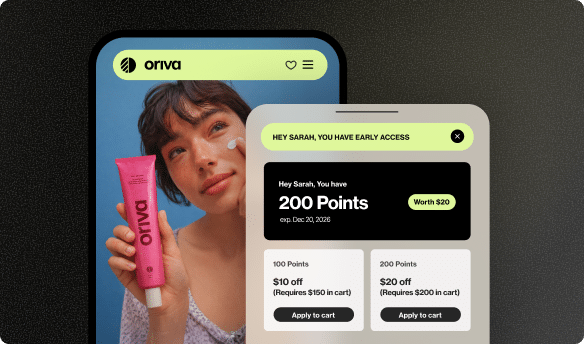
This is the most common type of loyalty program. Customers earn points for purchases and other actions, like writing reviews. They can then redeem these points for rewards like discounts, free products, or exclusive items.
- Best for: Brands with high purchase frequency, like fashion, beauty, or consumer goods.
- Why it works: The earn-and-redeem model is easy to understand and gives an immediate reason to keep buying.
Tiered Programs
Tiered programs add a gamified element to loyalty. Customers move up through different levels or tiers based on how much they spend or engage. Each new tier unlocks better and more valuable benefits. This creates a sense of achievement and exclusivity.
- Best for: Brands that want to build a sense of community and status among their top customers.
- Why it works: Tiers motivate customers to spend more to reach a higher status, which can build a strong emotional connection to the brand.
Value-Based (or Mission-Driven) Programs
These programs build loyalty by connecting with customers on a deeper, ideological level. Instead of getting discounts, customers can use their earned rewards to make donations to charities or contribute to social causes the brand supports.
- Best for: Mission-driven brands whose customers care about shared values.
- Why it works: This model creates an incredibly strong bond based on a shared purpose, building a loyal following that goes beyond price.
Paid (VIP) Programs
In a paid loyalty program, customers pay a recurring fee (monthly or annually) for access to a set of premium benefits. The best-known example is Amazon Prime. The value of the benefits, like free shipping or exclusive access, must be much greater than the cost of the membership.
- Best for: Businesses where customers buy frequently and can get a clear financial benefit from the membership.
- Why it works: The upfront payment creates a strong psychological commitment, encouraging members to get their money’s worth by shopping more with the brand.
Hybrid Models
Many of the best loyalty programs mix elements from different models to create a more engaging experience. A popular hybrid approach uses a points-based system for everyone but adds exclusive tiers for the biggest spenders. This allows a brand to appeal to a wide range of customers at the same time.
- Best for: Brands that need a flexible way to engage both casual shoppers and devoted VIPs.
- Why it works: A hybrid model provides value for all members while offering aspirational goals for the most dedicated customers.
Building Your Loyalty Marketing Strategy: A Step-by-Step Guide
Launching a successful loyalty program requires more than just picking a model and offering rewards. This step-by-step guide shows you how to build a program that drives engagement and delivers a measurable return.
Step 1: Define Your Goals and KPIs
First, set clear, measurable goals for your program. What do you want to achieve? Your goals should be SMART (Specific, Measurable, Achievable, Relevant, and Time-bound).
Common goals include:
- Increase Customer Lifetime Value (CLV) by 15% within a year.
- Improve the Repeat Purchase Rate by 10%.
- Enhance the overall Customer Retention Rate.
Your Key Performance Indicators (KPIs) are the specific metrics you’ll track to see how you’re doing.
Step 2: Understand Your Customers Deeply
Your program’s success depends on how valuable your customers find it. You need to know what motivates them. Are they looking for discounts, or do they value exclusivity and unique experiences?
- Surveys: Ask customers directly what kinds of rewards they want.
- Data Analysis: Look at your sales data to identify your best customers and their buying habits.
- Customer Personas: Create profiles of your ideal customers to make sure your program meets their needs.
Step 3: Choose the Right Loyalty Program Structure
Based on your goals and customer insights, pick the program model that fits your brand best.
- For increasing how often people buy, a points-based program is often a great choice.
- To reward and keep your top customers, a tiered program offers the exclusivity you need.
- For brands with a strong social mission, a value-based program can build a powerful connection.
Step 4: Design Your Rewards and Incentives
The rewards you offer must be desirable to customers and affordable for your business. A good program often includes a mix of reward types.
Transactional vs. Experiential Rewards
- Transactional Rewards: These have a clear monetary value, like discounts, coupons, or free shipping. They work well because they are practical and useful.
- Experiential Rewards: These offer non-monetary value, like early access to new products or invitations to exclusive events. These rewards build a deeper emotional connection. You can also offer points for actions beyond purchases, like writing a product review.
Make sure rewards are attainable. If it’s too hard to earn a reward, customers will lose interest. Offer smaller rewards for immediate gratification and bigger, aspirational rewards for long-term engagement.
Step 5: Name and Brand Your Program
Create a compelling name and brand identity for your loyalty program that fits your main brand. Avoid generic names like “Rewards Program.” Instead, choose a name that suggests community and exclusivity.
Step 6: Promote Your Program Effectively
A great program will fail if no one knows about it. Plan a multi-channel launch campaign and ongoing marketing.
- Website: Use banners, pop-ups, and a dedicated landing page.
- Email & SMS: Announce the program to your subscribers.
- Social Media: Create buzz with posts and targeted ads.
- Post-Purchase: Use order confirmation pages to encourage sign-ups.
Step 7: Measure, Analyze, and Optimize
A loyalty program needs constant monitoring and improvement. Track your KPIs to see how it’s performing.
- Monitor Engagement: See how active members are.
- Track Redemption Rates: Find out which rewards are most popular.
- Analyze Customer Behavior: Compare the spending of program members to non-members.
Use these insights to make smart adjustments to your program over time.
How Yotpo Loyalty Powers Your Strategy

Choosing the right technology partner is key to running a successful loyalty marketing strategy. A best-in-class platform is more than just a tool for tracking points; it’s a strategic engine for growth. Yotpo Loyalty is built specifically for eCommerce brands that want to create highly customized programs designed to deliver measurable results.
More Than a Tool: A Strategic Partnership
Yotpo understands that launching and managing a great loyalty program is complex. That’s why the platform comes with a strategic partnership. With years of market experience, Yotpo gives you access to eCommerce loyalty experts who offer guidance from setup to optimization. This includes dedicated Customer Success Managers and 24/7 support, ensuring you have the expertise you need to maximize your program’s performance.
Unmatched Flexibility and Customization
Your brand is unique, and your loyalty program should be too. Yotpo Loyalty offers extensive flexibility, allowing you to design a program that truly reflects your brand’s identity. You can go beyond standard templates to create unique loyalty experiences, whether that means a complex tiered structure or a nuanced mix of rewards.
Leveraging Data with Robust Reporting and Insights
A successful loyalty program is driven by data. Yotpo offers accurate and robust reporting that gives you a clear view of your program’s performance. You can easily track key metrics like member engagement, redemption rates, and the program’s impact on CLV. The platform’s advanced segmentation also lets you group customers based on their behavior or loyalty status, enabling highly personalized and effective marketing.
Common Challenges in Loyalty Marketing (And How to Overcome Them)
Even the best-planned loyalty programs can run into problems. Knowing these common challenges ahead of time can help you build a more effective strategy.
Challenge 1: Lack of Customer Engagement
Getting people to sign up is one thing, but keeping them active is another. If customers aren’t regularly reminded of the program’s value, they’ll stop participating.
- Solution: Implement a consistent communication strategy. Use email and SMS to send points balance updates, announce member-only offers, and celebrate milestones like reaching a new tier.
Challenge 2: Perceived Low Value of Rewards
If your rewards aren’t appealing or are too hard to earn, customers won’t be motivated. A program that asks for too much spending for a small discount won’t work.
- Solution: Design a balanced rewards structure with a mix of easy-to-get rewards for instant gratification and bigger rewards for long-term goals. Use customer data to make sure your rewards are what people actually want.
Challenge 3: Complexity and Difficult User Experience
If your program has confusing rules or a clunky interface, customers will give up. It should be easy to understand how to earn and redeem rewards.
- Solution: Prioritize simplicity. The rules should be clear, and the user experience should be seamless. Provide an easy-to-use dashboard where customers can track their status and rewards.
Challenge 4: Proving ROI
It can be hard to show the direct financial impact of a loyalty program. Without clear data, some might see it as just another cost.
- Solution: Take a data-first approach from the beginning. Use a platform with strong analytics to track KPIs. Compare the buying habits of loyalty members to a control group of non-members to clearly show the program’s return on investment.
The Competitive Landscape: What to Consider
When choosing a loyalty technology provider, you’ll find a market with many options, each with different features.
Evaluating Your Options
Yotpo offers a powerful combination of a flexible, customizable loyalty product and a deep strategic partnership. The focus is on providing you with eCommerce loyalty experts who help you build a dynamic program designed for long-term growth, backed by robust analytics to prove its value.
Other providers in the loyalty space include Loyalty Lion, Smile, Okendo, Stamped, and Rivo. These solutions offer a range of tools for managing loyalty and referral programs. Some are designed for quick setup in smaller businesses, while others focus on specific integrations or reward types.
When you evaluate platforms, it’s important to look beyond a simple feature list. Think about the level of strategic support a provider offers. While many platforms provide the basics for a points-for-purchase program, long-term success often depends on creating a truly unique experience.
Conclusion: Loyalty as a Cornerstone of Sustainable Growth
Loyalty marketing is no longer just a tactic; it’s a strategic necessity for any eCommerce brand that wants to succeed long-term. It’s a powerful approach that shifts your focus from expensive customer acquisition to profitable, relationship-driven customer retention.
By understanding your customers, choosing the right program structure, and offering real value, you can turn one-time buyers into a loyal community of brand advocates. A well-executed loyalty program does more than just drive repeat sales; it increases customer lifetime value, lowers acquisition costs, and provides priceless first-party data. It’s an investment in the sustainable, profitable growth of your brand.
Frequently Asked Questions
How do I measure the ROI of a loyalty program?
To measure ROI, track the program’s total cost (software, rewards) and compare it to the extra revenue generated by members. The best way to do this is by analyzing the increase in purchase frequency, average order value (AOV), and customer lifetime value (CLV) of program members compared to a control group of non-members. The formula is: ((Incremental Revenue – Program Cost) / Program Cost) * 100.
Can a loyalty program work for a small business?
Yes, loyalty programs are very effective for small businesses. A simple points-based or referral program can be a cost-effective way to encourage repeat business and build a loyal customer base from the start. The key is to begin with clear goals and offer valuable rewards that your business can afford.
How long does it take to see results from a loyalty program?
You might see an initial jump in engagement right after launch, but the biggest results, like a significant increase in customer lifetime value, develop over time. Most businesses can expect to see meaningful data and a clear ROI within 6 to 12 months, as customers need time to engage with the program.
What’s the difference between a loyalty program and a referral program?
A loyalty program is a broad strategy to keep existing customers by rewarding them for ongoing engagement. A referral program is a specific tactic focused on acquiring new customers by rewarding existing customers for bringing them in. Referral programs are often a key part of a larger loyalty program.
How do I choose the right rewards for my customers?
Start by analyzing your customer data to see what they buy most often. You can also run surveys to ask them directly what they’d like. A good strategy is to offer a mix of rewards: small, easily attainable ones (like a 10% off coupon) for instant gratification, and larger, aspirational ones (like a free product) to encourage long-term engagement.
Can loyalty programs work for B2B businesses?
Absolutely. While the structure might be different, B2B loyalty programs are very effective. Instead of rewarding individual shoppers, you might reward entire companies for things like contract renewals, high-volume orders, or successful case studies. The rewards could be service credits, exclusive training, or early access to new features.
What is the biggest mistake brands make with loyalty programs?
The biggest mistake is “set it and forget it.” A loyalty program isn’t a one-time project; it needs constant attention. Brands that fail to promote their program, update their rewards, and analyze performance data will see engagement drop over time.
How can I personalize my loyalty program?
Use the first-party data from your program to create personalized experiences. You can send birthday rewards, offer bonus points on products a customer has viewed before, or create special promotions for different VIP tiers. The more personal it feels, the more engaged customers will be.
Should my loyalty program be free or paid?
For most eCommerce brands, a free program is the best way to encourage widespread adoption. Paid (or VIP) programs can work well if you can offer incredibly valuable and exclusive benefits that clearly outweigh the membership fee, such as unlimited free shipping or deep, members-only discounts.
What is the role of ‘surprise and delight’ in loyalty marketing?
“Surprise and delight” refers to giving unexpected rewards to customers. It’s a powerful way to create a memorable experience and build a strong emotional connection. This could be anything from a random gift in an order to a surprise upgrade to the next VIP tier. It shows customers you appreciate them beyond just their transactions.
How do tiered loyalty programs keep customers engaged?
Tiers work because they tap into our desire for status and achievement. Customers are motivated to spend more to unlock the exclusive benefits of the next level. The key is to make the benefits of each tier genuinely better than the one before it, giving customers a clear reason to keep climbing.
Is it better to offer discounts or exclusive products as rewards?
A mix of both is ideal. Discounts are effective because they have a clear monetary value and appeal to a broad audience. Exclusive products or experiences, however, can create a stronger sense of community and make your most loyal customers feel special. Test different options to see what resonates most with your audience.
How do I prevent loyalty program fraud?
To prevent fraud, set clear terms and conditions. You can implement rules like limiting the number of points that can be earned in a single day or manually reviewing unusually large point redemptions. Using a robust loyalty platform with built-in security features can also help you monitor for and flag suspicious activity.











 Join a free demo, personalized to fit your needs