









In the fast-paced world of e-commerce, it’s easy to focus on the chase for new customers. While traffic spikes and new orders are worth celebrating, this emphasis on acquisition often overlooks a more critical element: the customers you already have. The true engine of sustainable growth lies not in attracting one-time buyers, but in building relationships that last. This is where Customer Lifetime Value (CLV) becomes essential. It’s the metric that shifts your focus from short-term gains to long-term profitability, and this guide provides a definitive framework for mastering it.
Key Takeaways
- CLV Defined: Customer Lifetime Value is the total net profit a brand expects to earn from a customer over their entire relationship.
- Core Components: CLV is driven by three main factors: Average Order Value (AOV), Purchase Frequency, and Customer Lifespan. Improving any of these will boost CLV.
- Strategic Importance: Focusing on CLV moves your strategy beyond expensive customer acquisition to sustainable, profitable growth built on customer loyalty.
- Calculation Methods: CLV can be calculated using simple formulas for a quick estimate or more complex traditional formulas that account for profit margins and discount rates for greater accuracy.
- Actionable Strategies: You can increase CLV by upselling/cross-selling to boost AOV, using loyalty programs to increase purchase frequency, and building trust with reviews to extend customer lifespan.
What Exactly is Customer Lifetime Value (CLV)?
Before diving into advanced strategies, it’s important to establish a clear definition of Customer Lifetime Value and its core components.
A Clear Definition for E-commerce Professionals
Customer Lifetime Value (CLV) is a predictive metric representing the total net profit a business can expect from a single customer throughout their entire relationship with the brand. It’s not a measure of a single purchase or even a year’s worth of transactions; it is the complete financial value a customer brings, from their first order to their last. This long-term perspective is what makes CLV a powerful tool for strategic planning, compelling businesses to look beyond the immediate transaction to the entire customer journey.
Why CLV is More Than Just Another Metric
Consider CLV a key performance indicator for your business’s health. A rising CLV indicates that you are not just selling products but effectively building loyalty. It shows that your customers are satisfied, engaged, and find sufficient value in your brand to return repeatedly. Conversely, a stagnant or declining CLV can be an early warning of friction in the customer experience, unmet product expectations, or marketing that fails to resonate with your existing base. In short, CLV reflects the strength and quality of your customer relationships.
The Core Components That Make Up CLV
To fully understand CLV, you must understand the factors that drive it. It is primarily influenced by three key variables:
- Average Order Value (AOV): This is the average amount a customer spends per transaction. A higher AOV directly contributes to a higher CLV.
- Purchase Frequency (F): This measures how often a customer makes a purchase from your store within a defined time frame, such as a year. Encouraging a customer to buy twice a year instead of once effectively doubles their value for that period.
- Customer Lifespan (L): This is the duration a customer continues to buy from your brand before they “churn,” or cease to be a customer. The longer you retain a customer, the more opportunities you have for them to make purchases.
Improving any one of these components will increase your CLV. Improving all three is a formula for building a resilient e-commerce business.
The Critical Importance of CLV in Today’s E-commerce Landscape
Focusing on CLV is not just a best practice; it is a strategic necessity in a market defined by intense competition and rising advertising costs.
Moving Beyond the Customer Acquisition Cost (CAC) Treadmill
For years, many marketers have prioritized a low Customer Acquisition Cost (CAC). However, acquiring new customers is becoming progressively more expensive. If you spend $50 to acquire a customer who only makes a single $60 purchase, your profit margin is minimal. This approach creates a cycle where you must constantly acquire more customers just to maintain revenue.
CLV reframes this perspective. It encourages you to ask a more strategic question: “How much can we afford to spend to acquire the right type of customer?” If you know the average customer will generate $500 in profit over their lifetime, a $50 acquisition cost becomes a sound investment. The CLV:CAC ratio is a crucial metric for business health. A healthy ratio, often cited as 3:1 or higher, signifies that your customer acquisition strategy is profitable and your business model is sustainable.
How CLV Directly Drives Profitable and Sustainable Growth
Why are repeat customers so valuable? The data is clear:
- They are easier to sell to, as the probability of selling to an existing customer is significantly higher than selling to a new prospect.
- They tend to spend more over time as their trust in your brand grows, increasing their AOV.
- They often become brand advocates, referring friends and family and providing you with high-quality, low-cost customer acquisition.
By focusing on strategies that increase CLV, you are inherently focusing on activities that build a more profitable and resilient business.
Using CLV for Smarter, Data-Driven Decisions
Once you begin tracking CLV, you can use it to make more informed decisions across your entire operation.
- Optimizing Your Marketing Budget: By analyzing CLV by acquisition channel, you can determine which channels attract high-value, repeat buyers versus those that attract one-time discount seekers. This allows you to allocate your marketing budget more effectively.
- Enhancing Customer Segmentation: CLV enables you to identify your most valuable customers, or VIPs. You can create specific segments for these high-CLV customers to provide them with exclusive offers, early access to new products, or personalized service.
- Informing Product Development: Analyzing the purchase history of your high-CLV segments can provide invaluable insights. What products do your best customers buy most often? This data can guide everything from new product development to promotional bundling.
How to Calculate Customer Lifetime Value: Formulas and Models
Calculating CLV can range from simple to complex, depending on your available data and required accuracy. Let’s review a few common methods.
The Foundational CLV Formula: A Simple Starting Point
This method is ideal for generating a quick, high-level estimate of your CLV.
Step 1: Calculate Average Annual Customer Value Average Annual Customer Value = Average Order Value (AOV) × Average Purchase Frequency
Step 2: Calculate Simple CLV Simple CLV = Average Annual Customer Value × Average Customer Lifespan (in years)
This calculation suggests how much revenue an average customer will generate. While it’s a useful starting point, it does not account for profit margins.
The Traditional CLV Formula: A More Accurate Approach
For a more financially sound calculation, you should use a formula that incorporates your gross margin and a discount rate. This shifts the focus from revenue to actual profit.
The formula is as follows: Traditional CLV = Gross Margin × (Retention Rate / [1 + Discount Rate – Retention Rate])
- Gross Margin: The percentage of revenue remaining after accounting for the cost of goods sold (COGS).
- Retention Rate: The percentage of customers who remain active from one period to the next.
- Discount Rate: An accounting principle that adjusts for the time value of money. A typical rate is 10%.
This more conservative figure represents the profit you can expect from a customer, adjusted for future value.
Predictive vs. Historic CLV: What’s the Difference?
The formulas above generally rely on past data, which is known as Historic CLV. This calculates value based on past purchases. While accurate for what has already occurred, it cannot calculate value for new customers.
Predictive CLV, on the other hand, uses machine learning to forecast a customer’s future value. It analyzes factors like the time between purchases and product types bought to predict how long a customer will remain active. This is the gold standard for CLV, as it enables proactive decision-making.
Proven Strategies for Increasing Customer Lifetime Value
Improving CLV requires a focused effort on three objectives: increasing how much customers spend per order, encouraging them to buy more often, and retaining them for longer.
Strategy 1: Boost Average Order Value (AOV)
Encouraging each customer to spend slightly more per transaction can have a significant impact on your CLV over time.
- Implement Strategic Upselling and Cross-selling: Upselling encourages customers to purchase a more premium version of a product, while cross-selling suggests related items. You can implement this through “You Might Also Like” sections and post-purchase offers.
- Create Compelling Product Bundles: Bundling several products together for a single price can increase perceived value and simplify the buying decision. This also introduces customers to a broader range of your product line.
- Offer Free Shipping Thresholds: Setting a minimum order value to qualify for free shipping is a highly effective tactic that directly incentivizes customers to add more items to their cart.
Strategy 2: Increase Purchase Frequency
Turning a one-time buyer into a repeat customer is where significant value is created. This requires proactive and personalized communication.
Develop a Robust Customer Loyalty Program
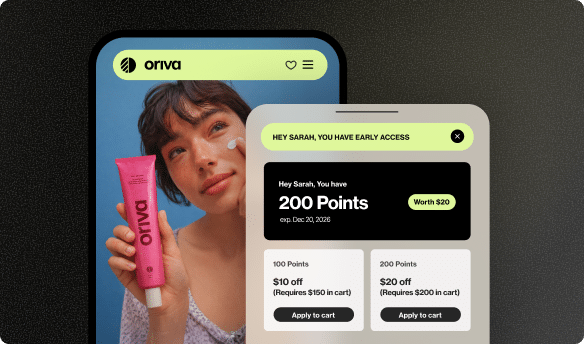
A loyalty program is a direct and powerful tool for encouraging repeat business. It formalizes the customer relationship and provides clear incentives to choose your brand over a competitor. A great program, like one built with Yotpo Loyalty, helps you design a dynamic experience powered by a flexible platform. Look for solutions that offer robust analytics, deep segmentation capabilities, and dedicated strategic support to help you meet your goals.

Leverage Targeted Marketing Campaigns
Staying top-of-mind is crucial for driving repeat purchases. Use email and SMS marketing to inform customers about new products, exclusive sales, or content that adds value. Personalize these communications based on past purchase behavior to make them more relevant and effective.
Strategy 3: Extend Customer Lifespan Through Retention
Long-term customer retention is the ultimate goal. This requires building trust, providing excellent service, and creating a memorable experience.
Build Trust with Authentic Social Proof
Modern consumers trust other consumers more than they trust advertisements. Reviews, ratings, and user-generated content (UGC) are essential for building the confidence required for a long-term relationship.
Choosing the right platform to collect and display this social proof is a key decision. A best-in-class solution like Yotpo Reviews helps brands turn customer feedback into conversion-driving assets. It’s important to focus on collecting high-impact reviews, especially those with rich content like photos and videos. The right tool will provide customizable widgets to display this content effectively and offer strategic partnerships to syndicate reviews to major platforms like Google.
It’s also worth noting the synergies between products. For instance, a brand using both a loyalty and a reviews solution can reward customers with loyalty points for submitting reviews, creating a positive feedback loop.

Create Exceptional Customer Experiences
This extends beyond the product itself. It includes fast shipping, easy returns, and responsive, helpful customer support. Every interaction a customer has with your brand is an opportunity to strengthen the relationship.
Advanced CLV Strategies: Segmentation and Personalization
Once you have mastered the fundamentals, you can advance to strategies that use CLV to create highly personalized marketing experiences.
Identifying Your Most Valuable Customers (MVCs)
The 80/20 rule often applies in e-commerce, suggesting that about 80% of your revenue comes from 20% of your customers. CLV analysis helps you identify this critical 20% segment. Focusing a significant portion of your retention efforts on this group will yield the highest return on investment.
Using RFM Analysis: A Practical Framework for Segmentation
RFM is a proven model for segmenting customers based on their transaction history. It stands for:
- Recency: How recently did the customer make a purchase?
- Frequency: How often do they purchase?
- Monetary Value: How much do they spend?
By scoring customers on these three factors, you can group them into actionable segments such as “Champions,” “Loyal Customers,” and “At-Risk.” Some advanced marketing platforms incorporate RFM modeling directly into their analytics dashboards, making it easier to target these different groups.
Tailoring Marketing to Different CLV Tiers
A one-size-fits-all marketing approach is inefficient. With CLV and RFM segmentation, you can deliver the right message to the right customer at the right time.
- High-CLV Customers: Treat them like VIPs. Offer exclusive access to sales, invite them to a private community, or send a personalized thank-you gift.
- Mid-CLV Customers: Nurture these customers to become champions. Use targeted cross-sell campaigns and encourage them to join your loyalty program.
- Low-CLV/At-Risk Customers: Approach this segment with win-back campaigns, or request feedback to understand their inactivity.
Conclusion: Making CLV the North Star of Your E-commerce Strategy
Focusing on Customer Lifetime Value is more than a marketing tactic; it’s a fundamental shift in business philosophy from a transactional mindset to a relational one. It requires you to prioritize the customer experience, build genuine loyalty, and make smarter, data-driven decisions that foster sustainable, profitable growth. By understanding the formulas, embracing core strategies, and using powerful tools, you can turn CLV from a passive metric into an active guide for your e-commerce strategy.
Frequently Asked Questions
What is a “good” Customer Lifetime Value for an e-commerce store?
There is no universal figure for a “good” CLV, as it varies significantly by industry. A high-end furniture store will naturally have a much higher CLV than a store selling phone cases. A more important benchmark is the CLV:CAC ratio. A ratio of 3:1, where a customer’s lifetime value is three times the cost of acquisition, is widely considered a healthy target.
How often should I calculate and track CLV?
It is a good practice to review your CLV on a monthly or quarterly basis. This allows you to identify trends and measure the impact of your retention marketing efforts. More importantly, you should monitor the core components of CLV (AOV, Purchase Frequency, Retention Rate) more frequently, as these are the leading indicators that will influence your overall CLV.
What’s the main difference between CLV and LTV?
The terms CLV and LTV are often used interchangeably in e-commerce marketing. In some financial contexts, LTV can be a broader term for the value of any asset, while CLV specifically refers to the value of a customer. For all practical purposes within e-commerce, it is safe to treat them as synonymous.
I’m a new store with limited data. How can I start improving my CLV?
Even without extensive historical data, you can focus on the foundational principles of CLV from day one. Start by providing an exceptional post-purchase experience to encourage a second order. Implement tactics to increase AOV, such as free shipping thresholds. Most importantly, begin collecting customer reviews early to build trust and social proof.
Can CLV be negative?
Yes, it’s possible for a customer’s CLV to be negative. This happens when the total cost of acquiring and serving a customer exceeds the revenue they generate. This situation often highlights issues with customer acquisition strategies, pricing, or product-market fit.
What are some common mistakes to avoid when managing CLV?
A common pitfall is focusing only on the overall average CLV. The real insights come from segmentation. An average can be skewed by a small number of very high-value customers. It’s crucial to analyze CLV by acquisition channel, first product purchased, and other segments to make accurate decisions.
How does customer service impact CLV?
Excellent customer service has a massive impact on CLV. Positive support interactions build trust and loyalty, which directly increases customer retention and lifespan. A single negative experience can lead to churn, instantly ending a customer’s lifetime value.
Which component of CLV should I focus on first?
For a new business, the first priority is often increasing Purchase Frequency to turn one-time buyers into repeat customers. For more established businesses with a loyal base, optimizing Average Order Value (AOV) through upselling and bundling can provide significant returns.
How long does it take to see an increase in CLV?
Improving CLV is a long-term strategy, not a quick fix. While you might see short-term lifts in AOV from a new bundling strategy, meaningful increases in customer lifespan and retention can take several months or even a year to become apparent in your data.
Does CLV apply to subscription-based businesses?
Absolutely. CLV is extremely important for subscription businesses. In this model, the “Customer Lifespan” component is directly tied to how long a customer remains subscribed. The primary strategies involve reducing churn and finding opportunities to upsell subscribers to higher-tier plans.
Are there tools that can help calculate CLV?
Yes, many platforms can help. Your e-commerce platform (like Shopify or BigCommerce) often has built-in reports. Customer data platforms (CDPs) and specialized analytics tools can also provide deep CLV insights. Additionally, best-in-class solutions for reviews and loyalty often have dashboards that track the value generated by those programs.
How does personalization affect CLV?
Personalization is a powerful driver of CLV. By using customer data to tailor product recommendations, marketing messages, and on-site experiences, you make customers feel understood and valued. This strengthens the relationship, leading to higher AOV, increased purchase frequency, and a longer customer lifespan.
What is the relationship between CLV and brand loyalty?
They are deeply connected. Brand loyalty is the emotional connection and trust a customer has for your brand. CLV is the financial outcome of that loyalty. Strategies that build genuine brand loyalty—like great products, strong community, and excellent service—are the most sustainable ways to increase Customer Lifetime Value.











 Join a free demo, personalized to fit your needs