









Many e-commerce brands struggle with the high cost of acquiring customers who only make a single purchase. Sustainable growth, however, isn’t just about finding new customers; it’s about retaining the ones you already have. This is where a strategic retail loyalty program becomes a valuable asset. Since not all loyalty programs are created equal, this guide will show you how to evaluate, design, and launch a program that builds customer relationships, increases lifetime value, and helps transform your brand.
Key Takeaways
- Retention Over Acquisition: Sustainable growth comes from retaining existing customers, not just acquiring new ones. Loyalty programs are a key tool for increasing customer lifetime value (LTV).
- More Than Discounts: Effective loyalty programs build emotional connections and brand advocacy by making customers feel valued, not just by offering transactional rewards.
- Program Structure is Key: The most successful programs often blend different models, like points-based, tiered, and VIP systems, to create an experience that feels unique to the brand.
- Choose the Right Partner: A dedicated loyalty platform is essential for building a strategic, flexible, and data-driven program. The right partner provides both powerful software and expert guidance.
- Promotion is Crucial: A loyalty program must be visible at every stage of the customer journey, from the homepage to post-purchase communications, to maximize enrollment and engagement.
Why Retail Loyalty Programs Are Critical for E-commerce Growth
Viewing loyalty programs as simple discount systems overlooks a significant opportunity. A well-designed program is a powerful engine for growth that can fundamentally change your relationship with customers and directly impact your bottom line. It is about making customers feel seen, valued, and connected to your brand on a deeper level.
Let’s examine the tangible business benefits:
- Boosts Customer Lifetime Value (LTV): The primary purpose of a loyalty program is to encourage repeat business. By rewarding customers for their continued patronage, you provide a compelling reason for them to choose your store over a competitor. This consistent engagement directly increases the total revenue a customer generates for your brand over their lifetime.
- Increases Average Order Value (AOV): Loyalty members often spend more per transaction. They are frequently motivated to reach the next reward threshold or unlock a new VIP tier. A simple prompt, such as “You’re only $10 away from free shipping,” can be a highly effective tactic for encouraging customers to add another item to their cart.
- Reduces Customer Acquisition Cost (CAC): Relying solely on paid advertising for growth is an expensive, continuous cycle. A strong retention strategy reduces this dependency. Satisfied, loyal customers not only return on their own but also become effective brand marketers. An integrated referral program can turn your customer base into a low-cost acquisition channel.
- Fosters Genuine Brand Advocacy: An effective loyalty program does more than offer transactional benefits; it builds an emotional connection. When customers feel like valued members of an exclusive group, they are far more likely to recommend your brand to friends and family. They become advocates who share your content, leave positive reviews, and drive organic growth.
In essence, a loyalty program shifts your focus from costly, short-term transactions to profitable, long-term customer relationships.
Understanding Modern Loyalty Programs
Before you can build an effective program, you must understand its fundamental parts. The most successful strategies often blend different models and components to create an experience that feels unique to the brand.
Types of Retail Loyalty Programs
There is no universal solution for loyalty programs. The right model depends on your brand, your products, and your customers’ motivations.
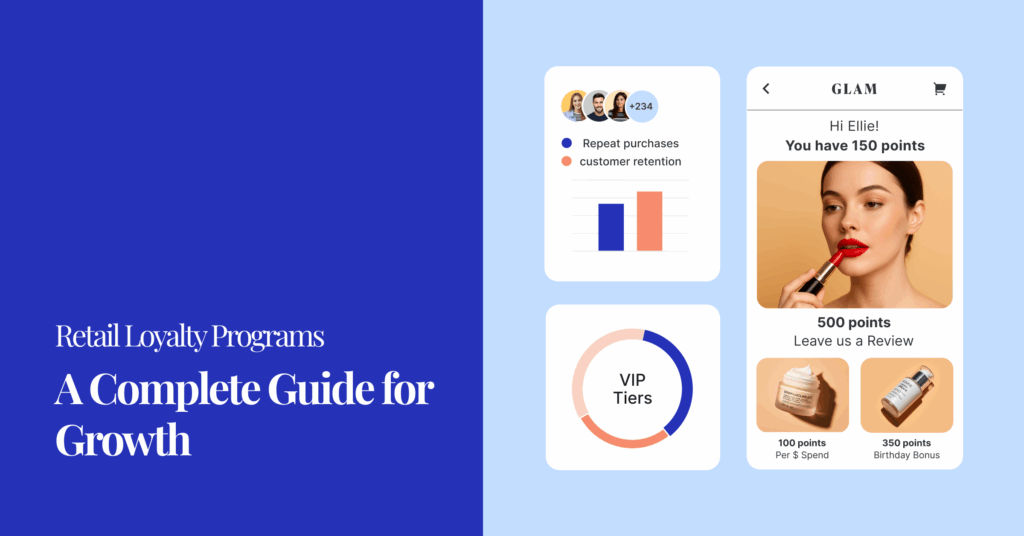
- Points-Based Programs: This is the most common model because it is simple and effective. Customers earn points for specific actions (like making a purchase or writing a review) and can redeem those points for rewards.
- Tiered Programs: These programs add a layer of gamification. Customers “level up” through different tiers based on their spending or engagement, with each higher tier unlocking better rewards and greater exclusivity. This model is highly aspirational and encourages higher spending.
- VIP & Paid Programs: This model creates an exclusive club. Customers pay a recurring fee for instant access to top-tier benefits, like free shipping on all orders, exclusive products, or members-only sales. It generates predictable revenue and attracts your most committed customers.
- Value-Based Programs: These programs focus on building an emotional connection by aligning with customers’ values. Instead of discounts, rewards might include the brand making a charitable donation on the customer’s behalf.
- Hybrid Programs: The best programs often borrow elements from multiple types. For example, a points-based system might also include VIP tiers for top spenders, creating a model that is both accessible and aspirational.
Key Components of a Successful Loyalty Program
Regardless of the type you choose, every successful program is built on several essential pillars.
- A Clear Earning Structure: Customers must understand exactly how to earn rewards, whether it’s through purchases or other engagements like writing a product review.
- An Attractive Redemption Structure: The rewards must be something your customers genuinely want. A mix of discounts, free products, and exclusive access usually works best.
- A Consistent Communication Strategy: Keep members engaged with regular updates about their points, tier status, and special promotions.
- A Seamless User Experience (UX): Joining and participating should be effortless. A confusing experience will diminish engagement.
- Robust Data & Analytics: To know if your program is working, you must track key metrics like program ROI, member behavior, and engagement rates.
Building Your Program with a Strategic Partner
Understanding loyalty concepts is different from implementing them effectively. Building a strategic, flexible, and data-driven program requires a powerful, dedicated partner. A solution like Yotpo Loyalty becomes essential here, providing the tools and expertise to launch, manage, and optimize a program for growth.

A common mistake is creating a generic program that functions as just another discount channel. Your loyalty strategy should be a direct extension of your business goals. With a strategic partner, you can design a program that motivates the right customer behaviors without simply eroding your margins. Yotpo, for instance, offers access to e-commerce loyalty experts who help design a program’s logic based on your specific objectives.
Here are key areas where the right partner can make a difference:
- Flexibility and Customization: Your loyalty program should feel like a natural, integrated part of your brand, not a generic add-on. Deep customization capabilities are crucial. Look for the ability to build a dedicated, fully-branded loyalty page on your site, customize on-site displays, and tailor all email communications. This level of control ensures a seamless customer journey.
- Data-Driven Tiers and Perks: A static program quickly loses its appeal. The key to long-term engagement is creating a sense of progression and exclusivity. A strong loyalty solution excels at creating dynamic, tiered programs that fuel customer ambition. You should be able to establish VIP tiers based on various criteria, like annual spend or points earned, to segment your most valuable customers.
- Robust Analytics and Reporting: If you cannot measure your program’s performance, you cannot improve it. Proving the ROI of your loyalty program is crucial. A key strength of a solution like Yotpo is a robust and accurate reporting suite. The analytics dashboard should clearly show the difference in spending habits between loyalty members and non-members, providing undeniable proof of the program’s value.
Best Practices for Your Retail Loyalty Program
To ensure your loyalty program is a success, consider these practical tips.
- Simplify Enrollment and Understanding. Do not hide your program behind a complicated signup process. Allow customers to join with a single click and make the value proposition clear on your homepage and product pages.
- Offer a Mix of Rewards. Do not rely solely on discounts. Blend transactional rewards with experiential perks, like early access to new products, to appeal to different customer motivations.
- Promote Your Program Everywhere. Your program should be visible at every stage of the customer journey. Use homepage banners, email footers, post-purchase pages, and social media to constantly remind customers of member benefits.
- Personalize Your Communications. Address members by name and reference their tier status and point balance in your communications. This personal touch makes customers feel valued.
- Incorporate Gamification. Use elements like progress bars to show customers how close they are to their next reward and create moments of delight with unexpected perks.
- Solicit and Act on Feedback. Your most loyal customers are your greatest source of insight. Use surveys or polls to ask them what they value in a loyalty program, and then act on that feedback.
Conclusion
A retail loyalty program is no longer optional; it is a fundamental component of a sustainable e-commerce growth strategy. By shifting your focus from one-time transactions to long-term relationships, you can build a resilient business that thrives on customer affinity rather than ad spend.
A successful program requires a strategic approach, deep customization, and robust analytics. It must be more than a simple discount tool. Choosing a best-in-class solution like Yotpo Loyalty provides you with the features to build a world-class program and the strategic guidance to ensure it delivers measurable results. With the right tools, you can create cohesive, personalized experiences that turn new shoppers into lifelong fans.
Frequently Asked Questions
How much does a retail loyalty program cost?
The cost can vary significantly depending on the platform and program complexity. Some solutions offer basic free plans, while advanced platforms have tiered pricing. It is best to evaluate the cost in terms of return on investment (ROI), as a well-executed program should increase customer lifetime value.
How long does it take to see results from a loyalty program?
Initial results, like member sign-ups, can be seen almost immediately. However, the true impact on key metrics like LTV and retention builds over time. Typically, you should expect to see significant, measurable results within 6 to 12 months.
What is the biggest mistake brands make with loyalty programs?
The most common mistake is making the program too complicated or the rewards unattainable. If customers cannot easily understand how to earn and redeem points, they will quickly lose interest. Simplicity and perceived value are essential.
Can a small business benefit from a loyalty program?
Absolutely. A loyalty program can be one of the most powerful tools for a small business, allowing it to compete with larger retailers by building a strong sense of community and personal connection.
How does a loyalty program specifically help with customer retention?
A loyalty program drives retention by creating powerful incentives for repeat purchases through strategic earning rules. It fosters brand affinity by allowing you to build a unique, tiered community with exclusive perks and provides the data needed to understand customer behavior.
How do I measure the ROI of my loyalty program?
You can measure ROI by tracking metrics like the repeat purchase rate of members vs. non-members, the increase in average order value (AOV), and the overall lift in customer lifetime value (LTV) for program participants. A good platform will provide a dashboard with this data.
What are the best rewards to offer?
The best rewards are a mix of transactional and experiential perks. Consider offering percentage discounts, fixed-amount vouchers, free shipping, free products, early access to sales, and exclusive access to new collections.
How should I promote my new loyalty program?
Promote it everywhere. Announce the launch via an email campaign, add banners to your homepage, create a dedicated landing page explaining the benefits, and mention it in your social media bios and posts.
What’s the difference between a points-based and a tiered program?
A points-based program is purely transactional: earn points, then spend them. A tiered program adds an aspirational element where customers unlock new, permanent benefits by reaching certain spending or engagement levels, encouraging them to climb higher.
How can I prevent my loyalty program from becoming stale?
Keep it fresh by introducing limited-time offers, double-point events, and new, exclusive rewards. Periodically survey your members to see what perks they value most and adjust your offerings accordingly.
Should my loyalty points expire?
Point expiration can create a sense of urgency that encourages redemption. However, it can also create a negative customer experience if not communicated clearly. If you implement expiration, ensure the policy is fair and that customers receive multiple reminders before their points are gone.
Can I reward customers for actions other than purchases?
Yes, and you absolutely should! Rewarding customers for actions like creating an account, signing up for your newsletter, following you on social media, or writing a product review are great ways to increase overall brand engagement.
How does a referral program fit into a loyalty strategy?
A referral program is a perfect component of a loyalty strategy. It empowers your most loyal customers to become brand advocates. You can reward them with a significant number of loyalty points for successfully referring a new customer, turning your existing base into a powerful acquisition channel.











 Join a free demo, personalized to fit your needs