


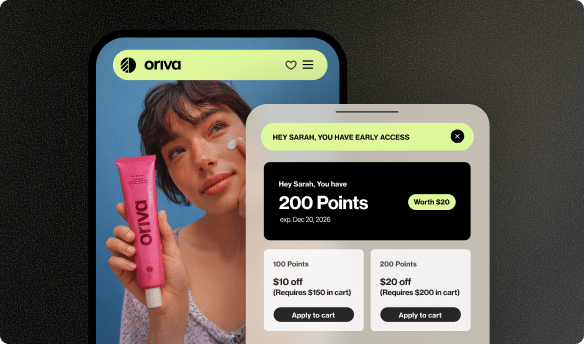










Customer acquisition costs continue to rise. Your advertising spend is working harder than ever for a single conversion, and the competition for a first-time purchase is intense. The critical question, however, is what happens after that first sale? Failing to actively build a customer relationship means leaving significant revenue on the table. In 2026, a powerful loyalty program is no longer a peripheral feature—it is the engine of sustainable eCommerce growth. This guide provides the definitive framework for choosing the right loyalty program software to convert one-time buyers into lifelong brand advocates.
Key Takeaways
- Focus on Retention: With rising customer acquisition costs (CAC), the strategic focus for growth has shifted to maximizing Customer Lifetime Value (LTV).
- Programs Drive ROI: A 5% increase in customer retention can boost profitability by 25% to 95%, making loyalty programs a high-impact investment.
- Flexibility is Crucial: The best loyalty software supports various program types—from points-based and tiered to value-based—allowing you to create a model that fits your brand.
- Integrations Matter Most: A loyalty program’s true power is unlocked through deep integration with your eCommerce platform and key marketing tools.
- Choose a Scalable Partner: Select a solution that not only meets your current needs but can also scale with your brand’s growth, avoiding complex migrations later.
Why Your eCommerce Brand Needs a Loyalty Program in 2026
The old eCommerce model of “acquire, convert, and find the next customer” is no longer viable. In a saturated digital marketplace, consumers have nearly unlimited choices. Your brand’s growth and long-term success now depend on retention. Loyalty programs are the cornerstone of any effective retention strategy.
The New Reality of eCommerce: Beyond the First Purchase
For years, the main metric of success was customer acquisition cost (CAC). As advertising platforms become more crowded, CAC has risen dramatically. Consequently, the strategic focus has decisively shifted to Customer Lifetime Value (LTV). Industry data consistently shows that acquiring a new customer is anywhere from 5 to 25 times more expensive than retaining an existing one.
Furthermore, a mere 5% increase in customer retention can boost profitability by 25% to 95%. This is not a small improvement; it is a fundamental shift in how successful brands operate. eCommerce has evolved from a transactional model to a relational one, where the goal is to build a lasting, mutually beneficial connection with your customers.
The Core Benefits of a Modern Loyalty Program
A well-executed loyalty program, powered by sophisticated software, delivers tangible business results that extend far beyond simple discounts.
- Increased Customer Lifetime Value (LTV): Loyal customers purchase more often and spend more over time. By incentivizing repeat business, you directly increase the total revenue each customer generates.
- Higher Repeat Purchase Rate: A loyalty program gives customers a compelling reason to return to your store instead of a competitor’s. The accumulation of points and rewards creates a switching barrier.
- Improved Customer Engagement: Modern loyalty programs reward customers for more than just transactions. Incentivizing actions like writing reviews, following on social media, or referring friends creates valuable touchpoints that deepen the customer relationship.
- Valuable First-Party Data Collection: With the decline of third-party cookies, first-party data has become a key asset. Your loyalty program serves as a rich source of information about your best customers’ behaviors and preferences.
- Brand Advocacy and User-Generated Content (UGC): Your most loyal customers are also your most effective marketers. A strategic program encourages them to share positive experiences and refer new customers.
In short, a modern loyalty program transforms your customer base from a list of transactions into a thriving community that actively contributes to your brand’s growth.
Understanding the Different Types of Loyalty Programs
Before selecting software, you must define the structure of your program. Most loyalty program solutions are flexible enough to support several models. It is crucial to align the model with your brand identity and customer behavior.
Points-Based Programs
This is the most common and easily understood model. Customers earn a set number of points for every dollar spent, which they can then redeem for rewards.
- Best for: Brands seeking a straightforward method to encourage repeat purchases. It is effective across most industries.
- Example: Earn 5 points for every $1 spent. Redeem 500 points for a $5 discount.
Tiered Programs
Tiered programs create a sense of aspiration and exclusivity. Customers unlock new levels of benefits as they spend more. This gamifies the experience and makes your best customers feel uniquely valued.
- Best for: Brands with high LTV potential, such as those in cosmetics, fashion, or specialized hobbies.
- Example:
- Bronze Tier (Entry): Basic points earning.
- Silver Tier ($500 yearly spend): Accelerated points earning and free shipping.
- Gold Tier ($1,500 yearly spend): Highest points earning and early access to new products.
Value-Based Programs
These programs connect with customers on a deeper, emotional level. Instead of offering only transactional discounts, you let customers use their rewards to support a cause.
- Best for: Mission-driven or socially conscious brands. It builds powerful brand affinity by aligning with customers’ values.
- Example: Redeem 1,000 points to plant a tree or donate $10 to a chosen charity.
Paid/VIP Programs
Popularized by Amazon Prime, this model requires customers to pay a fee to join an exclusive club that offers premium benefits.
- Best for: Brands with a highly engaged customer base and high purchase frequency. It can create a significant, predictable revenue stream.
- Example: Pay $50/year for permanent free 2-day shipping and a 10% discount on all orders.
Hybrid Models
The most sophisticated brands often use a hybrid approach, combining a points-based system with tiers and value-based options. The best loyalty software allows you to integrate these elements to create a program perfectly tailored to your brand.
The Essential Checklist: Key Features in Loyalty Program Software
This section outlines the core evaluation framework. A robust loyalty program software is more than a points calculator; it is a central hub for your customer retention efforts. Use this checklist to critically assess any potential solution.
Core Earning & Redeeming Capabilities
These are the foundational requirements. If a platform cannot execute these functions effectively, it should not be a consideration.
- Flexible Points Earning: You need precise control. Can you set different earning rules for specific products or customer segments? Can you easily run double-points promotions?
- Diverse Reward Options: Customers expect choice. Your software should support a range of redemptions, including percentage-off discounts, fixed-amount discounts, free shipping vouchers, and exclusive products.
- Points Expiration: This is a critical feature for creating urgency and managing program liability. Look for the ability to set expiration rules for points that remain unused.
Advanced Engagement Features
This functionality separates basic tools from true retention platforms. A modern loyalty program must reward engagement, not just transactions. Your software must allow you to reward customers for actions that build brand equity. For instance:
- Writing Product Reviews: This creates a powerful growth loop. A customer makes a purchase, gets a review request, and instantly earns loyalty points upon submission. This enriches your product pages with social proof while driving the customer back to spend their points.
- Following on Social Media: Grow your audience by offering a point incentive for a follow on Instagram, TikTok, or X.
- Referring Friends: Word-of-mouth is an extremely effective marketing channel. A built-in referral function enables customers to share a unique link and earn rewards when their friends make a purchase.
Integration Capabilities: The Decisive Factor
This is arguably the most important consideration. A loyalty program that operates in a silo is a wasted opportunity. Its true power is unleashed when it is deeply integrated with the rest of your technology stack.
- eCommerce Platform: A deep, reliable integration with your eCommerce platform—whether Shopify, BigCommerce, Adobe Commerce, or another major platform—is non-negotiable. This ensures that purchase data and reward redemptions sync flawlessly.
- Reviews & UGC: The synergy between loyalty and reviews is a strategic advantage. For example, the native integration between Yotpo Loyalty and Yotpo Reviews allows you to automatically award points to customers the moment they submit a review. This can dramatically increase review generation, which in turn boosts conversion rates.
- Help Desk: Integrating your loyalty software with platforms like Zendesk or Gorgias allows support agents to see a customer’s loyalty status and points balance directly within a support ticket. They can even award points to resolve issues or reward loyalty.
Customization and Branding
Your loyalty program is an extension of your brand. It must look and feel native to your website.
- On-Site Experience: Look for easy-to-customize on-site widgets, pop-ups, and the ability to build a fully branded, dedicated loyalty page.
- White-Labeling: The software should not impose its own branding on your customer-facing elements.
- Developer Tools: For brands with development resources, access to a robust API provides ultimate control over the program’s design.
Analytics and Reporting
You cannot optimize what you do not measure. A top-tier loyalty program software provides a powerful analytics suite to track performance and demonstrate ROI.
- Key Performance Indicators (KPIs): The dashboard should make it easy to track the most important metrics, including program ROI, LTV of members vs. non-members, repeat purchase rate, and reward redemption rate.
- Reporting: You need the ability to easily view data for specific timeframes and export reports for deeper analysis.
How to Choose the Right Loyalty Software for Your Business Stage
The ideal solution for a seven-figure brand might be excessive for a startup. It is crucial to match the software’s capabilities and cost to your business’s current needs and future ambitions.
For Startups and Small Businesses (Under $1M Revenue)
At this stage, your priorities are simplicity, affordability, and speed to market. You need a solution that is easy to set up and manage.
- Focus on: Ease of use, core features like points-for-purchase, and affordable pricing plans.
- Strategic Approach: Start with a solution like Yotpo Loyalty on an entry-level plan. This lets you build a solid foundation with a partner that can scale with you.
For Growing Mid-Market Brands ($1M – $50M Revenue)
Your focus shifts to scaling efficiently. Your needs are more complex, requiring deeper integrations, greater customization, and more sophisticated program structures.
- Focus on: Robust integrations, advanced program structures like tiers, and clear analytics to demonstrate ROI.
- Strategic Approach: This is where a more strategic loyalty partner like Yotpo becomes a significant growth lever. The ability to leverage expert guidance and advanced analytics helps optimize your program for maximum impact.
For Enterprise-Level Businesses ($50M+ Revenue)
At the enterprise level, your needs center on scalability, security, and complete control. You likely have a complex tech stack and require a strategic partner, not just a software provider.
- Focus on: Robust API access for custom development, proven scalability, and dedicated strategic support.
- Strategic Approach: An enterprise-grade platform like Yotpo is engineered for this level of complexity, offering powerful APIs and the dedicated support that large-scale businesses demand.
The Implementation Process: A Step-by-Step Guide
Choosing the software is a critical first step, but a successful launch requires a thoughtful strategy and a clear implementation plan.
- Define Your Goals & KPIs. Determine what success looks like. Is it increasing the repeat purchase rate by 15% or boosting LTV by 20%? Set clear, measurable goals.
- Design Your Program Structure. Based on the program types discussed earlier, define the specifics. Determine the points-per-dollar ratio, the rewards offered, and the requirements for any tiers.
- Choose Your Software. Use the feature checklist and business stage considerations in this guide to make your final selection.
- Configure and Integrate. Complete the technical setup by installing the application and connecting it to your eCommerce platform and other marketing tools.
- Brand and Customize Your UI. Customize the on-site widgets and build your dedicated loyalty program landing page. Ensure the language and design align with your brand identity.
- Launch and Promote. A program will not succeed without awareness. Plan a multi-channel launch campaign that includes email announcements, a homepage banner, and social media promotion.
- Analyze and Iterate. Your launch is just the beginning. Use the software’s analytics dashboard to monitor your KPIs and optimize your program over time.
Conclusion: Making Your Final Decision
Choosing a loyalty program software is a pivotal decision for your brand’s future. It is an investment in your most valuable asset: your existing customers. As you evaluate your options, look beyond a simple feature comparison. Focus on the platform that offers deep integrations, the flexibility to grow with you, and a strategic vision for the future of customer retention.
The right software will do more than manage points. It will empower you to build a thriving community of brand advocates, transforming customer relationships into your most profitable marketing channel.
Frequently Asked Questions
How much does loyalty program software cost?
Pricing varies widely. Entry-level plans for small businesses can start around $29-$99 per month. Mid-market solutions typically range from $200 to $800 per month, often based on order volume. Enterprise plans are custom-priced and can be thousands of dollars per month.
What’s the difference between a loyalty program and a rewards program?
Though often used interchangeably, there’s a slight difference. A rewards program is typically transactional, offering points for purchases. A loyalty program is more comprehensive, aiming to build an emotional connection through tiers, exclusive access, and community-building efforts.
How do I measure the ROI of a loyalty program?
You can calculate ROI by tracking the increase in revenue from program members versus a control group of non-members. Key metrics include repeat purchase rate, average order value (AOV), and customer lifetime value (LTV). Most top-tier software provides a built-in ROI dashboard.
Can I switch loyalty program software later?
Yes, but migrating can be complex. Moving customer data, points balances, and tier statuses requires careful planning. Most leading platforms can assist with this, but it is best to choose a scalable solution from the start to avoid a future migration.
How long does it to see ROI from a loyalty program?
While you can see immediate engagement, a tangible financial ROI typically becomes clear within three to six months. Key leading indicators are an increase in account creations, a higher repeat purchase rate among members, and a healthy reward redemption rate.
What is the biggest mistake brands make when launching a loyalty program?
The most common mistake is a “set it and forget it” approach. A loyalty program is not a passive tool. It requires active promotion to drive enrollment and ongoing analysis to optimize its effectiveness. Brands that continuously promote their program see exponentially better results.
Should I offer points for actions other than purchases?
Absolutely. Rewarding customers for actions like writing reviews, following on social media, or sharing user-generated content is a great way to increase engagement and build a stronger brand community.
What are the most popular types of rewards?
The most popular rewards are simple and valuable. These include percentage-off discounts (e.g., 15% off), fixed-amount discounts ($10 off), and free shipping. Offering exclusive products or early access to sales can also be very effective for top-tier members.
How do I decide how many points to give per dollar spent?
A common starting point is between 5 to 10 points per dollar. The key is to make the rewards feel attainable but not so easy that they devalue your products. Your points-to-reward ratio should generally result in an effective discount of 1-5% for members.
Is it better to have a tiered or a simple points-based program?
It depends on your brand. A simple points-based program is easy to understand and effective for encouraging repeat purchases. A tiered program is better for creating a sense of exclusivity and rewarding your very best customers, making it ideal for brands with high-LTV products.
How can I promote my new loyalty program at launch?
Promote it across all your marketing channels. Send a dedicated email blast to your customer list, add a banner to your homepage, announce it on social media, and consider running a launch promotion like “double points for the first week” to drive initial sign-ups.
Can a loyalty program help me collect more customer reviews?
Yes, this is a powerful strategy. By integrating your loyalty and reviews solutions, you can automatically offer points to customers who leave a review. This synergy is an excellent way to boost your volume of user-generated content.
Does Yotpo Loyalty work if I use another provider for reviews?
Yes. While the synergy with Yotpo Reviews offers a seamless experience, Yotpo Loyalty is designed to be a best-in-class solution that works well within a diverse tech stack. It has robust integrations with many top eCommerce tools.


 Join a free demo, personalized to fit your needs