








Customer acquisition costs are climbing with no ceiling in sight. Relying solely on attracting new shoppers is becoming an unsustainable growth model. So, what’s the answer? It’s focusing on the customers you already have. In 2026, a powerful, engaging loyalty program isn’t just a nice-to-have feature. It’s a core component of a resilient eCommerce business.
Key Takeaways
- Retention is the New Growth: With rising acquisition costs, focusing on customer retention is the most sustainable way to grow your eCommerce business.
- Modern Loyalty is More Than Discounts: A great program increases customer lifetime value (LTV), boosts average order value (AOV), and generates valuable first-party data.
- Look for Critical Features: Your platform must have deep eCommerce integration, robust branding customization, powerful analytics, and scalability.
- Synergy Creates Value: Choosing a loyalty solution that works seamlessly with other marketing tools, especially a reviews platform, creates a powerful flywheel for customer engagement and content generation.
- A Partner, Not Just a Platform: The best providers offer expert strategic support to help you design, launch, and optimize a program that achieves your specific business goals.
This guide will walk you through everything you need to know. We’ll cover why loyalty is so critical, what features define a modern loyalty platform, and provide a clear checklist for choosing the right solution for your brand. Let’s get started.
Why Your eCommerce Brand Needs a Loyalty Program in 2026
For years, the growth playbook was simple: spend more on ads to get more customers. But that playbook is getting expensive. Today, smart brands are shifting their focus from acquisition at all costs to building durable, long-term relationships with their customers.
The Shifting Landscape: From Acquisition to Retention
The cost of acquiring a new customer has increased significantly over the past few years. Factors like increased competition on ad platforms and data privacy changes have made it harder and more expensive to reach new audiences. This makes keeping your existing customers more important than ever.
Consider these facts:
- Increasing customer retention rates by just 5% can increase profits by 25% to 95%, according to research by Bain & Company.
- The probability of selling to an existing customer is 60-70%, while the probability of selling to a new prospect is only 5-20%.
A loyalty program is your engine for retention. It gives customers a compelling reason to come back to your store instead of turning to a competitor.
Beyond Discounts: The True Value of Customer Loyalty
A common mistake is thinking a loyalty program is just about giving away discounts. While rewards are part of the equation, the true value goes much deeper. A well-designed program drives tangible business results.
- Higher Customer Lifetime Value (LTV): Loyal customers buy more, more often. By rewarding them for their repeat business, you directly encourage behaviors that increase their total value to your brand over time.
- Increased Average Order Value (AOV): Loyalty programs can motivate customers to add more to their cart. For example, offering bonus points for spending over a certain threshold can nudge shoppers to increase their order size.
- Powerful Word-of-Mouth Marketing: Your most loyal customers are also your best advocates. A great loyalty program turns happy customers into brand ambassadors who refer their friends and family, creating a valuable and low-cost acquisition channel.
- Valuable First-Party Data: As third-party cookies fade away, first-party data becomes gold. A loyalty program is a fantastic way to collect this data ethically. You learn about your customers’ purchase habits and preferences, allowing you to create more personalized experiences.
In short, a loyalty program is an investment that pays for itself by increasing retention, boosting key revenue metrics, and building a stronger brand community.
Core Components of a Modern Loyalty Platform
Before you can choose a platform, you need to understand what a great loyalty program looks like. Modern programs are flexible, engaging, and feel like a natural extension of your brand. Let’s break down the essential components.
Earning Mechanisms: More Than Just Points-for-Purchases
The foundation of any loyalty program is how customers earn rewards. The best platforms offer a variety of ways for customers to engage, keeping the program fresh and exciting.
- Transactional Earning: This is the most basic method: customers earn points for every dollar they spend. It’s simple and effective.
- Engagement-Based Earning: This is where things get interesting. You can reward customers for actions that build community and provide value, even if they don’t involve a purchase. Examples include creating a store account, following your brand on social media, writing a product review, or celebrating a birthday.
- Campaign-Based Earning: Run special promotions to drive specific goals. You might offer double points on a new product line for a limited time or bonus points for shopping during a holiday weekend.
A flexible platform allows you to mix and match these methods to create a program that aligns perfectly with your business goals.
Redemption Options: Flexible and Desirable Rewards
Earning points is only half the fun. Customers need exciting ways to spend them. A rigid, one-size-fits-all rewards system can quickly lose its appeal. Look for a loyalty platform that offers a range of redemption options.
- Discounts: The most common rewards are coupons, like $10 off or 20% off an entire order.
- Free Products: Allow customers to redeem points for specific items in your catalog.
- Free Shipping: This is a highly valued perk that can easily be offered as a point redemption option.
- Exclusive Access: Offer early access to sales or new product drops for your most loyal members.
Tiered Programs: Gamifying the Customer Journey
Tiers add a layer of gamification to your loyalty program, encouraging customers to climb the ranks for better perks. Each tier comes with its own set of benefits. For example, a top-tier member might earn points at a faster rate, get free shipping on all orders, and receive exclusive access to VIP events. Tiers create an aspirational goal for customers, motivating them to increase their spending and engagement.
The Customer-Facing Experience
How your loyalty program looks and feels on your website is critical. It should be easy to find, simple to understand, and visually appealing. This requires strong customization and branding capabilities to ensure the entire experience feels like a native part of your brand.
The Evaluation Checklist: 7 Critical Features to Look For
How do you choose the right technology to power your program? Not all loyalty platforms are created equal. Use this checklist to evaluate your options and find a solution that will grow with your brand.
1. Deep eCommerce Platform Integration
Your loyalty platform must connect seamlessly with your eCommerce store. A shallow or unreliable integration will cause endless headaches. Look for a platform that offers a deep, certified integration with your specific eCommerce platform, whether it’s Shopify, Adobe Commerce, or BigCommerce. Support for headless commerce is also becoming essential for brands exploring more flexible site architectures.
2. Robust Customization and Branding
Your loyalty program should look and feel like your brand. You need a platform that gives you full control over the visual presentation. This includes the ability to customize on-site elements with your brand’s fonts, colors, and imagery and build a fully branded experience that feels native to your website.
Yotpo Loyalty provides extensive customization options, from a simple visual editor for quick changes to the ability to use a full API for custom-built loyalty experiences. This flexibility ensures your program enhances your brand identity.

3. A Strategic Focus on Loyalty
Some companies offer loyalty as just one feature among dozens. This often means the loyalty product doesn’t get the dedicated attention it deserves. You want a partner who lives and breathes customer retention.
Yotpo, for instance, maintains a sharp strategic focus on its best-in-class Loyalty and Reviews products. This dedicated approach means each solution is constantly evolving with cutting-edge features. This commitment translates into a more powerful, effective, and future-proof solution for your business.
4. Seamless Integration with Your Marketing Stack
Your loyalty platform generates a wealth of data that can supercharge your other marketing efforts. It should connect effortlessly with your email, SMS, and customer support tools. You can send highly targeted campaigns, like a points reminder email, or give support agents a full view of a customer’s loyalty status. Yotpo Loyalty integrates seamlessly with leading platforms like Attentive, Klaviyo, Gorgias, and Zendesk.
5. Powerful Synergy with User-Generated Content (UGC)
What’s one of the best ways to build trust? Authentic customer reviews. What’s one of the best ways to get more reviews? Rewarding customers for them.
This is where a solution that combines Loyalty with Reviews becomes incredibly powerful. When these two functions are built by the same company, they work together in perfect harmony. You can create a self-sustaining loop, offering loyalty points for submitting reviews. Yotpo is uniquely positioned here. Because Yotpo Loyalty and Yotpo Reviews are built to work together, setting up this powerful flywheel is simple.
6. Advanced Analytics and Reporting
You can’t improve what you can’t measure. A top-tier loyalty platform must provide clear, actionable insights into your program’s performance. You need a dashboard that helps you answer critical business questions, like the return on investment (ROI) of your program and its effect on customer lifetime value.
7. Scalability and Enterprise-Grade Support
Your business is going to grow, and your loyalty platform needs to grow with it. A solution that works for a small startup may crumble under the weight of thousands of daily orders. Equally important is the level of support you’ll receive. Look for a provider that offers strategic guidance, not just technical help. A true partner will help you design a program that meets your specific goals.
Understanding the Loyalty Platform Market Landscape
The market for loyalty platforms is crowded, and different providers take different approaches. Understanding these models can help you find the right fit for your tech stack and business strategy. We can generally group loyalty solutions into a few main categories.
- Best-in-Class Solutions with Natural Synergy: This model, exemplified by Yotpo Loyalty, centers on providing a powerful, standalone product designed by experts. It offers deep analytics, market-leading flexibility, and dynamic segmentation. A key advantage of this approach is the natural, powerful synergy with a sister product, like Yotpo Reviews. This allows brands to easily reward customers for generating user-generated content without complex third-party integrations. This model is ideal for brands seeking an expert-guided, data-driven loyalty solution that can also fuel their content strategy.

- Standalone Point Solutions: Many platforms focus on doing one thing: loyalty. They offer robust features specifically for building and managing a loyalty program. This can be a good option if you already have other best-in-class solutions and want to add a dedicated loyalty component. However, this often requires more work to integrate the loyalty platform with the rest of your marketing stack to achieve the same level of synergy.
- Ecosystem Add-ons: Some platforms offer loyalty as part of a broader set of apps. They might have started with a different feature, like reviews, and later added a loyalty module. While this can offer convenience, it’s important to evaluate whether the loyalty functionality has the same depth and flexibility as a dedicated, best-in-class solution.
There is no single “best” approach for every brand. The right choice depends on your priorities, your existing tech stack, and your long-term retention strategy.
Questions to Ask Potential Vendors
- Integration: “Can you walk me through your exact integration with
? How does it handle checkout and customer accounts?” - Customization: “What level of visual and functional customization do you offer? Can we use an API for a fully custom experience?”
- Synergies: “How does your platform help me get more customer reviews and other user-generated content?”
- Data & Analytics: “What specific metrics does your platform use to calculate the ROI of my loyalty program?”
- Support: “What does your onboarding process look like? What level of ongoing strategic support do you provide after launch?”
- Scalability: “Can you provide examples of brands at our scale that are using your platform successfully?”
- Roadmap: “What new features are you planning for your loyalty product in the next 6-12 months?”
Step-by-Step: How to Launch Your Loyalty Program with Yotpo

Ready to get started? Launching a world-class loyalty program is more straightforward than you might think. Here’s a simple, five-step framework.
- Define Your Goals: First, ask yourself what you want to achieve. Are you trying to increase repeat purchase rate, boost AOV, or drive more reviews? Pick one or two primary goals to start.
- Design Your Earning and Spending Rules: Based on your goals, decide how customers will earn and spend points. A good baseline is 5-10 points per $1 spent, plus points for engagement like creating an account. For spending, offer a mix of rewards like a $5 off coupon and a 15% off coupon.
- Configure Your Tiers (Optional but Recommended): Define your tiers and their benefits. Get creative with names that fit your brand, set entry requirements based on spending, and assign unique perks like a points multiplier or free shipping for top tiers.
- Customize the On-Site Experience: Use your platform’s visual editor to make the program look and feel like your brand. Update colors, fonts, and text. Create a dedicated loyalty explainer page that clearly communicates the program’s value.
- Promote Your Program Launch: You’ve built a fantastic program—now it’s time to tell everyone! Plan a multi-channel launch campaign using email, on-site banners, and social media announcements.
Conclusion: Investing in Your Most Valuable Asset
Choosing a loyalty platform is a major decision, but it’s one of the best investments you can make in your brand’s future. In an increasingly competitive eCommerce landscape, the ability to retain customers and build genuine loyalty is what separates good brands from great ones.
By focusing on the critical features—deep integration, customization, and synergy with other marketing channels—you can select a platform that does more than just award points. You can build a powerful retention engine that increases customer lifetime value, fosters a vibrant community, and creates a sustainable competitive advantage.
Frequently Asked Questions
What’s the difference between points and tiers in a loyalty program?
Points are the currency of your program. Customers earn them for specific actions, like making a purchase or writing a review, and can redeem them for rewards. Tiers are status levels that customers achieve based on long-term engagement, like total spending over a year. Tiers provide ongoing benefits, like a points multiplier or free shipping, to reward sustained loyalty.
How do I make my loyalty program feel exclusive?
Exclusivity is a powerful motivator. You can create it by offering “money-can’t-buy” rewards through your program. This includes early access to new products, invitations to VIP-only events (digital or in-person), or exclusive content. Tiers are a natural way to build exclusivity, as higher tiers unlock better and more unique perks.
Can a loyalty program help with customer feedback?
Absolutely. A loyalty program is one of the best ways to incentivize customer feedback. By rewarding customers with points for leaving product reviews, you can dramatically increase the volume of your user-generated content. This creates a positive cycle: more reviews build trust and drive sales, and more sales create more loyalty members.
What are some common mistakes to avoid when launching a loyalty program?
A common mistake is making the program too complicated. If customers can’t easily understand how to earn and redeem points, they won’t engage. Another is offering rewards that aren’t valuable or desirable to your specific audience. Finally, a “set it and forget it” approach rarely works. You should regularly analyze your program’s performance and optimize it.
How do I measure the success of my loyalty program?
You should track several key metrics. Look at the repeat purchase rate of loyalty members versus non-members. Measure the change in average order value (AOV) and customer lifetime value (LTV) for members. Also, track engagement metrics like point redemption rates and tier progression. A robust platform will provide an ROI dashboard to make this analysis clear.
Should I offer product rewards or discount rewards?
A mix of both is often best. Discounts ($10 off, 20% off) are universally appealing and easy to understand. Free product rewards are great for encouraging customers to try new items and can feel more special than a simple discount. The right balance depends on your product catalog and profit margins.
How important is a mobile-friendly loyalty experience?
It is absolutely critical. A huge portion of eCommerce traffic and purchases happen on mobile devices. Your loyalty program’s on-site experience, from the explainer page to the rewards panel, must be perfectly optimized for smaller screens. If it’s difficult for a customer to check their points or redeem a reward on their phone, they simply won’t use the program.
What is a headless commerce loyalty program?
Headless commerce is an architecture where the front-end presentation layer (the “head”) is decoupled from the back-end eCommerce functionality. A headless-compatible loyalty program is one that can operate in this environment, typically through a robust set of APIs. This allows brands to build completely custom, unique loyalty experiences on their websites, mobile apps, or any other touchpoint.
How can I re-engage inactive loyalty members?
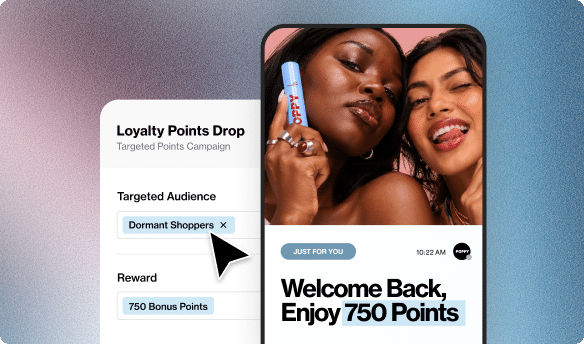
Use your data to identify members who haven’t made a purchase or earned points in a while. You can create a targeted re-engagement campaign through email or SMS. Offer them bonus points just for coming back, remind them of their current point balance, or announce new, exciting rewards they can earn.
Can a loyalty program work for subscription-based businesses?
Yes, and they can be extremely effective. For subscription businesses, loyalty is about more than just the next purchase; it’s about reducing churn. You can reward subscribers for their continued loyalty, offer points for adding new products to their recurring orders, or allow them to redeem points for discounts on their next subscription box.
How does a referral program fit into a loyalty strategy?
A referral program is a perfect component of a broader loyalty strategy. While loyalty programs focus on retaining existing customers, referrals use those same loyal customers to acquire new ones. Most top-tier loyalty platforms include a referral feature, allowing you to reward your best customers with points when they successfully refer a friend.
What kind of support should I expect from my loyalty platform provider?
You should expect more than just technical troubleshooting. A true partner provides strategic support. This includes a dedicated customer success manager who helps you design your program based on your business goals, guides you through the launch process, and provides ongoing analysis and recommendations to help you optimize performance over time.
How often should I update my loyalty program rewards?
It’s a good idea to review and refresh your rewards at least once or twice a year. This keeps the program exciting for long-time members. You can introduce new free products, add limited-time “surprise and delight” rewards, or run special campaigns around holidays or product launches. Listening to customer feedback can also give you great ideas for new rewards.











 Join a free demo, personalized to fit your needs