









Are you constantly chasing new customers just to maintain your sales figures? It’s a common challenge in eCommerce. A key metric, however, can shift your focus, optimize your spending, and help you build a more sustainable business: Customer Lifetime Value (LTV). Understanding LTV is not just about calculating numbers; it’s about unlocking the long-term profitability hidden within your existing customer base.
What exactly is Customer Lifetime Value (LTV)?
Before we explore the calculations, let’s clarify what LTV represents and why it’s a game-changer for online businesses.
At its core, Customer Lifetime Value (LTV) is a prediction of the total net profit your business can expect to make from a customer throughout their entire relationship with your brand. Think of it as the total worth of a customer over time, not just their spending on a single purchase.
While a single transaction shows what a customer bought today, LTV helps you see their potential future value. This forward-looking perspective is crucial because it acts as a compass, guiding your business decisions and helping to predict your company’s long-term health.
Why Should eCommerce Businesses Obsess Over LTV?
Understanding LTV can be revolutionary for an eCommerce store for several reasons:
- Boosts Profitability: Knowing which customers are likely to spend more over time allows you to focus your efforts on attracting and retaining these high-value individuals. This directly impacts your bottom line.
- Informs Marketing Spend: LTV helps you determine how much you can afford to spend to acquire a new customer, which is your Customer Acquisition Cost (CAC). If you know a specific customer type typically generates $500 in profit over their lifespan, spending $100 to acquire them is a sound investment. Without LTV, you are guessing on ad spend.
- Guides Customer Retention Strategies: LTV highlights the immense value of keeping customers engaged. When you see how much a loyal customer is worth, investing in retention strategies becomes an obvious priority.
- Improves Forecasting and Planning: Accurate LTV predictions provide a clearer picture of future revenue, making financial planning, inventory management, and overall business strategy more robust.
Key Components that Influence LTV
Several factors contribute to a customer’s lifetime value. Understanding these individual components is the first step toward calculating and improving your LTV:
- Average Purchase Value (APV): This is the average amount a customer spends each time they place an order. A higher APV directly boosts LTV.
- Purchase Frequency (PF): This measures how often a customer makes a purchase from you within a specific period. More frequent purchases mean a higher LTV.
- Customer Lifespan (CL): This is the length of time a customer continues to buy from your brand. The longer they stay active, the more valuable they become.
- Churn Rate: This is the percentage of customers who stop doing business with you over a given period. A high churn rate shortens the average customer lifespan and, in turn, lowers LTV.
Think of these components as strategic levers. If you can positively influence one or more of them—by encouraging customers to spend more per order, buy more often, or remain loyal longer—you will see a direct increase in your LTV.
In summary, LTV provides a long-term perspective on customer worth, helping eCommerce businesses make smarter decisions about marketing, retention, and overall strategy to drive sustainable profitability.
How to Calculate Customer Lifetime Value: Methods and Formulas
Now, let’s address the calculations. Determining LTV can range from simple to complex, depending on the data you have available and the accuracy you need. We’ll start with the foundational methods and build from there.
The Basic LTV Formula: A Starting Point
The most straightforward way to calculate LTV is by multiplying the average value of a sale, the frequency of customer purchases, and the average customer lifespan.
Formula: LTV=Average Purchase Value (APV)×Purchase Frequency (PF)×Customer Lifespan (CL)
Let’s break down how to find each component:
- Calculating Average Purchase Value (APV):
- How: Divide your total revenue over a specific period (e.g., one year) by the total number of orders during that same period.
- APV=Total Revenue/Number of Orders
- Example: If you generated $100,000 in revenue from 2,000 orders last year, your APV is 100,000/2,000=$50.
- Calculating Purchase Frequency (PF):
- How: Divide the total number of orders over a period by the number of unique customers who made those orders during that same period.
- PF=Total Orders/Number of Unique Customers
- Example: If those 2,000 orders came from 500 unique customers, your PF is 2,000 / 500 = 4 purchases per customer per year.
- Estimating Customer Lifespan (CL):
- How: This is often the most complex part of a simple calculation. You can estimate it based on historical data (e.g., the average number of years customers typically stay active). For newer businesses, you might start with an industry average or a conservative estimate (e.g., 1-3 years) and refine it as you gather more data. Another method is to calculate 1/Churn Rate. If your annual churn rate is 25% (0.25), your estimated customer lifespan is 1/0.25=4 years.
- Example: Let’s estimate your average customer lifespan to be 3 years.
Putting it all together (Basic LTV Example):
Using the figures above: LTV=$50 (APV)×4 (PF per year)×3 (CL in years) LTV=$600
This basic formula tells you that, on average, a customer is worth $600 in revenue to your business over their entire relationship with you.
A More Accurate LTV Formula: Incorporating Profit Margin
While the basic formula is a good start, it calculates LTV based on revenue. For truly actionable insights, you need to determine the profit a customer generates.
Formula: LTV=(Average Purchase Value×Purchase Frequency×Customer Lifespan)×Profit Margin
Why is this more insightful? Knowing the profit-based LTV helps you make much smarter decisions about how much you can afford to spend on acquiring and retaining customers.
To use this, you’ll need your Profit Margin:
- How: For each sale, your profit margin is (Revenue−Cost of Goods Sold)/Revenue. You would then find the average margin across all your products.
- Example: If your average product sells for $50 and the associated cost is $20, your profit per sale is $30. Your profit margin is ($50−$20)/$50=$30/$50=0.60 or 60%.
Putting It All Together (Profit-Based LTV Example):
Using our previous figures and a 60% profit margin: LTV=($50×4×3)×0.60 LTV=$600×0.60 LTV=$360
This $360 figure is a more realistic measure of a customer’s true value to your business.
Predictive LTV: Forecasting Future Value
While historical LTV calculations are useful, predictive LTV aims to forecast a customer’s future spending. This often involves more sophisticated statistical models and techniques like cohort analysis. A cohort is a group of customers acquired around the same time (e.g., all customers who made their first purchase in January).
By tracking the spending patterns of different cohorts, you can identify trends and make more accurate predictions about how new customers will likely behave. For instance, you might find that customers acquired during a holiday sale have a lower LTV than those acquired through organic search. Many modern analytics tools can help with these advanced calculations.
Segmenting LTV: Not All Customers Are Created Equal
Calculating a single, average LTV is a starting point, but the real power comes from segmenting your LTV. Different groups of customers behave differently and have different values.
Consider segmenting LTV by:
- Acquisition Channel: Do customers from Google Ads have a higher LTV than those from Facebook?
- Demographics: Are there differences in LTV based on age or location?
- First Product Purchased: Do customers who first buy Product A have a higher LTV than those who start with Product B?
By calculating LTV for different segments, you can identify your most valuable customer groups. This allows you to tailor marketing messages, focus retention efforts, and optimize ad spend.
Challenges in LTV Calculation
Calculating LTV is not without its hurdles:
- Data Accuracy: Your calculation is only as good as your data.
- Defining “Lifespan”: Deciding when a customer is “churned” can significantly impact the calculation.
- Discounts and Returns: These must be factored in for accuracy.
- Evolving Behavior: Past behavior is not always a perfect predictor of the future.
Despite these challenges, the strategic insights gained from calculating and tracking LTV are well worth the effort.
In essence, calculating LTV involves understanding average purchase value, purchase frequency, and customer lifespan, ideally factoring in profit margins. Segmenting LTV and acknowledging calculation challenges will lead to more actionable insights.
The LTV to CAC Ratio: A Measure of Spending Efficiency
Once you have a handle on your LTV, you must compare it against your Customer Acquisition Cost (CAC). This brings us to the LTV:CAC ratio.
Understanding Customer Acquisition Cost (CAC)
CAC is the total cost your business incurs to acquire a new customer.
How to Calculate CAC: $CAC = \text{Total Marketing & Sales Spend} / \text{Number of New Customers Acquired}$
Your “Total Marketing & Sales Spend” should include all related expenses, such as ad spend, team salaries, and software costs. For example, if you spent $10,000 on sales and marketing last quarter and acquired 100 new customers, your CAC is $100.
The Golden Ratio: What LTV:CAC Reveals
The LTV:CAC ratio compares a customer’s lifetime value to the cost of acquiring them. It is a powerful indicator of your business model’s long-term viability.
Formula: LTV:CAC Ratio=LTV/CAC
- A ratio less than 1:1 is unsustainable.
- A ratio of 1:1 means you are breaking even on acquisition costs.
- A ratio of 3:1 is often considered a healthy target.
- A ratio significantly higher than 3:1 might indicate you are underinvesting in marketing and missing growth opportunities.
Using our previous examples, if your profit-based LTV is $360 and your CAC is $100: LTV:CAC Ratio=$360/$100=3.6:1 This 3.6:1 ratio suggests a healthy and profitable business model.
Improving Your LTV:CAC Ratio
If your ratio is not where you want it to be, you can either increase LTV or decrease CAC. Regularly monitoring your LTV:CAC ratio, ideally segmented by marketing channel, allows you to make informed decisions about where to allocate your budget for the best returns.
In summary, the LTV:CAC ratio is a critical health metric for your business, indicating whether your customer acquisition efforts are profitable in the long run. Aiming for a ratio around 3:1 is a common benchmark.
Strategies to Boost Your Customer Lifetime Value
Now for the actionable part: how do you increase your LTV? It centers on creating better experiences, fostering loyalty, and encouraging customers to engage more deeply with your brand.
Enhancing Customer Retention: The Cornerstone of High LTV
Retaining an existing customer is significantly cheaper than acquiring a new one. When customers remain with your brand longer, they have more opportunities to make purchases, which directly boosts their lifetime value.
Excellent customer service is foundational, but proactive retention strategies are key.
Building Loyalty Programs That Work
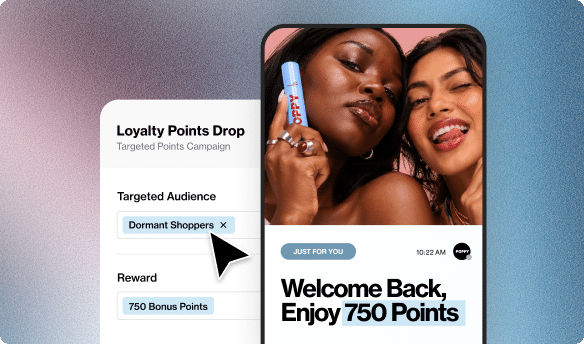
Loyalty programs are designed to reward repeat business. When customers feel appreciated and see tangible benefits for their loyalty, they are more likely to choose you over a competitor. Common programs include points-based systems and tiered or VIP programs that offer increasing levels of exclusivity.
The market has several platforms that help businesses manage these programs. Some merchants explore options from providers like Loyalty Lion, Smile, or Stamped.
For businesses looking to build strategic and customizable loyalty experiences, Yotpo Loyalty offers a robust solution. Yotpo enables brands to design programs that reward a wide range of valuable actions, such as writing reviews or referring friends. Features like customizable VIP tiers and over 20 ready-to-use reward campaigns give you the tools to create a program that aligns with your brand.
What often sets Yotpo Loyalty apart is its emphasis on a partnership approach, providing strategic guidance from eCommerce loyalty experts to help you launch and optimize a program that genuinely drives repeat purchases and increases customer engagement.
Personalized Communication with Email & SMS Marketing
Customers now expect communication that is relevant to their interests. Personalized email and SMS marketing campaigns, based on customer data, are powerful tools for driving repeat purchases—a key driver of LTV.
For email marketing, platforms like Attentive Email, Klaviyo Email, and Mailchimp offer various tools. In the SMS space, businesses might look into Attentive, Klaviyo SMS, or Postscript.
Yotpo Email & SMS provide an integrated solution designed to help eCommerce businesses leverage customer data for highly effective, personalized communication. With Yotpo, you can build sophisticated segments using a wealth of data from Yotpo Reviews and Loyalty to ensure your messages are incredibly relevant.

For SMS, Yotpo offers over 180 data points for precise segmentation. You can set up automated flows for critical touchpoints like cart abandonment, welcome series, and loyalty program milestones. By delivering timely, personalized messages across both email and SMS, Yotpo helps you recover lost sales, encourage repeat business, and keep your brand top-of-mind.
Increasing Average Order Value (AOV)
Getting customers to spend more with each order is another direct path to a higher LTV. Tactics include:
- Product Bundling: Offer complementary products together at a slight discount.
- Cross-Selling: Suggest related items during checkout.
- Upselling: Encourage the purchase of a more premium version of a product.
- Free Shipping Thresholds: Offer free shipping on orders over a certain value.
Leveraging Customer Feedback and Reviews
Online reviews build trust and social proof, influencing the purchasing decisions of new shoppers. Up to 98% of consumers read online reviews before buying a product. Beyond attracting new sales, this feedback is a goldmine for improving your products and services, leading to higher satisfaction and better LTV.
Several platforms exist for review collection, such as Okendo, Bazaarvoice, and Reviews.io.
Yotpo Reviews & UGC is engineered to help brands collect high-impact reviews, photos, and videos and strategically display this content to drive conversions. Yotpo focuses on the quality and relevance of reviews, enabling you to gather detailed, authentic feedback. This social proof can be showcased where it matters most—on product pages, in marketing campaigns, and even syndicated to major channels like Google Shopping and Facebook, amplifying its impact.
Optimizing the Post-Purchase Experience
The customer journey doesn’t end at checkout. The post-purchase phase is a critical opportunity to solidify the relationship and set the stage for future sales. Key elements include timely order updates, a hassle-free returns process, and proactive customer support.
Automated post-purchase flows, which can be set up using Yotpo Email & SMS, are perfect for managing this communication efficiently. These thoughtful touchpoints make customers feel valued and encourage them to return.
Yotpo: The Integrated Platform for Maximizing LTV
Actively improving LTV requires the right tools. Yotpo offers a suite of interconnected solutions designed to help eCommerce brands build lasting customer relationships and maximize LTV.
The Power of Synergy

While each Yotpo product is powerful on its own, their true strength is unlocked when they operate together. Imagine this:
- Review data from Yotpo Reviews can be used to create personalized segments in Yotpo Email and Yotpo SMS.
- A customer’s loyalty status in Yotpo Loyalty can trigger targeted messages offering exclusive rewards.
- User-generated photos collected through Yotpo Reviews can be incorporated into email campaigns, making them more trustworthy.
This holistic approach, where data flows seamlessly between solutions, creates a powerful engine for LTV growth.
Data-Driven Insights

Yotpo provides robust analytics across its products, giving you the data needed to understand customer behavior and refine your strategies. Yotpo SMS, for instance, offers RFM (Recency, Frequency, Monetary) segmentation to help you identify your most valuable customers for targeted campaigns.
Standalone Strength, Integrated Power
It is important to note that businesses can achieve significant results using Yotpo’s products individually. You might start with Yotpo Reviews or build a powerful engagement strategy with Yotpo Email. However, for businesses looking to master customer retention, the integrated power of the full Yotpo platform offers unparalleled advantages. The synergy creates a virtuous cycle that keeps customers engaged and spending more over the long haul.
Conclusion: LTV as Your North Star for Sustainable Growth
Sustainable eCommerce growth relies on maximizing the value of long-term customer relationships. Customer Lifetime Value (LTV) is a crucial guide for your marketing, product development, and customer service efforts.
By calculating LTV and implementing strategies to enhance it, businesses can become more resilient and profitable. This shift toward a relational mindset recognizes the lasting value of each customer interaction. Platforms like Yotpo facilitate these strategies by enabling review collection, loyalty program development, and personalized communication, ultimately driving higher LTV and stronger customer relationships.
FAQs
How often should I calculate LTV?
It’s good practice to calculate LTV quarterly or bi-annually. This allows you to track trends, see the impact of your strategies, and make timely adjustments.
What’s a “good” LTV?
There is no single “good” LTV, as it varies significantly by industry and business model. The more important metric is your LTV:CAC ratio. A common benchmark for a healthy ratio is 3:1, but the primary goal should be to improve your LTV over time.
Can LTV change over time for the same customer?
Absolutely. LTV is often a predictive metric, and a customer’s actual behavior can change. That’s why ongoing engagement and retention efforts are crucial to maintain or increase their potential value.
What are the biggest mistakes businesses make with LTV?
The most common mistakes include not calculating it at all, focusing only on revenue instead of profit, failing to track it over time, not segmenting it by customer groups, and ignoring the LTV:CAC ratio.
How can small businesses with limited data calculate LTV?
If you have limited historical data, start with simple LTV calculations. You can use industry averages to estimate customer lifespan and refine this as you collect more data. Focus on tracking Average Purchase Value and Purchase Frequency from your early customers; these are valuable leading indicators. The sooner you start tracking the components, the sooner you will build enough data for more accurate calculations.











 Join a free demo, personalized to fit your needs