


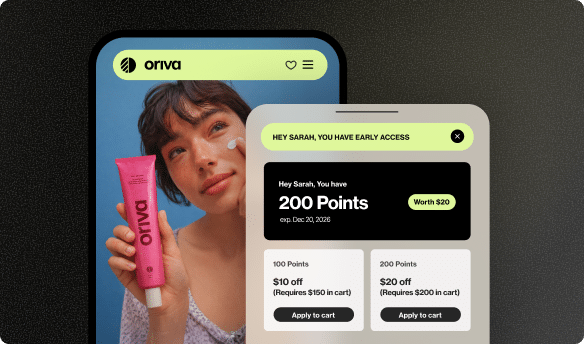







In an ecommerce landscape with rising acquisition costs and stiff competition, focusing on your existing customers is a critical business strategy. This is where loyalty programs really show their worth. A well-run loyalty program is much more than a discount system; it’s a powerful engine for sustainable growth. It can significantly boost customer lifetime value, increase repeat purchase rates, and turn happy shoppers into dedicated brand advocates. This guide will show you how to measure the real impact of your loyalty efforts and prove their return on investment.
Key Takeaways: Effectiveness of Loyalty Programs
- Retention is Profitable: Keeping existing customers is 5 to 25 times cheaper than acquiring new ones. A small 5% increase in retention can boost profits by 25% to 95%.
- Track the Right Metrics: To understand your program’s success, you need to measure key metrics like Customer Lifetime Value (CLV), Repeat Purchase Rate (RPR), and Average Order Value (AOV).
- Calculate a Clear ROI: A straightforward formula:
ROI = (Net Profit from Program – Cost of Program) / Cost of Program x 100
This can prove the financial value of your loyalty program to stakeholders.
- Choose the Right Partner: Selecting the right loyalty platform is crucial. Look for a provider that offers deep customization, robust analytics, and strategic guidance to help you build a program that aligns with your brand.
- Focus on the Customer Experience: A successful program is easy to join, offers compelling rewards, and communicates with members consistently. Personalization is key to making customers feel valued.
Understanding the True Value of Customer Loyalty
Before we dive into specific metrics, it’s important to grasp the fundamental value of customer loyalty. While getting new customers is part of any growth plan, your existing customer base is always your most valuable asset.
Why Retention Marketing is a Must
Retention marketing covers all the things you do to keep customers coming back. These are people who have already moved past the awareness stage. They’ve chosen your products and experienced your service. So, getting them to make a second or third purchase is much more efficient and cost-effective than converting a brand-new prospect.
Think about these key statistics:
- Profitability: A small 5% increase in customer retention can lead to a profit increase of anywhere from 25% to 95%.
- Cost-Effectiveness: Acquiring a new customer is five to 25 times more expensive than keeping an existing one.
- Spending Habits: Existing customers are 50% more likely to try new products and spend, on average, 31% more than new customers.
These numbers point to a clear conclusion: if your strategy ignores customer retention, you’re leaving a lot of money on the table.
The Role of Loyalty Programs in Modern Ecommerce
A formal loyalty program is an essential tool for any retention strategy. It gives you a structured way to recognize and reward customers for their business. This serves as a real expression of appreciation while encouraging them to buy from you again.
Modern loyalty programs have grown beyond simple rewards systems. They are now sophisticated marketing tools that can:
- Build an Emotional Connection: By creating a sense of exclusivity and recognition, these programs build a bond that goes beyond just a transaction.
- Gather Valuable Data: Loyalty programs generate a ton of first-party data on buying habits, product preferences, and engagement patterns.
- Drive Desired Behaviors: You can use rewards to encourage specific actions beyond just buying something, like writing a product review, following your brand on social media, or referring a friend.
In short, a loyalty program is a key strategy for creating a community of repeat customers who drive revenue and become vocal advocates for your brand.
Key Metrics for Measuring Loyalty Program Effectiveness
To accurately check your loyalty program’s performance, you have to track the right metrics. You need to look past surface-level data like membership numbers to understand how the program actually influences customer behavior and your bottom line.
Foundational Customer Metrics
These core metrics give you a baseline for understanding customer value and behavior, for both program members and non-members.
- Customer Lifetime Value (CLV): This is the total projected revenue a customer will generate throughout their relationship with your brand. A successful loyalty program should lead to a much higher CLV from its members.
- How to Calculate: (Average Purchase Value) x (Average Purchase Frequency) x (Average Customer Lifespan)
- Repeat Purchase Rate (RPR): This metric measures the percentage of customers who have made more than one purchase. It’s a direct indicator of customer loyalty.
- How to Calculate: (Number of Customers with More Than One Purchase) / (Total Number of Customers)
- Average Order Value (AOV): This is the average amount spent in each transaction. Loyalty programs can effectively increase AOV by offering incentives tied to spending thresholds.
- How to Calculate: (Total Revenue) / (Number of Orders)
- Purchase Frequency (PF): This metric tracks how often the average customer makes a purchase. An effective program should shorten the time between buys.
- How to Calculate: (Total Number of Orders) / (Total Number of Unique Customers)
Program-Specific Engagement Metrics
These metrics focus directly on how customers interact with your loyalty program. They give you insight into its appeal and how easy it is to use.
- Participation Rate: This is the percentage of your total customer base that has signed up for the loyalty program. It’s a primary indicator of the program’s initial appeal.
- How to Calculate: (Number of Loyalty Program Members) / (Total Number of Customers)
- Redemption Rate: This metric tracks the percentage of earned rewards that are actually used by members. A low redemption rate might mean the rewards aren’t compelling or the process is too complicated.
- How to Calculate: (Number of Points Redeemed) / (Number of Points Issued)
- Active Engagement Rate: This measures the percentage of loyalty members who are actively earning or redeeming points within a certain period (like 90 days). It separates the truly engaged members from the inactive ones.
Tracking this mix of metrics gives you a complete picture of your loyalty program’s health and its direct impact on your business.
Designing a High-Impact Loyalty Program with Yotpo

Understanding the metrics is the first step; building a program that delivers on them requires the right platform. The foundation of a successful program is flexibility, engagement, and data-driven insights.
Yotpo Loyalty positions itself as a strategic partner, not just a software provider. With years of specialized experience in ecommerce loyalty, the Yotpo team offers expert guidance to help you design a program that fits your unique business goals. This partnership approach is a key differentiator, providing you with an expert team to ensure your program is set up for success from day one.
Your brand is unique, and your loyalty program should feel like a natural extension of it. Yotpo Loyalty provides extensive flexibility and customization, allowing you to create a program that aligns perfectly with your brand identity. You can tailor every element, from reward structures and point-earning rules to VIP tiers and the user interface.
Powerful customization features include:
- Points for Actions: Encourage a wide range of behaviors beyond purchases, such as writing reviews, sharing on social media, or celebrating a birthday.
- Referral Programs: Turn your most loyal customers into brand ambassadors by rewarding them for bringing new business to your store.
- VIP Tiers: Create aspirational levels that unlock increasingly valuable perks, encouraging higher spending and long-term engagement.
- Flexible Point Expiration: Use strategic expiration policies to create urgency and encourage redemption without frustrating customers.
Effective management requires accurate measurement. Yotpo Loyalty includes a robust reporting and analytics suite that makes tracking key performance indicators simple. The intuitive dashboards let you monitor program performance, identify trends, and discover opportunities for improvement.

You can easily segment customer data to understand the behavior of different groups and measure the direct revenue impact of your loyalty initiatives. While Yotpo Loyalty is a powerful standalone solution, it also works seamlessly with Yotpo Reviews, allowing you to reward customers for leaving feedback and creating a more connected experience.
Calculating the ROI of Your Loyalty Program
Showing a clear return on investment (ROI) is essential for getting stakeholder support and justifying your program’s budget. The calculation itself is straightforward, but its accuracy depends on careful data collection.
The Basic ROI Formula
The standard formula for calculating ROI is:
ROI = (Net Profit from Program − Cost of Program) / Cost of Program × 100
- Net Profit from Program: The extra profit generated by loyalty members that is directly because of the program.
- Cost of Program: The total of all expenses to run the program.
Step-by-Step Guide to Calculating ROI
A precise ROI calculation requires a structured approach to tracking and analysis.
Step 1: Identify and Quantify Program Costs First, pull together all expenses associated with your loyalty program.
- Platform Fees: The subscription cost for your loyalty program software.
- Cost of Rewards: The value of redeemed rewards. For discounts, this is the margin you give up; for products, it’s the cost of goods sold (COGS).
- Marketing & Promotion Costs: Money spent on ads, dedicated email campaigns, or social media promotions for the program.
- Implementation & Design Costs: Any one-time fees for development or design work.
- Administrative Costs: The value of the time your team spends managing the program.
Step 2: Measure the Financial Uplift from the Program This is the most complex but most important part of the calculation. You have to isolate the additional profit generated by the loyalty program. The best way to do this is to compare the behavior of loyalty members against a control group of non-members.
Measure the following:
- Increased Purchase Frequency: Compare the average purchase frequency of loyalty members to that of non-members.
- Increased Average Order Value: Compare the AOV of loyalty members to that of non-members.
- Increased Customer Lifetime Value: Compare the CLV of a group of loyalty members to a similar group of non-members over the same period.
By measuring this uplift, you can figure out the incremental revenue generated by the program. Apply your average profit margin to this number to calculate the Net Profit from the Program.
Step 3: Completing the ROI Calculation With all the parts identified, you can now use the formula.
Example Scenario: Let’s assume the following figures for one year:
- Total Program Costs: $15,000 ($10,000 in platform fees + $5,000 in rewards)
- Incremental Revenue from Members: $100,000
- Average Profit Margin: 40%
Calculation:
- Net Profit from Program: $100,000 (Incremental Revenue) x 0.40 (Profit Margin) = $40,000
- ROI Calculation:
ROI = ($40,000 − $15,000) / $15,000 × 100
ROI = $25,000 / $15,000 × 100
ROI = 167%
An ROI of 167% gives you a clear, data-backed reason for the program’s value.
Beyond the Numbers: The Intangible Benefits
While a positive ROI is the main goal, loyalty programs also deliver significant intangible benefits that help your brand’s long-term health.
- Brand Advocacy: Loyal members are more likely to generate positive word-of-mouth marketing.
- User-Generated Content (UGC): Rewarding content creation gives you a valuable stream of authentic social proof.
- Customer Feedback: The program creates a direct channel to your most engaged customers for valuable insights.
- Reduced Price Sensitivity: Emotionally invested customers are often less swayed by competitor pricing.
These benefits, while hard to put a number on, are crucial for sustainable growth.
Best Practices for Maximizing Loyalty Program Effectiveness
A successful loyalty program needs active management and constant improvement. Following these best practices will help you get the best possible results.
Make It Easy to Join and Participate
The sign-up process must be smooth. Ask for minimal information to join and promote the program clearly on your website, during checkout, and in your emails. The program’s structure should be easy to understand, allowing members to quickly see how to earn points and what rewards they can get.
Offer Compelling and Relevant Rewards
The rewards you offer must be things your customers actually want. A balanced rewards catalog often works best.
Consider a mix of reward types:
- Transactional Rewards: Discounts, free shipping, or free products.
- Experiential Rewards: Early access to sales, invitations to exclusive events, or personalized services.
- Community-Based Rewards: Access to a private online group or a special tag on their customer profile.
Matching rewards with your brand and customer values is key to driving engagement.
Personalize the Experience
Use the data from your loyalty program to deliver personalized experiences. Segment members based on their purchase history, engagement level, or VIP status to send targeted offers and messages that connect with them on an individual level. Personalization shows you understand your customers and strengthens their connection to your brand.
Maintain Consistent and Strategic Communication
Keep your program top-of-mind with regular communication across multiple channels. Let members know about their point balances, new rewards, and exclusive promotions.
- Email: Use for regular updates and segmented campaigns.
- SMS: Great for time-sensitive notifications and reminders.
- On-Site Notifications: Use banners and pop-ups to promote the program to non-members and show relevant info to logged-in members.
A consistent communication strategy is vital for encouraging ongoing program participation.
Conclusion
A successful loyalty program is a powerful growth engine, not just an expense. By moving beyond basic rewards to focus on data, you can measure its true effectiveness. Tracking key metrics like CLV and calculating a clear ROI are no longer optional—they are essential for optimization. This data-driven approach allows you to build stronger, more profitable customer relationships that drive real business results. Ultimately, investing strategically in loyalty is investing in the sustainable, long-term success of your ecommerce brand, turning one-time buyers into lasting advocates who fuel your growth.
Frequently Asked Questions
How long does it take to see results from a loyalty program?
You can see initial engagement metrics, like the participation rate, within the first few weeks. However, measuring a meaningful impact on bigger indicators like Customer Lifetime Value (CLV) and Repeat Purchase Rate usually takes six to twelve months of data. Building loyalty is a long-term strategy, so it’s important to focus on sustained trends over time.
What are some common mistakes to avoid when creating a loyalty program?
Common mistakes include making the program too complicated, offering rewards that your customers don’t find valuable, and providing a poor user experience. Another big error is taking a “set it and forget it” approach; successful programs need constant promotion and tweaking. Finally, not integrating the program with other marketing channels creates a disconnected customer experience and leads to missed opportunities.
Can a loyalty program work for a business with a low purchase frequency?
Yes, loyalty programs can be very effective for these businesses. For brands that sell high-value items like furniture or luxury goods, the program can focus on rewarding engagement instead of just transactions. You can offer points for actions like writing detailed reviews, submitting photos, referring friends, or engaging with brand content. This approach keeps your brand top-of-mind and uses satisfied customers to build social proof.
How do I choose the right loyalty program provider?
You should look for a provider that acts as a strategic partner, offering deep ecommerce expertise that goes beyond just the software. Key things to look for include strong customization options, detailed analytics, and smooth integrations with your existing tech stack. It’s also critical to evaluate the level of strategic support they provide. A provider that offers dedicated customer success managers can give you the guidance needed to make sure your program is designed and optimized for maximum impact.
What is the difference between a loyalty program and a rewards program?
While the terms are often used interchangeably, a loyalty program is generally broader. A rewards program typically focuses only on transactional rewards (e.g., spend $100, get $10 off). A loyalty program aims to build a deeper, emotional connection by rewarding a wider range of engagement behaviors and often includes elements like VIP tiers and exclusive experiences.
Should my loyalty program be free to join?
For most ecommerce brands, yes. A free program removes any barrier to entry, maximizing your participation rate. The goal is to collect customer data and encourage repeat purchases from as many people as possible. Some brands use a paid or “premium” tier for their most dedicated customers, offering exceptional value in return for a fee, but the base program should almost always be free.
How do I promote my new loyalty program?
Promote it everywhere! Announce the launch with a dedicated email campaign and on social media. Use banners and pop-ups on your website to catch visitors’ attention. Add information about the program to your product pages and the checkout process. Also, be sure to train your customer service team to mention it during their interactions.
What kind of rewards should I offer?
The best rewards are a mix of things your customers find valuable. This can include discounts, free products, free shipping, early access to new collections, and exclusive content. It’s a good idea to survey your customers or look at your data to see what they might find most appealing. Offering a variety of rewards at different point levels keeps members engaged.
What are VIP tiers and should I use them?
VIP tiers are different levels within a loyalty program that customers can reach by spending more or engaging more frequently. Each tier unlocks better rewards and more exclusive perks. They are a great way to motivate customers to increase their spending and build a stronger long-term relationship with your most valuable shoppers.
How much does it cost to run a loyalty program?
Costs can vary widely. The main expenses are the platform subscription fees, the cost of the rewards themselves, and any marketing expenses to promote the program. It’s important to choose a platform that fits your budget and to carefully calculate the cost of rewards to ensure your program remains profitable.
How can I prevent loyalty program fraud?
Good loyalty software will have built-in fraud prevention tools. These can include monitoring for unusual account activity, limiting the number of points that can be earned in a certain period, and requiring email verification. It’s also important to have clear terms and conditions for your program that outline what is and isn’t allowed.
Can I change my loyalty program after it has launched?
Absolutely! In fact, you should plan on it. A good loyalty program evolves over time. Use your data and customer feedback to see what’s working and what’s not. You might want to add new rewards, adjust point-earning rules, or introduce new VIP tiers. Just be sure to communicate any major changes clearly to your members ahead of time.
What’s a good redemption rate for a loyalty program?
Industry benchmarks suggest that a redemption rate between 15% and 25% is considered healthy. If your rate is much lower, it could be a sign that your rewards aren’t compelling enough, the redemption process is too difficult, or you’re not reminding your members about their points. A high redemption rate shows that customers are engaged and find value in your program.











 Join a free demo, personalized to fit your needs