









It’s a well-established principle in e-commerce that customer acquisition is costly. When that cost is compared to the investment required to delight a current customer into returning, the financial argument becomes clear. This is where a well-designed loyalty scheme transforms from a marketing tactic into a powerful business asset. It is not merely about offering discounts; it is about building durable customer relationships.
This guide provides an in-depth analysis of the best loyalty schemes for 2026, detailing their mechanics and outlining a framework for building a successful program.
The Unmistakable Power of Customer Loyalty in E-commerce
Before exploring the architecture of loyalty programs, it is essential to solidify the strategic imperative behind them. In a crowded digital marketplace, competing on price is often an unsustainable strategy. Long-term, profitable growth is derived from building a resilient brand with a dedicated customer base.
Why Loyalty Matters More Than Ever
Industry analysis consistently shows that acquiring a new customer can cost five times more than retaining an existing one. This statistic highlights a crucial financial reality: investing in customers who have already demonstrated a preference for your brand is one of the most efficient decisions a business can make.
This focus on retention directly fuels your most important metric: Customer Lifetime Value (LTV). A loyal customer contributes far more than a second purchase; they become a recurring revenue source, often increasing their spend over time. They tend to be less price-sensitive and more receptive to new product launches. Furthermore, they evolve into brand advocates, generating powerful social proof through positive reviews and word-of-mouth referrals—a form of marketing that is both authentic and cost-effective.
What is a Loyalty Scheme, Really?
It is important to clarify a common misconception. A loyalty scheme is not simply a discount engine. At its core, it is a structured value exchange. Your brand offers tangible and intangible benefits; in return, the customer provides their repeat business and active engagement.
The ultimate objective is to cultivate an emotional connection that transcends the transactional nature of commerce. An effective loyalty program makes customers feel recognized, understood, and valued. It establishes the difference between a customer who buys from you based on momentary convenience and one who chooses you because they feel a sense of belonging to your brand’s community.
In essence, loyalty schemes are not cost centers; they are strategic investments in profitability, brand resilience, and sustainable growth.
The Anatomy of a Successful Loyalty Scheme: Core Models Explained
No single loyalty program structure is universally optimal. The most effective model is contingent on your product catalog, customer demographics, and overarching business goals. Understanding these core frameworks is the foundational step in selecting the right approach.
The Classic: Points-Based Loyalty Programs
This is the most conventional and widely understood type of loyalty program.
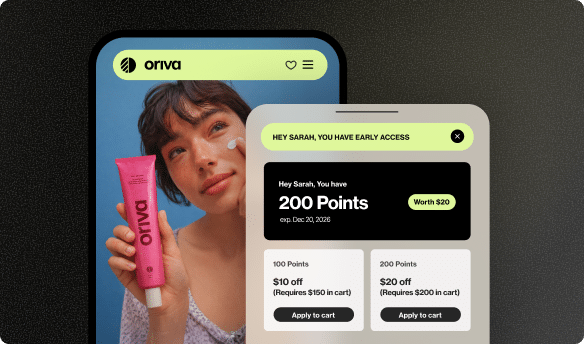
- How it works: Customers earn a predetermined number of points for every dollar spent and can earn additional points for other valuable actions, such as creating an account or writing a product review. These accumulated points can then be redeemed for various rewards, including discounts, free products, or exclusive merchandise.
- Pros: The model’s simplicity makes it easy for customers to understand and engage with. It directly incentivizes repeat purchases and offers the flexibility to reward a wide spectrum of behaviors.
- Cons: Without careful management, it can feel impersonal. There is also a potential for point inflation, which can devalue the program over time if not managed with strategic adjustments.
- Best for: Businesses characterized by frequent, smaller purchases, such as those in the cosmetics, food and beverage, or pet supply industries.
The A-List: Tiered Loyalty Programs
Tiered programs leverage the psychology of achievement and status, gamifying the customer experience to encourage higher levels of engagement.
- How it works: Customers are segmented into tiers based on their spending or engagement level over a defined period. As they increase their spend, they unlock higher tiers with progressively valuable benefits, such as enhanced discounts, early access to new collections, or dedicated customer support.
- Pros: Tiered systems are highly effective at creating a sense of aspiration and exclusivity. They validate a brand’s most valuable customers, which is critical for long-term retention.
- Cons: The program can be more complex to administer. It is imperative that the entry-level tier provides sufficient value to keep new members engaged and motivated to advance.
- Best for: Brands with a diverse customer base and a wide variance in spending habits, common in the fashion, travel, and consumer electronics sectors.
The VIP Club: Paid (Subscription) Loyalty Programs
This model requires a greater upfront customer commitment but can yield a deeply loyal and profitable customer segment.
- How it works: Customers pay a recurring fee (monthly or annually) to join the program. In return, they receive immediate and continuous access to a suite of premium benefits, such as complimentary shipping on all orders or members-only products.
- Pros: This approach cultivates a highly committed customer cohort that is less likely to patronize competitors. It also establishes a predictable, recurring revenue stream for the business.
- Cons: The value proposition must be exceptionally strong to justify the recurring cost. Customers must be able to clearly see how the benefits will quickly offset the subscription fee.
- Best for: Businesses where high-frequency purchasing is standard and the core benefits provide immediate and obvious value, with Amazon Prime being the classic example.
The Purpose-Driven: Value-Based Loyalty Programs
This modern approach to loyalty forges connections through shared values rather than purely transactional benefits.
- How it works: The program aligns customer rewards with the brand’s social or environmental mission. For example, customers might have the option to convert their points into a donation to a partner charity.
- Pros: This strategy builds a powerful, emotional bond that can transcend price and convenience. It resonates deeply with socially conscious consumers.
- Cons: The brand’s commitment to the cause must be authentic and woven into its corporate identity. An inauthentic effort can be perceived negatively and damage brand trust.
- Best for: Brands with a clear and genuine mission, such as those focused on sustainable manufacturing, ethical sourcing, or environmental conservation.
The All-in-One: Hybrid Loyalty Programs
A hybrid model integrates elements from multiple program types to create a highly tailored and flexible solution.
- How it works: This approach offers maximum customization. For instance, a brand could implement a tiered system where members earn points at varying rates based on their status, which can then be redeemed for either discounts or exclusive experiences.
- Pros: A hybrid program can be precisely engineered to incentivize specific behaviors across different customer segments.
- Cons: The primary risk is over-complication. If the program mechanics are not communicated with absolute clarity, customers may become confused and disengage.
- Best for: Mature brands with a sophisticated understanding of their customer segments that require a highly flexible system to achieve specific business outcomes.
The optimal model is determined by a thorough analysis of your business, customer base, and strategic objectives.
A Step-by-Step Framework for Building a High-Impact Loyalty Scheme
A successful loyalty program is not an accident; it is the outcome of a methodical, strategic process. This framework provides a roadmap for designing a scheme that delivers tangible results.
Step 1: Define Your Strategic Goals
Before designing any aspect of the program, you must define what success will look like. Ambiguous goals are ineffective. Utilize the SMART framework to establish clear objectives:
- Specific: Clearly state the intended outcome.
- Measurable: Define the key performance indicators (KPIs) for tracking progress.
- Achievable: Set a target that is challenging yet realistic.
- Relevant: Ensure the goal aligns with broader business objectives.
- Time-bound: Establish a clear timeline for achieving the goal.
Examples of well-defined goals:
- “Increase the customer retention rate by 10% within 12 months.”
- “Increase the average order value (AOV) of loyalty program members by 15% during Q4.”
- “Generate 1,000 new pieces of user-generated content (UGC) by incentivizing reviews with loyalty points by year-end.”
Step 2: Know Your Customer Inside and Out
A compelling program cannot be built without a deep understanding of its target audience. This requires moving beyond basic demographics to analyze customer behavior.
Begin by segmenting your audience. A small percentage of your customers likely generates a significant portion of your revenue. Your loyalty program must be structured to acknowledge these VIPs while motivating other customers to increase their engagement and spend.
To achieve this, data is essential. RFM analysis is a powerful model for segmenting customers based on:
- Recency: How recently did they purchase?
- Frequency: How often do they purchase?
- Monetary: How much have they spent?
Analyzing these segments allows you to answer critical questions that will inform your rewards strategy: What do your most valuable customers buy? What types of offers resonate with them? What are their primary motivations?
Step 3: Architecting Your Program’s Structure and Rewards
With clear goals and customer insights, you can begin to design the program’s architecture. This involves defining how members will earn rewards and what those rewards will be.
Choosing Earning Actions
While purchases are the primary earning mechanism, you should also incentivize other actions that provide value to your brand. Consider rewarding customers for:
- Making a purchase
- Creating a customer account
- Writing a product review
- Including a photo or video with their review
- Following your brand on social media channels
- Celebrating a birthday
- Referring a new customer
- Subscribing to your SMS or email marketing lists
Crafting Desirable Rewards
The rewards you offer must be sufficiently attractive to motivate customer action. A balanced rewards strategy often includes a mix of reward types.
- Transactional Rewards: These provide direct financial value and include discounts, free shipping, or complimentary products. They are effective but can be perceived as impersonal.
- Experiential Rewards: These rewards build a stronger emotional connection by offering status and exclusivity. Examples include early access to new products, invitations to members-only sales, or access to exclusive digital content. These make members feel like valued insiders.
Step 4: Branding and Naming Your Program
Your loyalty program is a product and requires thoughtful branding. It should not be an afterthought.
- Select a compelling name. A generic name like “Rewards Program” lacks impact. A name that reflects your brand’s identity, such as “The Insider’s Club” or “The Collective,” is more engaging.
- Create a dedicated landing page. This is a critical asset. The page must be visually appealing and clearly articulate the program’s benefits and mechanics. Use clean design and simple explanations to ensure the value proposition is understood immediately.
Step 5: Choosing the Right Technology Partner
A modern loyalty program involves numerous complexities. Manually tracking points, managing tiers, and delivering rewards at scale is not feasible. A robust technology platform is required to power the program.
When evaluating potential partners, consider the following criteria:
- Flexibility and Customization
- Integration Capabilities
- Data and Analytics Features
- Strategic Support and Expertise
Step 6: Launching and Promoting Your Loyalty Scheme
A program’s success is contingent on customer awareness. Plan a comprehensive, multi-channel launch campaign.
- Announce the program to your email and SMS subscriber lists.
- Promote it using on-site banners and pop-ups.
- Execute social media campaigns to drive enrollment.
- Incorporate program information into post-purchase communications.
The launch is merely the beginning. Consistent promotion is required to maintain engagement. Remind customers of their point balances, run special earning promotions, and highlight the advantages of advancing to the next tier.
A successful loyalty scheme is the product of a methodical process that integrates clear goals, customer insight, thoughtful design, and the right technology.
Executing Your Vision: How Yotpo Loyalty Brings Your Scheme to Life

Translating strategy into execution is where the right technology partner becomes indispensable. A platform should not just be a set of tools; it should be an enabler of your strategic vision.
Built for Strategic, Flexible Loyalty
Yotpo Loyalty is engineered to empower e-commerce brands to build sophisticated, customized loyalty and referral programs that measurably improve retention. The platform moves beyond simplistic, one-size-fits-all systems to provide the tools and expertise required to create a program that is a true extension of your brand.
- A Partnership Approach: The complexities of creating an effective loyalty program are significant. Yotpo functions as a strategic partner, providing access to eCommerce loyalty experts who offer guidance on program design, launch, and optimization. This ensures you are implementing a proven strategy, not just deploying software.
- Deep Customization and Flexibility: A brand’s loyalty program should be as unique as the brand itself. Yotpo’s platform offers the flexibility to build a highly customized experience. Brands can create unique VIP tiers, design a wide array of earning campaigns for specific customer segments, and craft a rewards experience that reinforces their brand identity.
- Dynamic Segmentation: Effective personalization is data-driven. Yotpo Loyalty allows brands to act on their customer insights by creating dynamic segments based on dozens of data points, including purchase history, review activity, and loyalty engagement. This enables highly targeted campaigns, such as offering exclusive rewards to VIPs or launching re-engagement campaigns for at-risk customers.
- Robust Reporting and Insights: To manage against your SMART goals, you need clear and accessible data. Yotpo provides comprehensive analytics that show precisely how your program is performing. You can track key metrics like redemption rate, points earned, and the ROI of specific campaigns, empowering you to make informed decisions and demonstrate the program’s value.
Navigating the Loyalty Platform Market
When searching for a technology partner, you will encounter a market with numerous options. It is crucial to understand this landscape and, more importantly, the criteria for selecting a solution that aligns with your strategic objectives.
Key Players in the Loyalty Space
The market for e-commerce loyalty solutions is mature, with several platforms offering tools to help brands build and manage their programs. This landscape includes specialized providers such as Loyalty Lion, Smile, Okendo, Stamped, and Rivo. Each platform presents its own approach, feature set, and target customer. Some focus on simplicity for smaller businesses, while others cater to the complex requirements of enterprise brands. The key is to focus on the capabilities that will drive your specific strategic goals rather than being distracted by an exhaustive list of features.
What to Look For: A Platform Evaluation Checklist
To conduct a thorough evaluation of potential loyalty platforms, use this checklist. It will help you look beyond marketing claims and assess which partner can best support your efforts to build a best-in-class program.
- Strategic Support: Does the provider offer dedicated support from loyalty experts? Will you have access to a customer success manager who can provide proactive guidance to help design and optimize your program for success?
- Customization Level: How much control do you have over the program’s branding, rules, and customer experience? Can you create fully unique VIP tiers and custom earning campaigns, or are you limited to pre-defined templates?
- Integration Ecosystem: How deeply and reliably does the platform connect with your other mission-critical technologies? Assess the quality of native integrations with your email, SMS, reviews, and helpdesk platforms.
- Data and Analytics: Does the platform provide clear, actionable insights or just raw data? Look for intuitive dashboards that track ROI, member behavior, and overall program health.
- Scalability and Reliability: Can the platform support your brand’s growth? Ensure it has a robust and reliable infrastructure designed to handle high-volume traffic and transactions, especially during peak seasons.
Choosing a technology partner is a significant long-term decision. Prioritize strategic capabilities, deep integration, and expert support over a superficial feature comparison.
Measuring What Matters: KPIs for Loyalty Program Success
To demonstrate the value of your loyalty program and optimize its performance, you must track the right Key Performance Indicators (KPIs). These can be organized into two categories: high-level business metrics and program-specific engagement metrics.
Top-Line Retention Metrics
These KPIs illustrate the program’s impact on your overall business health.
- Customer Retention Rate (CRR): This is the ultimate measure of loyalty, calculating the percentage of customers who continue to do business with you over time. An increasing CRR is a definitive indicator of a successful loyalty strategy.
- Repeat Purchase Rate: This metric tracks the percentage of your customers who have made two or more purchases. An effective loyalty program should produce a significant and measurable lift in this number.
- Customer Lifetime Value (LTV): This represents the total revenue a business can expect from an average customer over the entire duration of their relationship. You must track the LTV of loyalty members versus non-members to quantify the program’s direct financial impact.
Program-Specific Engagement Metrics
These KPIs provide insight into how customers are interacting with the loyalty program itself.
- Redemption Rate: This is the percentage of issued loyalty points that are spent by customers. A low redemption rate can indicate that your rewards are not compelling or that the redemption process is overly complex.
- Participation Rate: This measures the percentage of your total customer base enrolled in the loyalty program. It serves as a good indicator of your promotional effectiveness and the program’s initial appeal.
- Earning Velocity: This tracks the speed at which members accumulate points. Slow earning velocity may suggest that your earning rules are too restrictive or that you need to create more engagement opportunities.
Tracking a balanced set of retention and engagement KPIs is critical for understanding your program’s performance and making data-driven decisions for continuous improvement.
Common Pitfalls and How to Avoid Them
Even well-conceived loyalty programs can fail. By understanding these common pitfalls, you can proactively design your program for success.
- Pitfall 1: An Overly Complex Program
- The Problem: The rules for earning and redeeming points are confusing, or the benefits are unclear. This leads to customer confusion and program abandonment.
- The Solution: Prioritize simplicity. Use clear, concise language and a dedicated landing page with simple visuals to explain the program’s mechanics. The value proposition should be immediately apparent.
- Pitfall 2: Uninspiring Rewards
- The Problem: The rewards offered have a low perceived value or are too difficult to attain. If the effort required to earn a reward far exceeds its value, customers will not engage.
- The Solution: Offer a balanced portfolio of transactional and experiential rewards. More importantly, use customer data and surveys to understand what your customers genuinely value. A reward’s effectiveness is determined by the customer’s perception of its worth.
- Pitfall 3: The “Set It and Forget It” Mentality
- The Problem: The program is launched and then receives no ongoing promotional support. It becomes invisible to customers and its potential is never realized.
- The Solution: Treat your loyalty program as a continuous marketing initiative. Promote it consistently across all your channels. Run special promotions to maintain excitement and use your analytics to identify areas for optimization and evolution.
Avoid these common failures by prioritizing simplicity, delivering demonstrable value, and committing to ongoing promotion and data-driven optimization.
The Future of Loyalty: Trends for 2026 and Beyond
The customer loyalty landscape is in a constant state of evolution. To maintain a competitive advantage, brands must understand the trends shaping customer expectations.
- Hyper-Personalization: Generic, one-size-fits-all programs are being replaced by data-driven, one-to-one personalization. The future lies in offering tailored rewards based on an individual’s Browse and purchase history and communicating in a way that is uniquely relevant.
- Experiential and Community-Based Rewards: As products become increasingly commoditized, experiences emerge as a key brand differentiator. The most innovative programs are shifting focus from discounts to rewards that offer exclusive access and status, such as invitations to special events or membership in a private brand community.
- Omnichannel Loyalty: Customers expect a seamless and consistent loyalty experience across all touchpoints, whether they are shopping online, in a physical store, or on a mobile app. Their points, status, and benefits must be accessible and coherent everywhere.
- AI-Driven Insights: Artificial intelligence is set to revolutionize loyalty marketing. AI can analyze vast datasets to identify complex behavioral patterns, predict future actions, and recommend the optimal reward or message for each customer at the ideal moment.
The future of loyalty is more personalized, experiential, and seamlessly integrated across every facet of the customer journey.
Conclusion
In the competitive e-commerce landscape of 2026, a high-impact loyalty scheme is not an optional add-on; it is a core component of a sustainable business strategy. It serves as your most effective defense against commoditization and your most reliable engine for profitable growth.
Building a program that delivers results requires more than just software. It demands a strategic framework built on clear objectives and deep customer insight. It requires a thoughtful design that balances simplicity with compelling value. Finally, it depends on selecting a technology partner that provides not just features, but also flexibility, deep integration, and expert strategic guidance. By investing in loyalty, you are investing in relationships and building a community of advocates who will champion your brand for years to come.
FAQs
What’s the difference between a loyalty program and a rewards program?
While the terms are often used interchangeably, there is a key strategic distinction. A “rewards program” can be purely transactional, focused on a simple quid pro quo for a specific action. A true “loyalty scheme” is more comprehensive, aiming to build a long-term, emotional connection through a strategic blend of rewards, status, community, and shared values.
How much does a loyalty program cost to set up?
The cost to implement a loyalty program can vary widely, depending on the sophistication of the technology platform, the value of the rewards offered, and associated marketing expenses. It is most accurately viewed as an investment with a measurable return, which can be quantified by tracking increases in key metrics like Customer Lifetime Value (LTV) and customer retention.
Can a loyalty program work for a business with infrequent purchases?
Yes. For businesses whose customers purchase infrequently, a traditional points-for-purchase model may be less effective. The strategy should shift to a tiered or value-based program that rewards non-transactional engagement. Incentivize actions like writing detailed reviews, referring new customers, or engaging with brand content. The objective is to maintain brand salience so that when the customer is ready for their next purchase, your brand is their first choice.
How long does it take to see results from a new loyalty scheme?
Certain metrics, such as program participation and engagement rates, will be visible almost immediately after launch. However, the core strategic outcomes—a statistically significant increase in the overall customer retention rate or Customer Lifetime Value—are part of a long-term strategy. It typically requires 6 to 12 months of consistent operation and promotion to demonstrate a clear, measurable impact on these fundamental business metrics.











 Join a free demo, personalized to fit your needs