









Deciding to move your eCommerce business to a new platform is a huge step. It’s both exciting and, let’s be honest, a little terrifying.
A platform migration is a complex project with numerous moving parts, and the stakes are high.
Done right, it can unlock unprecedented growth, streamline your operations, and dramatically improve your customer experience. Done wrong, it can lead to lost data, broken SEO, and frustrated customers.
But you don’t have to go it alone.
Think of this guide as your complete, step-by-step playbook for a successful Shopify migration. We’ve broken down the entire process into three manageable phases—from pre-migration planning to post-launch optimization.
We’ll cover the critical technical steps, the strategic decisions you need to make, and how to protect your most valuable asset through it all: your hard-won customer relationships.
Why Migrate to Shopify? A Quick Look at the Opportunity
Before we dive into the “how,” let’s briefly touch on the “why.”
If you’re reading this, you likely already have your reasons for switching, but it’s worth reaffirming the advantages you’re working toward.
Brands migrate for concrete reasons; in fact, a Deloitte survey found that 67% of retailers cited ongoing issues with outdated platforms as a key reason for investing in new eCommerce solutions.
- Scalability & Performance: Shopify’s robust infrastructure is built to handle growth. This is particularly critical, considering that 53% of mobile site visits are abandoned if a page takes longer than three seconds to load. A platform that is slow or can’t handle traffic spikes is a direct threat to your revenue.
- Ease of Use: Shopify is renowned for its intuitive interface. It empowers your team to manage products and run campaigns without needing a developer for every minor change.
- The App Ecosystem: With thousands of apps, you can build a best-in-class tech stack. This matters because 43% of private companies now cite increasing AI use as a top business priority, and Shopify’s ecosystem provides access to these cutting-edge tools.
With a 30% market share of e-commerce platforms in the United States and powering nearly 5 million active websites worldwide, Shopify has proven itself to be a platform built for modern commerce.
A migration is your golden opportunity not only to move to a better platform but also to strategically upgrade every facet of your business.
Phase 1: Pre-Migration Planning & Preparation (The Blueprint)
This is, without a doubt, the most crucial phase of the entire process.
The work you do here will determine whether your migration is a smooth transition or a chaotic scramble. Meticulous planning is your best defense against unexpected problems.
Task 1: Comprehensive Data Audit & Backup
Before you touch a single thing, you need a complete inventory of what needs to be moved. Your data is the lifeblood of your business. This step is crucial because, without proper management, 43% of companies experience disruptions or data loss during migration.
Your Core Data Sets:
- Product Data: All SKUs, product titles, descriptions, images, videos, meta descriptions, pricing, and inventory levels.
- Customer Data: Customer names, contact information, shipping and billing addresses, and order history.
- Order Data: A complete record of all historical orders, including transaction status, items purchased, and customer information.
Export all data from your current platform and create multiple secure backups. This is your safety net. No matter what happens during the migration, you will have a clean copy of your original data.
Task 2: Protecting Your SEO Rankings
One of the most significant risks in any platform migration is losing the valuable SEO equity you’ve spent years building. A drop in your Google rankings can lead to a substantial loss of organic traffic and revenue.
- Benchmark Your Performance: Before you start, take a detailed snapshot of your current SEO health. Record your rankings for your top keywords, your average organic traffic, and your top-performing pages. This will be your baseline for measuring success after the migration.
- URL Mapping: Your product and category pages will likely have a different URL structure on Shopify. You need to create a spreadsheet that maps every old URL to its new corresponding URL on Shopify. This is a tedious but critical task.
- The 301 Redirect Strategy: That URL map will be used to create 301 redirects. A 301 redirect is a permanent instruction that tells search engines a page has moved. When implemented correctly, a 301 redirect transfers the vast majority of SEO value (approximately 90-99%) from the old URL to the new one, thereby preserving your hard-earned rankings.
Task 3: Auditing Your Apps and Finding Shopify Equivalents
Your current platform relies on a set of apps for key functionalities. Now is the time to audit every single one. Ask yourself:
- What function does this app serve?
- Is it critical to our business?
- Is there a better, more modern alternative in the Shopify App Store?
This is not just a “lift and shift” exercise. This is your chance to level up your tech stack. Five of your old, clunky apps can be replaced by one powerful, integrated platform.
The Critical Task of Migrating Customer Relationship Data
This is a sub-task that deserves its section because it’s where many migrations go wrong. Your most valuable data isn’t just your product catalog; it’s the data that defines your customer relationships. We’re talking about:
- Product Reviews: All of that priceless social proof. The value here is immense; data shows that the probability of a product being purchased with just five reviews is 270% higher than the same product with no reviews.
- Loyalty & Rewards Data: Your customers’ hard-earned points balances and VIP tiers. Losing this is a betrayal of trust. And financially, it’s a disaster, since a mere 5% improvement in customer retention can increase profits by at least 25%.
- Email & SMS Subscriber Lists: Your direct line of communication to your audience.
Losing this data is catastrophic.
It’s like starting your customer relationships from scratch. You can’t ask your loyal VIP customers to re-earn their status or tell your customers that the hundreds of reviews they wrote have vanished.
This is where a unified platform like Yotpo becomes a critical part of your migration strategy.
Instead of trying to find separate Shopify apps for reviews, loyalty, and SMS, and then figuring out how to migrate your data to each one, you can consolidate these core functions onto a single platform designed for this exact scenario.
Yotpo’s dedicated team of migration experts helps you seamlessly transfer your most valuable customer data. This includes your existing product reviews, your complete loyalty program data (including customer points balances and VIP history), and your SMS and email subscriber lists with their full engagement history.
By consolidating these functions onto the Yotpo platform during your migration, you’re doing more than just moving data. You’re setting up your new Shopify store for immediate post-launch success with a fully integrated retention marketing engine.
Your customer data won’t be trapped in separate silos; it will be unified and ready to power sophisticated, personalized marketing from day one.
Phase 2: The Migration Process (The Heavy Lifting)
With your blueprint in hand, it’s time to start the technical work of building your new store. This phase is all about execution and attention to detail.
Step 1: Data Migration – Products, Customers, and Orders
Now, you’ll move the core data sets you audited in Phase 1. Depending on your technical comfort level and budget, you have several options available.
- Shopify’s Native Tools: Shopify offers a free Store Importer app that can migrate data from many popular platforms. This is a good starting point for simpler stores.
- Third-Party Migration Apps: The Shopify App Store offers several apps that specialize in data migration. Services like Cart2Cart and LitExtension are systems that facilitate automated data transfer between different eCommerce platforms.
- Hiring an Expert: For large or complex stores, hiring a Shopify migration expert or agency is often the safest and most efficient path. They’ve handled hundreds of migrations and know how to avoid the common pitfalls.
Step 2: Setting Up Your Shopify Store’s Core Settings
This is the foundational setup of your new store. Go through each setting meticulously.
- Payment Gateways: Set up Shopify Payments and any other payment options you wish to offer, such as PayPal or Shop Pay.
- Shipping Rates & Zones: Configure all of your shipping rules, rates, and zones. This is a common area for errors, so be sure to double-check everything.
- Tax Settings: Ensure your tax settings are correct for all the regions you sell to.
- Store Policies: Add your privacy policy, terms of service, shipping policy, and return policy pages.
- Domain Setup: Add your domain to your Shopify admin, but don’t point it there yet. We’ll do that at the very end.
Step 3: Installing and Configuring Your Apps
Now, install the apps you selected during Phase 1 of your audit. This isn’t just about clicking “install.” Each app needs to be configured correctly.
This is when you will work with the support teams for your key platforms. For example, you will finalize the migration of your reviews and loyalty data with the Yotpo team to ensure everything is in place before you go live.
This ensures that when you flip the switch, your product pages are immediately populated with social proof and your loyalty program is ready for your customers.
Step 4: Implementing 301 Redirects
Use the URL map you created in Phase 1 to set up your 301 redirects in Shopify. You can do this manually in the Navigation section of your Shopify admin or use an app to help you manage it in bulk. Do not skip this step. It is essential for preserving your SEO traffic.
Step 5: Rigorous Testing Before Go-Live
Before announcing your new site to the world, you need to test it thoroughly. Pretend you are a customer and try to break things.
- Place Test Orders: Complete the entire checkout process using both real and test payment gateways.
- Test on All Devices: How does the site look and function on a desktop, a tablet, and multiple types of smartphones?
- Check All Links: Click on every link in your navigation, your footer, and on your key pages to ensure they go to the right place.
- Test Your Forms: Test your contact forms and, most importantly, your email and SMS sign-up forms.
- Review Your Migrated Data: Spot-check a few dozen products, customers, and orders to ensure the data migrated correctly.
Phase 3: Post-Launch & Optimization (The Growth Phase)
You’ve planned, you’ve built, and you’ve tested. The work isn’t over, but the most stressful part is behind you. This final phase involves launching your new site and activating the new growth levers you’ve implemented.
Task 1: Point Your Domain and Go Live!
This is the moment of truth.
It’s time to update your DNS records to point your domain name to Shopify’s servers. Once the changes propagate (which can take anywhere from a few minutes to a few hours), your new Shopify store will be live to the world.
Task 2: Post-Launch SEO Health Check
As soon as your site is live, submit your new sitemap to Google Search Console.
For the next few days and weeks, keep a close eye on your GSC account. Watch for any crawl errors or 404 (“Page Not Found”) errors and fix them immediately. Monitor your rankings and organic traffic to ensure everything is holding steady.
Task 3: Communicate With Your Customers
Your loyal customers need to know about your new and improved store.
- Send a “We’ve Moved!” Campaign: Send an email to your entire list announcing the launch of the new site. Highlight the benefits for them—a faster experience, easier checkout, etc.
- Customer Account Reactivation: For security reasons, customer passwords cannot be migrated. Customers will need to reactivate their accounts on your new site. Send a dedicated email explaining the simple process.
Task 4: Activate Your New Retention Engine
This is the payoff for all your hard work. Now that you’ve migrated your valuable customer data to a unified platform, you can immediately leverage it. It’s crucial to focus on these existing customers, especially since they spend 67% more on average than new customers.
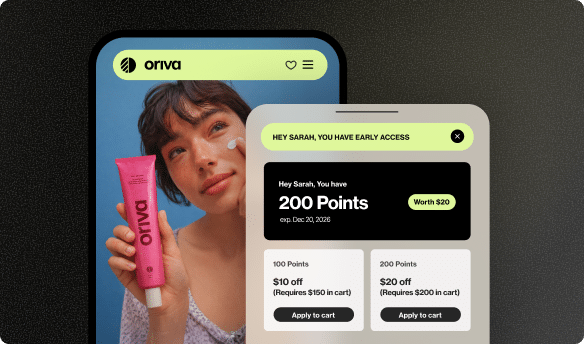
- Launch a “Welcome to Our New Home” Loyalty Campaign: Send a segmented email using your migrated Yotpo Loyalty data. The message can welcome your customers to the new site and delight them by showing their current points balance, reminding them that none of their hard-earned rewards were lost in the move.
- Activate Your Automated SMS & Email Flows: Turn on your abandoned cart, welcome series, and review request flows in Yotpo. Since you’ve already migrated your data, these flows will be smarter from the start, powered by a comprehensive historical view of your customer relationships.
Task 5: Analyze, Learn, and Optimize
Your new Shopify store is a powerful platform for growth. Keep a close eye on your key metrics:
- Site Speed
- Conversion Rate
- Average Order Value
- Customer Lifetime Value
Use this data to continuously test and optimize your site, campaigns, and overall strategy.
Conclusion: Your Migration Is a New Beginning
A successful eCommerce migration is about so much more than just changing platforms. It’s a strategic opportunity to rethink, rebuild, and upgrade every system that powers your business. It’s a new beginning.
Meticulous planning is the key to navigating the technical complexities, but the accurate measure of success is what happens after you go live.
The goal is not just to have a new website; it’s to have a more powerful engine for growth.
By protecting your most valuable assets—your customer relationships and the data that defines them—you ensure that you don’t lose a step during the transition. A platform like Yotpo can be a critical partner in this process, providing the tools and expertise to not only preserve your reviews, loyalty, and subscriber data but to unify it in a way that unlocks new marketing capabilities from day one on your new site.
Your migration isn’t the finish line; it’s the starting block for your next phase of growth.












 Join a free demo, personalized to fit your needs