








Rising customer acquisition costs are squeezing ecommerce margins, and that’s forcing brands to rethink how they sustain growth. Transactional marketing alone doesn’t guarantee repeat visits anymore. Retention has become the real survival tool for digital storefronts.
Securing customer lifetime value takes more than a discount code here and there. It takes a deliberate strategy that turns casual buyers into people who actually advocate for your brand.
Finding the right loyalty rewards program software is the first step toward building a repeat-buy loop that actually works.
Key Takeaways
- Marketers are responding to rising acquisition costs by putting a majority of marketing budgets into loyalty and CRM channels.
- Loyalty programs prove their value fast: a majority of program owners report positive ROI, with an average 5.3x return on investment.
- Existing customers are the backbone of a healthy brand, generating 60% of DTC revenue on average.
- Customer experience matters across every age group. 77% of Millennials want a fast, efficient digital loyalty experience.
- A personalized, multi-tier loyalty structure helps brands grow customer lifetime value without leaning on margin-eroding discount codes.
What a Loyalty Rewards Program Actually Does
The shift in retention economics isn’t gradual. It’s a real change in how brands survive. Marketing teams used to buy growth through ads; now they have to earn it through relationships. Brands that leave their customer journey unguided watch their acquisition metrics get worse every quarter.
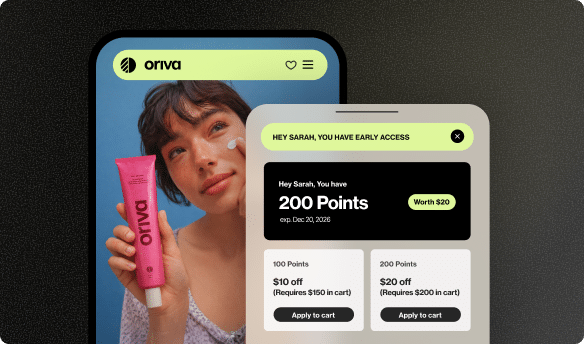
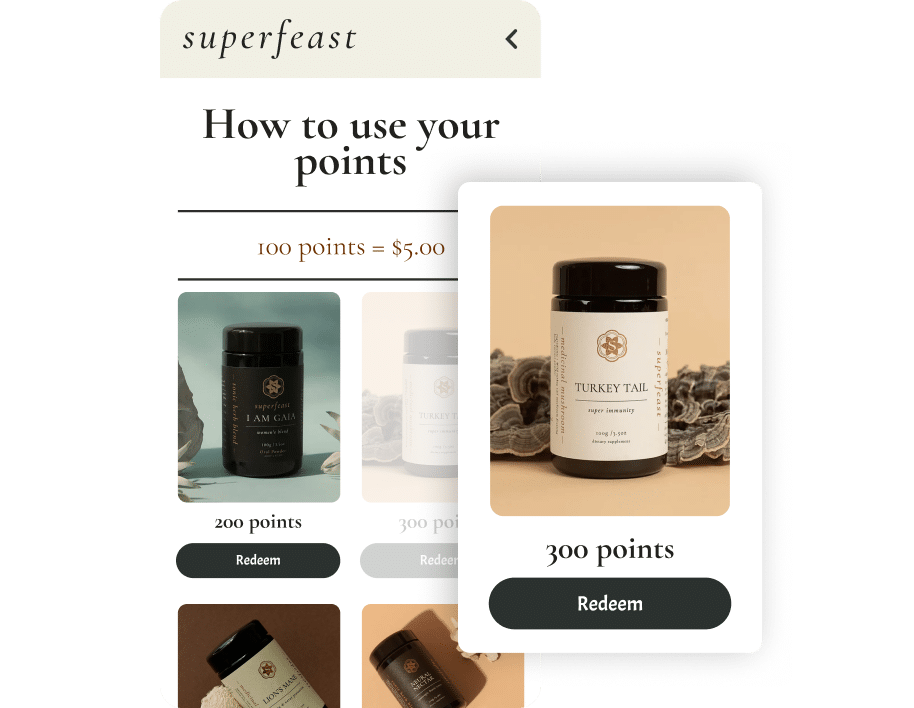
A structured loyalty program protects margins while it secures future sales, turning one-time purchasers into a community of people who keep coming back. At its core, a loyalty rewards platform runs on a few connected mechanics: points customers earn for purchases and other actions, tiers that unlock better perks as customers spend more, referral tools that turn happy customers into a acquisition channel, and a redemption experience that makes cashing in points feel easy rather than like a chore.
Picture a VP of Ecommerce staring at a CAC chart that keeps climbing while retention numbers barely move. New traffic is getting more expensive every quarter, and generic rewards programs that shoppers ignore aren’t going to fix that. Personalization is what makes the difference between a program people forget and one they actually use.
The data backs this up. Loyal shoppers convert at a 60-70% conversion rate, while first-time visitors convert at a fraction of that. Once you get someone to buy a second time, the momentum tends to build on its own: after a first purchase there’s only about a 27% chance a shopper returns, but once they make that second purchase, the odds of a third jump to 54%. Businesses that maintain a 40% repeat customer rate see 50% more revenue than brands stuck below that threshold, and since repeat customers spend 3x more per visit, building a predictable repeat-purchase engine isn’t optional anymore. It’s how healthy ecommerce brands actually grow.
What to Look for in Loyalty Rewards Program Software
Picking a platform means weighing technical capability against your team’s actual bandwidth. Before you sit through a single demo, it helps to know what separates a program that moves the needle from one that just sits on your site collecting dust. Here’s what to look for.
Can you actually make it look and feel like your brand?
Look for a platform that lets you build fully branded, customized on-site loyalty pages that match your aesthetic without needing a developer for every tweak. Generic, templated widgets are fine for a quick launch, but they tend to feel bolted-on rather than native to your storefront. The more your rewards page looks like an extension of your brand instead of a plugin, the more shoppers trust it enough to engage.
Does it connect to the rest of your customer data?
A loyalty platform shouldn’t operate in a silo. Look for first-party data integration with your other retention channels, especially review engines and subscription systems, so you get a single, complete customer profile instead of three disconnected ones. When your loyalty data talks to your reviews data, you can do things like award points automatically for a review submission, which compounds engagement without extra manual work.
Will you get real strategic support, or just a login?
Some vendors hand you software and leave you to figure out the rest. Others pair the platform with dedicated people who help you plan, analyze, and refine the program over time. If your team is small or new to loyalty, planned guidance from real experts is worth more than a longer feature list. Ask directly during evaluation: who do I call when a campaign underperforms?
Can you trust the numbers in your dashboard?
Reporting transparency matters more than people expect going in. Some platforms inflate results with soft metrics that make the program look better than it’s actually performing. Look for dashboards that show real customer trends and retention data instead, broken out by the metrics that actually matter: points redemption rate, VIP tier performance, referral activity, and member share of revenue.
Will it scale past Shopify-only, single-channel setups?
Multi-channel scalability is easy to ignore when you’re small and painful to discover you’re missing once you’ve outgrown your platform. Ask whether the software can scale across multiple geographies, headless architectures, and offline retail touchpoints as your brand grows. Switching loyalty providers mid-growth is disruptive, expensive, and it resets the customer trust you spent years building.
The Features Worth Weighing Before You Commit
Once you’ve got your selection criteria straight, the next step is understanding the individual features that actually drive retention. Here’s what to dig into during a demo, and why each one matters.
Points architecture
- Tracks purchases, reviews, referrals, social shares, and other actions you define as point-earning events.
- Lets you set custom earning rules instead of a single flat rate for every action.
- Handles redemption in-cart, so customers can apply points at checkout instead of hunting for a separate redemption page.
A flexible points architecture is the foundation everything else sits on. If your platform only supports one earning rule (say, a flat rate per dollar spent), you lose the ability to reward the specific behaviors that matter most to your business, like reviews or referrals.
Tiers and VIP structure
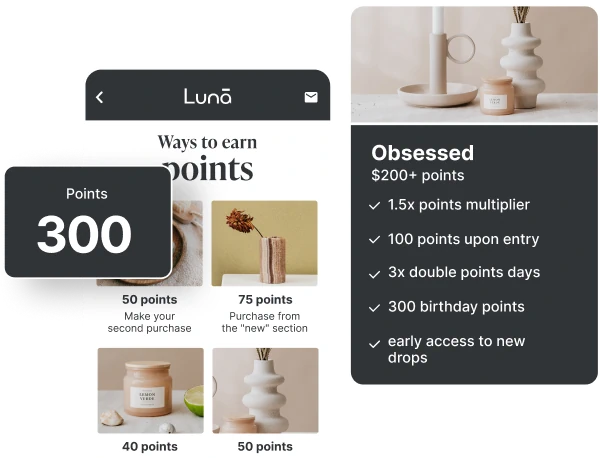
- Builds progressive VIP tiers with escalating perks and early-access privileges.
- Lets you name tiers using your own brand’s vocabulary instead of generic Gold, Silver, Bronze labels.
- Flags high-value customers automatically as they cross spend thresholds.
Multi-tier structures gamify the shopping experience. Higher tiers with exclusive perks tend to build stronger emotional attachment and drive more spending than a flat, one-size-fits-all points program.
Referrals
- Sends referral invites to existing members with a trackable link or code.
- Rewards both the referrer and the new customer, not just one side of the transaction.
- Routes referral data back into the same customer profile as points and purchase history.
Referral programs turn your best customers into an acquisition channel, which helps lower the customer acquisition costs that are squeezing margins in the first place.
Integrations with reviews, SMS, email, and subscriptions
- Connects to review platforms so customers earn points automatically for submitting feedback.
- Feeds loyalty data into your SMS and email tools for targeted, tier-based campaigns.
- Syncs with subscription systems so recurring purchases count toward loyalty status.
Integrated platforms turn loyalty into more than a standalone widget. They fold it into everything else your retention stack is already doing, which means less manual work reconciling data across five different tools.
Analytics and reporting
- Shows you rewards activity, VIP tier movement, referral performance, points velocity, and revenue attribution in separate, specific views.
- Pulls real customer trend data instead of inflated engagement metrics.
- Helps you spot which campaigns are actually driving repeat purchases versus which ones are just noise.
You can’t optimize what you can’t measure accurately. A platform with genuinely transparent reporting lets your team make decisions based on what’s actually happening, not on a dashboard designed to look impressive in a board meeting.
Headless and multi-channel support
- Connects to custom storefronts and headless commerce builds through developer APIs and SDKs.
- Keeps data synchronized across web, mobile, and offline retail touchpoints.
- Supports brands expanding beyond a single sales channel without losing loyalty history.
If you’re planning to expand beyond a single storefront (new markets, a headless rebuild, in-store retail) your loyalty platform needs to keep up. Picking a Shopify-only tool early can mean a painful migration later.
Points-liability management
Unredeemed points are a real financial liability sitting on your balance sheet, not just a marketing footnote. As a program grows, so does the pile of points customers have earned but haven’t cashed in, and finance teams eventually start asking questions about that number.
Look for a platform (and a strategy partner) that helps you design active campaigns encouraging timely redemption, so that liability doesn’t quietly balloon as your program scales. A points-expiration policy, well-timed reminder emails, and clear redemption pathways all help keep that number in check without making customers feel like their rewards were taken away.
How Yotpo Loyalty Fits
Yotpo Loyalty was originally built for high-growth merchants and has grown into a mature loyalty platform built to maximize customer lifetime value. The team has been building loyalty solutions since 2016, which means deep experience across a wide range of business models and industries, not just one narrow use case.
Software alone isn’t enough to move retention metrics. That’s the thinking behind Yotpo’s support model: dedicated Customer Success Managers who specialize in retention strategy, acting as an extension of your own marketing team rather than a support ticket queue. During 2024 alone, that team launched 24,000 programs and supported 4,600 global brands.
On the product side, Yotpo Loyalty covers the ground this guide just walked through. Multi-tier VIP structures with progressive benefits and early-access perks. In-cart points redemption, so customers apply rewards without leaving checkout. Dynamic segmentation that maps personalized customer journeys instead of treating every shopper the same. And five separate analytics dashboards tracking rewards, VIP tiers, referrals, points, and generated revenue, so your team gets a clear read on performance without inflated numbers dressing up a weak campaign.
Key features
- Builds a customizable points architecture with a wide range of earning rule configurations.
- Runs multi-tier VIP programs with progressive benefits and exclusive early-access perks.
- Pairs every account with a dedicated Customer Success Manager who specializes in ecommerce retention strategy.
- Shows five separate reporting views for transparent, reliable retention analytics.
- Connects to Yotpo Reviews so customers automatically earn loyalty points for submitting feedback.
On pricing, Yotpo Loyalty runs on custom enterprise pricing based on order volume and program depth, with a free plan available for early-stage brands that want to establish baseline rewards before scaling up. That combination (real technology plus real human strategy) is why scaling DTC brands keep choosing Yotpo Loyalty as their retention partner rather than just another tool bolted onto checkout.
How to Choose the Right Loyalty Software for Your Brand
The commercial case is simple: loyalty software isn’t just a point-accrual system. It protects margins and secures future demand. Your decision should match your brand’s growth phase and internal resources, not just the flashiest demo you sat through.
If your brand is earlier-stage, with lower annual GMV, a fast, plug-and-play setup with minimal upkeep might genuinely be the right call for now. You can get a program live quickly, though you should expect to outgrow a bare-bones setup as volume scales and your retention needs get more specific.
For scaling DTC brands with meaningful GMV, your loyalty program has to be a core differentiator, not an afterthought. At that scale, generic templates and unguided strategy get expensive fast. You need deep reporting to track points velocity, flexible API configurations for headless or custom checkouts, and a planned ecommerce partner to help optimize campaign structures as you grow (not just a knowledge base article when something breaks).
“Loyalty is no longer about transactions. It’s about designing customer processes that shoppers actually want to participate in. Brands that pair human planned support with flexible software are the ones building retention that lasts.”
Mira Talisman, Growth CRO Team Lead at Yotpo
Rolling out a new loyalty program, or replacing an old one, works best in stages. Start with your core points and redemption mechanics, get those stable, then layer in tiers, referrals, and deeper integrations once the foundation is solid. Trying to launch every feature simultaneously tends to overwhelm both your team and your customers.
Give yourself real time to test before a full rollout. A soft launch to a segment of your best customers surfaces friction points (a confusing redemption flow, a tier threshold that’s set too high) before they turn into support tickets from your whole customer base. Once the mechanics feel smooth, expand to everyone and start layering in the campaigns that push people toward that second and third purchase.
To find the right fit for your business, explore Yotpo’s transparent pricing plans or learn more about Yotpo to see how the team helps brands grow.
Frequently Asked Questions
What is loyalty rewards program software?
Loyalty rewards program software is a platform that helps businesses create, manage, and scale rewards programs. It tracks customer purchases and actions, awards points or perks, and provides on-site elements for customer redemption.
How does loyalty software help improve customer lifetime value?
By rewarding shoppers for returning, loyalty software turns one-time purchasers into repeat buyers. This progression increases buy frequency, boosts average order value, and stabilizes long-term retention economics.
Can I integrate loyalty programs with my existing review tools?
Yes. Yotpo Loyalty integrates directly with review engines to automatically award loyalty points to customers who submit feedback through review requests, which compounds engagement rates over time.
What is points liability, and why does it matter?
Points liability refers to the outstanding, unredeemed loyalty points in your program, which carry a financial value. Managing this liability means building active campaigns that encourage shoppers to redeem their points regularly.
Is a multi-tier VIP loyalty structure better than a basic points program?
Multi-tier structures are generally more effective for mid-market and larger brands. They gamify the shopping experience, offering higher tiers exclusive perks that increase customer emotional attachment and spending.
Should I choose self-service loyalty software or a platform with planned support?
Self-service software works fine for early-stage brands with lower order volumes. Scaling brands tend to benefit most from planned partners that provide dedicated Customer Success Managers to help build, analyze, and iterate custom reward programs.
How do I track the ROI of my loyalty rewards program?
Look for loyalty software that provides transparent analytics dashboards. Track core metrics like member share of revenue, points redemption rate, repeat buy frequency, and VIP tier average order value.
Does loyalty rewards software work with headless commerce setups?
Advanced platforms like Yotpo Loyalty provide developer APIs and SDKs to support headless commerce, multi-channel setups, and custom web frameworks without losing data synchronization.
How does a referral program tie into loyalty software?
Most advanced loyalty platforms include referral program tracking. This feature lets you reward existing members with points or discounts when they refer new customers, which helps lower overall customer acquisition costs.










 Join a free demo, personalized to fit your needs