








What is a Marketing Qualified Lead (MQL)?
Imagine you’re at a toy store, and you see a new toy you really, really want. You pick it up, look at the box, maybe even watch a video about it on your parent’s phone. You’re not buying it yet, but you’re showing a lot of interest, aren’t you? In the world of businesses, someone who shows a similar kind of strong interest in what a company offers is often called a Marketing Qualified Lead, or MQL for short. These are people who aren’t just browsing; they’re actively looking and engaging in ways that tell the company, “Hey, I might be interested in what you have!”
Understanding MQLs is super important for companies. It helps them focus their energy on the people who are most likely to become customers. Think of it like a treasure hunt: you don’t want to dig everywhere; you want to dig where the map tells you the treasure is most likely hidden. MQLs are those promising spots on the map!
The Journey of a Customer: From Stranger to Friend
Every customer starts as a stranger. They don’t know your business, or perhaps they’ve just heard a little whisper about it. Then, they take a journey, much like a character in an adventure story. This journey has different stages, and at each stage, the person gets to know the business a little better, slowly turning from a stranger into someone who might become a loyal friend, or in business terms, a loyal customer.
First, there’s the Awareness Stage. This is when someone first finds out your business exists. Maybe they saw an ad, or a friend told them about a cool product you sell. They’re just learning your name.
Next comes the Consideration Stage. At this point, they’re not just aware; they’re actively thinking about whether your product or service could help them. They’re doing some research, comparing options, and trying to understand what makes your offering special. This is often where a potential customer starts showing the signs of becoming an MQL.
Finally, there’s the Decision Stage. This is when they’re ready to choose and make a purchase. They’ve done their research, they’re convinced, and they’re about to become a customer.
An MQL sits squarely in the consideration stage, showing strong signs that they are moving towards making a decision.
What Does “Qualified” Mean Anyway?
When we say someone is “qualified,” we mean they fit a certain set of rules or criteria that make them a good fit for what the business offers. It’s like having a special ticket to enter a specific club. For an MQL, this “qualification” comes from their actions and interests. They’re not just window shopping; they’re pausing, reading the labels, maybe even asking an employee a question. These actions show a real intent and a genuine interest.
For example, if you sell skateboards, someone who just visited your homepage once might not be “qualified” yet. But someone who visited your “pro skateboards” page, watched a video about a specific board, and then downloaded a guide on “How to Choose Your First Skateboard” is definitely showing more interest. They are “qualified” because their actions suggest they are serious about getting a skateboard.
How Does Someone Become an MQL?
It’s all about the clues people leave behind as they interact with a business. Think of these clues as digital footprints. When someone visits a website, clicks on an email, or fills out a form, they’re leaving a trail. Marketers look at these trails to figure out who is an MQL.
Here are some common ways someone might become an MQL:
- Downloading a Special Guide or Ebook: If someone downloads a detailed guide about a product or a topic related to the business, it shows they want to learn more.
- Signing Up for a Newsletter: This means they want to get regular updates and hear from the business. It’s like saying, “Keep me in the loop!”
- Visiting Specific Web Pages: If a person repeatedly visits product pages, pricing pages, or a “contact us” page, it’s a big hint they’re seriously considering buying.
- Filling Out a Form: Whether it’s to ask a question, request a demo, or get more information, filling out a form is a direct way to say, “I’m interested!”
- Engaging on Social Media: Liking posts, commenting, or sharing content related to products can also signal interest, especially if it leads to more visits to the website.
- Using Interactive Tools: Some websites have quizzes or calculators. If someone uses these, they’re usually exploring a problem or solution the business offers.
These actions show a higher level of engagement than just a casual visit. They indicate that the person is doing more than just looking around; they’re actively exploring solutions and gathering information.
Signs That Someone Might Be an MQL
To make it even clearer, businesses often look for a combination of these actions to identify an MQL. No single action usually makes someone an MQL; it’s the pattern of behavior that counts. Here’s a quick look at what marketers consider:
- Repeated Website Visits: Not just once, but coming back several times, especially to important pages like specific product categories or solution pages.
- Downloads of “High-Value” Content: This isn’t just a simple blog post. We’re talking about in-depth whitepapers, case studies, or templates that show a deeper commitment to solving a problem.
- Email Interaction: Opening emails, clicking on links within them, and even replying can all be strong signals of interest.
- Specific Form Submissions: Filling out a “Request a Demo” or “Get a Quote” form is a very strong MQL indicator.
- Video Views: Watching product demonstration videos or tutorials to completion suggests a serious desire to understand the product better.
Lead Scoring: Giving Points to Your Potential Customers
How do businesses keep track of all these different actions and decide who is an MQL? They use something called lead scoring. It’s like a game where potential customers earn points for their actions.
Here’s how it generally works:
- Assign Points to Actions: Different actions get different point values. For example, visiting a product page might be 5 points, but downloading a detailed guide could be 20 points.
- Consider Demographics: Sometimes, how well a person fits the “ideal customer” profile also adds or subtracts points. For instance, if you sell products for pet owners, someone who indicates they own a pet would get more points.
- Set a Threshold: Once a person collects enough points (reaches a certain score), they cross the “MQL line” and are considered an MQL.
- Factor in Negative Actions: Not all actions are positive. Unsubscribing from emails or visiting a “careers” page (showing they might be looking for a job, not a product) could subtract points.
Lead scoring helps businesses make smart decisions about who to focus on. It makes the process much more organized and ensures they’re not just guessing about who is genuinely interested.
Why Are MQLs Important for Businesses?
You might be wondering, “Why go through all this trouble to figure out who an MQL is?” Well, it’s because MQLs are like gold for businesses! They help companies grow and work more efficiently.
Here’s why they matter:
- Saves Time and Money: Instead of trying to sell to everyone, businesses can focus on people who have already shown interest. This means sales teams spend less time chasing people who aren’t ready to buy and more time talking to those who are.
- Better Sales Conversations: When a salesperson knows someone is an MQL, they understand what that person is interested in and can tailor their conversation to be much more helpful and relevant.
- Increases Sales: By focusing on engaged individuals, businesses naturally increase their chances of making a sale. It’s like watering the plants that are already starting to sprout!
- Aligns Marketing and Sales Teams: MQLs create a clear hand-off point between the marketing team (who finds the interested people) and the sales team (who talks to them). This makes sure everyone is working towards the same goal effectively.
- Faster Growth: Efficiently turning interested people into customers means a business can grow faster and stronger.
Essentially, MQLs help businesses be smarter about their efforts, leading to better results and happier customers.
Working Together: Marketing and Sales
Think of it like a relay race. The marketing team runs the first leg, finding and nurturing potential customers until they become MQLs. Once someone reaches MQL status, they pass the baton to the sales team, who runs the final leg to help the person become a customer.
This teamwork is vital. Marketing’s job is to attract people and get them interested, turning them into MQLs. Sales’ job is to take those MQLs, answer their specific questions, address their concerns, and guide them to make a purchase. When both teams understand what an MQL is and agree on the scoring, the process is smooth and powerful, leading to better ecommerce conversion rates.
How Yotpo Helps Turn Visitors into MQLs (and Beyond!)
Now, how do businesses actually find and understand these MQLs better? That’s where tools like those from Yotpo come into play. Yotpo offers powerful solutions that help businesses connect with their customers in meaningful ways, which in turn can help identify and even create MQLs.
When customers share their experiences, it’s not just good for the customer; it’s fantastic for the business too. It creates a rich tapestry of information and social proof that draws new people in and helps them become MQLs. Similarly, when a business rewards its customers for their loyalty, it gathers important information about engagement that can also signal MQL behavior.
Reviews: Building Trust and Interest
Think about when you’re looking for something new, maybe a game or a cool gadget. What’s one of the first things you do? You probably look at what other people are saying about it, right? Customer reviews are incredibly powerful because they show potential buyers that real people have used and loved a product. This builds immense trust and piques interest.
How do reviews help create MQLs?
- Social Proof: When someone sees many positive reviews, they’re more likely to spend time exploring the product further. This increased time on specific product pages can contribute to their MQL score. You can learn more about building this trust through ecommerce product reviews.
- Detailed Information: Reviews often contain details that go beyond what a product description can offer. Someone reading multiple in-depth reviews is clearly invested in learning more, showing high intent.
- Visual Content: Yotpo allows customers to share photos and videos in their reviews, known as Visual User-Generated Content (UGC). Seeing a product in action or used by real people makes it much more appealing and drives deeper engagement, moving someone closer to MQL status. Find out more about what user-generated content is.
- Search Engine Visibility: Reviews help products show up higher in search results, bringing more interested people to your site. This expanded reach means more opportunities for people to engage and become MQLs. Reviews can even improve your Google Seller Ratings.
With Yotpo’s Reviews solution, businesses can easily collect and display these valuable customer insights. By making it simple to ask customers for reviews, businesses create a steady stream of content that not only helps future buyers but also helps identify potential MQLs who are deeply engaging with that content. Whether you’re on Shopify or another platform, a tool like the Yotpo Shopify product reviews app makes this process seamless.
Loyalty Programs: Keeping Customers Engaged and Coming Back
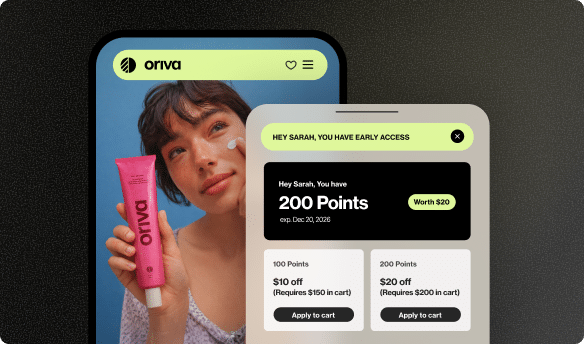
What happens after someone makes a purchase? Do they disappear? Not if you have a great loyalty program! Loyalty programs are designed to reward customers for sticking with a brand. This isn’t just about discounts; it’s about building a community and making customers feel special. Learn more about Yotpo’s Loyalty solution.
How do loyalty programs help with MQLs, especially for existing customers?
- Identifying Engaged Customers: People who actively participate in a loyalty program, earning and redeeming points, are highly engaged. If a business launches a new product or service, these loyal customers are prime candidates to become MQLs for that new offering because they already trust the brand. For more ideas, check out the best loyalty programs.
- Encouraging Repeat Purchases: Loyalty programs nudge customers to come back. Each return visit and purchase, especially for different product categories, shows expanding interest and potential MQL behavior for related items. This is key for improving customer retention.
- Gathering Insights: The data collected from loyalty programs helps businesses understand what their most loyal customers like. This insight can then be used to create new offers that these MQLs would be most interested in. Loyalty use cases highlight these benefits.
- Synergy with Reviews: Imagine a loyalty program that gives points for leaving a product review. A customer earns points, leaves a review, and that review then inspires a new visitor to engage more deeply with the product. This creates a powerful cycle where loyal customers help generate new MQLs through their trusted feedback.
Yotpo’s Loyalty solution empowers businesses to create exciting reward programs that not only keep existing customers happy but also provide valuable insights into who is most engaged and likely to become an MQL for future products or premium services. By understanding and rewarding your best customers, you’re also identifying a strong pool of MQLs for your next big idea.
Examples of MQL Actions
Let’s look at some specific examples to make this concept even clearer. Imagine different actions a person might take on a company’s website or with its content, and how those actions might qualify them as an MQL.
Here’s a table showing various actions and their potential as MQL indicators:
| Action Taken | What it Shows | MQL Potential |
|---|---|---|
| Downloaded a detailed guide or ebook | High interest in a specific solution or topic | High |
| Visited the ‘Pricing’ or ‘Plans’ page more than once | Actively comparing options, considering a purchase | High |
| Signed up for the company’s newsletter | Wants to stay updated, open to receiving communication | Medium |
| Submitted a ‘Contact Us’ or ‘Request Info’ form | Directly asking for more information, high intent | Very High |
| Watched a product demo video to completion | Invested time in understanding how the product works | High |
| Left a detailed product review on a specific item | Already a customer, shows engagement and satisfaction, potential for cross-sell/upsell MQL if new products are released (Yotpo Reviews synergy) | High for future offers |
| Visited multiple product pages within a category | Exploring different options within a specific need | Medium-High |
| Clicked on a link in an email related to a new collection | Shows interest in new offerings from the brand | Medium |
| Engaged with a loyalty program, earning points | Highly engaged existing customer, potential MQL for premium tiers or new product lines (Yotpo Loyalty synergy) | High for retention/expansion |
Common Mistakes When Identifying MQLs
Even though MQLs are super helpful, businesses can sometimes make mistakes when trying to identify them. Avoiding these pitfalls makes the whole process smoother and more effective:
- Not Having Clear Definitions: If the marketing and sales teams don’t agree on what makes someone an MQL, there can be confusion. It’s like having two different rulebooks for the same game.
- Ignoring Negative Actions: Focusing only on positive actions can be misleading. Someone who visits a pricing page but then immediately unsubscribes from all emails might not be a strong MQL.
- Not Updating Criteria: Customer behavior and market trends change. What made someone an MQL a year ago might not be the same today. Businesses need to regularly check and update their MQL rules.
- Not Aligning with Sales: Marketing might think someone is ready, but sales might disagree. Close communication and feedback between the teams are essential to ensure that MQLs are truly “qualified” for sales outreach.
- Too Many or Too Few MQLs: If the MQL definition is too loose, sales teams might get overwhelmed with leads who aren’t really ready. If it’s too strict, they might miss out on genuinely interested people. It’s about finding the right balance.
By being careful and thoughtful, businesses can avoid these mistakes and build a robust MQL process.
Nurturing Your MQLs: What Happens Next?
Becoming an MQL is a big step, but it doesn’t mean someone is immediately ready to buy. Think of it this way: you’ve picked up that toy in the store, looked at it, and shown interest, but you haven’t bought it yet. You might still have questions, or need a little more convincing.
This is where “nurturing” comes in. Nurturing an MQL means providing them with more helpful and relevant information, slowly guiding them toward making a purchase. It’s like a friendly guide answering questions and offering useful tips without being pushy.
Businesses often send MQLs personalized emails with content like:
- More in-depth product information.
- Customer success stories (how others benefited).
- Comparisons with other options (highlighting their strengths).
- Invitations to webinars or special events.
The goal is to build trust, answer any lingering questions, and demonstrate even more clearly how the product can help them. This smooth journey from initial interest to confident decision is vital for the consumer decision-making process.
Moving from MQL to SQL (Sales Qualified Lead)
After being nurtured, if an MQL shows even stronger intent (like asking for a demo or directly contacting sales), they might graduate to become a Sales Qualified Lead, or SQL. At this point, the sales team knows they are truly ready for a direct conversation about buying. The baton has been passed from marketing to sales for the final sprint!
The Big Picture: Growing Your Business with Smart Marketing
Understanding MQLs is more than just a marketing trick; it’s a fundamental part of smart business growth. It’s about being efficient, focusing your efforts where they’ll have the most impact, and truly understanding your potential customers. By identifying MQLs, businesses can build stronger connections with people who genuinely need what they offer.
This smart approach to marketing and sales helps businesses not just acquire new customers but also think about ecommerce retention. When you bring in the right customers, who are truly interested, they’re more likely to be happy and stick around, leading to long-term success and growth. It’s all about creating an amazing ecommerce customer experience from the very first spark of interest.
Frequently Asked Questions about MQLs
Sometimes, new concepts bring up a lot of questions. Let’s tackle some common ones about MQLs.
- What’s the difference between a “lead” and an “MQL”?
- A lead is just someone who has shown *any* interest, even very basic, like visiting your website once. An MQL is a lead who has shown *significant and specific* interest through their actions, making them more likely to become a customer. Think of a lead as someone who walked into the toy store, and an MQL as someone who picked up the specific toy they might want to buy.
- How do I know if my MQL definition is right?
- The best way to know is by seeing the results! If the sales team is happy with the quality of the MQLs they receive and they are converting into customers at a good rate, then your definition is probably working well. Regular check-ins and feedback between marketing and sales are key. If you’re looking for more general insights, Yotpo’s FAQs page might offer some helpful guidance.
- Can an MQL skip straight to buying?
- Sometimes, yes! This is often called a “hot lead” or a “product-qualified lead.” These are people who are so interested and ready that they might skip some of the nurturing steps and go straight to talking to sales or even making a purchase. However, most MQLs still benefit from some nurturing to build that final layer of trust and answer all their questions before buying.
- Does my business really need to track MQLs?
- If your business wants to grow efficiently and make the most of its marketing and sales efforts, then yes! Tracking MQLs helps you understand where to put your energy and how to get the best results. It’s about being smart, not just busy.
Wrapping Up Our MQL Adventure
So, there you have it! A Marketing Qualified Lead is a person who has shown real, measurable interest in a business’s products or services. They’re not just idly browsing; they’re actively engaging, leaving digital footprints that tell marketers they might be ready for the next step in their customer journey.
By understanding what makes an MQL, businesses can work smarter, connecting with the right people at the right time. Tools like Yotpo’s Reviews and Loyalty solutions play a fantastic role in this journey. They help businesses build trust, engage customers deeply, and identify those valuable individuals who are showing all the signs of becoming not just customers, but enthusiastic advocates for the brand. It’s all part of building a successful business by focusing on what truly matters: your customers.










 Join a free demo, personalized to fit your needs