



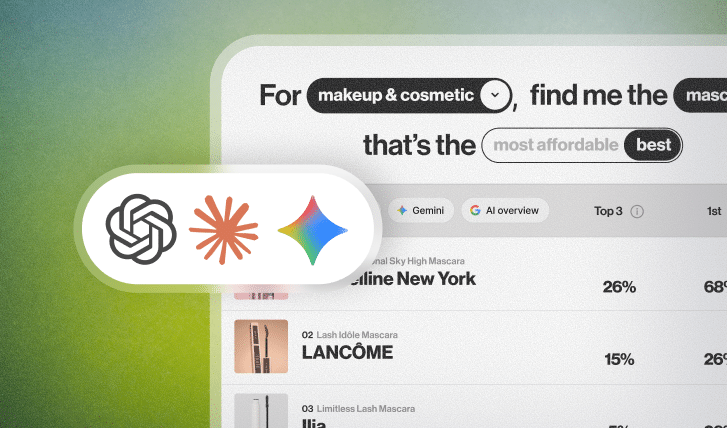






Does your next customer still type a keyword? Maybe they don’t. They might ask ChatGPT, Gemini, or Google AI Mode which running shoe suits high arches, or which face serum won’t sting sensitive skin. A good answer doesn’t have to come from a scan of keyword counts. The model can draw on what real shoppers have said and may look for the places where they agree.
Reviews are the center of this. Anyone in search or technical marketing should understand how AI models may read and cite them. That knowledge helps protect your organic brand discovery.
Key takeaways
- Language models may treat reviews as proof of meaning, so real agreement can count for more than a keyword repeated ten times on a single page.
- For market context, 91% of retail and CPG companies surveyed by NVIDIA said they are either actively using or assessing AI, per NVIDIA’s third annual State of AI in Retail and CPG survey. That figure covers AI adoption broadly, not AI-visibility work specifically.
- Add clean schema markup and JSON-LD, which may help AI crawlers pull out your review details.
- AI answers are becoming one more way shoppers find products, so it’s worth planning for now.
- Outside opinion helps your brand stay visible, since AI tools may weigh forums and other off-site talk alongside your own pages.
- Tracking your own AI visibility over time shows whether your review and content work is paying off.
Why authentic shopper voices can shape AI shopping recommendations
Product discovery used to depend on matching. Did your page repeat the phrase a user typed? If so, the engine listed it, and signals like domain authority and keyword placement helped set the order. Answer Engine Optimization (AEO) has a different goal, which is to be named inside the AI’s answer, and that tends to depend on meaning more than on matching.
When you ask ChatGPT which winter jacket will survive a Chicago January, notice what you don’t get. There are no ten blue links. You usually get two or three jackets with a reason for each, and Gemini and Google AI Mode often answer in a similar way. Many tools first look things up, a step called Retrieval-Augmented Generation (RAG), and then write from what they found.
Reviews are among the most grounded, fact-rich text on the web, and AI tools may draw on them for both training and retrieval. A product description written by a copywriter makes marketing claims. A set of 500 reviews holds lived experience. One buyer wore the jacket over broad shoulders. Another left the battery out in freezing cold. A third has rosacea and tried the moisturizer anyway.
SEO worked from intent that showed up in keywords, while AI search tends to work from intent that shows up in conversation.
That raises a fair question for any brand built on keyword density. Your pages may still rank. But does an engine that paraphrases have anything to quote from a page that repeats a phrase and never answers a real question? It may have very little, as it turns out. You’ll need new measurement tools and a different kind of content.
One agency forecast models a scenario in which AI answers could cannibalize about 40% of organic clicks on an informational and product-comparison query mix sometime between 2027 and 2028, using a baseline the agency describes as typical of mid-market B2B software. It is a single forecast, not an industry consensus, so ecommerce results may differ. Suppose an AI tool can’t find clear, verified reviews that back up your product claims. It may favor a rival whose reviews do.
How AI shopping engines parse customer reviews
To get found by answer engines, it helps to understand how language models may handle text. AI systems don’t have to judge reviews by star averages alone, and they can work through the text itself. Engine internals aren’t published, so the three layers below are our own framework for thinking about it, not a description of how any one engine works.
1. Semantic embeddings and vector search
A shopping system can turn every review into a string of numbers called a vector embedding, and similar ideas tend to end up with similar numbers. Fifty buyers might say their hiking boots “kept my socks bone dry” all day. The model may file all fifty reviews near ideas like “waterproof reliability,” “heavy rain performance,” and “wet weather durability” (even if no review uses those exact words).
Suppose a shopper wants boots for muddy spring trails that won’t leak. Will the model reach for the brand that writes “waterproof” on its page? It may not, if another brand’s buyers keep describing real wet weather. A model can compare the question with the reviews available to it and look for the closest meaning, so the brand whose reviews sit nearest may earn the citation.
2. Aspect-based sentiment analysis (ABSA)
Large language models don’t have to give a review one verdict. They can split it into pairs of items and traits, a method known as Aspect-Based Sentiment Analysis, and read how each part of the product performs.
Take an apparel review that praises the “incredible and luxurious” fabric but says the waist “runs at least one size small” and the zipper catches. Fabric earns a positive mark, while sizing and the zipper earn negative ones. When a tool builds a pick, it may blend all three into a fair answer, so shoppers can hear about the quirks in sizing along with the praise for the material.
3. Entity disambiguation and consensus verification
AI tools may check claims by comparing data points across the web. A brand might claim its blender motor lasts a decade. Do reviews on its site, on retail sites, and in forums say the same thing? A tool could form a sense of consensus from how well those sources agree.
Models may also give less weight to text that’s repetitive and formulaic, or text that looks machine-made. Real shopper voices don’t read that way. They bring natural wording and small complaints, plus stories about how people actually use the product. That mix can help a model treat them as credible.
The 5-stage framework: optimizing customer reviews for AI discovery
Treat review collection as a data pipeline you shape on purpose, not a passive tool for conversion. That’s one way to earn picks inside AI search. Our five-stage framework walks SEO and content teams through the work. It is our own approach, not an industry standard. (Each stage stands alone, so start wherever your gaps are biggest.)
Stage 1: structuring review data for machine readability
What it involves
This stage is technical. Search bots and AI crawlers need to be able to read and sort your reviews, and many of them work under compute limits. If reaching your reviews takes heavy client-side scripts, the crawler often just moves on.
Basic crawling is only half the job. Your reviews also need markup that ties each one to the exact product it covers, using modern schema terms. Suppose a crawler lands on your boot page. Could it tell a boot review from a tent review? Markup gives it a direct way to tell.
How to execute
Add JSON-LD with an AggregateRating and individual Review objects, plus an author, rating value, review text, and publish date for each one.
Add item traits such as positiveNotes and negativeNotes where they fit. When AI tools read clear pros and cons in schema, they may be able to feed them straight into aspect scoring.
Tech teams using Yotpo Discover can lean on its automated Onsite Agent. It constantly scans your store to find and fix structural issues that hurt AI visibility. The agent flags missing schema, repairs broken structured data, and keeps catalog attributes open to AI crawlers.
Common pitfalls
A common mistake is lazy-loading reviews through API calls that run only when a visitor scrolls. That keeps the first page load fast. But it can hide review text from AI crawlers that don’t scroll deep. Load your newest and strongest reviews right in the first HTML payload.
After each release, view the page source for a few product URLs and confirm the review text is in the initial HTML. A structured-data testing tool can also show whether your markup validates.
Stage 2: guiding reviewers toward semantic specificity
What it involves
Short, bland reviews like “Great product, fast shipping!” give large language models very little to work with. They lack traits, and they say little about the problem the buyer had or how the product was used. Stage two is about reworking your prompts so they draw out full, rich replies.
AI tools tend to work best with answers to pointed, real-life questions. Does this moisturizer work under mineral sunscreen? Does this coffee grinder make even espresso grounds? Shape your review flow to gather these answers, and you create richer raw material for models to draw on.
How to execute
Use custom review forms that ask for exact traits as well as open-ended feedback. Base your questions on the product type:
- Fit and sizing: Ask whether the item runs small, true to size, or large.
- Usage context: Find out about skin type, room size, skill level, or running terrain.
- Primary benefit: Ask what problem the product solved for the buyer.
Specific prompts tend to work better than broad ones. “What were you using this for?” and “How did it fit after a few washes?” invite a concrete story, while “Tell us what you think” invites a one-word reply.
Linking your review flow to a platform like Yotpo Reviews lets you add smart prompts and customizable review forms. These nudge buyers to describe real experiences. When shoppers name exact uses in their own words, AI models can connect those uses to the product.
Common pitfalls
A long form that feels like homework cuts the number of reviews you get. Ask for the core rating and some open text, and make everything else optional. Trait questions work best as quick clicks.
Stage 3: transforming shopper feedback into answer-ready content
What it involves
AI models can crawl product pages. But they may also draw on full editorial guides, comparison tables, and FAQ hubs when they pull together picks across many products. Stage three connects shopper feedback to editorial content.
Here you pull recurring themes and sentiment patterns out of your reviews, along with the real phrasing buyers use. Then you weave them into trusted on-site resources for Answer Engine Optimization (AEO).
How to execute
Mine your reviews for common questions and points of comparison. If dozens of buyers say they chose your cookware set over an enameled cast iron one because of weight, that’s your cue to write an in-depth guide on exactly that trade-off.
Quote shoppers right in your buying guides and comparison pages. Models may find real content more useful than bland sales copy, since verified reviews reflect lived experience.
A simple tracking sheet helps here. Record each recurring phrase next to the product it belongs to, and note how often buyers repeat it. Questions that come up again and again make strong headings for buying guides and FAQ entries.
Inside Yotpo Discover, the Content Agent handles this work. It studies your shopper voices, loyalty signals, and order records, then drafts SEO- and AEO-ready content for your brand blog and compiles outreach briefs for third-party publisher sites, using the words shoppers actually used. Because the content starts from real feedback, AI tools may have more specific material to work with.
Beekman 1802 and David Protein both work with Yotpo Discover and run review programs alongside clear product content. That mix of real shopper voices and well-organized pages can give an AI assistant material it can find and cite.
Common pitfalls
Don’t publish shallow, programmatic pages that just repeat product specs. Low-effort content hubs give an AI tool little to quote, so they may be passed over for richer sources. What works is real depth, which means context and detail plus direct quotes from actual shoppers.
Stage 4: building off-site consensus and community validation
What it involves
AI models may not rely on a single domain to back up a buying pick. Picture a product with thousands of five-star reviews on its own store and zero mentions anywhere else. Would a model trust a profile like that? It might not, and a lack of outside support could make the brand look less credible. A model can compare on-site claims with what forums and retail sites say, so outside evidence can strengthen your case.
Stage four grows your real sentiment footprint in the outside spaces where AI models may look for proof from others.
How to execute
Which sites count most? That can vary by engine and by category. Reddit threads, niche forums, and independent review blogs are good places to look first. Ask each tool about your market and write down every third-party site it cites, from retailers to forums.
Yotpo Discover has an Activation Agent for this job. It watches the off-site spots and forum threads that AI tools cite, and it helps brands invite verified reviewers and community members into those spaces.
Picture a marketing lead at a growing DTC lifestyle brand. One morning she finds that Google AI Mode no longer shows her flagship collection. A rival now fills that spot, and its Reddit mentions have grown. Off-site agreement may matter alongside on-site technical work, though no engine publishes how it weighs either.
Encourage your most vocal fans to join public talks. Say a real buyer posts an unprompted, detailed breakdown of your product in an active forum thread. That post can become lasting source material for AI answers.
When you join a thread, say who you are and answer the question that was asked before you mention a product. Disclosure keeps the conversation honest, and it protects the trust that makes outside mentions valuable.
Common pitfalls
Don’t try to seed fake or sponsored reviews on community platforms. Moderators often ban brands that post in bot-like patterns, and AI tools may flag those patterns too. Real support from verified customers, freely given, is the safer path over time.
Stage 5: tracking AI citations and closing competitive gaps
What it involves
Standard rank trackers follow keyword positions on Search Engine Results Pages (SERPs), so they often can’t show whether your products appear in AI answers, which traits the tool stresses, or why a rival won the top pick.
In stage five, you measure share of voice inside AI tools and close content gaps one at a time.
How to execute
Start with a clear view of your brand visibility across AI search. Yotpo Discover tracks ChatGPT, Gemini, and Google AI Mode. It benchmarks your citation share against rivals for high-intent shopping queries.
Next, set your baseline by generating an AI visibility score. This audit shows where your products are cited, where rivals win picks, and which sentiment gaps hold your products back.
Use a gap check against rivals to guide your content and review work. Maybe Gemini keeps suggesting another brand because its reviews praise durability. Aim your next review drives at gathering durability feedback from verified buyers.
Repeat the check on a regular schedule. Pick a stable list of 15 to 20 shopping prompts that mirror how your buyers really ask, run them in each engine, and note which brands and traits come up. AI answers can vary from one run to the next, so look for patterns across several runs rather than reacting to a single answer.
Gaps can come from missing sentiment traits as much as from low review volume. A focused set of recent, detailed reviews can carry more weight than a large pile of old, vague ones, so aim for depth before you chase a bigger count.
Common pitfalls
Can a score on a dashboard change anything by itself? No, because gains come when a team acts on it. Find the gaps, then fill them in product pages and editorial content.
Measuring success: KPIs for review-driven AI visibility
Old organic search KPIs, like keyword rankings and click-through rates, don’t capture how you show up in AI answers. To judge how well your reviews may sway AI shopping answers, we recommend tracking these five metrics (five is plenty to start with):
- AI Citation Rate: The share of target chat queries where an AI tool names and links your brand or product.
- Engine Share of Voice: Your slice of the citations across ChatGPT, Gemini, and Google AI Mode, set against top rivals in your niche.
- Aspect Sentiment Balance: The split between praise and complaints on fit, durability, and value in your parsed reviews.
- Referral Conversion Rate: How visitors from AI tools convert next to standard organic search visitors.
- Schema Extraction Health: How cleanly testing tools can crawl and validate your Product, Review, and AggregateRating data.
AI visibility is still a young area, so an early baseline gives your team something concrete to compare against later.
Tracking these metrics can help your team respond as shopper habits change. Some shoppers are moving from skimming blue links to acting on direct AI picks.
“AI engines don’t buy marketing copy; they look for verifiable consensus. When your customer reviews contain detailed, aspect-level proof that your product solves a specific problem, engines tend to reward that clarity with primary citations. Structuring your review corpus is no longer just about on-site conversion. It can be one of your most important organic search assets.”
Ben Salomon, Growth Marketing Manager at Yotpo
Frequently asked questions
How do AI shopping engines use customer reviews to make recommendations?
Imagine reading a stack of reviews with a highlighter. You’d mark the fit notes and the results after a month, plus the opinions that keep repeating. AI tools can do that marking at scale with Natural Language Processing, then compare your marketing claims against it and suggest products that fit the limits in a shopper’s prompt.
Does review volume matter more than review content for AI search?
Content tends to matter more. Take one jacket with 400 reviews that say “great, fast shipping” and another with 30 that describe sizing, rain, and a year of wear. An AI tool can quote the second jacket’s reviews but has little to say about the first. So a store with fewer, richer reviews can beat a bigger store with shallow feedback.
Can AI engines read reviews hidden behind JavaScript widgets?
Many AI crawlers run on tight compute budgets, so they may never run your client-side scripts. If your review widgets load only through JavaScript after a user acts, crawlers often skip them. Keep key review text and JSON-LD schema in the first server-rendered HTML payload.
How does schema markup help AI engines understand product reviews?
Schema can give AI crawlers explicit context they would otherwise have to infer. Tag your reviews with JSON-LD properties such as Review, AggregateRating, positiveNotes, and negativeNotes, and AI tools may be able to pull out ratings, review text, and product links more reliably, although no engine has published exactly how it uses schema.
What engines does Yotpo Discover track for AI visibility?
Yotpo Discover tracks brand citations and product visibility across ChatGPT, Gemini, and Google AI Mode. It shows how your products appear inside chat answers and flags when rivals earn the pick. Its agents then help you close those gaps.
Does answer engine optimization replace traditional SEO?
No, the two work side by side. SEO still covers crawling, indexing, and core keyword rankings. AEO adds the work of earning mentions inside AI answers, which can depend on your semantic footprint and unstructured content as much as on your review sentiment. Many brands run both together.
Why might AI engines check external forums like Reddit for review consensus?
AI models may check on-site claims against outside forums and sites, which can help guard against brand bias and fake reviews. Independent forums like Reddit hold uncurated talk, and that can serve as third-party proof when a model weighs consensus for product picks.
How can brands encourage customers to leave more descriptive reviews?
Brands can guide feedback with custom prompts that ask exact questions about use, fit, and key benefits. Offering multiple-choice traits next to open text fields helps buyers share detail without adding friction to the form.
How do negative reviews affect AI product recommendations?
Negative reviews don’t automatically rule a product out of AI picks. Models may look for balanced, credible sentiment. Minor negative notes next to strong positive traits can make a product look real. Models may then cite it with helpful nuance, such as suggesting a jacket while telling shoppers to size up.
Next steps for technical e-commerce leaders
AI search adds a new place where shoppers find products. Search leaders who turn their reviews into assets that AI can read may be better placed to earn high-intent shopping traffic across new answer engines.
To see where your catalog stands in chat-based search, get your free AI visibility score. Want to see how automated agents can fix structural errors and create review-grounded content for your brand? Learn more and request a demo of Yotpo Discover.






 Join a free demo, personalized to fit your needs
