


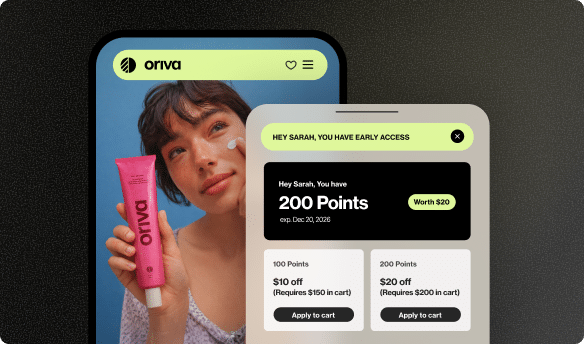






Customer acquisition costs keep climbing, and that’s pushed retention to the top of the priority list for most ecommerce leadership teams. Picking the right loyalty program platform isn’t just a technical checkbox anymore. It’s a strategic call that shapes your customer lifetime value and your margins for years.
Dozens of vendors sell some version of “loyalty software,” but the real differences show up in how flexible the platform is, how deep the integrations go, and whether there’s a team behind the software helping you use it well. This guide walks through what a loyalty platform actually needs to do, what to weigh when you’re comparing options, and how to think about the decision so it holds up as your program scales.
Key Takeaways
- Marketers are shifting budget toward retention, putting a majority of marketing budgets into loyalty and CRM initiatives.
- Loyalty programs pay off: a majority of program owners report positive ROI.
- Retention drives DTC revenue directly — 60% of DTC revenue comes from returning shoppers, not new ones.
- Repeat buyers are worth more per visit: they spend 3x more than first-time shoppers.
- Yotpo Loyalty already powers retention programs for 4,600 global brands, with the enterprise infrastructure and support to back it up.
What Makes a Loyalty Program Platform Worth Adopting?
Picture a VP of ecommerce at a $40M apparel brand, still at their desk at 8 PM on a Tuesday, watching acquisition costs climb while repeat buy rates stay flat. It’s a familiar moment. The old playbook, spend more on ads and discount harder to close the sale, stops working once acquisition costs outpace what a first-time buyer is actually worth.
Retention isn’t a secondary metric anymore. It’s the thing that decides whether a brand’s growth is profitable or just expensive. That means moving past blanket discount codes toward experiences that make customers want to stick around: points that map to real actions, tiers that feel worth reaching, rewards that fit how someone actually shops.
A loyalty platform is the infrastructure that makes this possible, connecting customer behavior to rewards in a way that a spreadsheet or a one-off promo code never could. Skip that infrastructure and you’re stuck relying on uncoordinated discounts that erode margin without building any real attachment to the brand. Brands that win at retention tend to treat loyalty as a structural, experience-led program, not a bolt-on feature.
Shoppers also expect the reward experience itself to be frictionless. 77% of Millennials say an efficient digital experience matters most when they engage with a loyalty program. If redemption means clicking through five screens or hunting for a promo code, most people just won’t bother.
Personalization matters just as much. Roughly 62% of Gen Z shoppers say they’re willing to share personal preferences in exchange for rewards that actually fit them. That’s a signal, not a nice-to-have: your platform needs to take in that first-party data and use it to trigger rewards that feel relevant, not generic.
What a Loyalty Program Platform Actually Does
Strip away the marketing language and a loyalty platform handles a few core jobs. It tracks customer actions, purchases but also reviews, referrals, social follows, account creation, and assigns points or credit for them. It manages tiers, so your best customers get treated like your best customers instead of getting the same generic email as someone who bought once.
It handles referrals, turning happy customers into a low-cost acquisition channel. And it manages redemption, the actual moment where a customer cashes in points for a discount, a free product, or early access to something new.
The mechanics sound simple on paper. The hard part is making all of it feel coherent to the shopper and manageable for your team. A well-built points engine can reward more than just purchases: birthdays, reviews, social shares, milestones, without turning into a maze of rules nobody on your team can explain. Tiers need real thresholds and real perks at the top, not just a badge. And referrals need to be easy enough that a customer actually shares a link instead of abandoning the process halfway through.
Points and Earning Rules
The earning engine is the backbone of any program. It decides which actions earn points and how many. Purchases are the obvious one, but the platforms worth using let you reward reviews, social follows, account creation, and other high-value behaviors too.
The flexibility here matters more than it looks: a rigid rules engine locks you into “spend $1, get 1 point” forever, while a flexible one lets you test incentives and adjust based on what’s actually moving the needle for your brand.
Tiers and VIP Structures
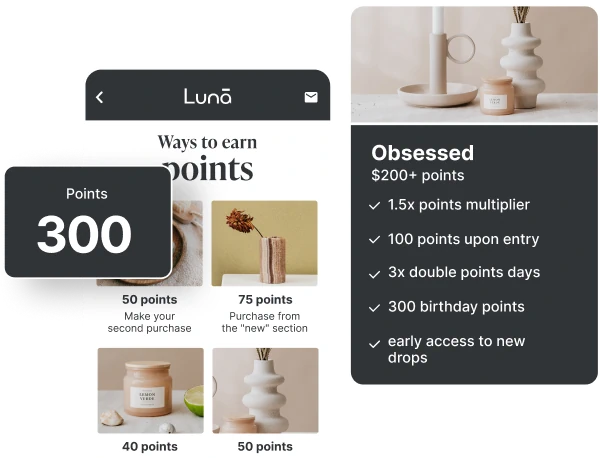
Tiered programs reward your best customers more than your occasional ones, which sounds obvious but a surprising number of programs still don’t do it well. The base tier should be easy to reach so people actually join. The top tier should feel exclusive: early access, free shipping, a real perk worth chasing.
Members who never redeem anything in their first 90 days are far more likely to quietly churn, so tier design isn’t just about generosity. It’s about giving people a reason to stay engaged early.
Referrals
Referred customers tend to stick around. Referred buyers show a 2.5x higher repeat buy rate than customers acquired through paid ads, which makes referral design one of the highest-leverage levers in the whole program.
A platform that makes sharing effortless (one-click links, automatic tracking, a reward that shows up fast) turns existing customers into an acquisition channel that costs a fraction of paid media.
Redemption
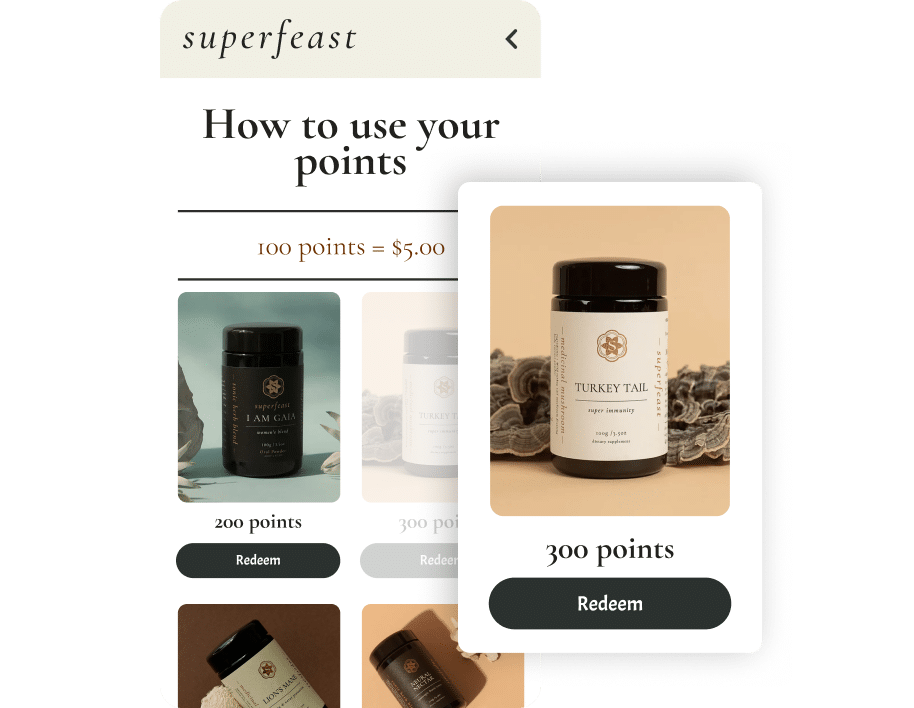
None of the above matters if redemption is clunky. Customers should be able to apply points at checkout without copying a code into a separate field or digging through an account page. Friction here is where programs quietly lose members: they earn points, forget about them, and eventually stop paying attention to the program altogether.
What to Look For in a Loyalty Platform
Once you understand the mechanics, the next question is what actually separates a platform that scales with your brand from one you’ll outgrow in a year. A few criteria matter more than the rest.
- Design flexibility and brand fit. A loyalty program should feel like a natural extension of your storefront, not a bolted-on widget with someone else’s branding. Look for platforms that let you fully customize typography, color, on-site reward pages, and checkout elements without needing a developer for every tweak.
- Strategic support, not just software. Software alone rarely solves a retention problem. A dedicated Customer Success Manager who understands retail strategy, not just ticket queues, makes the difference between a program that launches and one that keeps improving. Ask any vendor directly: who do we talk to when we want to change the program, and how fast do they respond?
- Reporting depth and cohort analytics. You need real visibility into member lifetime value, redemption velocity, points liability, and the actual revenue your loyalty cohort drives, not just a dashboard showing total points issued. Vague reporting makes it impossible to prove the program’s ROI to your CFO.
- Rule engine flexibility. Your program should be able to reward more than purchases: reviews, surveys, social milestones, referrals. A rigid engine limits you to the same discount-driven mechanics you’re trying to move past.
- Integration depth. A loyalty platform has to talk to the rest of your stack (email, SMS, subscriptions, support helpdesks) cleanly and without a six-week implementation project. Check how it connects to the tools you already run, not just the ones on a feature checklist.
- Room to grow. A platform that fits your brand today should still fit when you triple your order volume or add a second sales channel. Ask what breaks, or what requires a re-platform, at 3x your current scale.
How Yotpo Loyalty Fits
Yotpo Loyalty was built to solve the retention problem end to end, and it’s been helping ecommerce brands design reward structures since its 2016 launch. Rather than shipping a rigid widget and leaving you to figure out the rest, it pairs a flexible points and rewards engine with dedicated strategic support, so your team isn’t building a program alone.
The platform handles complicated vertical needs well, from subscription rewards to multi-tier VIP structures to custom earning rules, without forcing your team to write code. On-site reward pages and widgets match your brand’s look and feel instead of sitting on your storefront like an obvious third-party plugin.
What Yotpo Loyalty Offers:
- Builds advanced VIP tier structures with customizable entry requirements, exclusive perks, and benefits that scale as members climb.
- Runs a flexible earning-rules engine that rewards purchases, social follows, referrals, and customer milestones, not just checkout totals.
- Powers on-site reward pages and dynamic widgets built to match your brand’s visual identity, not a generic template.
- Connects you with a dedicated Customer Success Manager who helps structure, launch, and iterate your program over time.
- Tracks cohort performance across five dashboards, covering redemption velocity, points liability, and member lifetime value.
- Plugs into Yotpo Reviews, SMS & Email, and Subscriptions, so loyalty data feeds the rest of your retention stack instead of living in its own silo.
- Works across Shopify and other major commerce platforms, giving you one customer view instead of fragmented data across tools.
Pricing: Yotpo Loyalty runs on custom enterprise pricing, scoped to your brand’s size and technical needs, with plans built to grow alongside your retention goals rather than forcing a re-platform later.
Made for mid-market and enterprise DTC brands that need a genuinely flexible loyalty setup and want a strategic partner in the room, not just a login to a dashboard. If your team is already stretched thin, the CSM relationship alone tends to be the difference between a program that launches and stalls, and one that keeps improving quarter over quarter.
How to Choose the Right Loyalty Software
Picking the right platform means matching your choice to your team’s internal resources and your long-term retention goals, not just the feature list on a sales page. Brands that want a genuinely customized membership experience should prioritize flexibility and strategic support over an out-of-the-box widget that looks easy on day one and feels limiting by month six.
If your platform makes it hard to test and adjust your rewards structure, the program will stagnate, and your best customers will stop noticing it. So ask the question directly: if acquisition costs keep rising, how do you keep growing profitably without discounting your way there?
The answer is building a program that keeps customers coming back on its own, without constant intervention. We see this pattern across growing brands: a well-structured loyalty program shifts the focus from one-time transactions to compounding value, where each purchase makes the next one more likely.
Referral design plays a bigger role in this than most teams expect, given that referred buyers show meaningfully higher repeat buy rates than customers acquired through paid channels. That makes referrals one of the more efficient levers for lowering acquisition costs while still bringing in customers who are worth keeping.
Before you commit to a platform, ask your prospective vendor directly how they handle changes once the program is live. If adjusting a tier or updating a reward banner means filing a developer ticket and waiting two weeks, that platform will slow your team down every time you want to improve the program. You can also check the Yotpo blog for current benchmarks on retention and loyalty program design.
What Does a Strong Rollout Look Like?
Most successful launches start narrow. Get the core points and tier structure live first, confirm redemption works cleanly at checkout, then layer in referrals and secondary earning actions once the basics are running smoothly. Trying to launch every feature on day one usually means nothing gets tested properly, and a broken redemption flow in week one can sour a customer’s whole impression of the program.
Plan for the first 90 days as a tuning period, not a finished product. Watch redemption velocity closely, adjust tier thresholds if almost nobody is reaching the top level (or if everyone reaches it too easily), and use that early data to decide where to expand the program next. A strategic partner who’s seen this pattern across other brands can shortcut a lot of the trial and error your team would otherwise have to work through alone.
“A modern loyalty strategy isn’t about giving away margin through mindless discount codes. It’s about building an agile, experience-driven program that deepens customer relationships and turns retention into a predictable, measurable engine of lifetime value.”
Mira Talisman, Growth CRO Team Lead at Yotpo
Frequently Asked Questions
What is an ecommerce loyalty program platform?
It’s software that helps online brands build, launch, and manage customer rewards programs. These platforms track customer actions, assign points, structure VIP tiers, and handle redemptions at checkout, all in service of driving customer lifetime value.
How do loyalty platforms help reduce customer acquisition costs?
They turn existing customers into a referral channel by incentivizing them to share with friends. Referral traffic tends to be high-intent, so brands acquire valuable customers without leaning as hard on paid advertising.
Can you award points for actions other than purchases?
Yes. Strong loyalty platforms let you reward a range of high-value actions — writing reviews, following social channels, creating an account, celebrating a birthday, or engaging with specific content on-site.
What’s the difference between a widget-based loyalty tool and an enterprise platform?
Widget-based tools launch fast but offer limited customization, thin reporting, and little to no strategic guidance. Enterprise platforms give you fully customizable on-site pages, real multi-tier VIP logic, and a dedicated strategy team helping you grow repeat buy rate over time.
Why does a dedicated Customer Success Manager matter for a loyalty program?
Loyalty programs need ongoing analysis and iteration to stay engaging. A CSM who specializes in ecommerce strategy helps you read cohort trends, manage points liability, and keep tuning rewards for better return over time, instead of leaving the program to run on autopilot.
How should you structure loyalty program tiers?
Most successful brands use a three-tier VIP model based on annual spend or points accumulated. Keep the base tier low-barrier so people actually join, and save experiential perks like early product drops or free shipping for the top tier.
Do loyalty platforms integrate with subscription software?
Yes, leading platforms connect with subscription tools to award points for recurring orders. That combination helps reduce subscription churn by giving long-term subscribers rewards worth sticking around for.
How do you measure the ROI of a customer rewards program?
Track repeat buy rate, customer lifetime value, and average order value for program members versus non-members. Watching redemption rates alongside those numbers also tells you whether members are actually engaging with their rewards, not just accumulating points they’ll never use.










 Join a free demo, personalized to fit your needs