








Acquiring a new customer has never been more expensive, and that’s pushing retail brands to look inward at their existing buyers. With acquisition channels saturated, the software you use to keep those buyers coming back shapes your brand’s financial health more than almost anything else you’ll invest in this year. Picking the right loyalty platform provider isn’t a simple feature checklist anymore. It’s a foundational choice for sustainable growth.
Key Takeaways
- Marketers are shifting focus to retention, now allocating a majority of total marketing budgets to loyalty and CRM initiatives.
- Customer retention is a highly profitable channel, with a majority of loyalty program owners reporting a positive return on investment.
- Repeat customers spend 3x more per visit than first-time shoppers, which compounds the value of every member you retain.
- Building repeat buy habits matters most for DTC brands specifically, since 60% of DTC brand revenue comes from returning customers, not new ones.
- Yotpo Loyalty offers mature, flexible technology, having supported 4,600 global brands with an outcome-driven customer success model.
What Does a Loyalty Platform Provider Actually Do?
A loyalty platform provider is the software layer that lets you track customer behavior and turn it into rewards. At its core, that means points for purchases, tiers for your best spenders, and referral tools that turn happy customers into your cheapest acquisition channel. But the category has moved well past that basic description.
Where loyalty once meant a simple discount coupon at checkout, the shift in customer retention today is a structural change in how ecommerce brands calculate lifetime value. Brands treating loyalty as a checkout widget end up giving away margin to buyers who would have purchased anyway. The real opportunity is coordinating VIP tiers, points, and referrals into one growth engine that reinforces itself. That takes a platform mature enough to blend flexible technology with real strategic guidance, not just a plugin you install and forget.
Marketers are waking up to this. Building retention tends to be far more efficient than constantly paying to acquire cold traffic (and the data backs that up in almost every category we’ve studied). So how do brands actually build this kind of relationship at scale?
60-70% of loyal customers convert when they visit a store, compared to a mere 5% to 20% conversion rate for first-time shoppers. When loyal members buy, they tend to shop with higher average order values and much shorter consideration cycles. That gap alone explains why so many retention budgets have grown this year.
What Should You Look For in a Loyalty Platform?
Evaluating loyalty engines means looking past basic point-accumulation widgets. The best way to judge a platform is by how it handles software flexibility, data depth, and the quality of the partnership behind it. A platform that just holds a points balance isn’t doing the job. It needs to help you run the entire retention strategy.
Picture a VP of marketing at a $25M ecommerce apparel brand, sitting at her desk at 7:30 PM on a Tuesday, looking at retention cohorts and realizing the loyalty app is leaking first-time buyers. That’s the moment most teams start asking harder questions about their platform. Here are five things worth scoring closely before you sign a contract:
- Customization depth. Loyalty pages and VIP portals should feel like a natural extension of your own store, not a generic third-party overlay bolted on top.
- Redemption smoothness. A modern digital experience has to be fast. If redemption requires a checkout reload or manual copy-pasting of coupon codes, participation drops fast.
- Data integration and segmentation. The platform needs to read customer history, purchase frequency, and product categories to deliver incentives that feel personal instead of generic.
- Support model. Software alone doesn’t build loyalty. You want a provider that offers planned experts who help co-manage performance and launch new features with you, not just a support ticket queue.
- Value-adding integrations. The ability to earn points for activities like submitting a review with a photo turns transactional loyalty into something closer to community advocacy.
The Core Mechanics Every Buyer Should Understand
Before you compare vendors, it helps to know what’s actually inside a modern loyalty program. Most platforms in this market share the same basic building blocks, but how well each one executes them varies a lot.
Points and earning rules
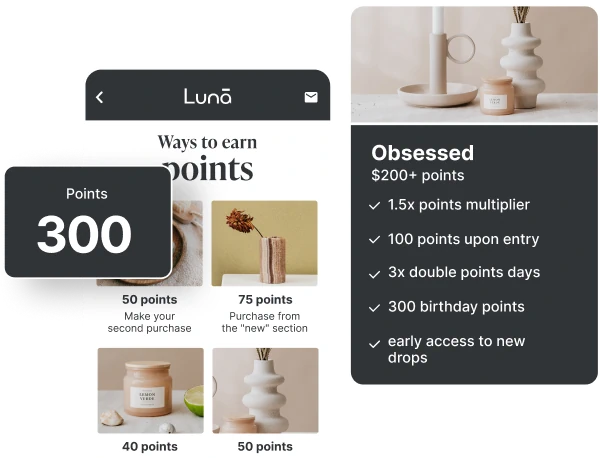
Points are the foundation. Customers earn them for purchases, but the more flexible platforms let you extend earning to reviews, social shares, referrals, birthdays, and other actions that build a relationship beyond the transaction. The flexibility of the earning rules determines how creative you can get with your program over time.
VIP tiers
Tiers gamify the shopping experience. As customers spend more to reach a higher tier, they unlock perks like early product access, free shipping, or exclusive events. This structure rewards your highest-value customers specifically, rather than treating every buyer the same way regardless of how much they spend with you.
Referrals
A referral program turns loyal customers into an extension of your marketing team. Referrals deliver a 3x higher conversion rate than other traditional marketing channels, and once acquired, referred customers show a 2.5x higher repeat buy rate compared to non-referred buyers. That’s a compounding effect worth designing your program around from day one.
Redemption
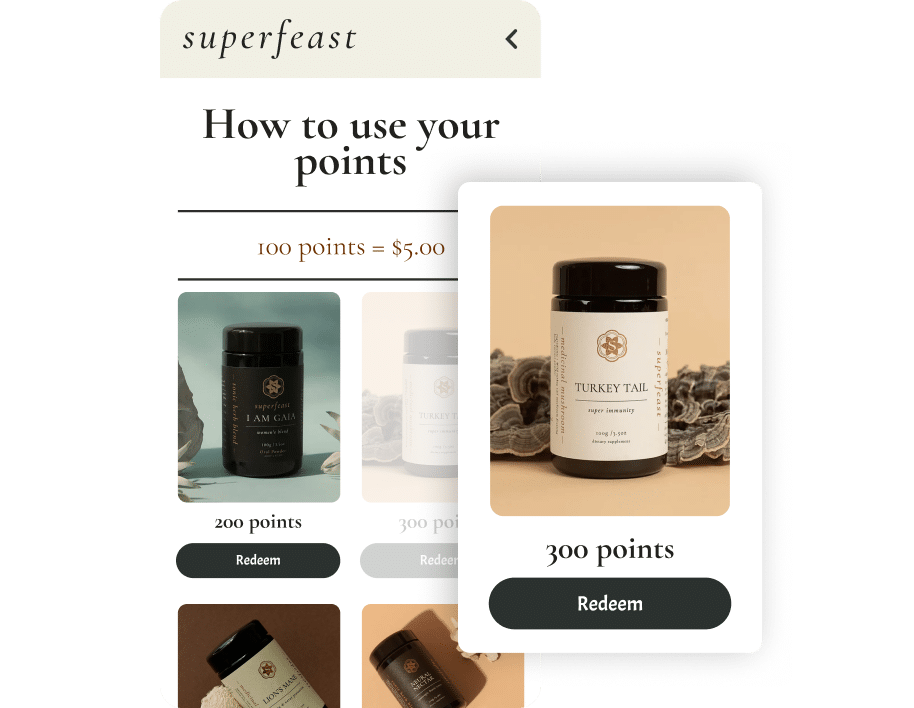
How customers actually spend their points matters as much as how they earn them. In-cart redemption without a page reload keeps friction low. Clunky redemption flows, manual codes, and page reloads all chip away at participation even when the underlying points economy is generous.
Why Redemption Velocity Matters More Than Signups
A lot of brands measure loyalty program health by counting members. That number looks good in a board deck, but it doesn’t tell you much on its own. Redemption velocity, meaning how quickly members actually cash in the points they earn, is a far better signal.
When redemption is fast, it tells you customers feel genuinely engaged and are coming back with intent to buy again. When points sit unredeemed for months, that’s dormant engagement dressed up as a healthy membership count. A platform that surfaces this data clearly, cohort by cohort, gives you an early warning system for churn long before it shows up in your revenue numbers.
How Yotpo Loyalty Fits
Yotpo Loyalty is a standalone loyalty product built to help growing commerce brands maximize lifetime value through customizable incentives. Rather than positioning itself as just a rewards widget, Yotpo pairs a flexible points and rewards engine with a team of dedicated Customer Success Managers who work as an extension of your own team, not a support line you escalate to when something breaks.
The platform lets brands build fully bespoke rewards pages and on-site elements that match their brand identity closely, instead of the generic templated widgets you’ll find on lower-tier tools. That maturity comes from powering ecommerce loyalty programs since 2016, across fashion, beauty, food and beverage, and subscription retail.
In our work with brands scaling quickly, this mix of flexible technology and hands-on guidance tends to keep programs growing smoothly without piling up technical debt behind the scenes.
What Yotpo Loyalty includes:
- Builds flexible points architecture that supports earning for purchases, product reviews, social shares, and custom milestones you define.
- Runs multi-tier VIP structures with progressive perks, early product access, and custom tier entry requirements.
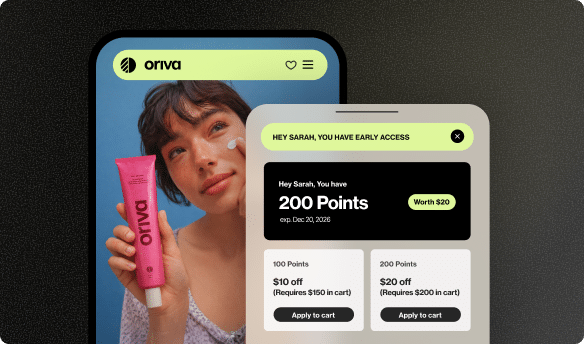
- Lets customers redeem points directly in their shopping cart, with no page reloads or manual codes.
- Tracks performance across five specialized dashboard views covering rewards, VIP tiers, referrals, points, and overall revenue.
- Hooks into Yotpo Reviews natively, so customers automatically earn loyalty points for submitting authentic reviews.
- Connects with SMS and email so loyalty milestones, tier upgrades, and expiring points show up where customers already look.
- Plugs into Yotpo Subscriptions, letting recurring buyers earn and redeem points as part of the same relationship.
- Works across Shopify and other major ecommerce platforms, so you’re not locked into a single storefront technology.
- Builds one customer view across reviews, loyalty, SMS, and subscriptions, instead of fragmenting customer data across separate tools.
Pricing runs on a custom enterprise model, scoped to your program’s complexity and scale rather than a flat monthly fee. That’s a deliberate choice: a mid-market DTC brand with a single tier structure has very different needs than an enterprise brand running loyalty across multiple regions and languages.
Who is Yotpo Loyalty right for?
If you’re a mid-market or enterprise DTC brand that views retention as a real growth lever, not an afterthought bolted onto checkout, Yotpo Loyalty is built for you. It’s especially well suited if you want a highly customized, multi-tier VIP program that ties together reviews and referrals under one roof, and you want a dedicated team helping guide that strategy rather than a self-service dashboard and a knowledge base.
You can read more about how the strategy team supports brands on the Yotpo blog, or review the customizable plans on the pricing page to see how they align with your retention goals.
What About Smaller or Early-Stage Brands?
Not every brand needs an enterprise-grade loyalty program on day one. If you’re running a small, early-stage store with minimal development resources, a lighter, more templated approach can keep your operational overhead low while you validate that a loyalty program actually moves the needle for your customer base. The market has several platforms built for that lighter end of the spectrum, and they’re a reasonable place to start.
The tradeoff is customization. Templated tools are fast to launch, but they tend to hit a ceiling once your brand identity, catalog complexity, or customer segments outgrow a one-size-fits-all rewards page. Most brands feel that ceiling once they cross roughly $10M in GMV, which is usually the point where loyalty needs to become a planned asset instead of a generic discount mechanism sitting behind a login wall.
How to Choose the Right Loyalty Platform for Your Stack
The decision ultimately depends on your brand’s scale, your development resources, and how deeply you want to customize the customer experience. For mid-market and larger brands, priorities shift toward personalization and digital efficiency, and that pattern shows up clearly in what consumers actually say they want.
77% of Millennials prioritize an efficient digital experience when interacting with loyalty programs, and 64% of consumers prefer dedicated apps or smooth on-site widgets over email to check and redeem their points.
Personalization is the next major battleground for retention: 62% of Gen Z and most of Millennials say they’d opt into hyper-personalized loyalty configurations if it meant securing better perks. If your loyalty software can’t segment users by purchase history or VIP status, you simply can’t deliver on that expectation.
Does the platform integrate with the rest of your stack?
Loyalty doesn’t work in isolation. It needs to talk to your reviews platform, your email and SMS tools, and ideally your subscription engine if you run one. A platform that keeps these signals siloed forces your team to stitch together a customer view by hand, which slows down every campaign you try to run.
Can it scale with your catalog and geography?
A platform that works well for a single-market, single-catalog brand may buckle once you add international currencies, multiple languages, or a more complex product catalog. Ask vendors directly how their multi-region and multi-language support actually works in production, not just in the sales deck.
Rolling out a new loyalty platform
Once you’ve picked a provider, the rollout itself deserves a plan. Start with a soft launch to a segment of your best customers before opening the program to everyone. That gives your team room to catch redemption bugs, tune your earning rules, and gather early feedback before the full customer base sees the experience. Most successful rollouts also pair the launch with an email and SMS sequence that explains the program clearly, since a confusing first impression can suppress signups for months afterward.
Budget time for your Customer Success Manager (if your provider offers one) to review your first 60 to 90 days of data with you. Early redemption velocity, tier distribution, and referral activity all tell you whether the program is landing the way you designed it, and catching a miscalibrated tier structure early is far cheaper than fixing it after a year of customer expectations have already formed around it.
What does long-term success look like?
A healthy loyalty program keeps evolving. The brands that get the most out of their platform revisit their tier thresholds, earning rules, and reward catalog at least once or twice a year, using redemption and segmentation data to guide the changes rather than guessing. A provider that treats your account as a strategic partnership, not just a software license, makes that ongoing tuning a lot easier to sustain.
“Loyalty is no longer about transactions; it’s about building an experience so smooth that repeat buying becomes the customer’s default choice. Brands that treat points as a liability instead of an engagement engine miss the point entirely.”
Mira Talisman, Growth CRO Team Lead at Yotpo
Frequently Asked Questions
What is a loyalty platform provider?
A loyalty platform provider is a software vendor that helps ecommerce businesses design, launch, and manage customer rewards programs. These platforms track customer purchases and engagement, awarding points, VIP tiers, and referral incentives to drive repeat purchases.
How do loyalty programs improve customer lifetime value?
Loyalty programs improve customer lifetime value by creating structured incentives for customers to return. By offering points, exclusive perks, and VIP tiers, brands motivate buyers to choose them over competitors, which increases purchase frequency and average order value.
Why is point redemption velocity important?
Point redemption velocity tracks how quickly loyalty members redeem their earned rewards. A high redemption velocity means customers are actively engaged with your brand and have a strong intent to make repeat purchases, while unredeemed points represent dormant engagement.
What is a typical return on investment for loyalty programs?
Loyalty programs are highly profitable when they’re executed well. A majority of loyalty program owners report a positive return on investment, which makes it one of the most reliable channels for sustainable revenue growth.
Can loyalty platforms integrate with product review software?
Yes, leading loyalty platforms integrate directly with review software. Brands using Yotpo Loyalty, for example, can automatically award loyalty points to customers who submit feedback through Yotpo Reviews, which helps collect more authentic shopper voices while rewarding customer advocacy at the same time.
How do VIP tiers encourage repeat purchases?
VIP tiers encourage repeat purchases by gamifying the shopping experience and rewarding high-value customers with escalating benefits. As customers spend more to reach higher tiers, they unlock exclusive perks like early access to products, which builds deeper brand affinity over time.
What is the ideal channel for loyalty communication?
Customers increasingly prefer digital-first channels for their loyalty updates. Data shows that 64% of consumers prefer dedicated mobile apps over traditional email to check their points balances and redeem rewards.
Why do customers unsubscribe from loyalty programs?
Customers typically unsubscribe from loyalty communications when they receive too many messages, or when the content feels irrelevant to their shopping habits. Brands need personalized customer data to keep loyalty updates timely and relevant instead of generic.
How do referral programs impact customer acquisition costs?
Referral programs lower customer acquisition costs by turning loyal members into brand advocates. Because referred customers convert faster and show a higher repeat buy rate, the organic, trust-based signups they bring in help offset the cost of paid acquisition elsewhere.
Is Yotpo Loyalty a standalone product?
Yes, Yotpo Loyalty is a standalone loyalty product. While it integrates natively with other products like Yotpo Reviews, it also runs independently on major commerce platforms to power advanced, customizable rewards programs.










 Join a free demo, personalized to fit your needs