








Getting traffic to your Shopify store is a great start. But let’s be honest, traffic doesn’t pay the bills. Sales do. The real challenge isn’t just getting people in the door; it’s convincing them to make a purchase. This magic metric is your conversion rate, and it’s the single most important number for your store’s health. If you’re wondering how to increase your Shopify conversion rate, you’re in the right place. We’re about to dive deep into proven, actionable tactics for 2026 that turn casual browsers into loyal customers.
Key Takeaways: How to Increase Shopify Conversion Rates
- It’s Not One Thing: Increasing your conversion rate isn’t about a single magic fix. It’s a combination of technical performance, building trust, optimizing your user experience, and encouraging repeat business.
- Trust is Everything: Social proof, especially product reviews, is no longer optional. Shoppers demand authentic feedback, and providing it is one of the fastest ways to lift conversions.
- Speed Kills (Slow Speed, That Is): A one-second delay in page load time can drop conversions by 7%. A fast, mobile-first website is the foundation of all optimization.
- Reduce Friction: The checkout process is where sales are won or lost. Every extra field, surprise shipping cost, or forced account creation is a reason for a shopper to abandon their cart.
- Retention is Conversion: It’s far easier and cheaper to convert an existing customer than to acquire a new one. A best-in-class loyalty program is a powerful tool for driving repeat purchases.
First, What is a Good Shopify Conversion Rate?
Before you can improve your conversion rate, you need to know what it is and how to benchmark it. Your conversion rate is simply the percentage of your store’s visitors who complete a desired action. In eCommerce, this is almost always completing a purchase.
The formula is simple: (Number of Sales / Number of Visitors) * 100 = Conversion Rate
So, if 1,000 people visit your store and 10 of them buy something, your conversion rate is 1%.
Now, the big question: what’s a “good” rate? Industry reports from 2024 and 2026 often place the average eCommerce conversion rate between 1% and 3%. But this number can be misleading. A “good” rate depends heavily on your specific industry, price point, traffic source, and brand maturity.
- Industry: A store selling low-cost, impulse-buy items (like fashion accessories) will naturally have a higher conversion rate than one selling high-ticket, considered purchases (like custom furniture).
- Traffic Source: Visitors from a targeted email campaign who already know your brand will convert at a much higher rate than first-time visitors from a broad social media ad.
- Price Point: A $20 t-shirt requires a lot less consideration than a $2,000 laptop.
- Device: Mobile conversion rates still tend to lag behind desktop, even though mobile traffic is often much higher.
Avoid focusing too much on global averages. The most important benchmark is your own, month over month. You can find your store’s conversion rate directly in your Shopify Analytics dashboard. Your goal is to establish this baseline and then implement the tactics in this article to achieve consistent, upward growth.
In short, a “good” rate is one that is consistently improving. Focusing on Conversion Rate Optimization (CRO), which is the practice of systematically improving your site to get more sales from the same amount of traffic, is the key to sustainable growth.
The Foundation: Optimizing Your Store’s Technical Performance
You could have the best products in the world, but if your site is slow, clunky, or broken on a phone, your customers will never see them. A fast, seamless technical experience is the foundation upon which all other conversion tactics are built. Why? Because it directly impacts user patience and, more importantly, trust.
Master Mobile-First Design
In 2026, mobile-first isn’t a trend; it’s a requirement. Data consistently shows that over 70% of all eCommerce traffic comes from mobile devices. Yet, mobile conversion rates often trail desktop. This gap usually means the mobile experience is failing the user.
A “responsive” theme (which most Shopify themes are) simply reflows your desktop site to fit a smaller screen. A true “mobile-first” approach designs the experience for the small screen first and then adapts it for larger screens.
How do you optimize for mobile conversions?
- Make Buttons Tappable: Are your “Add to Cart” and “Checkout” buttons large, obvious, and easy to tap with a thumb? Avoid tiny text links.
- Simplify Navigation: Use a clean, simple “hamburger” menu. Don’t overload it. Prioritize search and the most critical categories.
- Ensure Font Legibility: Can users read your product descriptions without pinching and zooming? Use a clear,-sized font.
- Streamline Forms: Checkout forms on mobile must be incredibly simple. Use single-column layouts and enable auto-fill options.
- Test It Yourself: Go through your entire purchase flow on your own phone. Where do you get stuck? What feels awkward? Have friends or family do the same. This simple user testing is priceless.
Supercharge Your Site Speed
We’ve become incredibly impatient. Data shows that a one-second delay in page load time can cause a 7% reduction in conversions. After three seconds, more than half of mobile visitors will simply abandon your site.
Google also uses page speed as a key ranking factor through its Core Web Vitals. These are metrics that measure real-world user experience:
- Largest Contentful Paint (LCP): How long does it take for the main content (like your hero image or product photo) to load?
- First Input Delay (FID): How long does it take for your site to respond when a user first interacts with it (like clicking a button)?
- Cumulative Layout Shift (CLS): Does your page jump around as it loads? (Think: you try to tap a button, and an ad loads, pushing it down).
For a Shopify store, “app bloat” is a primary cause of slow speeds. Every app you install adds extra code (JavaScript and CSS) that has to be loaded. Be critical. If you are not actively using an app and seeing a clear return on investment (ROI), uninstall it.
Here are your top speed-boosting tactics:
- Compress Your Images: This is the biggest win. High-resolution product photos are essential, but they must be optimized. Use Shopify apps or desktop tools to compress images before uploading them. This reduces file size without a visible loss in quality.
- Lazy Load Images: Lazy loading means images further down the page only load as the user scrolls to them. This makes the initial page load (LCP) much faster. Many modern Shopify themes have this built-in.
- Minify Code: This means removing unnecessary spaces and characters from your theme’s CSS and JavaScript files. Many themes and optimization apps can handle this.
- Use a Fast Theme: Not all themes are created equal. When choosing a theme, look for “performance-optimized” or “fast-loading” as a key feature. Themes from the official Shopify Theme Store are generally well-optimized.
Improving your site’s technical backbone is a foundational step. A fast, mobile-friendly store feels professional and trustworthy, which removes major psychological barriers to conversion.
Build Unshakable Trust with Social Proof
Once your store is technically sound, your next job is to build trust. In the anonymous world of online shopping, shoppers are naturally skeptical. They’re asking, “Is this site legitimate? Is this product as good as it looks? What if I have a problem?”
The single most effective way to answer these questions and build immediate trust is social proof. This is the psychological idea that people will follow the actions of the masses. If they see other people just like them buying and loving your products, their skepticism melts away.
Leverage the Power of Product Reviews
Product reviews are the most powerful form of social proof, period. Up to 98% of consumers read online reviews before making a purchase. Shoppers who interact with reviews are often 160% more likely to convert.
Why? Because reviews provide two essential things:
- Authentic Feedback: They offer real-world insights into a product’s fit, quality, and performance from an unbiased (hopefully) third party.
- Product Information: A customer review often answers a specific question a shopper has (e.g., “Is this true to size?” or “How does it look in a dark room?”) better than a marketing description ever could.
But just having reviews isn’t enough. You need a strategy for collecting and displaying them for maximum impact.
Collecting High-Quality Reviews
The foundation of a great review strategy is making it easy and rewarding for customers to leave feedback. The best time to ask is after they’ve received and had a chance to use the product.
- Automate Your Requests: Use an app to send automated post-purchase review request emails.
- Make it Frictionless: Use in-mail forms so customers can leave a review directly from their inbox without having to visit your site again.
- Prompt for What You Want: Don’t just ask for a star rating. Use smart prompts to ask for specifics. For fashion, ask about “Fit” and “Fabric.” For electronics, ask about “Ease of Use” and “Battery Life.”
- Ask for Visuals: Visual User-Generated Content (UGC)—customer photos and videos—is a conversion goldmine. It shows your product in a real-world context, which is far more powerful than a polished studio shot. Actively request that customers upload a photo with their review.
Displaying Reviews for Maximum Impact
Collecting reviews is half the battle. How you display them is just as important.
- On Product Pages: This is a must. Display reviews and star ratings prominently, ideally “above the fold” near the product title and price.
- Homepage Carousels: Showcase your best reviews on your homepage to build trust with new visitors immediately.
- Smart Filtering: Allow shoppers to filter reviews by star rating, topics, or (most importantly) by reviews that include photos or videos.
- Visual Galleries: Create dedicated, shoppable galleries of customer photos and videos. When shoppers see someone who looks like them using your product, it’s a powerful conversion trigger.
- AI Summaries: New tools can use AI to analyze all your reviews for a product and present a summary of the most common themes (e.g., “85% of reviewers mention ‘easy setup’ and ‘great quality'”). This is perfect for shoppers who don’t want to read dozens of individual reviews.
Choosing a Best-in-Class Reviews Solution
To do all this effectively, you need a dedicated reviews solution. A generic, free app might collect basic reviews, but it won’t give you the conversion-driving tools you need.
Yotpo Reviews

Yotpo is a best-in-class reviews platform designed specifically to help eCommerce brands turn customer feedback into conversions. Its real strength lies in its focus on collecting and displaying high-impact reviews. It uses AI-powered “Smart Prompts” to gather more detailed, helpful feedback and makes collecting visual UGC (photos and videos) a priority. Yotpo Reviews helps you strategically display this content in a variety of customizable, high-conversion widgets, like carousels, AI-powered summary widgets, and beautiful visual galleries. This focus on conversion—not just collection—is what sets it apart. Yotpo also has deep strategic partnerships with Google, meaning your reviews can show up as Rich Snippets and Seller Ratings in search results, boosting your click-through rate before a user even reaches your site.
When evaluating a reviews solution, ask yourself: Is this just a simple tool for collecting stars, or is it a powerful engine for building trust and driving sales?
Showcase User-Generated Content (UGC)
Beyond reviews, you should actively encourage and showcase all forms of UGC. This includes:
- Instagram Photos: Create a branded hashtag and encourage customers to tag you. Use a tool to pull these tagged photos into a shoppable gallery on your site.
- Unboxing Videos: This content is incredibly popular on platforms like TikTok and YouTube.
- Community Q&A: Adding a Q&A section to your product pages (where shoppers can ask questions and past customers can answer) is another powerful form of social proof. It shows you have an active, engaged community.
In summary, trust is the currency of eCommerce. Social proof, led by a robust product review strategy, is the fastest and most effective way to earn it. Failing to showcase authentic customer feedback in 2026 is an open invitation for shoppers to click away to a competitor who does.
Optimize Product Pages for Conversions
Your product page is the final sales pitch. It’s where a browser’s interest turns into a decision to buy (or not). Every single element on this page should be working toward one goal: getting the user to click “Add to Cart.” If your product pages are confusing, uninspiring, or missing key information, your conversion rate will suffer.
Write Compelling Product Descriptions
Too many stores just list features and specs. This is a mistake. Shoppers don’t buy features; they buy benefits. Your product description needs to paint a picture and sell a solution or an experience.
- Focus on Benefits: Don’t just say, “This backpack is made of waterproof nylon.” Say, “This backpack’s waterproof nylon construction keeps your laptop and gear completely dry, even in a downpour.”
- Use Persuasive Language: Use sensory and emotional words. Instead of “nice,” try “luxuriously soft.” Instead of “strong,” try “adventure-proof.”
- Break Up Text: Shoppers are unlikely to read a large wall of text. Use short paragraphs, bold headings, and bullet points to highlight the most important benefits.
- Answer Questions Proactively: Think about the top 3-5 questions a shopper might have. Is it machine washable? Does it come with batteries? What are the dimensions? Answer these directly in the description.
Use High-Quality Product Photography and Video
If shoppers can’t touch or feel your product, your visuals have to do all the work. Low-quality, “one-angle” photography is a conversion killer.
- Multiple Angles: Show your product from every possible angle (front, back, side, top, bottom).
- Context of Use: Show the product in action. If it’s a dress, show it on a model. If it’s a coffee maker, show it on a kitchen counter.
- Detail/Zoom Shots: Let shoppers zoom in to see the texture, fabric, or build quality.
- Product Video: This is a massive conversion booster. A 30-60 second video showing the product in 360 degrees or in use can increase conversion rates significantly. It’s the closest you can get to an in-person demo.
Implement Clear Calls-to-Action (CTAs)
Your “Add to Cart” button should be the most obvious, unmissable thing on the page.
- Make it Stand Out: Use a bright, contrasting color that draws the eye. Don’t use the same color as all your other buttons.
- Placement is Key: Keep the CTA “above the fold” so users don’t have to scroll to find it.
- Use Active Verbs: “Add to Cart” is the standard, but you can test others like “Add to Bag” or “Buy Now.” The key is strong, clear, active language.
- Create Urgency (Sparingly): Tactics like “Only 3 left in stock!” or a limited-time offer can be effective, but they must be authentic. If you use inauthentic scarcity, shoppers may recognize it, which can damage trust.
Show Shipping, Return, and Payment Information Upfront
One of the top reasons for cart abandonment is surprise costs at checkout. Shoppers hate getting to the final step only to find a $15 shipping fee they didn’t expect.
- Be Transparent: State your shipping costs (or “Free Shipping over $50”) right on the product page near the “Add to Cart” button.
- Promote Your Return Policy: Reduce purchase anxiety by making your return policy clear and simple. A link like “Easy 30-Day Returns” builds confidence.
- Display Payment Icons: Show the logos of the payment methods you accept (Shop Pay, PayPal, Visa, Afterpay, etc.). This is a small but powerful trust signal that reassures shoppers you’re a legitimate, secure business.
Your product page is your digital salesperson. By arming it with benefit-driven copy, rich visuals, a clear CTA, and all the trust-building information a shopper needs, you remove friction and make the decision to buy an easy one.
Streamline the Checkout Process
You’ve done it. Your site is fast, your reviews are glowing, and your product page convinced the shopper. They clicked “Add to Cart.” Now, all you have to do is not mess it up.
This is the final hurdle, and it’s where nearly 70% of all eCommerce carts are abandoned. Why? Because of friction. Every extra step, every confusing form field, every surprise fee is a reason for your hard-won customer to give up and leave. Streamlining your checkout is one of the highest-impact CRO activities you can do.
Reduce Checkout Steps
The golden rule of checkout is: ask for the absolute minimum information required to complete the sale.
- Don’t Force Account Creation: This is the #1 conversion killer at checkout. Forcing a user to “create an account” before they can buy adds a massive, unnecessary barrier. Always offer a prominent guest checkout option. You can ask them to create an account after the purchase is complete.
- Enable Express Checkouts: These are your new best friends. Options like Shop Pay, Apple Pay, Google Pay, and PayPal let users check out in one click using their saved information. This is especially critical on mobile, where typing in a full address and credit card number is a pain.
- Use a Progress Bar: If your checkout has multiple steps (like Shipping > Payment > Review), use a clear visual progress bar. This manages expectations and reduces anxiety by showing the user exactly where they are and how close they are to finishing.
Offer Transparent Pricing and Shipping
We mentioned this for product pages, but it’s even more critical at checkout. The top reason for cart abandonment is “unexpected extra costs.”
- No Surprises: The price the user sees in their cart should be the final price. All taxes and shipping fees must be calculated and displayed before the final payment step.
- Offer Free Shipping (If You Can): Free shipping is a powerful psychological motivator. If you can’t offer it on all orders, offer it above a certain threshold (e.g., “Free Shipping on orders over $75”). This not only reduces friction but can also increase your Average Order Value (AOV) as shoppers add items to their cart to meet the threshold.
Optimize the Cart Page / Drawer
The cart itself is a key part of the flow. Many themes now use a “cart drawer” or “mini-cart” that slides out, which is great for keeping the user on the product page and encouraging them to keep shopping.
- Clear Summary: The cart should show a clear photo, name, and price for each item.
- Easy Adjustments: Make it simple for users to change the quantity or remove an item.
- Promote Your Best Offer: Use the cart to promote your free shipping threshold (“You’re only $15 away from free shipping!”).
- Include Trust Signals: Reiterate your trust signals here. A small “Secure Checkout” badge or a link to your return policy can provide that last-second reassurance.
In short, your checkout process should be fast, transparent, and exceptionally simple. Get out of the user’s way and let them give you their money.
Drive Repeat Purchases with a Loyalty Program
So, you got the conversion. A new customer just made their first purchase. Great. Now what?
If your answer is “go find another new customer,” you’re making a costly mistake. It is 5 to 25 times more expensive to acquire a new customer than to retain an existing one. A 5% increase in customer retention can increase profits by over 25%.
This is why focusing on repeat conversions is so critical. And the best-in-class tool for doing that is a loyalty program.
The Business Case for Loyalty
A loyalty program isn’t just a digital punch card. It’s a powerful marketing engine that transforms one-time buyers into a community of repeat customers and brand advocates.
- Increase Customer Lifetime Value (CLTV): By incentivizing repeat purchases, you drastically increase the total amount of money a customer spends with you over their lifetime.
- Build an Emotional Connection: A good program makes customers feel recognized and valued. This builds an emotional bond that goes beyond just price, making them less likely to switch to a competitor.
- Gather Valuable Data: A loyalty program gives you priceless data (with the customer’s permission, of course) about your best customers’ buying habits, which you can use to personalize your marketing.
Key Elements of a Successful Loyalty Program
A successful program is more than just “points for purchases.” It’s an engaging experience.
- Points for Purchases: This is the foundation. Customers earn points for every dollar they spend.
- VIP Tiers: This is where gamification comes in. Create tiers (e.g., Bronze, Silver, Gold) that customers can unlock by spending more. Each tier should offer escalating perks, like early access to sales, free shipping, or a higher points-earning rate.
- Non-Transactional Rewards: Reward customers for engagement, not just spending. Give them points for following you on social media, writing a review, or on their birthday.
- Referral Programs: Turn your loyal customers into a sales force. Reward them (and their friends) when they refer a new customer.
Choosing a Best-in-Class Loyalty Solution
Just like with reviews, the tool you choose matters. You need a solution that is flexible, data-driven, and acts as a partner in your growth.
Yotpo Loyalty

Yotpo provides a best-in-class loyalty and referrals solution that helps you build a fully customized, branded program. What truly makes it a top-tier choice is its combination of a flexible platform with a team of experts. Yotpo partners with you to guide your strategy, drawing on experience from thousands of top eCommerce brands.
The platform’s key strengths are its flexibility and customization (letting you build a program that is unique to your brand) and its robust analytics. Yotpo’s reporting gives you action-oriented insights—not inflated numbers—to help you understand customer behavior and segmentation. This allows you to create truly personalized journeys and rewards that drive real engagement and maximize customer lifetime value.
As a quick, relevant synergy, a powerful strategy is to connect your customer engagement tools. For example, you can use Yotpo Loyalty to automatically award points to customers who leave feedback through Yotpo Reviews. This is a perfect example of a relevant synergy: it encourages more high-quality reviews (which drives new conversions) and rewards existing customers (which drives repeat conversions).
Ultimately, a loyalty program is a conversion-driving tool. It converts one-time buyers into two-time buyers, and two-time buyers into lifelong, high-LTV customers.
Advanced CRO Tactics for 2026
You’ve mastered the fundamentals. Your site is fast, trustworthy, and easy to use. Now it’s time to layer on more advanced tactics to squeeze every last conversion out of your traffic.
Personalization and Segmentation
In 2026, one-size-fits-all marketing is dead. Shoppers expect experiences tailored to them. Use the data you have (ethically!) to personalize their journey.
- Product Recommendations: Show shoppers products related to what they’ve already viewed or purchased. “Customers who bought this also loved…” is a classic for a reason.
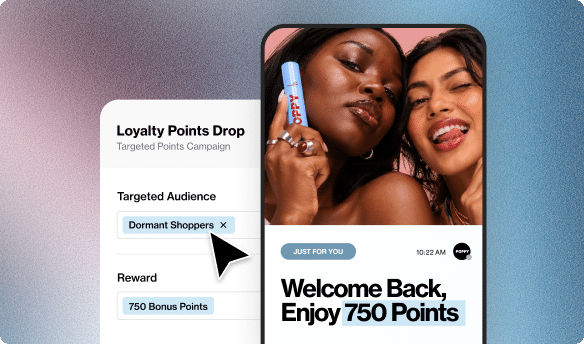
- Personalized Offers: Use segmentation to send different offers to different people. A first-time visitor might see a 10% off welcome popup. A VIP loyalty member might see an exclusive “early access” banner instead. (This is a key use case for the segmentation features in a tool like Yotpo Loyalty).
A/B Testing Your Store
How do you know if a green “Buy Now” button works better than a red “Add to Cart” button? You test it.
A/B testing (or split testing) means showing two different versions of a page to two different sets of visitors to see which one performs better.
- What to Test: Focus your tests on high-impact elements rather than random changes. Test elements like:
- Your main headline or value proposition
- Your CTA button color, text, and placement
- Your hero image
- Your product page layout
- Tools: Use A/B testing tools (like VWO, Optimizely, or Shopify apps) to run these tests.
- Be Patient: You need to run a test long enough to get a “statistically significant” result. Don’t call a test after 20 visitors.
Using Exit-Intent Popups (Carefully)
Popups can be disruptive if used incorrectly. But when used correctly, they can be a powerful conversion tool. An exit-intent popup triggers only when a user’s mouse moves toward the “close” button, signaling they’re about to leave.
This is your last chance. Don’t just beg them to stay. Offer them real value.
- “Wait! Get 10% off your first order.”
- “Before you go, join our list for exclusive offers.”
- “Can we help? Chat with an expert now.”
Implementing Live Chat and Chatbots
Sometimes, a shopper just has one specific question that’s stopping them from buying. (“Do you ship to Canada?” “Will this fit a 15-inch laptop?”).
- Live Chat: Offering live chat allows you to answer these pre-sale questions instantly, removing that final barrier to purchase.
- Chatbots: You can’t be online 24/7. A well-programmed chatbot can answer common FAQs instantly, and if it can’t, it can create a support ticket for a human to answer later. This instant support builds confidence and saves sales.
Conclusion: Start Optimizing Today
Increasing your Shopify conversion rate is a journey, not a destination. It’s not a “set it and forget it” task. It’s an ongoing process of listening to your customers, analyzing your data, and making incremental improvements.
Don’t get overwhelmed. You don’t have to do all of this at once. Start with the fundamentals:
- Check your site speed and mobile experience.
- Implement a best-in-class reviews solution to build social proof.
- Read your product descriptions and make sure they sell benefits, not just features.
- Walk through your own checkout and remove any friction you find.
By focusing on these key areas—technical performance, trust, user experience, and retention—you will create a store that not only gets traffic but converts that traffic into lasting, profitable customer relationships.
FAQs: How to Increase Shopify Conversion Rates
How do I calculate my Shopify conversion rate?
You can find it directly in your Shopify Analytics dashboard under “Online store conversion rate.” It’s calculated by taking the number of sessions that resulted in a sale, dividing it by the total number of sessions, and multiplying by 100.
What’s the fastest way to improve my Shopify conversion rate?
The fastest ways to get a lift are usually by adding high-quality product reviews and streamlining your checkout. Reviews build immediate trust, and simplifying checkout (by adding express payment options and offering guest checkout) removes the biggest barriers to purchase.
Do I really need a mobile-first design?
Yes, absolutely. With over 70% of traffic coming from mobile, a poor mobile experience is like locking the door to 7 out of 10 potential customers. If your site is frustrating to use on a phone, shoppers will simply leave.
How many reviews are enough for a product page?
While even one review is better than zero, data shows that conversion rates increase significantly as more reviews are added. Aim to get at least 5-10 reviews for a product. Having visual reviews (photos/videos) is often even more impactful than the total number.
Can bad reviews actually help conversions?
Believe it or not, yes. A page with only 5-star reviews can look fake. Having a few 3- and 4-star reviews (and even a 1- or 2-star) makes your overall rating more authentic and believable. The key is to respond to negative reviews professionally and publicly, showing you’re an engaged and caring brand.
Should I force users to create an account to check out?
No. Never. This is one of the top reasons for cart abandonment. Always offer a prominent “Guest Checkout” option. You can give customers the option to create an account after their purchase is complete.
Is free shipping always better for conversions?
Shoppers are psychologically wired to love free shipping. However, it has to make financial sense for your business. A very effective strategy is offering free shipping over a certain order value (e.g., “Free shipping over $75”). This can both increase conversions and your average order value.
How does a loyalty program help new customer conversions?
While loyalty programs are primarily for retention, they can help convert new customers. Advertising your program (“Join our rewards club to get 50 points on your first order!”) gives shoppers an immediate, extra incentive to make that first purchase.
What’s the difference between Yotpo Reviews and Yotpo Loyalty?
They are two separate, best-in-class products. Yotpo Reviews is a solution focused on helping you collect and display high-impact product reviews and visual UGC to build trust and convert new shoppers. Yotpo Loyalty is a solution focused on helping you build a customized loyalty and referrals program to retain existing customers and drive repeat purchases.
Can I A/B test on my Shopify store?
Yes. While Shopify doesn’t have a native, store-wide A/B testing tool, you can use third-party Shopify apps or platforms like VWO or Optimizely to test different versions of your pages and find out what converts best.
Are popups bad for my conversion rate?
Annoying, immediate popups are bad. But strategically used popups, like an “exit-intent” popup that offers a discount to a user who is about to leave, can be very effective at capturing otherwise lost sales and email signups.
How much does site speed really matter?
It matters immensely. A 1-second delay can drop conversions by 7%. A slow site feels unprofessional and untrustworthy, and most users will not wait. It’s a foundational element of CRO.
Where should I put my product reviews?
At a minimum, they must be on your product pages, displayed prominently near the product title and price. You should also showcase your best reviews on your homepage (in a carousel) and even on category pages to build trust as shoppers browse.











 Join a free demo, personalized to fit your needs