



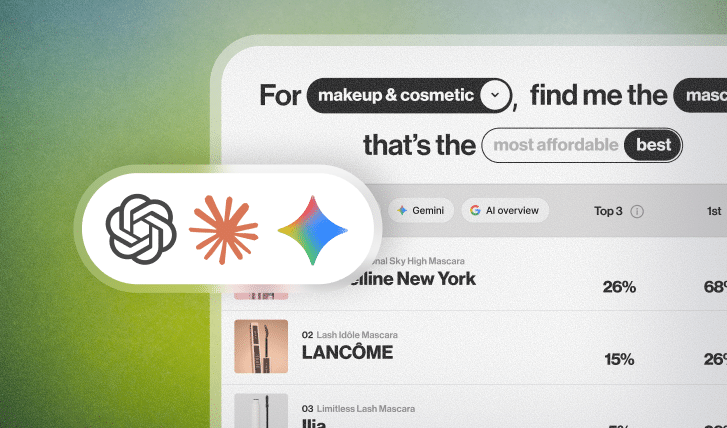







AI product discovery is no longer a futuristic concept; it’s reshaping how consumers find and purchase products right now. With 51% of consumers already using AI tools for product discovery and brands optimized for AI seeing conversion rates 9 times higher, understanding this shift isn’t optional, it’s essential for staying competitive in eCommerce.
But this shift comes with real challenges. The rules of AI product discovery have fundamentally changed, and strategies that worked brilliantly for traditional SEO don’t necessarily translate to AI recommendations. Success in this environment isn’t just about great products and marketing, it’s about making your brand visible and trustworthy to AI systems.
At our recent AI Uncensored event, industry experts broke down exactly how AI product discovery is changing the shopping journey and what eCommerce brands can do to adapt. What follows is a practical guide to help you navigate this new landscape.
Key Takeaways: AI Product Discovery
- Half of shoppers have already shifted to AI: 51% of consumers now use AI tools for product discovery, and brands optimized for AI are seeing conversion rates 9 times higher than traditional traffic.
- Traditional search is declining rapidly: Organic search traffic is expected to drop 25% by 2026 as LLM-driven traffic rises to outpace SEO within a few years.
- AI evaluates trust through three factors: To recommend your brand, AI triangulates your product data, expert validation from media and reviews, and authentic user sentiment from customers.
- Reviews are infrastructure, not just social proof: AI can analyze hundreds of reviews that humans won’t read – detailed, authentic reviews directly influence whether AI recommends your products.
- Yotpo helps brands win in AI search: Through content collection, indexability optimization, and AI performance audits, Yotpo enables brands to appear in AI product discovery results.
How AI Product Discovery Is Already Changing Shopping Behavior
Let’s start with a reality check: 51% of consumers are already using AI tools to discover products and get personalized recommendations. That means half of shoppers are no longer starting solely with Google, marketplaces, or brand websites. They’re starting with AI assistants.
To put this into perspective, it took the internet itself several years to reach 400 million users. ChatGPT did it in just 18 months. This isn’t just adoption—it’s an explosion. And what’s most interesting is that these aren’t passive users just browsing around. These are people asking buying questions over a billion times a week. And they’re not just researching – around 59 million times a month, they’re clicking through to buy.
The revenue data is even more striking: brands optimized for AI discoverability are seeing conversion rates 9 times higher from this new style of traffic to their sites.
Why AI Product Discovery Is Different From Traditional Search
The way shoppers think about AI has changed significantly, even over the last year. But it’s not just about behavior; the underlying infrastructure of search is shifting.
According to data from Semrush and Gartner, traditional organic search traffic is expected to drop by 25% in 2026. At the same time, traffic coming from LLMs is rising rapidly and is expected to outpace SEO-driven traffic within a few years.
What’s important here isn’t just that traffic is shifting, it’s that the entire model of discovery is changing:
- Traditional search is about ranking against a few keywords
- LLMs are about being referenced in answers
So even though traffic volume may shrink, each visitor coming from an LLM carries more intent because they’re reaching your brand as a recommended solution, not through a long list of competitive links.
From Keywords to Conversations
Think about how different the shopping journey has become. A traditional Google search might be just “women’s leggings” or “black leggings gym”—typically around 3 words. But when shoppers use AI, they can ask much more nuanced questions like “What are the best sustainable leggings under £60 for high-intensity workouts that won’t pill after a few washes?”
The AI understands context, intent, and nuance in a way that traditional search never could. And here’s the critical part—that detailed, specific query gets a detailed, specific answer with curated product and brand recommendations.
This shift from short keywords to full conversational-style questions fundamentally changes the entire discovery model.
From SEO to AEO: Answer Engine Optimization
We’re moving from SEO (Search Engine Optimization) to AEO (Answer Engine Optimization).
SEO was built for keyword matching. If someone typed “leggings women,” the goal would be to rank as high as possible on a page of links.
But when someone asks an AI agent “What are the best sustainable leggings under £60 that could be delivered in time for my pilates class on Sunday?” the output isn’t a long list of links anymore. It’s a fully formed answer with a curated set of products.
So the question changes from “How do I rank?” to “How do I get included in as many relevant answers as possible?”
And that’s why AEO matters. Because in an AI-first world, visibility isn’t about appearing on page 1. It’s about being the product that AI chooses to recommend.
Optimizing for AI Product Discovery: The Three Confidence Factors
So how can you make sure your brand appears in AI product discovery results?
AI doesn’t just read your website and recommend your brand, it triangulates truth from three main sources:
1. Brand Data: What You Say About Yourself
First, AI pulls your brand data—your product specs, prices, what’s in stock. But here’s the thing: it doesn’t just trust you.
2. Expert Validation: What Authorities Say About You
Second, it checks for expert validation. Media coverage, expert reviews, industry awards. This establishes credibility.
3. User Sentiment: What Customers Say About You
Third, it analyzes user sentiment: owned reviews, Reddit discussions, social proof. This confirms real-world performance.
How Authenticity Drives AI Recommendations
AI engines really prioritize authenticity. While there are core building blocks required in foundational structured data, authenticity adds a crucial layer.
AI is able to index user-generated content from more sources than ever before. Here’s the reality: no shopper is going to read 300 brand reviews. But AI can, and AI does.
This means detailed, high-quality reviews can directly influence whether your brand appears in AI recommendations. For this reason, review execution is a key part of a well-rounded discoverability strategy.
How to Win at AI Product Discovery: Next Steps
The shift to AI product discovery is happening now, and the brands that adapt quickly will have a significant advantage. Here’s where to start:
Audit Your Three Confidence Factors
- Is your product data complete, structured, and AI-readable?
- Do you have expert validation through media coverage and reviews?
- Are you collecting and displaying authentic user reviews effectively?
Prioritize Review Collection: High-quality, detailed reviews aren’t just social proof for human shoppers, they’re essential data for AI systems making recommendation decisions.
Make Your Content AI-Readable: Ensure your product information, reviews, and site content are properly structured with schema markup and accessible in formats AI can parse.
Measure Your AI Performance: Start tracking where and how often your brand appears in AI-generated recommendations. What you can measure, you can improve.
The question isn’t whether AI product discovery will change how shoppers find products – it already has. The question is whether your brand will be ready when shoppers ask AI for recommendations in your category.
This article is based on insights from our recent event on AI product discovery. The strategies outlined here are being implemented by leading eCommerce brands to ensure they remain visible as shopping behavior continues to shift toward AI-mediated discovery.
FAQs About AI Product Discovery
What is AI product discovery in eCommerce?
AI product discovery is the process by which artificial intelligence tools help shoppers find and evaluate products through conversational queries rather than traditional keyword searches. Instead of browsing through pages of search results, AI analyzes a shopper’s detailed question and provides curated product recommendations based on intent, context, and nuance. This technology is transforming how consumers shop, with 51% of shoppers now using AI tools for product research and purchase decisions.
How does AI product discovery differ from traditional SEO?
Traditional SEO focuses on ranking for specific keywords to appear high in search results, while AI product discovery emphasizes being referenced in AI-generated answers. When someone searches “women’s leggings” on Google, they see a list of links to sort through. When they ask ChatGPT “What are the best sustainable leggings under £60 for high-intensity workouts?” they receive a curated answer with specific brand recommendations. The shift from keyword matching to answer generation means brands need to optimize for Answer Engine Optimization (AEO) rather than traditional Search Engine Optimization (SEO).
What factors does AI use to recommend products?
AI evaluates products using three main confidence factors before making recommendations. First, it analyzes brand data including product specifications, pricing, and inventory details to understand what you offer. Second, it checks for expert validation through media coverage, professional reviews, and industry awards to establish credibility. Third, it examines user sentiment by analyzing customer reviews, Reddit discussions, and social proof to confirm real-world performance. Brands that excel in all three areas, like Patagonia with its 94% recommendation rate, significantly outperform those with gaps in their confidence factors.
How can reviews improve my brand’s AI discoverability?
Detailed, authentic reviews are critical infrastructure for AI product discovery because AI systems can analyze hundreds of reviews that human shoppers will never read. While no shopper will read through 300 reviews, AI processes all of them to assess product quality, identify common themes, and gauge overall sentiment. High-quality reviews with specific details about materials, fit, use cases, and performance directly influence whether AI recommends your products. Yotpo helps brands optimize review collection, indexability, and structure to ensure AI can effectively parse and trust your customer feedback.
What should I do first to optimize for AI product discovery?
Start by auditing your three confidence factors to identify gaps in how AI perceives your brand. Ensure your product data is complete, properly structured with schema markup, and includes detailed specifications that AI can parse. Prioritize collecting detailed, authentic customer reviews and make sure they’re visible in your site’s HTML where AI can access them. Implement structured data for FAQs, product information, and image alt text to improve machine readability. Consult with Yotpo’s experts to conduct an AI discoverability audit and develop a tailored strategy for improving your brand’s visibility in AI-powered search results.
How quickly is AI product discovery growing?
AI product discovery is experiencing explosive growth, with ChatGPT reaching 400 million users in just 18 months compared to the several years it took the internet itself to reach that milestone. Currently, 51% of consumers use AI tools for product discovery, and traditional organic search traffic is expected to drop 25% by 2026 as LLM-driven traffic continues to rise. Shoppers are asking buying questions over a billion times per week through AI assistants, with approximately 59 million monthly clicks through to purchase. Brands optimized for AI discoverability are already seeing conversion rates 9 times higher than traditional search traffic.





 Join a free demo, personalized to fit your needs