








AI is changing ecommerce mostly by changing where shoppers start looking. Shoppers can now ask a chatbot to pick something. About 49% of US adults say they’ve used an AI chatbot such as ChatGPT or Gemini, according to Pew Research Center. Many skip the search bar and ask for a recommendation. For plenty of shoppers, that’s quietly become routine.
Search is shifting too, and so are personalization and the buying decision. Discovery is different. It’s how a shopper first hears about a product and narrows a list of options. That’s where the change matters most for brands right now.
Key takeaways
- AI chatbots are now mainstream. About 49% of US adults have used one. ChatGPT usage alone climbed to 44% from 34% in a single year.
- AI-referred traffic to US retail sites rose 393% year over year in Q1 2026. That traffic now converts better than traffic from other sources.
- Google’s AI-generated summaries suppress clicks on regular results now. They appear on 48% of tracked searches and measurably cut organic click-through.
- Shoppers now lean on AI to interpret product reviews, not just to find products. That shift can make real review content a meaningful input into AI recommendations.
- AI’s influence extends into the purchase itself. It shaped about a fifth of orders during Cyber Week 2025. It also left AI-assisted shoppers more confident and less likely to return what they bought.
- Discovery, not the checkout moment, is where AI is changing ecommerce the most. It’s also where brands stand to lose the most ground if they aren’t visible.
How AI Is Changing Product Discovery
Discovery used to start with a search box. A shopper typed in a query. Then they scanned a page of links and clicked through a handful of options. Shoppers who use an AI chatbot now skip most of that. They ask the assistant for an answer. It answers with a short list, sometimes just one product, instead of a page of links to sort through.
Who leans on AI to shop these days? The crowd is wider than most brands assume. Pew Research Center found that 44% of US adults have used ChatGPT, up from 34% just a year earlier. That is close to half the adult population, reached in twelve months. Each of those people can, and often does, ask an assistant what to buy.
That shift matters. A shopper who never scrolls a results page never sees the products that missed the AI’s short list. Being the brand an AI engine mentions is starting to work the way a first-page ranking used to.
Why Discovery Is the Biggest Shift
Discovery stands apart from search, personalization, and buying, the other parts of the journey that are shifting too. It happens earliest. It’s also the hardest to see if a brand is watching only its own site analytics.
AI traffic to US retail sites rose 393% year over year in the first quarter of 2026. By March 2026, that traffic was converting 42% better than traffic from any other source. A year earlier, it had converted 38% worse, a real reversal, per Adobe Analytics, reported by TechCrunch.
Revenue per visit from those AI-referred visits was also 37% higher than revenue per visit from non-AI traffic as of March 2026. The gap goes beyond raw traffic volume. Shoppers arriving through AI-driven discovery tend to be further along in deciding, and more ready to buy.
That extra revenue lines up with how those visitors behave once they land. Per Adobe Analytics, reported by TechCrunch, shoppers who arrive from generative-AI sources spend about 48% more time on site than other visitors. That’s meaningful, and it doesn’t stop there. They also view roughly 13% more pages per visit. An AI-driven recommendation seems to earn a longer, closer look.
How AI Is Changing Search
Google’s Results Page Looks Different Now
Search hasn’t disappeared, though the page shoppers land on looks different than it did a year ago. Google’s AI-generated summary now appears on 48% of tracked search queries, up from roughly 30% a year earlier, per BrightEdge.
Google AI Overviews works differently from the AI assistants shoppers use. It’s a summary box on the results page rather than a standalone chat. The underlying pattern hasn’t changed. Links used to fill that space, and now an AI-generated answer sits between shoppers and the list they used to scroll through.
What This Means for Shoppers and Brands
Most US adults now at least sometimes read that AI-generated summary. 60% say they do, per Pew Research Center.
Reading the summary is changing whether shoppers click through at all. When an AI summary appeared, Google users clicked a regular organic result only 8% of the time, versus 15% without one. That’s according to Pew Research Center. Just 1% clicked a link inside the summary itself.
For a brand, that means fewer shoppers ever reach a product page through a regular click. That’s true even when the brand’s product is the one the summary describes. Being named correctly inside the answer matters more than it used to. On the 48% of searches where an AI summary now appears, the answer is the entire experience.
How AI Is Changing Personalization
Reviews Are Becoming an AI Input
Personalization used to mean a website remembering a shopper’s last view, a preferred size, or a favorite color. It means something more now. An AI assistant can work through a product’s reviews, pull out the details that answer a shopper’s specific question, and shape a response around them.
Reviews are a big part of why this works. Most shoppers can recall the specific review that convinced them to buy. They trust reviews more than almost anything else a brand puts in front of them. A January 2026 survey reported by Digital Commerce 360 found that 84% of Americans say they trust online product reviews. That’s a high bar. AI systems are often trained on that kind of everyday language, and can draw on that same first-person detail when shaping an answer.
Shoppers are also turning to AI to make sense of reviews. That habit is separate from using AI simply to find products in the first place. 33% of shoppers who use AI while shopping turn to it to help interpret reviews. That share trails AI product research (41%) and edges past AI deal-hunting (31%), per an IBM-NRF study of over 18,000 consumers.
Onsite Personalization Is Getting an AI Layer Too
The onsite tools brands run for shoppers are picking up AI features as well. Review platforms now offer AI-generated summaries. These condense dozens or hundreds of reviews into the few points a shopper needs. They also offer smarter sorting, surfacing the most relevant reviews first rather than just the newest ones.
Changes like these matter beyond convenience. A brand’s own site becomes a better source of detailed, credible content. Both shoppers and AI engines tend to look for that kind of content.
How AI Is Changing the Buying Decision
Shoppers Trust the Recommendation More Than Expected
AI’s influence doesn’t stop at research. Among consumers who use AI for online shopping, 79% say they feel more confident in a purchase. That confidence comes after using an AI assistant. 69% say they’re also less likely to return an item they bought with AI’s help, per Adobe.
That confidence and lower return rate point to something clear. AI-assisted shoppers seem to reach a decision with better information, and the process often ends up faster too. Fewer returns also protect a brand’s margins, even when the AI conversation itself never closes the transaction.
AI’s Reach Into Peak-Season Sales
The clearest evidence that AI now touches actual purchases, not just research, comes from peak shopping season. During Cyber Week 2025, AI influenced about 20% of orders and roughly $67 billion in global online sales. That was out of $336.6 billion total, up 7% year over year, per Salesforce.
That’s influence, not full automation. AI shaped the decision in about one of every five orders rather than completing the purchase on its own. But a fifth of peak-season orders is a large enough share to matter. Treating AI visibility as optional stops making sense for a brand that depends on that shopping window.
What Comes Next: Agentic Commerce
Some of that influence may eventually turn into direct action. McKinsey estimates that agentic commerce, AI agents completing purchases on a shopper’s behalf, could generate up to $1 trillion in US B2C retail revenue by 2030, according to a joint report with ICSC.
That figure is a projection, not a measured result. It also describes a different behavior than the research-and-recommend pattern driving most of today’s AI-referred traffic. It’s worth watching, but it shouldn’t be confused with what AI is doing to ecommerce today.
Why Retailers Are Paying Attention Now
None of this is happening in a vacuum. 91% of retail and CPG companies surveyed by NVIDIA said they are either actively using or assessing AI. That finding comes from NVIDIA’s third annual State of AI in Retail and CPG survey. The figure covers AI adoption broadly, across use cases like supply chain, forecasting, and pricing, not AI-visibility work specifically.
For an individual brand, the more direct signal is what’s happening in its own category. That means watching which competitors show up in AI answers. It also means noticing which questions shoppers are asking that the brand hasn’t answered anywhere an AI system can find.
What Brands Need to Do About the Shift
So much of the buying journey now runs through an AI-generated answer. Most brands no longer need to ask whether to respond. The real question is where to start. In Yotpo’s experience, the work breaks down into three areas that reinforce each other rather than three separate projects.
Onsite Readiness
The first area is a brand’s own site. Structured data and clean product pages can help an AI system read a catalog correctly. That means not guessing at size, materials, or use case. AI engines can draw on structured data, page content, and other signals when forming an answer. A catalog that’s hard to read may be easy to leave out.
Content That Answers Real Questions
The second area is content. It means building content, grounded in real reviews and support data. That content should answer the specific questions shoppers ask an AI assistant. Generic marketing copy tends to carry less weight here than language that mirrors how customers describe a product.
Showing Up Where AI Already Looks
The third area is activation. It covers the forums, marketplaces, and communities an AI engine may treat as trustworthy for a given category. Genuine mentions in those places tend to carry more weight than mentions a brand manufactures directly. An AI system might consult many sources, and trying to control every one of them rarely works.
Sequencing matters less than coverage here. A brand that invests a modest amount in all three areas usually ends up more visible. That beats perfecting a single area while neglecting the other two.
Where Yotpo Discover Fits
Tracking all of this by hand, across every AI engine a brand’s shoppers might use, isn’t realistic. A spreadsheet of manual prompts can’t keep up. This is the gap Yotpo Discover was built to close.
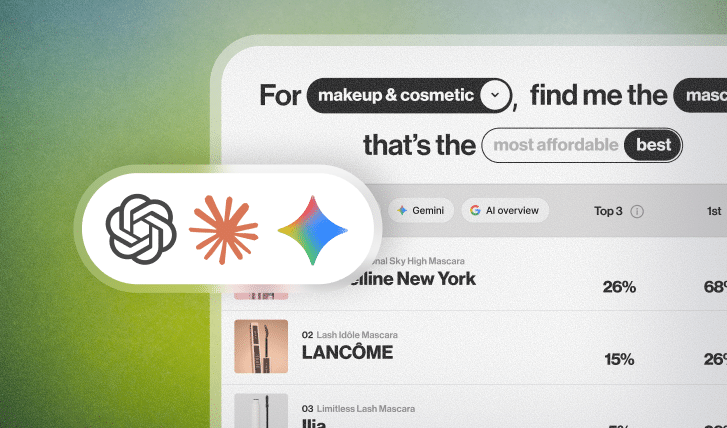
Discover is Yotpo’s purpose-built AI-visibility platform for ecommerce. It’s built on Yotpo’s existing base of authentic reviews, verified purchase data, and loyalty signals. It tracks how a brand’s products appear across ChatGPT, Gemini, and Google AI Mode. Then it deploys three coordinated agents, Onsite, Content, and Activation, to close the gaps it finds.
Brands like Beekman 1802 and David Protein work with Yotpo Discover. What the platform offers those brands is visibility: a clear read on whether an AI assistant recommends their products at all, and where the gaps are when it doesn’t.
Brands ready to see where they stand now can learn more and request a demo at yotpo.com/discover. Or they can start with a free AI visibility score from Yotpo. That gives a concrete read on how their products show up in AI answers today.
Frequently asked questions
How is AI changing ecommerce the most?
The biggest shift is in discovery. Shoppers who use ChatGPT or Gemini now ask the assistant directly for a product recommendation. That’s instead of scanning a page of search results. AI-referred traffic to US retail sites has also been growing far faster than traffic from other channels. Other parts of the journey, like search and personalization, are changing too. But discovery is currently the most visible and most important shift for brands.
Does AI influence ecommerce at checkout, or earlier in the journey?
AI mostly shapes the earlier part of the journey. It drives the research, comparison, and shortlisting stage of the shopping process. That happens well before a shopper commits to buy, rather than at the final checkout moment. A brand that shows up clearly during that earlier research phase tends to make more shortlists. That holds even when the transaction later happens through the usual channel.
Which AI engines matter most for ecommerce brands right now?
Yotpo Discover tracks how products appear across ChatGPT, Gemini, and Google’s AI Mode. Google AI Overviews, the summary box that now appears on 48% of tracked search queries, is a separate surface worth watching. Other AI tools are part of the broader landscape too. Rather than ranking one engine above another, the priority is keeping product data clear and consistent. That way, any of them can represent it correctly.
Does AI replace the need for SEO?
No, AI doesn’t replace SEO. AI systems tend to rely heavily on content that’s already been crawled and indexed. Well-structured pages make that content easier to use as raw material for an answer, and that’s a routine part of technical SEO. A strong SEO foundation tends to support AI visibility as well. The two work best together, as reinforcing layers of one ongoing visibility strategy.
How can a brand tell whether AI is already sending it shoppers?
Most site analytics still undercount AI-referred visits. They weren’t originally built to distinguish an AI assistant’s traffic from any other kind of referral. The most direct way to check is to look at referral sources tied to AI platforms. It also helps to run the brand’s own products through the AI assistants shoppers actually use. That shows how a brand is currently being described and recommended.











 Join a free demo, personalized to fit your needs