










Online retail in 2026 doesn’t just look different; it operates on an entirely new frequency. We’ve left the reactive models of the early 2020s in the dust, entering an era of predictive, agentic commerce where the friction between desire and acquisition has effectively vanished. For developers and merchants, the game has changed. It’s no longer about ensuring basic functionality. It’s about achieving architectural mastery.
We are seeing a move away from “growth at all costs” toward “efficiency at scale.” Why? Because the numbers demand it. The median company in the Yotpo DTC Index has grown revenue roughly 3% year-to-date in 2025, signaling that the easy money era is over. With growth harder to come by, margins are the new battleground.
The tools are smarter, the data is cleaner, and the customer—often an AI agent acting on behalf of a human—is more demanding. If you are still relying on the playbooks of 2023, you are already behind. This guide dissects the technical, strategic, and operational trends separating market leaders from legacy players.
Key Takeaways: 26 Ecommerce Trends for 2026
- Agentic AI is the New User: Optimization isn’t just for humans anymore; you must optimize for the AI agents that browse and buy on their behalf.
- Loyalty is a Data Strategy: Retention programs have evolved from simple point systems to complex data engines that drive personalization.
- Authenticity Beats Polish: In an AI-flooded web, verified reviews and user-generated content (UGC) are the only trust signals that matter.
- Composable is Standard: Monolithic architectures are dead; winners build flexible, API-first stacks that adapt instantly.
1. Agentic AI Commerce
We have moved past simple chatbots. In 2026, “Agentic AI” refers to autonomous software agents that can perform multi-step tasks without human intervention. These agents don’t just answer questions; they execute purchases.
The Deep Dive
For years, we optimized for SEO, helping humans find us on Google. Now, we must optimize for AIO (Artificial Intelligence Optimization). Consumers are delegating the “search and filter” phase of shopping to personal AI assistants. A user might say, “Find me a sustainable running shoe under $150 with high arch support and buy the one with the best reviews.” The AI agent crawls the web, reads the specs, verifies the reviews, and executes the transaction.
Implementation Challenge
The real barrier here is the “Trust Gap.” Shoppers are hesitant to let AI handle their credit cards. To fix this, you need to implement Agentic Payment Protocols. This effectively means updating your checkout API to recognize and trust authorized bots, rather than blocking them as fraud. These protocols set safe boundaries—like preset spending limits or biometric approval triggers—allowing the AI to execute the purchase while the human stays in control. If your site can’t distinguish between a helpful shopping agent and a malicious bot, you aren’t just losing a transaction; you are breaking the chain of convenience. Secure the protocol, and you unlock the wallet.
2. The Renaissance of Authentic Reviews
As AI-generated content floods the internet, trust has become the most expensive currency. Consumers are skeptical of polished marketing copy because they know a Large Language Model (LLM) could have written it. They crave the raw, unvarnished truth of other humans.
Stop Asking Manually
Let’s be clear: Sending manual email requests for reviews is a dead strategy. It is a resource drain that yields stale data. In 2026, brands must leverage AI to automate the request loop, timing the ask perfectly—when the customer is most likely to convert—to ensure a steady stream of fresh content without human effort.
Yotpo Reviews: Addressing the Trust Deficit
This is where a platform like Yotpo Reviews demonstrates its specific value. It addresses the capability of “Authenticity verification” by moving beyond basic collection. Yotpo leverages AI not to fake content, but to analyze it. Its “Smart Prompts” feature encourages buyers to leave specific feedback about fit, quality, and usage cases.
Furthermore, Yotpo excels in syndication. It ensures that the high-quality reviews you collect are pushed to Google Shopping and Meta. This is critical because it signals to search algorithms that your products are legitimate, creating a verified “paper trail” that AI agents and human shoppers prioritize. See how Authenticity Verification drives revenue.
3. Loyalty 3.0: The Emotional Data Engine
Points are boring. In 2026, transactional loyalty (buy X, get Y) is the baseline. The new standard is “Emotional Loyalty,” where the program fosters a sense of belonging.
The Economic Reality: The “Lipstick Effect”
Why is loyalty surging? Because despite inflation, consumers haven’t stopped spending—they’ve just shifted. We are seeing a “Lipstick Effect” where shoppers splurge on affordable luxuries (like a $6 lip gloss) while pulling back on big-ticket items. Loyalty programs capture this behavior by rewarding frequent, smaller purchases, turning a “treat yourself” moment into a habit.
“Shoppers aren’t just looking for a discount; they are looking for a deal. Your loyalty program must offer value that feels exclusive, not just transactional.”
— Ben Salomon, Growth Marketing Manager at Yotpo
Yotpo Loyalty: Engineering Retention
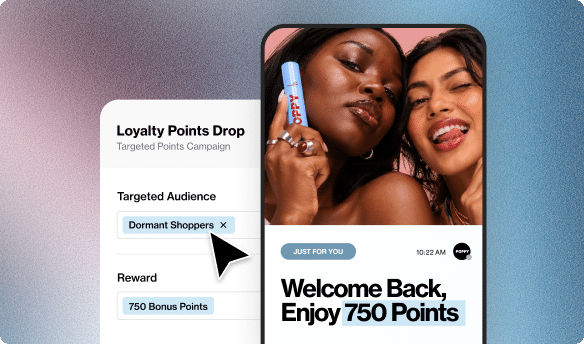
Yotpo Loyalty addresses this by acting as a segmentation engine. It allows non-technical marketers to spin up “VIP Tiers” that offer experiential rewards—like early access to sales—driving emotional connection. The reporting suite offers a granular look at “Program ROI,” showing exactly how much revenue is generated from loyal customers versus non-loyal ones. Turn your loyalty program into a performance channel.
4. Hyper-Personalization: Predict, Don’t Just React
We used to personalize based on what a customer did. In 2026, we personalize based on what they are about to do.
The Technology
This relies on “Edge AI.” If a user hovers over a winter coat for 3 seconds but doesn’t click, the next page load should instantly feature winter accessories. This requires a headless architecture where the frontend is decoupled from the backend.
The Business Case
Generic experiences convert at 2%. Hyper-personalized experiences convert at 6%+. Your website needs to stop acting like a static catalog and start acting like a perceptive sales associate that reads body language. See how data-driven personalization lifts conversion.
5. Zero-Click Commerce
The funnel is dead. Long live the “Buy Button.”
The Concept Zero-Click Commerce describes the trend where transactions happen in situ. A user is watching a TikTok video? They buy it there. They are chatting with a support agent? They buy it in the chat.
Technical Requirements
This requires “Checkout Extensibility.” You are no longer driving traffic to a website; you are distributing your checkout API to where the traffic already is.
6. Sustainable Logistics & Transparency
Greenwashing is illegal in the EU and heavily scrutinized in the US. In 2026, you cannot just say you are sustainable; you must prove it with granular data.
Digital Product Passports (DPP)
The EU now mandates Digital Product Passports for many categories, turning sustainability from a marketing buzzword into a data compliance requirement. This is a digital record, often secured on a blockchain, that tracks the entire lifecycle of a product from raw material sourcing to shelf.
For merchants, this means your Product Information Management (PIM) system needs new, verifiable fields for “Carbon Footprint,” “Material Origin,” and “Recyclability.” Shoppers are actively filtering for “Carbon Neutral Shipping” options; if your checkout doesn’t offer a “Green Delivery” choice (typically slower, batched shipping), you risk alienating a growing segment of values-driven consumers who demand proof, not just promises.
7. Visual Search & Discovery
Text search is archaic. We are visual creatures, and the search bar of 2026 must reflect that reality.
Multi-Modal Search
Users now search by uploading an image, asking, “Find me this chair but in blue,” or “Does this match my living room?” Your onsite search bar must support image drag-and-drop capabilities. This requires investing in Vector Databases that convert your product catalog images into vector embeddings.
When a user uploads a photo, the AI doesn’t look for keywords; it compares the vector of the upload to your catalog and finds the closest mathematical match. This shifts the burden of discovery from the user’s ability to describe an item to the machine’s ability to recognize it, significantly shortening the path to conversion for visually driven categories like fashion and home decor.
8. Headless & Composable Commerce
This is no longer a buzzword; it is the default for anyone doing over $5M GMV.
The “Why”
Monolithic platforms are too slow. Composable Commerce allows you to pick the “best of breed” for every function—Shopify for checkout, Contentful for blogs, Yotpo for retention. You glue these together using APIs, allowing you to swap out a vendor without rebuilding the whole site.
9. B2B Ecommerce Consumerization
B2B buyers are just B2C consumers at work, and their patience for clunky, manual ordering has evaporated.
Why does this matter?
Because relying on faxed orders or sales calls is a scalability bottleneck that bleeds margins.
The Shift
To capture modern wholesale revenue, your B2B portal must mirror the slick, seamless experience of your DTC site. We’re talking high-res imagery, mobile responsiveness, and instant search.
The Difference
The complexity is now invisible. While the front end looks simple, the backend handles the heavy lifting: dynamic pricing lists unique to every client, “Net 30” terms, and bulk reordering. If you force wholesale partners to talk to a human for basic tasks, you lose them to brands that offer self-service efficiency. Automating this flow is the only way to grow B2B without bloating your payroll.
10. Social Commerce Maturity
TikTok Shop was just the beginning; the entire social ecosystem has become a transactional layer.
The Creator-Affiliate Hybrid
In 2026, every customer is a potential affiliate. Platforms are making it seamless for a regular user to share a product link and earn a micro-commission instantly, democratizing influence. This fundamentally changes your “Customer Acquisition Cost” (CAC) model. Instead of paying Facebook for expensive top-of-funnel ads, you are paying your customers directly for distribution.
This shifts the budget from “renting” attention to rewarding advocacy. To make this work, you need robust tracking pixels and server-side API integrations (CAPI) to attribute these sales correctly in a cookie-less world, ensuring you are rewarding the right creators for the actual revenue they generate.
11. Immersive Commerce (Spatial Web)
With the mass adoption of lightweight AR glasses, “Spatial Commerce” has graduated from novelty to utility.
Virtual Try-On 2.0
We have moved beyond the floating, unrealistic 3D models of the past. The new standard is physics-based rendering. You can see how a fabric drapes on your specific body type or how a couch physically fits into the corner of your room, accounting for lighting and shadows. This isn’t just about “cool factor”—it’s a profit protection strategy.
By giving customers a realistic preview, you drastically reduce returns caused by “item not as described” or poor fit. Implementation requires investing in high-fidelity 3D assets (GLTF/USDZ formats), which are becoming the JPEGs of 2026.
12. Voice Commerce 2.0
Voice assistants have finally evolved from simple command-response bots to intelligent, context-aware shopping aides.
Conversational Context
The old Alexa could only handle “Order paper towels.” The 2026 assistant proactively manages your household: “I noticed you usually buy paper towels every 4 weeks, but you have a party on your calendar this Saturday. Should I order a double pack?” This shift requires merchants to optimize for “Long-tail conversational queries.”
Your product descriptions and metadata need to be written in natural language that sounds fluid when read aloud by a synthetic voice. If your content is stuffed with keywords rather than natural phrasing, the voice assistant will bypass you for a brand that sounds like a helpful human.
13. Subscription Evolution: Membership
The subscription box is outdated; the broader membership model is gaining traction.
Access over Ownership
People are paying for access to better pricing, community, and faster shipping. This requires a billing engine that handles proration and pausing to prevent involuntary churn. Learn more about subscription retention engines.
14. Mobile-Only Architecture
We used to design for Desktop and “make it responsive” for Mobile. Now, we design for Mobile and “scale it up” for Desktop.
Thumb Zones & PWAs
With mobile accounting for the vast majority of traffic, navigation must move to the “Thumb Zone”—the bottom of the screen—using swipe-based menus rather than tiny top-bar clicks. Furthermore, your site must be a Progressive Web App (PWA). It should be installable on the home screen and capable of working offline.
If a user loses signal in the subway, they should still be able to browse your catalog and add items to the cart, with the transaction syncing automatically once connectivity is restored. This ensures you never lose a sale to a spotty connection.
15. Privacy-First Data (Zero-Party)
Third-party cookies are gone, and Apple killed the IDFA. You are flying blind unless you own the data yourself.
Zero-Party Data
This is data the user voluntarily gives you, typically via interactive quizzes or preference centers. “What is your skin type?” “What is your running style?” You store this in your Customer Data Platform (CDP) and use it to power hyper-personalization. The key is Trust and Transparency. You must frame this data collection as a value exchange: “We are asking for your birthday so we can send you a gift,” not just to harvest data for ads. This consensual relationship builds a foundation for long-term loyalty that survives browser privacy updates.
16. Gamification of Shopping
Shopping should be fun.
Gamification as a Retention Lever
Gamification has become a standard feature of modern loyalty programs. Campaigns like time-bound point multipliers, tier progression, and achievement-based rewards give customers clear goals and a sense of progress.
When executed well, these mechanics turn loyalty dashboards into dynamic experiences rather than static account pages—driving repeat engagement without constant discounting.
Yotpo addresses this by providing the backend logic for campaigns like “Double Points Weekend.” The platform’s “Tiered” system is pure gamification. Moving from “Silver” to “Gold” gives the user a goal, turning a static account page into a dynamic player dashboard. Explore gamification stats for 2025.
17. Livestream Shopping Globalizes
Livestream shopping has graduated from a novelty to a dedicated revenue channel. It’s no longer just for China; it’s global.
The “Host” Economy
Brands are professionalizing this channel by hiring full-time “Hosts” who stream 4-8 hours a day, acting as digital store associates who demo products, answer live questions, and offer flash sales. The technical challenge here is latency. You need a video stack that supports real-time interaction with an “Add to Cart” overlay that functions without pausing the stream.
If the video stutters or pauses during checkout, the impulse is broken, and the sale is lost. This requires embedding low-latency streaming directly into your app, rather than relying solely on third-party social platforms where you lose data ownership.
18. Dynamic Pricing Algorithms
Price is fluid, and it has to be.
The Tariff Impact
With costs rising, 87% of online merchants have raised prices to counteract tariff impacts. You cannot afford static pricing. Algorithms now adjust prices based on real-time supply, demand, and competitor moves to protect margins without killing conversion.
19. Accessibility as Standard
It is not a “nice to have”; it is a legal requirement under the European Accessibility Act and a moral imperative for inclusive design.
AI Remediation & WCAG 2.2
Your site must be fully navigable by keyboard and screen readers, adhering to WCAG 2.2 standards. High contrast colors and proper Alt text are non-negotiable. Manually checking every page is impossible at scale, so developers are turning to AI Remediation tools.
These automated systems scan your site in real-time and fix accessibility issues in the code—like missing ARIA labels—before the page even renders for the user. This “self-healing” code ensures compliance and opens your brand to the millions of shoppers who rely on assistive technology.
20. Cross-Border Simplification
The world is your market, but navigating international tax laws shouldn’t be your headache.
Merchant of Record (MoR)
Expanding globally used to mean a nightmare of VAT registrations and customs forms. In 2026, tools like Global-e or Shopify Markets Pro handle this complexity. They act as the “Merchant of Record,” meaning legally, you are selling to them, and they are selling to the customer in Germany or Japan.
They calculate the exact duty, taxes, and shipping costs at checkout, ensuring the customer sees a guaranteed landed price. This removes the “surprise fee” friction upon delivery and offloads the entire compliance burden from your finance team.
21. Return Management Optimization
Returns kill profit margins, but they are an unavoidable part of doing business. The goal is to minimize the loss, not just process the refund.
The “Keep It” Offer
Smart brands are using AI to predict if a return is financially viable. If a customer wants to return a $10 t-shirt, the cost of shipping, restocking, and processing it might be $12. In these cases, the AI automatically offers a “Keep it and get a 50% refund” option.
This saves the brand money on logistics, keeps the customer happy, and removes the item from the reverse supply chain. Additionally, automated RMA portals where users print their own labels reduce support tickets by 80%, freeing up your team to solve complex issues.
22. Community-Driven Brands
The brand is not what you say it is; it is what they say it is. Ownership is shifting to the users.
DAO-Lite & Owned Platforms
Some forward-thinking brands are adopting “DAO-Lite” structures, giving loyal customers voting rights on product development—asking, “Which colorway should we drop next?” This creates deep buy-in before a product even launches.
Simultaneously, brands are moving communities off rented land like Facebook Groups and onto owned platforms like Circle or Discord. Here, they own the audience relationship directly, free from algorithm changes, fostering a high-engagement environment where super-users drive the conversation and support one another.
23. The “Anti-AI” Backlash
For every action, there is a reaction. As AI-designed goods flood the market, a counter-movement is rising.
Human Premium
As mass-produced, AI-generated designs become ubiquitous, there is a growing premium on “Human Made” goods. Authenticity is the ultimate luxury. Your product page needs to lean into storytelling, showing the actual hands that crafted the item.
Video content of the artisan at work is becoming the highest converting asset for luxury and heritage brands. It provides the “soul” that AI cannot replicate, justifying a higher price point and building an emotional connection that purely algorithmic brands cannot compete with.
24. Delivery Speed & Automation
Same-day delivery is no longer a perk; it is the expectation in major metropolitan areas.
Micro-Fulfillment & Drones
To meet this speed without bankrupting margins, brands are abandoning the single giant warehouse model in favor of Micro-Fulfillment Centers (MFCs) located in urban cores. These small, automated hubs put inventory closer to the customer.
Simultaneously, drone delivery has become viable for light items in suburban zones. Your checkout needs to be sophisticated enough to support “Drone Drop” as a shipping method if the user’s zip code qualifies, offering a futuristic convenience that differentiates you from slow-moving competitors.
25. User-Generated Content Evolution (Video Focus)
Photos are static; video is dynamic.
The TikTok-ification of Reviews
Video-based user-generated content has become one of the highest-converting assets in ecommerce. Allowing customers to upload videos directly within the review experience bridges social discovery and onsite conversion.
When paired with shoppable placements, video UGC shortens the path from inspiration to purchase—especially for categories where seeing the product in use reduces uncertainty.
Yotpo Reviews supports native video uploads, allowing you to create “Shoppable Galleries” where a user can watch a customer video and click the product inside it to buy. This bridges the gap between social discovery and onsite conversion.
26. Payment Flexibility
The digital wallet is fragmented, and consumers expect to pay with whatever method is fastest and most familiar—Apple Pay, Shop Pay, PayPal, BNPL, or saved credentials.
In 2026, payment options are no longer a backend detail; they directly impact conversion. Biometric authentication (“Pay with Face” or fingerprint) is removing friction from checkout by eliminating passwords and forms, especially on mobile.
The brands that win will treat payments as part of the user experience. Faster, trusted checkout flows will matter as much as pricing or shipping in getting shoppers to complete the purchase.
Conclusion: Building for the Future
The trends of 2026 are not about adding more “features”; they are about removing friction. The goal is to build a system where the technology is invisible.
For the developer, this means a commitment to clean code and API-first thinking. For the merchant, it means letting go of gut instinct and trusting the data. Efficiency at scale is the only way to navigate a market where growth is slow (~3%) but potential is high.
Whether you are leveraging Yotpo Reviews to verify authenticity or Yotpo Loyalty to engineer retention, the principle remains: Value is generated by solving the user’s problem before they even ask.
Frequently Asked Questions (FAQ)
1. What is the biggest technical challenge for ecommerce in 2026?
The biggest challenge is “Data Unification.” You have data in your reviews platform, your loyalty program, your ERP, and your analytics tools. Getting all these systems to talk to each other in real-time to power hyper-personalization requires a robust middleware or CDP architecture.
2. Is Agentic AI safe for merchants to enable?
Yes, but with guardrails. You need to implement “Agentic Payment Protocols” that verify the identity of the AI agent. The risk of fraud exists, so you must treat AI-initiated transactions with the same scrutiny (velocity checks, address verification) as human ones.
3. Why is Yotpo Reviews considered a “conversion engine” rather than just a collection tool?
Most tools collect reviews. Yotpo Reviews focuses on displaying them strategically. Features like “Smart Filters” (allowing users to filter reviews by their body type or use case) and “Syndication” (pushing reviews to Google) directly impact the likelihood of a purchase. It turns static text into an active sales tool.
4. Can I run a loyalty program without discounting my products?
Absolutely. In fact, you should. Yotpo Loyalty enables “Experiential Rewards.” You can let customers redeem points for a donation to charity, a consultation with an expert, or early access to a new product drop. These rewards build emotional connections without devaluing your brand equity.
5. How do I prepare my site for Visual Search?
You need to ensure your image assets are high-resolution and isolated. Then, you need a search vendor that supports “Vector Search.” This technology converts your images into mathematical data that AI can compare against user uploads.
6. What is the difference between Headless and Composable Commerce?
Headless is a concept: separating the frontend from the backend. Composable is an architecture: selecting different best-of-breed vendors (like Yotpo for retention, Stripe for payments) and composing them into a single solution. All Composable commerce is Headless, but not all Headless commerce is Composable.
7. Why are “Zero-Party Data” strategies replacing cookies?
Privacy laws (GDPR, CCPA) and browser restrictions (Safari ITP) have made third-party tracking unreliable. Zero-party data is data the user voluntarily gives you (like answering a quiz). It is accurate, compliant, and builds a relationship based on consent rather than surveillance.
8. How does Yotpo Loyalty integrate with Yotpo Reviews?
While they are separate products, they work together. You can set up a workflow in Yotpo Loyalty that rewards a customer with points for leaving a review via Yotpo Reviews. This incentivizes the creation of content, which in turn drives conversion, creating a virtuous cycle of growth.
9. Will Mobile Apps replace Mobile Websites in 2026?
For loyal customers, yes. For acquisition, no. You need a fast mobile website (PWA) for new traffic coming from Google or TikTok. Once they are a repeat buyer, you should push them to download your App for a better, more personalized experience and push notifications.
10. How do I handle sustainability without “Greenwashing”?
Use data. Don’t just say “Eco-Friendly.” Use a “Digital Product Passport” to show the supply chain. Be specific: “This shirt uses 40% less water than the industry average,” and link to the audit report. Transparency is the antidote to skepticism.
11. Is Livestream Shopping effective for small brands?
It can be, but it requires consistency. You cannot do it once a month. It works best when built into the community routine (e.g., “Wine Wednesdays” at 6 PM). For smaller brands, it is often more effective to partner with a micro-influencer who hosts the stream for you.











 Join a free demo, personalized to fit your needs