










Navigating the world of Shopify review apps can feel overwhelming. You’ve likely come across the Air Product Reviews App, a popular tool for gathering and displaying customer feedback. But is it the absolute best choice for your brand’s ambitions? If you’re searching for an Air Reviews alternative, you’re asking the right question. You’re looking for a solution that doesn’t just collect reviews but turns them into a powerful engine for growth, trust, and sales. This guide will compare the top ten competitors to help you find the perfect fit for your e-commerce strategy.
Key Takeaways
- Growing Brands Need More: While simple review apps are great for starting, scaling businesses require advanced features like deep analytics, AI-powered collection, and extensive customization to maximize the impact of social proof.
- Syndication is Non-Negotiable: To get the most out of your reviews, you need to display them everywhere customers are. Look for a solution with official partnerships with Google, Meta, and major retailers to boost visibility and traffic.
- Focus on Conversion, Not Just Collection: The best review solutions go beyond just collecting feedback. They offer strategically designed on-site widgets and insights that actively help convert shoppers into customers.
- Yotpo Reviews Leads for Growth: For brands aiming to turn customer content into a primary sales driver, Yotpo Reviews offers a best-in-class solution focused on collecting high-quality UGC, displaying it for maximum conversion, and syndicating it across key marketing channels.
Why Look for an Air Reviews Alternative?
Air Reviews offers a solid entry point for merchants, especially with its user-friendly interface and generous free plan. However, as your business scales, your needs evolve. You might start looking for an alternative for a few key reasons:
- Deeper Analytics and Insights: You need more than just a list of reviews. You need to understand the sentiment behind them. What are customers saying about quality, shipping, or service? A more advanced platform can provide actionable insights to improve your products and operations.
- More Sophisticated Collection & Display: Your strategy might now require more than basic email requests. You could be looking for advanced features like AI-powered smart prompts, in-depth customization of review widgets to match your brand perfectly, or the ability to collect specific product attribute ratings (like “fit” or “comfort”).
- Integration with Your Marketing Stack: A standalone review app can feel disconnected. Growing brands often seek a solution that integrates seamlessly with their other best-in-class marketing tools, creating a unified customer experience.
- Extensive Syndication: You want your hard-earned reviews to work for you everywhere. This means needing a partner with robust syndication capabilities to push reviews to critical channels like Google Shopping, Meta, and major retail sites.
The Top 10 Air Reviews Alternatives for 2025
To help you decide, we’ve compiled a list of the ten best alternatives, starting with our top recommendation for brands focused on strategic growth and moving through other excellent options with unique strengths.
1. Yotpo: Product Reviews App

For brands ready to leverage reviews as a primary conversion tool, Yotpo Reviews is the clear frontrunner. It’s a best-in-class reviews solution designed to help brands collect high-impact customer content and use it to drive growth across their most important channels.
Key Features:
- Focus on High-Impact Reviews: Yotpo helps you collect better content. With AI-powered review requests and smart prompts, you can guide customers to leave more detailed and helpful reviews. The platform makes it easy for shoppers to add photos and videos, providing the powerful visual proof that modern consumers look for.
- Strategic On-Site Display: Yotpo offers a suite of highly customizable widgets, including carousels, photo galleries, and star ratings, designed to integrate flawlessly with your site. Its AI-powered Reviews Summary widget provides a digestible overview of what others are saying, boosting confidence at the point of purchase.
- Deeper Insights and Analytics: Yotpo provides analytics that go beyond simple ratings. You can analyze customer sentiment, identify key topics mentioned in reviews, and filter feedback to understand your customers better. The Reviews Atlas feature offers even deeper insights for smarter business decisions.
- Powerful Review Syndication: Maximize the reach of your UGC. Yotpo has official partnerships with Google, Meta, and TikTok, allowing you to syndicate your reviews across these crucial channels. It also enables syndication to major retail partners like Target.
Pricing Summary:
Yotpo offers a free plan for up to 50 monthly orders. Paid plans are flexible and scale with your business, starting with the Growth plan and moving up to the Prime plan, which unlocks more advanced features and support.
Pros & Cons:
Pros:
- Conversion-Driving Features: The entire solution is built to turn reviews into sales, from collection to display.
- Enterprise-Level Capabilities: Offers advanced AI, deep analytics, and strategic support unmatched by simpler apps.
- Extensive Syndication Network: Official partnerships with Google, Meta, and retail giants provide maximum visibility for your reviews.
Cons:
- Investment for Growth: As a premium solution, its pricing reflects its comprehensive capabilities and is higher than basic apps.
- Can Be More Than a Small Store Needs: The full suite of features might be overwhelming for a brand just starting out.
2. Judge.me: Product Reviews App
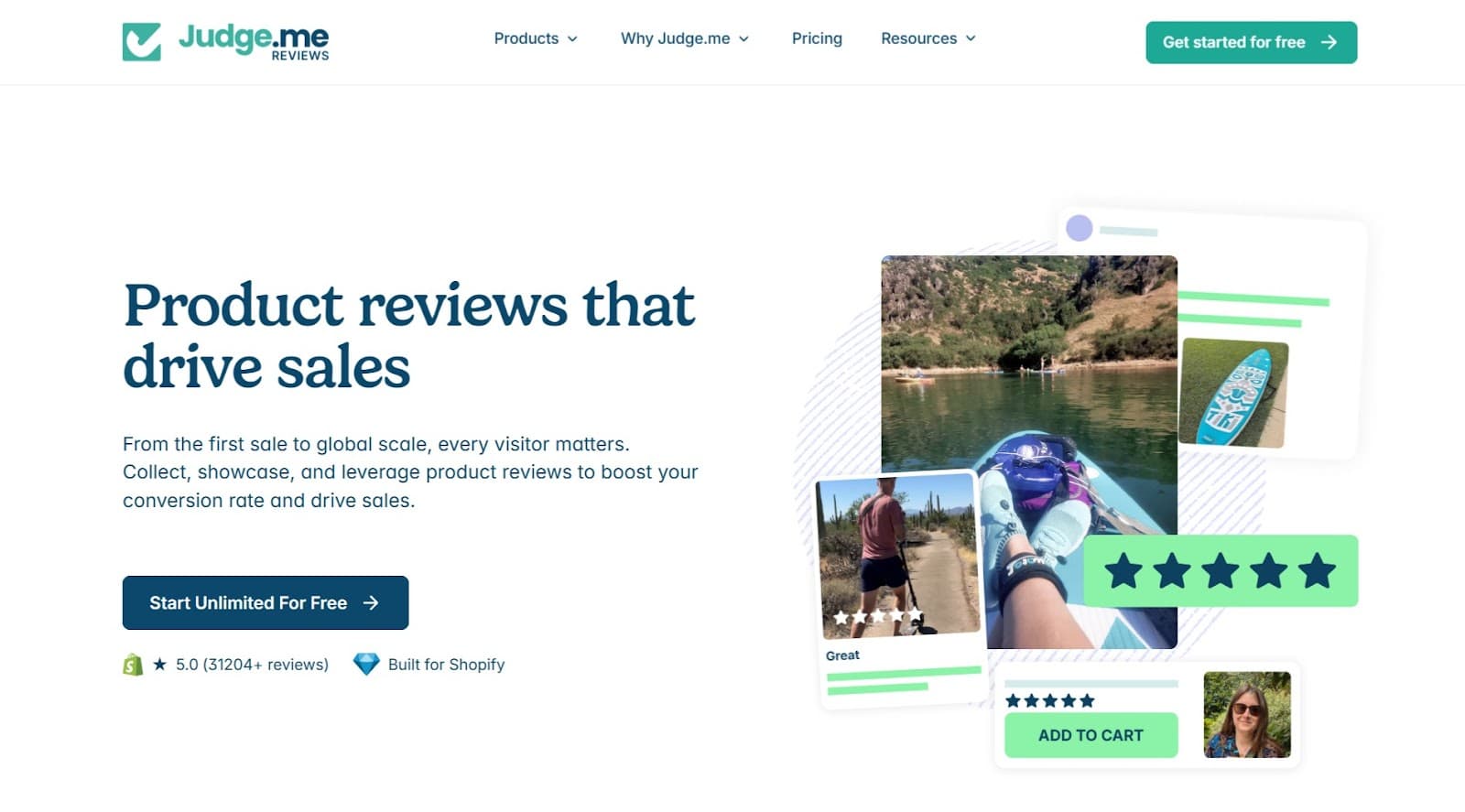
Judge.me is widely known in the Shopify ecosystem for its affordability and extensive feature set, particularly its robust free plan. It allows for unlimited review requests and offers photo and video reviews without a subscription, making it a very popular starting point for new stores.
Key Features:
- Unlimited review requests on the free plan.
- Photo and video reviews.
- Q&A functionality and custom review forms.
- Widgets are customizable with CSS.
- Syndication with Google Shopping on its paid plan.
Pricing Summary:
Judge.me has a simple pricing structure. Its Forever Free plan includes unlimited reviews, photos, and videos. The Awesome plan is a flat $15/month and unlocks features like Google Shopping syndication, coupon creation, and advanced customization.
Pros & Cons:
Pros:
- Generous Free Plan: The free offering is one of the most comprehensive on the market.
- Affordable: The single paid tier is very budget-friendly for small businesses.
- Fast Loading: Widgets are designed to be lightweight and not slow down your site.
Cons:
- Less Advanced Analytics: While it provides basic reporting, the analytics are not as deep as enterprise-level platforms.
- Simpler UI/UX: The backend interface can feel less polished compared to more premium solutions.
- Limited Strategic Support: Support is primarily chat and email-based, lacking the dedicated strategic guidance some brands require.
3. Loox: Product Reviews App
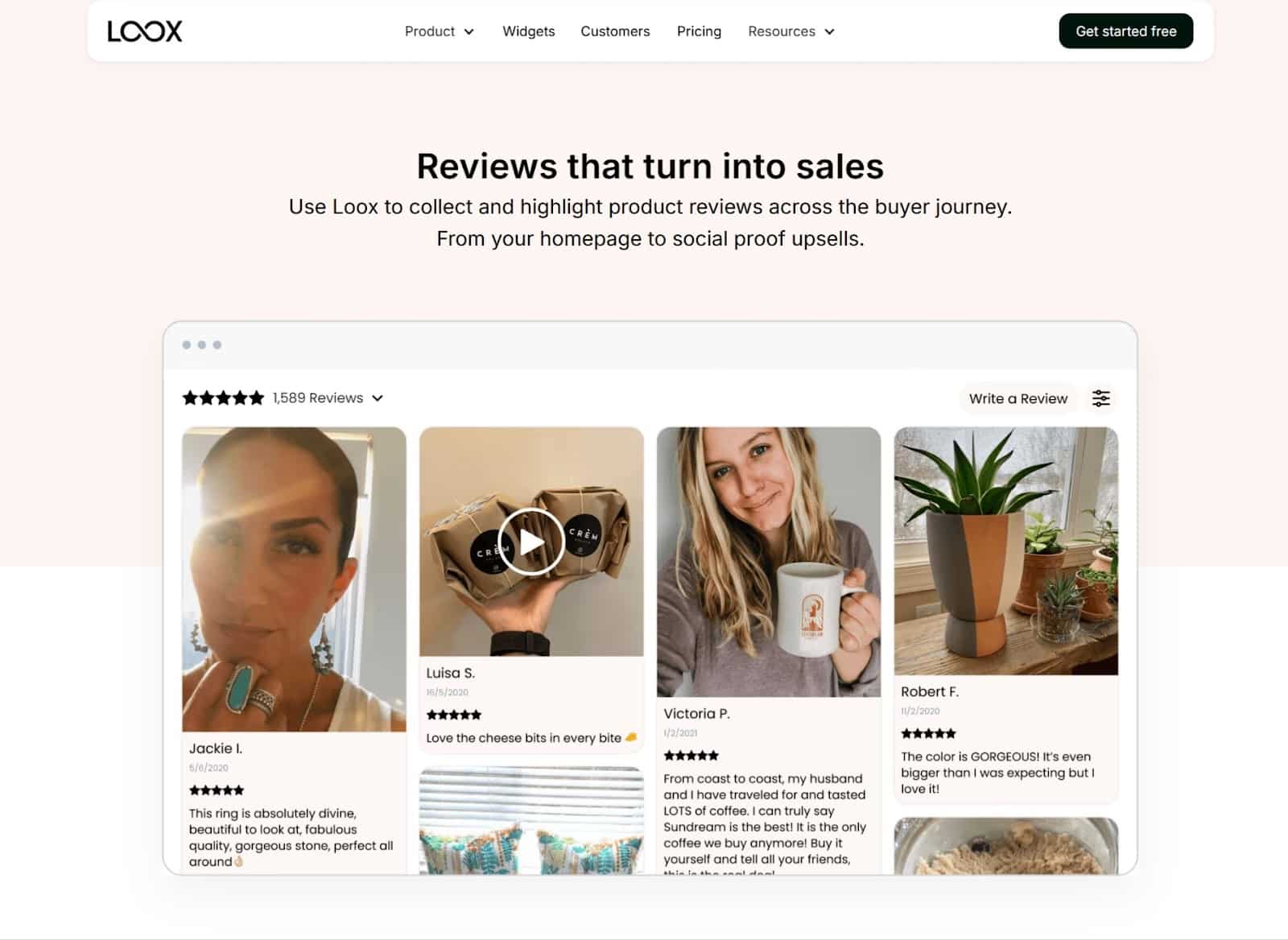
Loox is optimized for collecting and displaying visual user-generated content (UGC). Its platform is designed to encourage customers to submit photos and videos, and its widgets are crafted to display this visual UGC beautifully. It’s an excellent choice for visually-driven brands in fashion, beauty, or home decor.
Key Features:
- Strong focus on photo and video reviews.
- Visually appealing, highly customizable widgets (carousels, pop-ups, galleries).
- One-click referrals to encourage word-of-mouth marketing.
- Automated review requests with discounts for photo submissions.
- Google Shopping integration available on higher-tier plans.
Pricing Summary:
Loox offers tiered pricing based on the number of monthly review request emails. The Beginner plan starts at $12.99/month for 100 emails. The Scale plan, at $39.99/month, adds video reviews and Google Shopping integration. The Unlimited plan is $299.99/month for unlimited requests and referrals.
Pros & Cons:
Pros:
- Excellent for Visuals: The entire platform is optimized for collecting and showcasing photo/video UGC.
- Beautiful Widgets: Its display options are modern and highly aesthetic.
- Built-in Referrals: The integrated referral system is a nice bonus for encouraging advocacy.
Cons:
- Order-Based Pricing: Costs can escalate quickly as your order volume grows.
- Limited Free Trial: Unlike some others, it does not have a free-forever plan.
- Fewer Advanced Features: Lacks some deeper functionalities like attribute analysis or extensive retail syndication.
4. Stamped: Product Reviews & UGC
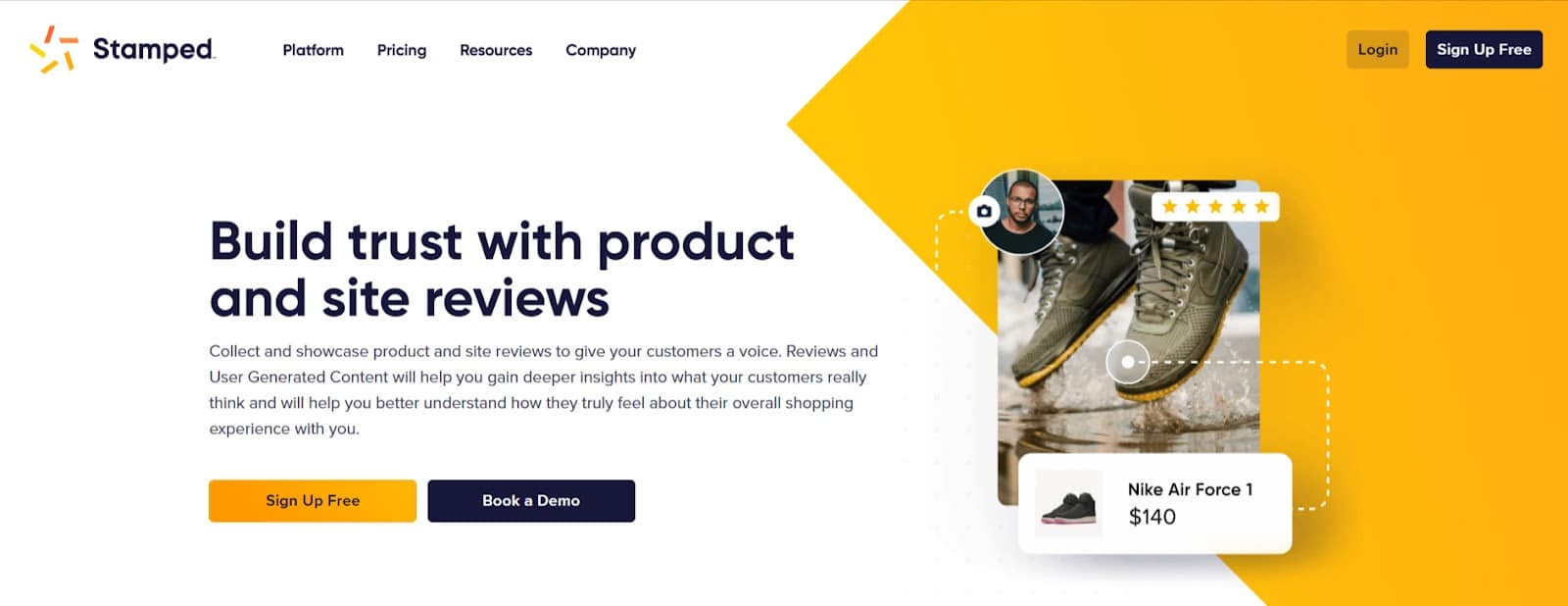
Stamped is a versatile solution that offers a suite of products, including Reviews and Loyalty. It’s a strong contender that provides a wide array of features aimed at building social proof and is used by many high-growth and enterprise-level brands.
Key Features:
- Collects a wide range of UGC: product reviews, photo/video reviews, Q&A, and Net Promoter Score (NPS).
- Shoppable Instagram galleries.
- AI-powered features for smarter marketing.
- Integrations with Google Shopping and other marketing tools.
- Offers a separate, but integrated, Loyalty & Rewards program.
Pricing Summary:
Stamped have multiple tiers. The Basic plan is $29/month for up to 200 monthly review requests. The Business plan is $149/month for 1,500 requests and includes Google Shopping integration and video reviews. They also offer a limited free plan for up to 50 monthly requests.
Pros & Cons:
Pros:
- Comprehensive Feature Set: Offers a broad range of UGC and review tools, including NPS surveys.
- Scalable: The platform is built to grow with your business, with plans for enterprise clients.
- Multi-Product Offering: The ability to add a loyalty program from the same provider is a plus.
Cons:
- Can Become Expensive: Higher-tier plans needed for key features like Google Shopping can be costly for smaller businesses.
- Interface Complexity: With so many features, the backend can be more complex to navigate than simpler apps.
5. Okendo: Reviews & Loyalty
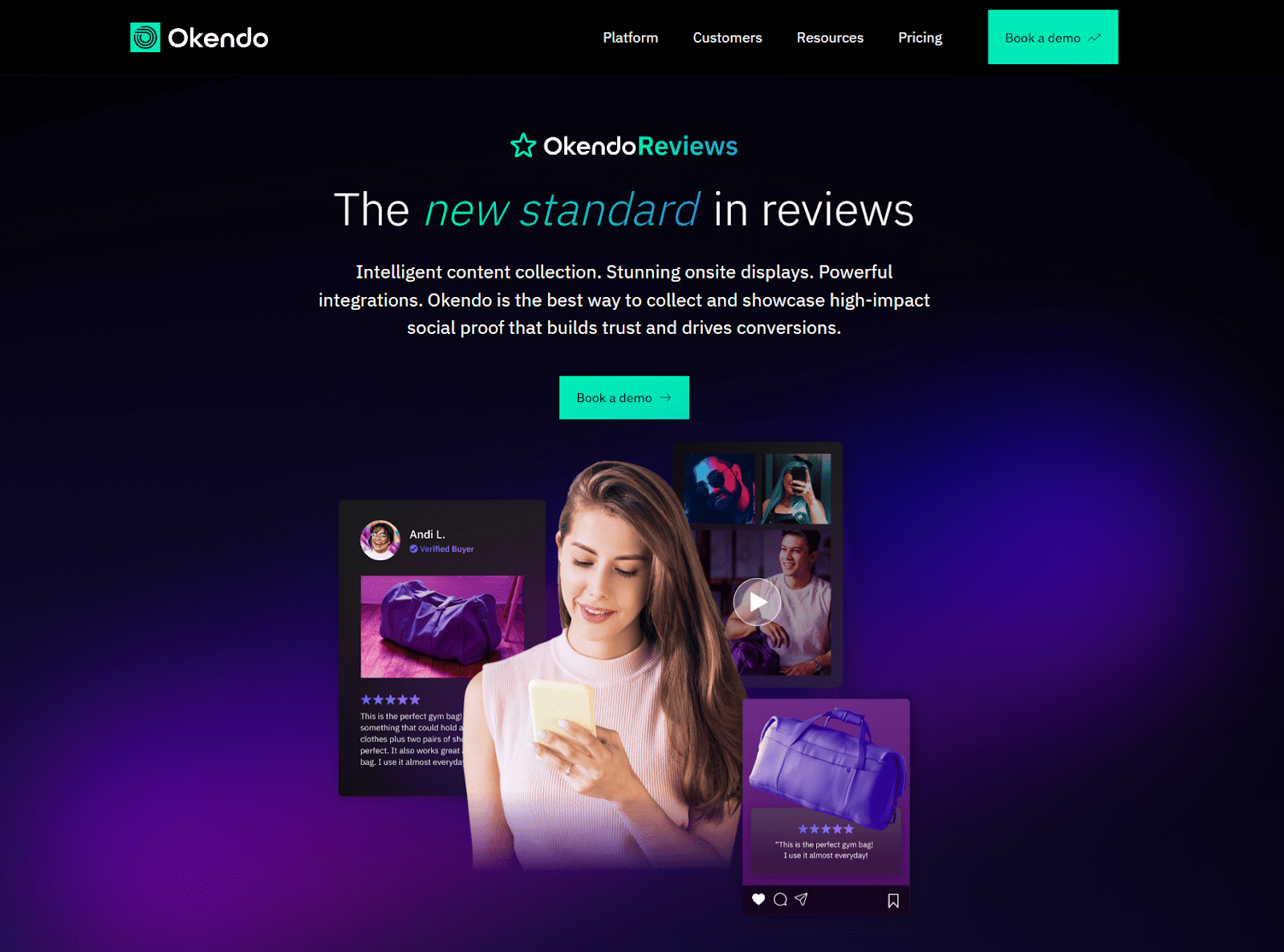
Okendo positions itself as a customer marketing platform for fast-growing Shopify brands. It emphasizes high-quality reviews by allowing brands to collect specific attribute ratings (e.g., fit, quality, comfort), which gives shoppers more detailed, useful information.
Key Features:
- Attribute ratings to collect structured, specific feedback.
- Fast, mobile-first review capture forms.
- Photo and video reviews, Q&A, and highly customizable widgets.
- Deep integrations with major email and SMS platforms.
- Retail syndication is available on higher plans.
Pricing Summary:
Okendo’s pricing is based on monthly orders. The Essential plan starts at $19/month for up to 200 orders. The Growth plan is $119/month for up to 1,500 orders and adds Google Shopping integration.
Pros & Cons:
Pros:
- Attribute Ratings: A key differentiator that provides deeper, more useful review content.
- Strong Performance: Known for fast-loading widgets that don’t hurt site speed.
- Focus on Integration: Plays well with other best-in-class marketing tools.
Cons:
- Limited Conversion & Insight Tools: Strong at collecting reviews, but offers fewer built-in features focused on driving conversion or extracting deep customer insights.
- Syndication Depth Is More Limited: Off-site and retail distribution options are not as extensive as enterprise-focused platforms.
6. REVIEWS.io: Product Reviews
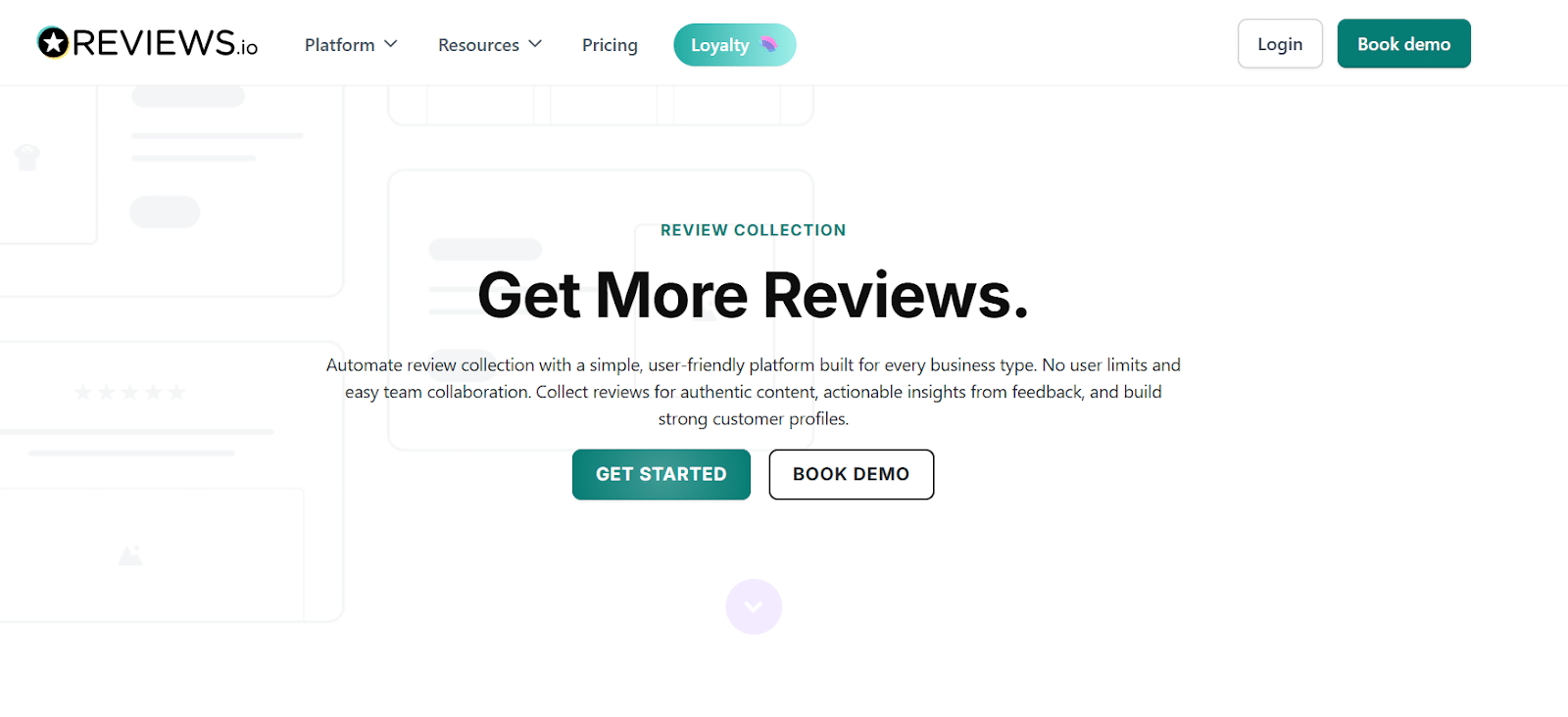
REVIEWS.io is a powerful, UK-based review solution and a long-standing Google Review Partner. It offers a very feature-rich platform that includes company reviews, product reviews, and strong syndication options. Their platform also has unique features like video review collection.
Key Features:
- Official Google Review Partner, ensuring strong integration.
- Collection of company and product reviews, including photo and video UGC.
- Review syndication to various channels.
- Attribute collection to gain deeper insights from reviewers.
- AI-powered features like review summaries.
Pricing Summary:
REVIEWS.io has a Shopify-specific free plan for up to 25 monthly review invites. Paid plans on Shopify start at $19/month for 50 invites. The next tier is $45/month for 500 invites and adds features like surveys and Q&A.
Pros & Cons:
Pros:
- Strong Google Integration: As an official partner, their Google syndication is top-notch.
- Feature-Rich: Offers a deep feature set, including unique tools for social proof and video.
- Good Value on Shopify Plans: The Shopify-specific plans offer a lot of functionality for the price.
Cons:
- Can Be Complex: The sheer number of features can be overwhelming for some users.
- UI Can Feel Dated: Some users find the user interface less modern than some competitors.
7. Vitals: Reviews, Bundles, AI

Vitals is an “all-in-one” app that bundles over 40 different e-commerce tools, including product reviews, into a single subscription. Its value proposition is simplicity and cost-effectiveness, as it replaces the need for dozens of individual apps.
Key Features:
- Product reviews with photo capabilities.
- Review importer from sources like AliExpress and other apps.
- Bundled with 40+ other apps (e.g., product bundles, currency converter).
- One flat monthly fee for all features.
Pricing Summary:
Vitals has a simple, single-price model, typically around $29.99/month, which gives you access to all of its 40+ applications, including product reviews.
Pros & Cons:
Pros:
- Incredible Value: A huge number of tools for one low monthly price.
- Simplicity: Reduces “app overload” by consolidating many functions into one dashboard.
- Good Core Features: The review functionality is solid for most small to medium-sized businesses.
Cons:
- “Jack of All Trades, Master of None”: The review function lacks the depth and strategic features of a dedicated solution.
- No Free Plan: Offers a 30-day free trial but no free-forever plan.
8. Kudosi Reviews (Formerly Ali Reviews)
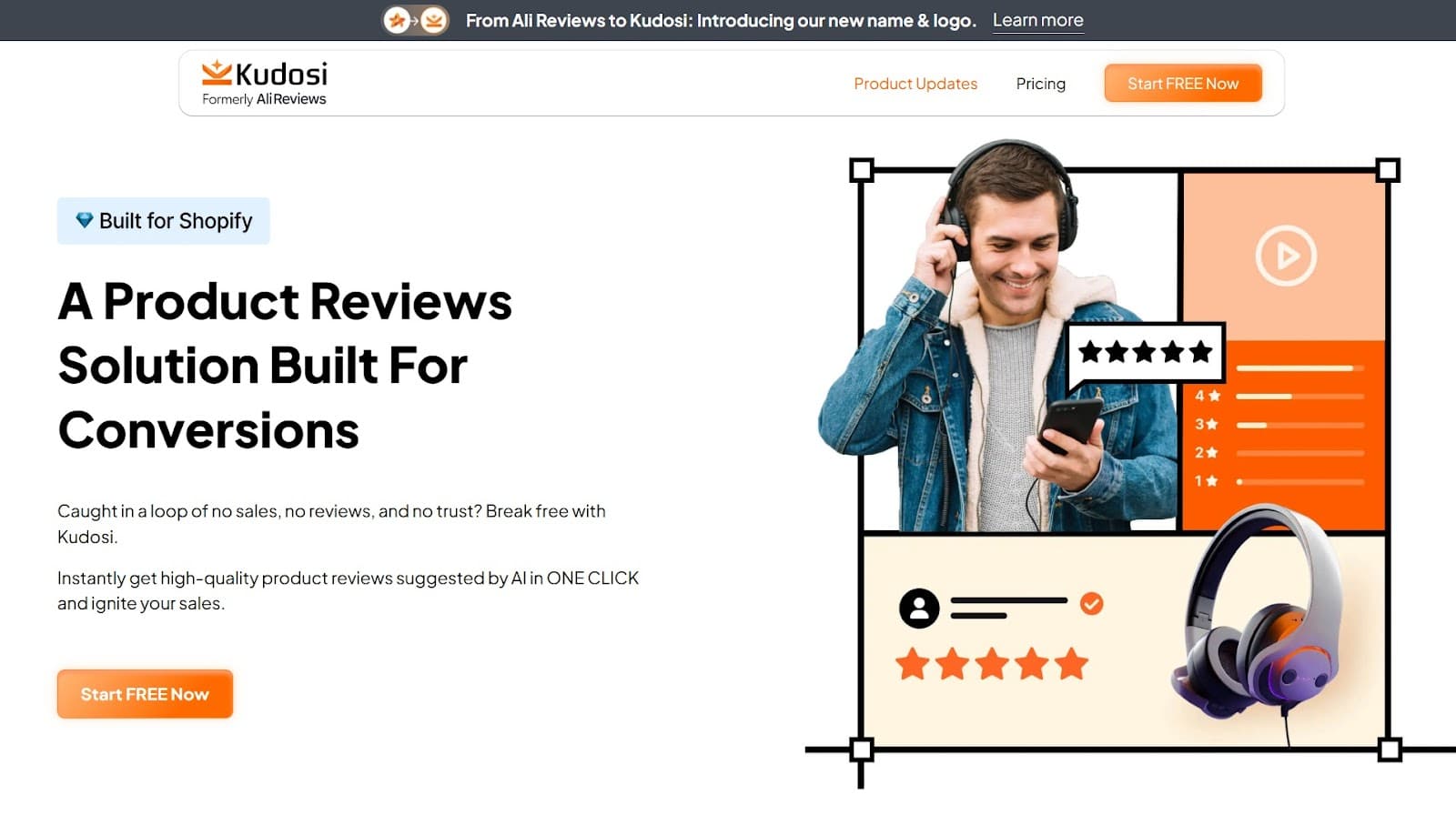
Kudosi Reviews, formerly known as Ali Reviews, excels at importing reviews from marketplaces like AliExpress. This makes it an invaluable tool for dropshippers looking to quickly build social proof for new products. While its core strength is importing, the platform has expanded to offer standard review collection via email and customizable display widgets.
Key Features:
- Powerful review importer from AliExpress, Amazon, and CSV files.
- Bulk import capabilities and auto-syncing of reviews.
- Customizable display widgets, including pop-ups and carousels.
- Automated email review requests.
Pricing Summary:
Kudosi Reviews offers a free plan and paid tiers starting around $9.95/month.
Pros & Cons:
Pros:
- Best-in-Class for Importing: Its core strength is importing reviews to quickly populate product pages.
- Ideal for Dropshipping: Perfectly suited for the dropshipping business model.
- Affordable: The pricing structure is very accessible for new businesses.
Cons:
- Less Focus on Authentic Review Collection: The platform’s emphasis is on importing rather than generating original reviews from your actual customers.
- Limited Advanced Marketing Features: Lacks the deep analytics and integration capabilities of more comprehensive platforms.
9. Junip: Product Reviews App
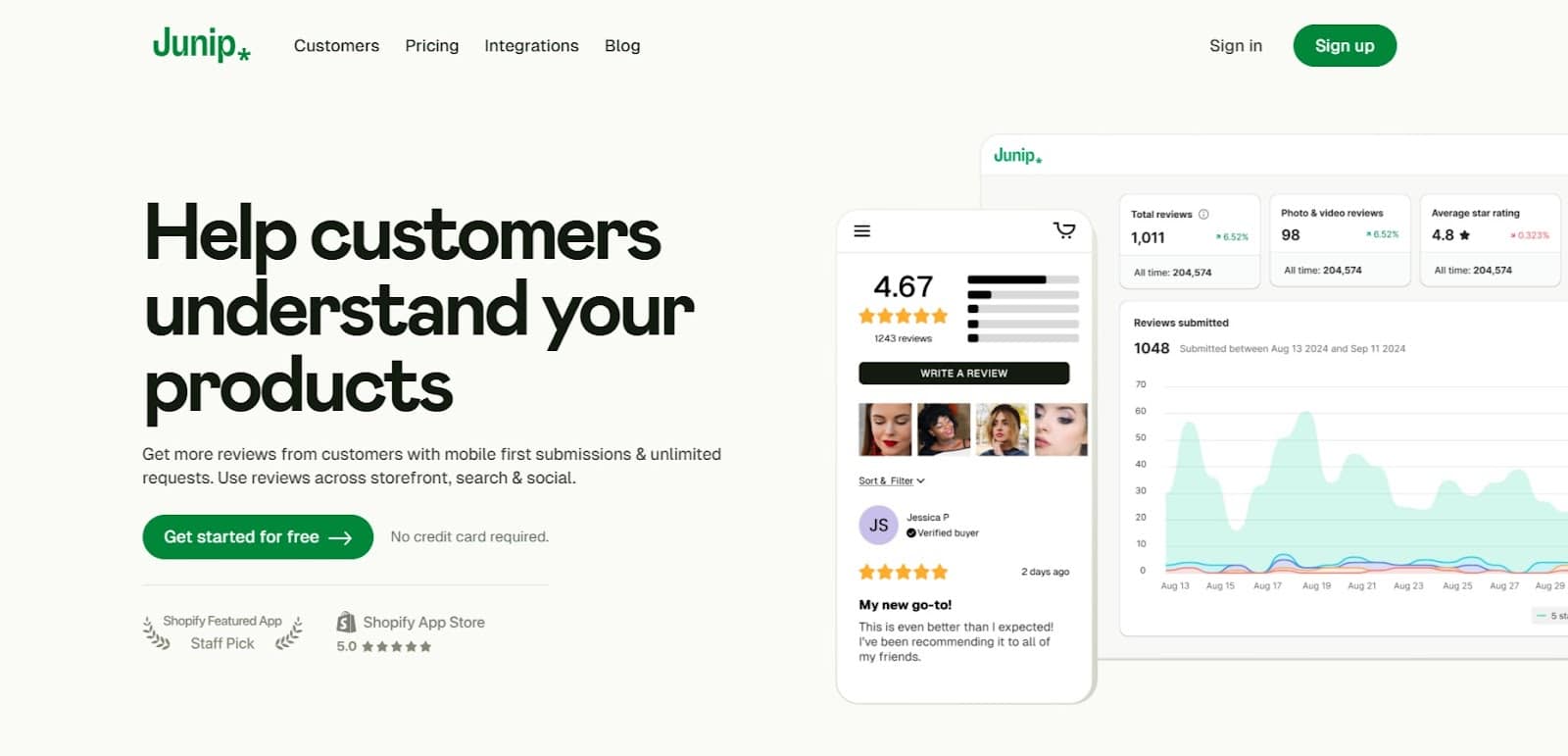
Junip focuses on being a clean, fast, and scalable review platform that integrates deeply with a modern marketing stack. It’s designed for brands that value aesthetics and want a review solution that feels like a native part of their site and integrates seamlessly with tools like Klaviyo and Postscript.
Key Features:
- Beautifully designed, brandable on-site displays and forms.
- Mobile-first design for a great user experience.
- Strong integrations with email and SMS marketing platforms.
- Google Shopping integration included in all paid plans.
Pricing Summary:
Junip has a free plan for up to 50 orders/month. Paid plans start at $29/month for 500 orders, with a focus on providing core features to all paying customers.
Pros & Cons:
Pros:
- Excellent Design and UX: One of the most aesthetically pleasing and user-friendly options.
- Plays Well with Others: Built from the ground up to integrate deeply with other marketing tools.
- Fair Pricing Model: Core features aren’t gated behind expensive top-tier plans.
Cons:
- Fewer Built-in Features: Relies on its integrations for some functionality that other platforms have built-in.
- Newer Player: It doesn’t have the long market history of established leaders.
10. Rivyo: Reviews & Loyalty
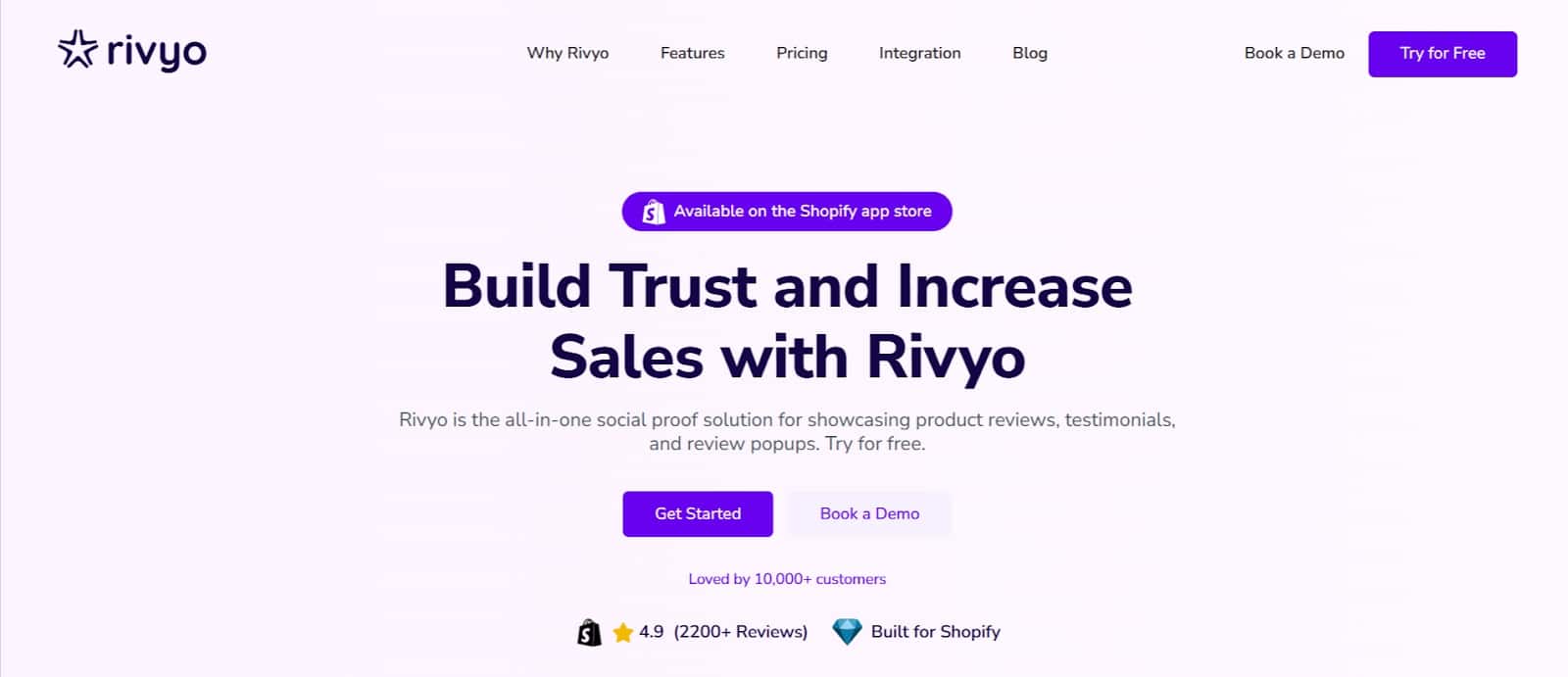
Rivyo is another app that combines product reviews with a loyalty program. It aims to provide an affordable, all-in-one solution for Shopify stores to build social proof and encourage repeat business. It offers a solid set of features, including review importing and customizable widgets.
Key Features:
- Product reviews with photo and video capabilities.
- Import reviews from Amazon or AliExpress.
- Q&A feature and a range of display widgets.
- Integrated loyalty and rewards program.
Pricing Summary:
Rivyo offers a competitive free plan. Paid plans are affordable, starting at $9/month, which unlocks more advanced features for both the reviews and loyalty components.
Pros & Cons:
Pros:
- Affordable Combo: Offers both reviews and loyalty at a very accessible price point.
- Good Core Functionality: Covers all the basics a small or medium store needs.
- Review Importer: The ability to import reviews is a valuable feature.
Cons:
- Less Polished: The user interface and widgets can feel less modern than more premium competitors.
- Lacks Depth: The review and loyalty features are not as strategic as specialized platforms.
Conclusion
Choosing the right review platform is a critical decision that directly impacts your brand’s credibility and conversion rates. While Air Reviews provides a great starting service, its limitations often lead growing brands to seek a more powerful alternative.
After comparing the top contenders, a clear picture emerges. For brands just starting, Judge.me offers unbeatable value. For those focused on dropshipping, Ali Reviews is tailor-made. And if aesthetics and design are your top priority, Loox and Junip deliver beautifully.
However, for ambitious e-commerce brands looking for a true growth partner, Yotpo Reviews stands out as the superior choice.
Yotpo doesn’t just collect reviews; it helps you build a conversion-focused strategy around customer content. Its strength lies in generating higher-quality UGC, leveraging it strategically across your site, and syndicating it to the world’s largest marketing channels. It transforms reviews from a static rating into a dynamic asset that drives confident purchase decisions.
If you’re looking for a simple app to collect basic reviews, there are many good options. But if you’re building a brand and want a solution that will turn customer content into your most powerful sales tool, Yotpo Reviews is the clear winner.
Frequently Asked Questions
Why are product reviews so important for an e-commerce store?
Product reviews are essential for building trust and providing social proof. They offer potential customers authentic, real-world insights into a product’s quality, fit, and performance, which directly influences their decision to buy. For brands, reviews improve SEO visibility, increase conversion rates, and provide invaluable feedback for product improvement.
What percentage of consumers read online reviews before buying?
Research shows that a vast majority, up to 98% of consumers, read online reviews before making a purchase. This highlights just how critical social proof has become in the modern shopping journey. A Yotpo study further found that 94% of purchases are for products with a 4- or 5-star rating, emphasizing the need to collect and showcase positive feedback.
Can I collect photo and video reviews with these apps?
Yes, absolutely. Yotpo Reviews and all the alternatives discussed support the collection of photo and video reviews. This visual user-generated content (UGC) is incredibly powerful because it helps shoppers see the product in a real-life context, which significantly boosts trust and conversion rates.
How do I request reviews from my customers automatically?
All leading review platforms, including Yotpo Reviews, allow you to automate review requests via email. You can typically set up triggers based on order information, ensuring you ask for feedback at the optimal time after a purchase. These platforms provide customizable templates to match your branding and make it simple for customers to respond.
Can I display my reviews on Google Shopping and other channels?
Yes, this is a key feature called “syndication.” Yotpo Reviews has strong partnerships that let you push your reviews and star ratings to Google Shopping, Meta (Facebook/Instagram), TikTok Shop, and even major retail partners like Target. Most alternatives also offer Google Shopping syndication, though it’s often reserved for their higher-tier plans.
What is the difference between a basic and an advanced review app?
A basic app focuses on the core functions: collecting text reviews via email and displaying them on your site. An advanced solution like Yotpo Reviews goes much further. It uses AI to collect higher-quality content, provides deep analytics on customer sentiment, offers extensive widget customization, and has a robust network for syndicating reviews to critical channels like Google and Meta.
How can AI help with product reviews?
AI plays a huge role in modern review platforms. It can power “smart prompts” that ask customers specific questions to generate more detailed reviews. It also drives features like the Reviews Summary, which analyzes thousands of reviews to give shoppers a quick, digestible overview of key topics. This helps shoppers make faster, more confident decisions.
Should I be afraid of negative reviews?
Not at all. In fact, a few negative reviews can actually increase trust, as a perfect 5-star record can seem suspicious to shoppers. The key is how you handle them. Responding publicly and professionally to a negative review shows that you care about customer feedback and are committed to solving problems. It’s an opportunity to demonstrate excellent customer service.
What are “product attribute” ratings?
This is a feature offered by platforms like Okendo and REVIEWS.io that lets you ask for specific ratings beyond the overall star score. For example, a clothing brand could ask customers to rate “Fit,” “Comfort,” and “Quality” on a scale. This provides more structured, granular feedback that is incredibly helpful for other shoppers.
How do I get more customers to leave a review?
The best way is to make it incredibly easy. Use mobile-friendly email requests with in-mail forms so they can reply directly. Timing is also key; ask for a review when the customer has had enough time to experience the product. You can also offer incentives, like loyalty points for submitting a review, which is a great synergy between Yotpo Reviews and Yotpo Loyalty.
What’s more important: the number of reviews or the quality?
Both are important, but quality often has a greater impact on conversion. A single, detailed review with a customer photo can be more persuasive than ten simple 5-star ratings with no text. The ideal strategy is to aim for a healthy volume of high-quality, descriptive reviews that include visual content.
Can a review app slow down my website?
It’s a valid concern. Some apps with poorly coded widgets can impact your site speed. Look for solutions that prioritize performance, like Yotpo Reviews, Judge.me, and Okendo, which are known for building lightweight widgets that load quickly and don’t hurt your performance scores.
How do I measure the ROI of a review solution?
You can measure it in several ways. Track the conversion rate of shoppers who interact with review widgets versus those who don’t; brands often see a significant lift. You can also monitor the click-through rate (CTR) on Google Shopping ads that display star ratings. Finally, analyze the insights from reviews to see how they inform product improvements, which leads to long-term gains.











 Join a free demo, personalized to fit your needs