









What is an API Integration?
Imagine you’re at a restaurant, and you want a delicious meal. You tell the waiter what you’d like, right? The waiter then goes to the kitchen, tells the chefs your order, and later brings your food back to your table. You don’t go into the kitchen yourself, and you don’t need to know how the chefs cook the food. You just interact with the waiter, and the waiter handles everything else.
That’s a bit like what an API integration is in the world of computers and online businesses!
API stands for Application Programming Interface. Think of an API as that helpful waiter. It’s a special set of rules and tools that lets different computer programs talk to each other, just like the waiter helps you talk to the kitchen. It allows them to request information, share data, and work together without needing to know all the messy details of how each other works.
When we talk about an “API integration,” we mean connecting two or more of these computer programs so they can share information and do tasks automatically. This makes things much smoother and faster for everyone, especially for businesses that sell things online, known as e-commerce stores.
Why Do Computers Need to Talk to Each Other?
In our daily lives, we use many different apps and websites. For example, when you shop online, you might use a website to pick your items, then a payment system to pay, and then a shipping company to deliver your package. Each of these is a different computer program, or “application.”
If these programs couldn’t talk to each other, imagine the hassle! You’d have to manually tell the payment system what you bought, and then manually tell the shipping company where to send it. It would be a lot of extra work and take forever. APIs make sure these separate programs can chat effortlessly.
This “chatting” between different systems is vital for businesses to run smoothly. It helps them automate tasks, get a complete picture of their customers, and make smart decisions. For instance, knowing what customers like helps businesses keep them happy and coming back. You can learn more about keeping customers engaged by exploring ways to improve customer retention.
The “Waiter” Analogy Revisited
Let’s go back to our restaurant waiter. The waiter:
- Takes your order (a request from you).
- Goes to the kitchen (sends the request to another system).
- Gets the food (receives a response from the kitchen).
- Brings the food to you (delivers the response).
An API works in a very similar way. One program sends a request to another program through its API. The second program then does what was asked and sends a response back. It’s a polite and organized way for software to interact.
How Do API Integrations Work?
Think of it like this: every computer program that offers an API also offers a special instruction manual. This manual tells other programs exactly how they can ask for information or send commands. When two programs are integrated using an API, they essentially follow these instructions to communicate.
Here’s a simplified breakdown:
- A Request is Sent: One program (let’s call it Program A) wants something from another program (Program B). Program A uses Program B’s API to send a specific request.
- The Request is Understood: Program B receives the request through its API. It understands exactly what Program A is asking for because it follows the rules in its “instruction manual.”
- Program B Acts: Program B performs the task or finds the information Program A asked for.
- A Response is Sent Back: Program B sends the result or the requested information back to Program A through the API.
- Program A Uses the Response: Program A receives the information and can now use it to do its own job.
This back-and-forth communication happens super fast, often in a blink of an eye! It’s how your phone app can show you the weather, or how an online store knows your package is on its way.
Different Kinds of API Integrations
APIs can work in a few different ways, depending on what a business needs. Some are simpler, while others are more complex:
- One-Way Integration: Imagine a one-way street. Information flows from one system to another, but not back. For example, if your online store sends a customer’s order details to a separate shipping company’s system, but the shipping company doesn’t send updates back directly to your store.
- Two-Way Integration: This is like a two-way street. Information flows both ways. For instance, when you buy something, your bank’s system tells the online store that the payment went through, and the online store then tells the bank that the order was received. Many modern e-commerce tools use two-way integrations to keep everything in sync.
These integrations can connect almost any two systems, making businesses much more efficient. Curious about how to turn website visitors into loyal shoppers? Take a look at strategies to improve your e-commerce conversion rate.
What API Integrations Do for Businesses
For businesses, especially those selling online, API integrations are incredibly powerful. They help streamline operations, make customers happier, and grow the business. Let’s look at some key benefits:
Making Your Online Store Smarter and More Connected
Think about all the different tools an online store might use:
- A website platform (like Shopify or BigCommerce)
- A system for collecting customer reviews
- A program for running loyalty points and rewards
- A payment processing service
- A shipping label printer
- A marketing email tool
Without API integrations, each of these would be a separate island. You’d have to manually move information from one to another, which would be like pushing a boulder uphill! With APIs, these tools can work together like a well-oiled machine, sharing information automatically and instantly.
Better Customer Experiences
When systems are integrated, businesses can offer a much smoother and more personalized experience to their customers. For example:
- You buy something, and you immediately get a tracking number because the store’s system talked to the shipping system.
- You leave a helpful review, and the loyalty program automatically gives you points because the review system talked to the loyalty system.
- You get a personalized email with products you might like, based on your past purchases and browsing, because the marketing system talked to the store’s product system.
These small, seamless interactions build trust and make customers feel valued. That’s why understanding the e-commerce customer experience is so important.
Saving Time and Effort
Automating tasks through APIs saves businesses a huge amount of time. Instead of someone having to manually update spreadsheets or copy-paste information, the computers do it all. This frees up people to focus on more important things, like coming up with new product ideas or helping customers directly.
For instance, managing customer relationships and automating tasks are two big reasons businesses rely on these integrations. If you’re running an online store, saving time means you can focus more on how to best serve your customers. You can explore how automation helps create amazing customer journeys through the ecommerce marketing funnel.
API Integrations in Everyday E-commerce
Let’s look at some common examples of API integrations that you probably use all the time when shopping online:
| What It Does | Example Integration | How it Helps Customers |
|---|---|---|
| Payment Processing | Online store ↔ Payment gateway (like PayPal or Stripe) | You can pay quickly and securely without leaving the store’s website. |
| Shipping Information | Online store ↔ Shipping carrier (like UPS or FedEx) | You instantly get tracking numbers and real-time updates on your package. |
| Customer Support | Online store ↔ Help desk software | Customer service agents see your past orders and questions right away, helping you faster. |
| Marketing Automation | Online store ↔ Email marketing tool | You get relevant product recommendations and special offers tailored to you. |
Customer Reviews and Loyalty Programs: A Perfect Use for APIs
Now, let’s talk about something really important for online stores: getting feedback from customers and rewarding them for sticking around. This is where API integrations shine, especially with tools like Yotpo Reviews and Yotpo Loyalty.
How Customer Reviews Use APIs
Imagine you just bought a super cool toy online. A few days later, you get an email asking you to share your thoughts on the toy. You write a glowing review, and BOOM! It appears right there on the toy’s page on the store’s website. How does all this happen so smoothly?
APIs are the secret sauce! Here’s how a reviews solution uses them:
- Collecting Feedback: After you make a purchase, the online store’s system talks to the reviews system (like Yotpo Reviews) using an API. It tells the reviews system about your purchase. The reviews system then knows to send you an email asking for a review. Want to know more about getting customer feedback? Check out how to ask customers for reviews.
- Displaying Reviews: Once you submit your review, the reviews system uses an API to send that review back to the online store. The store’s website then knows exactly where and how to display your review on the product page. This makes it easy for other shoppers to see what you think! You can explore how these reviews influence buying decisions on ecommerce product reviews pages.
- Sharing with Search Engines: Reviews can also be sent via API to search engines like Google. This helps online stores show off their great products and customer satisfaction, sometimes even directly in search results through things like Google Seller Ratings.
- Integrating with Store Platforms: If a store uses a platform like Shopify, a reviews app can connect directly to it using APIs. This means the app can automatically pull product info and order data from Shopify and push reviews back. For example, the Yotpo Shopify Product Reviews App does just that, making it easy for Shopify stores to manage their reviews.
Having a powerful tool that collects and displays customer reviews, such as Yotpo Reviews, makes a huge difference. These reviews are a form of User-Generated Content (UGC), which means content created by real people, not the brand. This content is super helpful for other shoppers to make decisions. You can learn more about what is user-generated content and how it helps online stores.
How Loyalty Programs Use APIs
Have you ever gotten points for buying something, or a special discount just for being a loyal customer? That’s probably thanks to a loyalty program, and APIs are busy behind the scenes making it happen!
A loyalty program solution, like Yotpo Loyalty, uses APIs to connect with your online store and other systems:
- Tracking Purchases: When you buy something, the online store’s system tells the loyalty program system (via API) what you bought and how much you spent. The loyalty system then knows exactly how many points to give you. Learn more about how businesses use these tools in loyalty rewards program software.
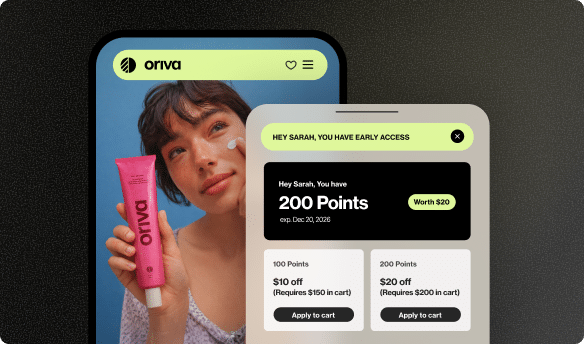
- Giving Rewards: Once you’ve earned enough points, the loyalty system uses an API to create a special discount code or a free gift voucher. It then sends this information to the online store or an email system to deliver your reward.
- Personalizing Offers: By knowing your past purchases and how many points you have, the loyalty program can send you special, personalized offers that you’ll actually like. This kind of personalization makes you feel special and keeps you coming back! See how this works in practice with different loyalty program use cases.
By using APIs, tools like Yotpo Loyalty can automatically manage points, rewards, and VIP tiers, making it easy for businesses to build strong relationships with their customers. Want to dive deeper into rewarding your best customers? Discover more about the best loyalty programs.
The Power of Reviews and Loyalty Together
While Reviews and Loyalty are distinct and powerful tools on their own, they can also work together, using APIs, to create even more amazing experiences for customers. Imagine earning loyalty points just for writing a review or adding a photo of your new purchase! This is a great example of word-of-mouth marketing in action.
When an online store integrates a reviews solution with a loyalty solution, they can create a fantastic cycle: happy customers leave reviews, and they get rewarded for it. These rewards encourage them to shop again, leading to more purchases and potentially more reviews. This kind of synergy helps businesses not only get valuable feedback but also build a community of loyal fans. Understanding how customers make decisions, especially with the help of user-generated content, is key to this process. Read more about the consumer decision-making process with UGC.
The Big Benefits of Smart API Integrations
So, what’s the bottom line? Why should businesses care so much about these digital “waiters” and how they connect different systems? Here are some of the major advantages:
- Increased Efficiency: Automating tasks means less manual work, fewer mistakes, and more gets done in less time.
- Better Data Accuracy: When information flows directly between systems, there’s less chance of errors that can happen when people type things in repeatedly.
- Smarter Business Decisions: With all your data connected, you get a much clearer picture of your customers and your business. This helps you make better choices, like knowing which products are popular or what kinds of rewards your customers love most.
- Improved Customer Experience: Seamless interactions, personalized offers, and quick service make customers happier and more likely to return. This directly impacts e-commerce retention.
- Scalability: As a business grows, API integrations make it easier to add new tools and services without having to completely rebuild everything. It’s like adding new rooms to a house without tearing down the whole building.
- Innovation: By connecting different technologies, businesses can create entirely new services and features that weren’t possible before.
Key Things to Keep in Mind About API Integrations
While APIs are fantastic, it’s also important to understand a few things about them:
- Security: Just like you wouldn’t let just anyone into the restaurant kitchen, APIs need to be secure. Businesses make sure that only authorized programs can send and receive information, keeping sensitive data safe.
- Reliability: APIs need to be dependable. If an API connection breaks, the two programs can’t talk, and tasks might stop working. Businesses work hard to ensure their integrations are stable.
- Documentation: For developers building these integrations, clear instructions (the “instruction manual” we talked about earlier) are crucial. Good API documentation helps connect systems correctly and efficiently.
- Maintenance: Like any machine, integrations need occasional check-ups and updates to make sure they continue to work perfectly, especially as software changes over time.
Wrapping It Up: The Power of Connected Systems
So, what is an API integration? It’s the smart way different computer programs connect and communicate, making the digital world work smoothly. From making online payments to tracking your package, to collecting valuable customer reviews with Yotpo Reviews or running exciting loyalty programs with Yotpo Loyalty, APIs are everywhere.
They are the invisible helpers that allow businesses to automate, personalize, and innovate, leading to happier customers and more successful online stores. Understanding APIs helps us appreciate the clever engineering that powers so much of what we do online every single day!










 Join a free demo, personalized to fit your needs