








What is a Total Addressable Market? (TAM)
Imagine you have a really cool idea for a new product, like a super comfy blanket or a game that teaches coding. Before you start making it, wouldn’t you want to know how many people might actually want to buy it? That’s where something called the Total Addressable Market, or TAM for short, comes in! It’s like finding out the size of the whole pie before you even think about how big of a slice you want to eat.
TAM helps businesses understand the biggest possible opportunity out there for what they’re selling. It’s the total amount of money a business could make if every single person who might ever want their product or service bought it from them. Pretty neat, right? Let’s dive in and explore this idea, and see how online stores use it to grow!
Why Do Businesses Care About TAM?
Think about it like this: if you’re planning a treasure hunt, wouldn’t you want to know the size of the island the treasure is on? TAM is like finding the size of that island for a business. It’s not about how much treasure you’ll find, but how big the area is where you *could* find it. Businesses care about TAM for a few super important reasons:
- Big Picture Thinking: It helps them see the absolute biggest their business could ever be. If the “island” is tiny, maybe their idea isn’t for a giant company. If it’s huge, they know there’s lots of room to grow!
- Making Smart Choices: Before spending a lot of time and money, businesses use TAM to decide if their idea is even worth pursuing. If the total market is only 10 people, it might not be a great business idea. But if it’s millions, then it’s exciting!
- Attracting Helpers: Sometimes, businesses need help to get started or grow even bigger. These helpers, often called investors, want to know that there’s a huge opportunity. A big TAM shows them that the business has the potential to make a lot of money someday. It’s like showing them a map of a giant treasure island!
- Setting Goals: Knowing the TAM helps businesses set realistic goals for how much they can grow. They know they can’t get *everyone* right away, but they know the ultimate target.
So, TAM isn’t just a fancy business word; it’s a helpful tool for dreams and plans.
How Do You Figure Out TAM? Simple Methods
Okay, so how do businesses actually figure out this “biggest possible market”? It’s not always easy, but there are a few simple ways they try to estimate it. It’s like trying to guess how many stars are in the sky – you can’t count them all, but you can make a pretty good guess!
The Top-Down Approach
Imagine you want to know how many children in your country might want a brand-new, super-duper robot toy.
With the top-down approach, you start with a very, very big number. You might begin by finding out the total number of children in your entire country. That’s a huge number! Then, you start to make it smaller based on your specific product.
You might ask:
- How many of those children are the right age for my robot toy?
- How many families can afford a toy like this?
- How many children already have a similar toy?
You keep narrowing down the big number until you get a more specific estimate. It’s like looking at a map of the whole world, then zooming in to your country, then your state, then your city, until you find your street. This method uses big industry reports and public information to get started.
The Bottom-Up Approach
This way is kind of the opposite! Instead of starting big and shrinking, you start small and grow.
Let’s stick with the robot toy example. For the bottom-up approach, you might think about just one customer.
You could ask:
- How much would one child be willing to pay for my robot toy? Let’s say $50.
- If I sold to all the children in my neighborhood, how many would that be? Maybe 100 children. That’s $5,000!
- Then, you think: “If I can sell to 100 children in my neighborhood, and there are 1,000 neighborhoods like mine, how many could I sell to in total?” That would be 100,000 children, making $5 million!
You’re building your estimate from the ground up, starting with what you know about individual customers or small groups, and then multiplying it to imagine the whole market. This method often feels more real because it’s based on actual customers or what you think one customer would do.
Both methods help businesses get a good idea of their TAM. Often, smart businesses will use both and compare their answers to get the best possible guess!
Let’s Talk About a Lemonade Stand Example
Let’s make this even simpler with an example everyone knows: a lemonade stand! Imagine you want to open the best lemonade stand ever. How would you figure out your TAM?
Top-Down for Your Lemonade Stand
You’d start big:
- How many people live in your entire town or city? Let’s say 50,000 people.
- Now, how many of those people drink lemonade or would be interested in a refreshing drink on a hot day? Maybe half of them, so 25,000 people.
- How often would they buy a cup of lemonade? Maybe once a week during summer? And how much would they pay for a cup? Let’s say $2.
So, you might estimate that if everyone who wanted lemonade bought it from someone, the total market for lemonade in your town could be (25,000 people * 10 weeks of summer * $2 per cup) = $500,000! That’s your TAM for lemonade in your town.
Bottom-Up for Your Lemonade Stand
Now let’s try starting small:
- You know you can make about 50 cups of lemonade in a day if you work hard.
- You plan to sell for 60 days over the summer.
- Each cup costs $2.
If you were the *only* lemonade stand and you could sell to everyone who wanted a cup within your reach, your potential would be (50 cups/day * 60 days * $2/cup) = $6,000. But this is just what *you* could make. To get the TAM for the *entire market*, you’d need to think: how many other lemonade stands *could* there be doing the same? If there could be 100 stands like yours in the town, then the TAM would be 100 * $6,000 = $600,000.
See how both methods help you think about the potential size? They might give slightly different numbers, but they both point to a really big opportunity for lemonade!
TAM, SAM, and SOM: What’s the Difference?
We’ve talked about TAM, the biggest pie. But in business, there are two other important ideas that help you get even more specific about your market: SAM and SOM. They’re like different sized slices of that big pie.
- TAM (Total Addressable Market): This is the biggest possible market, as we’ve learned. It’s everyone and everything that *could* ever buy your product or service. This is the entire treasure island.
- SAM (Serviceable Available Market): This is a smaller part of the TAM. It’s the people you can *actually reach* with your business right now. Maybe you only ship your robot toys to certain countries, or your lemonade stand is only in one neighborhood. SAM is the part of the island where you can actually look for treasure.
- SOM (Serviceable Obtainable Market): This is an even smaller part of SAM. It’s the customers you can *realistically get* to buy from you right now, or in the near future. You won’t get every single person in your neighborhood to buy lemonade, but you might get a good chunk of them. SOM is the little spot on the island where you’ll actually dig for treasure today.
So, it goes:
Big Pie (TAM)
A Slice You Can Serve (SAM)
A Piece You’ll Actually Eat (SOM)
Understanding these three helps businesses set even more practical goals.
Why TAM is Super Important for Online Stores
Online stores are pretty amazing, aren’t they? They can sell things to people all over the world, not just in one town. This means their TAM can be incredibly huge! Understanding their TAM is even more important for online businesses because:
- Global Reach: An online store selling those super comfy blankets isn’t just selling to people in their city. They could sell to people across many countries! TAM helps them dream big and plan for that global reach.
- Finding New Customers: If they know their TAM, they can figure out which new groups of people they should try to reach. Should they advertise in a new country? Should they try to reach a different age group? TAM guides these decisions.
- Growth Potential: For online stores, TAM shows just how much room there is to grow. If they’re currently only getting a tiny piece of the TAM, they know there’s a huge world of customers waiting to be discovered. This helps them strategize for long-term success. You can learn more about how online stores grow by understanding their ecommerce conversion rate.
Once an online store understands its TAM and starts reaching out to potential customers, they need clever ways to turn those potential customers into real, happy buyers. This is where tools that focus on building trust and keeping customers happy become super important.
For example, once an online store identifies its TAM, it needs strategies to attract and retain those customers. Yotpo Reviews helps online stores build trust and attract more customers from their TAM by showing what existing happy customers think. This makes new shoppers feel confident about buying.
Then, to keep those new customers coming back for more, Yotpo Loyalty helps businesses create special clubs and rewards for their best customers. This makes sure you get a bigger share of your SAM and SOM over time, turning one-time buyers into loyal fans. You can see how important customer retention is by reading about 10 Ways to Improve Customer Retention.
How Yotpo Helps Businesses Grow Their Share of the Market
So, once a business has figured out its TAM, how do they actually go about getting their slice of that big market pie? This is where companies like Yotpo step in to help online stores shine and attract more customers.
Building Trust with Reviews
Think about it: when you want to buy a new toy or a cool gadget online, what’s one of the first things you look for? Often, it’s what other people are saying about it, right? Those are called customer reviews.
Yotpo Reviews is a special kind of platform that helps online stores easily collect and show off what their customers think about their products. When new customers from the store’s TAM see lots of good reviews and star ratings, they feel more confident and excited to buy. It’s like having your friends tell you that a new game is awesome – you’re much more likely to try it!
Here’s how Yotpo Reviews helps businesses get more customers from their market:
- Shows Social Proof: When many people say they love a product, it makes others think, “Hey, this must be good!” This is called social proof, and it’s a big deal for online shopping. You can learn more about ecommerce product reviews.
- Helps Shoppers Decide: Reviews give potential customers all the information they need to make a choice. They can read about the product from real people who have used it.
- Boosts Visibility: Reviews also help products show up better in search engines like Google, which means more people from the store’s TAM will find them. This can also include Google Seller Ratings.
By making it easy for stores to get and display customer feedback, Yotpo Reviews helps businesses win over more customers from their Serviceable Available Market (SAM) and turn them into happy buyers.
Keeping Customers Happy with Loyalty Programs
Getting new customers is great, but keeping old ones is just as important, if not more! Why? Because happy customers often buy again, and they tell their friends about how great your store is. This is where loyalty programs come in.
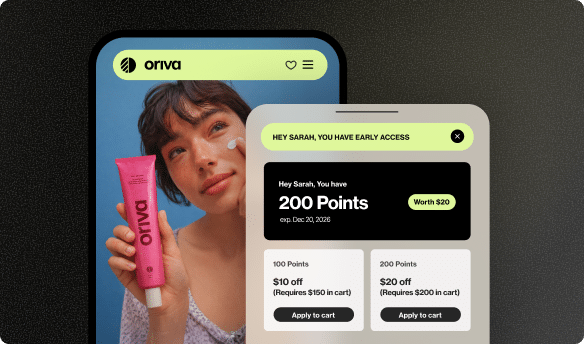
Yotpo Loyalty helps online stores create exciting clubs and rewards for their customers. Imagine you buy your favorite robot toy, and then the store gives you special points or a discount for your next purchase. That makes you want to come back, right? That’s what a loyalty program does! You can learn more about the best loyalty programs.
Here’s how Yotpo Loyalty helps businesses make their Serviceable Obtainable Market (SOM) even bigger:
- Encourages Repeat Purchases: When customers earn rewards, they’re more likely to shop again and again. This helps the business keep its current customers and get more value from them.
- Builds Strong Relationships: Loyalty programs make customers feel special and appreciated. This builds a strong bond between the customer and the brand.
- Spreads the Word: Happy, loyal customers are the best advertisers! They’ll tell their friends and family about their great experiences, which can bring in even more new customers without the store having to spend extra money on ads. This is a powerful form of word-of-mouth marketing.
By using Yotpo Loyalty, businesses can turn one-time shoppers into lifelong fans, effectively making their realistic share of the market (SOM) grow over time.
The Power of What People Say
When a business uses both reviews and loyalty programs, something really cool happens. Reviews help new customers trust the brand and make their first purchase. Once they become customers, loyalty programs keep them coming back. These repeat customers then leave more positive reviews, which helps bring in even *more* new customers! It’s a wonderful cycle that helps a business continuously expand its reach within its TAM.
This combination creates a powerful consumer decision-making process where user-generated content (like reviews and photos from real customers) plays a huge role in helping other potential customers decide to buy. It’s a fantastic way for businesses to not only identify their big market opportunity but also to capture it, customer by customer.
Table: Understanding Your Market Pie
Let’s put the three market ideas – TAM, SAM, and SOM – into a table to make it even clearer. Imagine you have an online store that sells amazing, unique handcrafted wooden toys.
| Market Type | What It Is | Example (Online Wooden Toy Store) |
|---|---|---|
| Total Addressable Market (TAM) | Everyone who could possibly buy your product or service. The whole, giant market. | All children and adults in the world who might ever want or buy a toy (handmade or not). |
| Serviceable Available Market (SAM) | The people you can actually reach with your business model and current capabilities (like shipping or language). | Children and adults in countries where your online store ships, and who speak the languages your website supports. |
| Serviceable Obtainable Market (SOM) | The people you can realistically get to buy from you right now, or in the near future, given your marketing and competition. | Children and adults in your shipping regions who find your store, are convinced by your products and reviews, and choose to buy your unique wooden toys over other options. |
This table helps to show how you go from the biggest idea of a market to the most realistic part a business can aim for right now.
Steps to Think About Your TAM
If you were a business owner, here’s a simple way you might start thinking about your TAM:
- What Problem Do You Solve? First, figure out what need your product or service meets. For our wooden toys, maybe it’s “providing durable, eco-friendly, imaginative play.”
- Who Has This Problem? Think about everyone who might want or need what you offer. This is the starting point for your TAM. For wooden toys, it’s not just kids, but also parents, grandparents, and collectors.
- How Many of Them Are There? Try to find some big numbers. How many children are there in the world? How many adults buy gifts for children? Research can help here.
- How Much Do They Spend? How much money do people spend on similar products each year? If you know this, you can get a better idea of the total value of your market.
- Keep Learning and Adjusting: TAM isn’t a fixed number. As the world changes, so does your TAM! Businesses constantly learn more and adjust their ideas.
Thinking through these steps helps businesses truly understand the landscape they are operating in and how much potential there is for their great ideas.
Conclusion
The Total Addressable Market, or TAM, is a super important idea for any business, especially online stores. It’s like looking at the entire planet and seeing how many people might be interested in what you have to offer. It helps businesses dream big, plan smart, and understand the huge potential that’s out there.
By understanding their TAM, SAM, and SOM, businesses can make better decisions about where to focus their energy and how to grow. And with clever tools like Yotpo Reviews and Yotpo Loyalty, online stores can not only reach more of their potential customers but also turn them into happy, repeat buyers. So, the next time you see an online store, remember all the big thinking that goes into finding their perfect piece of the market pie!










 Join a free demo, personalized to fit your needs