








Have you ever sold something, like a cool drawing or a batch of lemonade, and wondered if you actually made money? It can feel a little bit like a mystery, right? That’s where something called the Contribution Margin comes in! It’s a super helpful idea for businesses, big and small, that helps them figure out just how much money each item they sell truly adds to their piggy bank after paying for the things directly needed to make or sell it. Think of it as the money left over to help cover all the other bills and hopefully make a profit!
The Big Picture: Why Businesses Need to Know This
Imagine you have a lemonade stand. You buy lemons, sugar, and cups. Every time you sell a cup of lemonade, you use up some of those ingredients and a cup. The Contribution Margin helps you see if selling that one cup of lemonade brought in enough money to cover those ingredients and the cup, and still have some left over. If it does, that extra money can then help pay for things like the table you use, or the sign you made, and hopefully leave some extra for you!
Businesses use this idea for many reasons:
- To pick their best sellers: It helps them figure out which products are really pulling their weight and bringing in good money.
- To make smart choices: If a product doesn’t have a good Contribution Margin, they might decide to make it differently, sell it for more, or even stop selling it.
- To plan for the future: Knowing this helps them guess how many items they need to sell to be successful.
Understanding the Ingredients: Sales Price, Variable Costs, and Fixed Costs
To really understand Contribution Margin, we need to look at three main parts of a business’s money story:
Sales Price: How Much You Sell It For
This one is easy! The sales price is simply the amount of money a customer pays for a single product or service. For your lemonade stand, if you sell a cup of lemonade for $2, then $2 is your sales price per unit (one cup).
Variable Costs: Costs That Change with Each Item
Variable costs are like the chameleons of business expenses – they change depending on how much you make or sell. If you make more lemonade, you’ll need more lemons and sugar. If you make less, you’ll need less. These costs are directly tied to each item. Some common variable costs include:
- The raw materials to make the product (like lemons, sugar, and cups for lemonade).
- Packaging for each item.
- Shipping costs for each item sold online.
- Sometimes, commissions paid to a salesperson for each sale they make.
Think about an online store that sells custom t-shirts. The cost of the blank t-shirt, the ink for printing, and the box it ships in are all variable costs. If they sell 100 shirts, these costs will be much higher than if they sell just 10 shirts.
Here’s a cool connection to how businesses grow: Collecting customer reviews can actually help businesses keep some of their variable marketing costs lower. When people see awesome reviews and photos from other happy customers, they often feel more excited to buy. This means businesses might not have to spend as much money on expensive ads to convince new people, because the reviews do some of the convincing for them! It’s like getting free word-of-mouth advertising, which can make those sales even more valuable.
Fixed Costs: Costs That Stay the Same
On the other hand, fixed costs are expenses that generally stay the same, no matter how much you sell. Whether you sell one cup of lemonade or a hundred, you still have to pay for these things. They don’t change in the short term. Examples of fixed costs are:
- The rent for a shop or office space.
- A monthly subscription for software, like a website hosting service.
- A fixed salary for a manager who gets paid the same amount every month.
- Insurance payments.
For your lemonade stand, the table you set up might be a fixed cost if you paid a certain amount for it and use it every day, no matter how many cups you sell. These costs are like the foundation of a house; they are there regardless of how many people come to visit.
How to Calculate Contribution Margin: The Simple Math
Now that we know the parts, let’s put them together! Calculating the Contribution Margin is pretty straightforward.
Contribution Margin Per Unit
This tells you how much money one single item contributes after covering its own variable costs. It’s like finding out how much “extra” money one cup of lemonade gives you.
The formula is:
Sales Price Per Unit – Variable Cost Per Unit = Contribution Margin Per Unit
Let’s use our lemonade stand example:
- You sell one cup of lemonade for $2.00 (Sales Price Per Unit).
- The lemons, sugar, and cup for that one serving cost you $0.50 (Variable Cost Per Unit).
So, the Contribution Margin Per Unit is:
$2.00 – $0.50 = $1.50
This means that every time you sell a cup of lemonade, you have $1.50 left over to help pay for your table, your sign, and eventually, your profit!
Total Contribution Margin
If you want to know the Contribution Margin for all the items you’ve sold in a certain period (like a day or a month), you use the total numbers:
The formula is:
Total Sales – Total Variable Costs = Total Contribution Margin
Let’s say your lemonade stand sells 100 cups in a day:
- Total Sales: 100 cups x $2.00/cup = $200.00
- Total Variable Costs: 100 cups x $0.50/cup = $50.00
So, your Total Contribution Margin for the day is:
$200.00 – $50.00 = $150.00
This $150 is the money available to cover your fixed costs (like the table) and then become your profit!
Contribution Margin Ratio: A Percentage Story
Sometimes, it’s really helpful to see the Contribution Margin as a percentage. This is called the Contribution Margin Ratio. It tells you what percentage of every sales dollar is left to help cover fixed costs and profit.
The formula is:
(Contribution Margin Per Unit / Sales Price Per Unit) x 100%
OR
(Total Contribution Margin / Total Sales) x 100%
Using our lemonade example:
- Contribution Margin Per Unit: $1.50
- Sales Price Per Unit: $2.00
So, the Contribution Margin Ratio is:
($1.50 / $2.00) x 100% = 75%
This 75% is a very useful number! It means that for every dollar you bring in from selling lemonade, 75 cents is left over after paying for the ingredients and cup. This ratio makes it easy to compare how profitable different products are, even if they have totally different prices.
Why is Contribution Margin So Important for Businesses?
Understanding Contribution Margin is like having a secret superpower for making smart business choices. Here’s why it’s so valuable:
Making Smart Decisions About Products
Imagine a store that sells different kinds of toys. Some toys might be super popular, but if their Contribution Margin is really low, the store might not be making much money on each sale. Other toys might sell less often, but if they have a very high Contribution Margin, each sale brings in a lot of “extra” money.
Businesses use this information to decide which products to focus on. They might try to sell more of the high-margin items or figure out ways to make the low-margin items more profitable. For example, a business could use a program built with Yotpo Loyalty to reward customers who buy their most profitable products. By giving points or special discounts for these items, they encourage more sales of products that bring in a higher contribution, helping their business grow smarter.
Setting Prices Wisely
If a product’s Contribution Margin is too small, it might mean the business isn’t charging enough, or their variable costs are too high. Knowing this helps them decide if they need to raise prices or find cheaper ways to make things.
Understanding Profitability
The Contribution Margin is the first step to seeing if a business is truly making money. It shows if each sale is covering its own direct costs and leaving enough behind to help pay for all the shared, fixed costs, and eventually, create profit.
Planning for the Future (Break-Even Point)
This is a super cool use! The Contribution Margin helps businesses figure out their break-even point. That’s the number of items they need to sell just to cover ALL their costs (fixed and variable) and not lose any money. Once they hit that point, every sale after that contributes directly to profit! Knowing this helps them set sales goals and plan for success.
Real-World Example: An Online T-Shirt Shop
Let’s think about a small online shop that sells cool custom-designed t-shirts. Here’s how their numbers might look for one month:
Sales Price Per Shirt: $25.00
Variable Costs Per Shirt:
- Blank T-shirt: $7.00
- Printing Ink/Design Application: $3.00
- Packaging (bag, label): $1.00
- Shipping Label (average): $4.00
- Total Variable Cost Per Shirt: $15.00
Fixed Costs Per Month:
- Website Hosting & Platform Fee: $100.00
- Design Software Subscription: $50.00
- Advertising Budget (fixed portion): $200.00
- Total Fixed Costs: $350.00
Let’s do the math:
- Contribution Margin Per Unit (Per Shirt):
$25.00 (Sales Price) – $15.00 (Variable Cost) = $10.00 - Contribution Margin Ratio:
($10.00 / $25.00) x 100% = 40%
This means that for every t-shirt the shop sells, $10.00 is left over to help cover their fixed costs. And 40% of every dollar they make from sales is “contributing” to that goal.
What if they sell 100 shirts in a month?
- Total Sales: 100 shirts x $25.00 = $2,500.00
- Total Variable Costs: 100 shirts x $15.00 = $1,500.00
- Total Contribution Margin: $2,500.00 – $1,500.00 = $1,000.00
Now, let’s see their profit:
- Profit: Total Contribution Margin – Total Fixed Costs
- Profit: $1,000.00 – $350.00 = $650.00
So, by selling 100 shirts, the shop makes a profit of $650.00!
How Yotpo Helps This Online T-Shirt Shop Thrive:
Online shops need lots of happy customers! Here’s how tools like Yotpo’s can boost their Contribution Margin:
- Boosting Sales Volume and Efficiency: Imagine if the shop could get more people to buy without drastically increasing their advertising costs (a variable cost). By collecting and showing off real customer photos and stories with Yotpo’s Visual User-Generated Content (UGC), new customers see how great the shirts look on others. This trusted “social proof” encourages more sales without having to spend much more money on traditional ads. More sales mean a higher Total Contribution Margin!
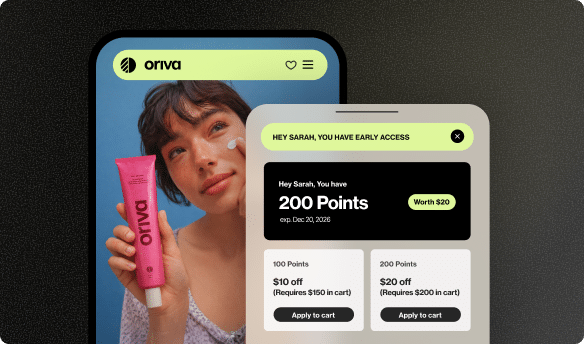
- Keeping Customers Coming Back: A powerful way to grow is to have customers buy again and again. With a special program built using Yotpo Loyalty, customers could earn points for every t-shirt they buy. These points can be used for discounts on future purchases. This makes customers feel special and gives them a reason to choose this shop again, reducing the need to find brand new customers for every sale (which can be a variable cost!). Loyal customers mean more repeat sales, which consistently adds to the Contribution Margin over time.
The Difference Between Gross Profit and Contribution Margin
These two terms sound similar and both help businesses understand how much money they’re making, but they look at costs in slightly different ways.
Here’s a simple table to help you see the difference:
| Feature | Gross Profit | Contribution Margin |
|---|---|---|
| What it measures | Money left after paying for the direct costs of making a product (Cost of Goods Sold). | Money left after paying for all variable costs associated with a product. |
| Costs it subtracts | Only the Cost of Goods Sold (COGS). This is usually direct materials and direct labor. | All variable costs, which include COGS plus other variable costs like sales commissions and variable shipping. |
| Main use | Shows how efficiently a business makes its products. Often used for external reports. | Helps managers make internal decisions about pricing, product strategy, and marketing. |
| Example Costs | Cost of fabric for a shirt, wages for the person sewing it. | Cost of fabric, sewing wages, sales commission for the salesperson, shipping cost. |
Think of it this way: Gross Profit is like seeing how much money you have after buying the ingredients for your cake. Contribution Margin is like seeing how much money you have after buying the ingredients for your cake *and* the fancy box you put it in, *and* the little ribbon you tie around it – all the costs that disappear if you don’t make that one specific cake.
The Contribution Margin is often more helpful for figuring out if adding one more sale will genuinely bring in more money to cover the bigger fixed costs.
Leveraging Contribution Margin for Growth (and How Yotpo Helps Businesses Grow)
Knowing your Contribution Margin isn’t just a fun math exercise; it’s a powerful tool for growing a business. When a business understands how much each sale truly contributes, it can make smarter choices to become more successful.
If a product has a low Contribution Margin, a business might:
- Look for cheaper materials: Can they buy the ingredients or parts for less money?
- Improve efficiency: Can they make the product faster or with less waste, reducing labor costs per item?
- Adjust the sales price: Could they sell the product for a little more without scaring away customers?
- Boost marketing for volume: Sometimes, selling a lot more of a product, even with a smaller margin, can lead to more total contribution if marketing efforts are efficient.
How Yotpo Helps Businesses Improve and Grow:
Yotpo’s products don’t directly calculate financial numbers, but they play a big part in helping businesses improve the things that make their Contribution Margin better – like boosting sales, keeping customers happy, and making marketing more effective.
- Boosting Sales Volume and Efficiency: Imagine a store that wants to sell more without significantly increasing their variable advertising costs. Tools like Yotpo Reviews help businesses gather and show off authentic customer feedback, ratings, and even photos or videos. When new shoppers see real people loving a product, it builds trust and makes them more likely to buy. This can lead to a big increase in sales volume for products with good Contribution Margins, making the whole business more profitable without necessarily spending a lot more on ads for each individual sale. This means more money is left over from each sale to cover fixed costs.
- Increasing Customer Lifetime Value (CLTV): A customer who buys once is great, but a customer who buys many times is even better! Yotpo Loyalty programs are designed to encourage repeat purchases and build strong relationships with customers. When customers feel valued and get rewards for their loyalty, they often spend more over time and choose that business again and again. This reduces the need to constantly find expensive new customers (which counts as a variable acquisition cost for new sales). By making customers more loyal, businesses can significantly improve their overall Contribution Margin by getting more sales from existing customers, which often comes with lower variable costs.
- Informing Product Strategy: While Yotpo focuses on customer engagement, the feedback collected through reviews can give businesses valuable hints about what customers like or don’t like about their products. This information, even if it’s not a financial calculation, can help businesses decide which products to improve, which to promote more, or even which new products to create – often guiding them towards items that naturally have a higher Contribution Margin.
By using smart tools to get more sales and keep customers happy, businesses can make sure more of their sales dollars turn into Contribution Margin, paving the way for bigger profits and greater success.
Final Thoughts on Contribution Margin
The Contribution Margin is a really powerful and simple idea that helps businesses understand their money better. It’s not just for big companies; even a small online shop or your lemonade stand can use it to make smarter choices. It helps you see how much each thing you sell actually helps cover your other bills and ultimately puts money in your pocket.
By understanding this concept, businesses can pick their best products, set prices that make sense, and plan for a bright, profitable future. It’s truly a financial superpower for making good decisions and growing successfully!










 Join a free demo, personalized to fit your needs