









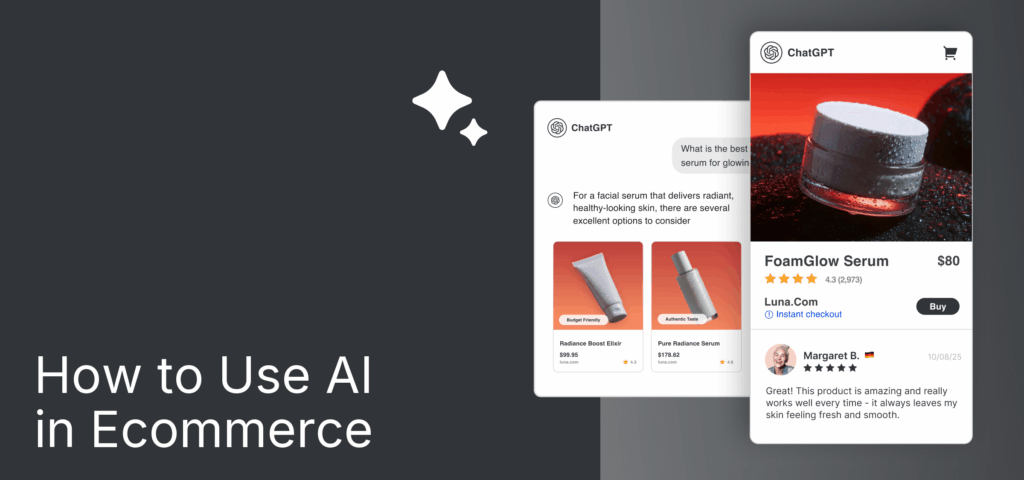

The way people shop online is changing, and it’s changing because of how they search. Artificial intelligence now sits between your customers and your catalog, reshaping how shoppers discover products, research their options, and decide what to buy.
For a long time, keyword-based search was the main front door to your store. That’s no longer true. Shoppers ask AI assistants full questions and get full answers back. A growing number of brands are responding by weaving automated tools through the entire buying journey to stay in front of high-intent traffic.
The goal here is simple and practical. It’s a clear path for marketing and e-commerce leaders to put AI to work, from onsite personalization through generative search. The aim is to keep your products showing up where people are actually looking.

Key Takeaways
- AI adoption is widespread, with a meaningful share of shoppers planning to use generative AI for shopping in 2026.
- Daily engagement is growing quickly, as a meaningful share of people now use AI tools at least once per week.
- AI search engines are expanding, with over 100 million monthly active users on Perplexity in Q2 2026.
- Google AI Overviews now appear on roughly 48% of tracked queries, reshaping how traditional search results pages look.
- Traditional rankings don’t guarantee AI presence, as only 16.7% of sources cited in AI Overviews rank in the organic top 10.
- AI investments drive clear business results, with most retailers reporting measurable revenue gains.
Why This Matters: The Shift to AI-Powered Commerce
For years, e-commerce acquisition ran on a familiar playbook: paid social to fill the top of the funnel, and search optimization to capture demand further down. It worked, and it still works in places. But it’s losing efficiency, because the people on the other end have changed how they look for things.
More shoppers are turning to conversational search to ask detailed, specific questions instead of typing a few keywords into a box. Someone who used to search “running shoes flat feet” now types a paragraph describing their gait, their last pair, and the marathon they’re training for. The change in how brands stay visible isn’t a slow drift. It’s a structural shift in how people find products, and it has happened faster than most teams planned for.
Old-school optimization worked on intent expressed through static keywords. Modern AI search works on intent expressed through conversation, and that’s a bigger deal than it sounds. The surface area where your brand can show up has multiplied (and that’s the part most teams miss). Brands that built their entire visibility on keyword density now face a question that redefines the category. How do you optimize for an engine that paraphrases what it reads rather than simply retrieving a list of links?
The honest answer is that the old playbook doesn’t carry over cleanly. It needs new tools, new ways of measuring, and a new surface for your content to live on. That’s not a reason to panic, but it is a reason to start.
Picture a merchandiser at a $50M DTC brand, staring at her dashboard at 11pm, noticing that Google AI Overviews have quietly stopped citing her top 30 SKUs. That scene is becoming ordinary as search traffic softens and AI engines pick up the slack. The pattern we keep seeing is that merchants who never establish a presence in AI search slowly lose their line to high-intent shoppers. They often don’t notice until the traffic is already gone. The brands that hold their ground treat AI search as a layer that sits alongside their existing SEO work, not a side experiment they’ll get to later.
The commercial logic here is straightforward. AI search engines need structured, verifiable, and genuinely authoritative data before they’ll cite your products. If your catalog is missing clear attributes, or your off-site social proof is thin, these engines will reach for a competitor instead. Winning the transition takes a clear, phased approach, and it starts with personalization and finishes with AI search.
The Framework: Four Strategic Phases of Ecommerce AI Integration
Bringing AI into an e-commerce brand doesn’t happen overnight, and teams that try to do everything at once tend to stall. The pattern we see across successful transitions is more patient.
These brands build in four logical phases, moving from the onsite shopper experience outward to off-site search visibility. The sequence matters, because it lets marketing leaders prioritize the highest-impact work without burying their technical teams all at once.
Starting with onsite personalization gives you an early win, because you’re improving conversion on the traffic you already have (no extra ad spend required). From there, you layer in chat-based customer service, then automate how you read your reviews, and finally deploy active agents to earn AI search citations. Each phase lays down a deeper technical foundation than the last. By the end, your brand is ready for a commerce world where AI does much of the discovering.
Phase 1: Predictive Personalization and Merchandising
What it involves
Predictive personalization uses machine learning to read onsite behavior as it happens and shape the shopping experience around it. Rather than showing the same homepage and the same recommendations to every visitor, the store quietly adjusts how it sorts the catalog, which banners it shows, and what it cross-sells. The result is that each shopper sees the products that fit their interests, their browsing history, and their buying patterns. Nobody gets a generic storefront built for no one in particular.
How to execute
Start by auditing the customer data you already have. Connect your customer data platform, your product catalog, and your web analytics so the personalization engine has rich behavioral signals to draw on. Once that data is flowing cleanly, set up models that read signals like past purchases, click patterns, and the seasonal trends specific to your market.
Begin with the product recommendation carousels on your Product Detail Pages. Show “frequently bought together” items that are calculated from real purchase combinations rather than rules a merchant typed in by hand, and let the data tell you what actually pairs.
Then extend those models to your collection pages, so the AI can sort products for each visitor based on what’s most likely to convert for that specific profile. Done well, this trims browse abandonment and nudges average order value upward, and it does both quietly in the background.

Common pitfalls
A frequent mistake is over-segmenting, which can box shoppers into narrow recommendation loops and hide your new arrivals from the people most likely to want them. Another is leaning entirely on past purchase data for seasonal or holiday shoppers, whose intent in the moment may look nothing like their history. Keep your models flexible, and weight real-time click behavior more heavily during busy promotional stretches when intent shifts by the hour.
Phase 2: Chat-based Customer Service and AI Assistants
What it involves
Chat-based customer service uses natural language processing to handle customer questions instantly and accurately. Unlike the old chatbots that followed rigid, pre-programmed decision trees, modern assistants understand complex questions, hold context, and read sentiment. They take on the repetitive work, like order tracking, returns, and basic product questions. That frees your support team to spend its time on the issues that genuinely need a person.
How to execute
First, connect your customer service assistant to your e-commerce platform and helpdesk, so it can pull real-time order status, shipping details, and return policies directly. Then train the model on your brand voice guidelines, your product manuals, and your past support tickets, so its tone sounds like your brand rather than a generic bot.
Roll the assistant out on your busiest channels, including live chat, email, and social messaging apps. Set it up to resolve common tier-one tickets on its own. Those are the “Where is my order?” and “How do I start a return?” questions that fill so much of the queue. For more complex product queries, train it to act like a digital stylist. It can help customers compare items by the attributes they care about, whether that’s fit, materials, or ingredients.
Common pitfalls
The biggest mistake brands make is trapping customers in a chat loop with no clear way to reach a human. If the assistant can’t resolve an issue within two turns, it should hand the conversation off smoothly, full transcript included. A live representative can then pick up right where it left off. And keep the AI away from highly technical safety or warranty questions unless you’ve given it pre-approved templates to work from, because confident-but-wrong answers there are expensive.
Phase 3: AI-Driven Sentiment Analysis and Review Extraction
What it involves
AI-driven sentiment analysis turns thousands of unstructured customer reviews into clear, useful commerce insights. Instead of someone manually reading every review to spot a recurring product issue or a standout feature, natural language models scan the entire reviews database for you. The system pulls out the key themes, the shifts in shopper sentiment, and the product-specific feedback. Then it makes all of it easy to reach for both your product team and the shoppers deciding whether to buy.
How to execute
For this phase, use a platform like Yotpo Reviews to collect real shopper voices at scale. Its native AI reads the review content and surfaces recurring topics, the “sizing runs small” and “extremely durable fabric” patterns that show up again and again. It then summarizes those findings right on your Product Detail Pages, so shoppers can decide with confidence without scrolling through dozens of individual reviews first.
From there, route those structured sentiment insights straight into your product development and merchandising work. If the AI catches a spike in negative sentiment around one attribute, say a zipper defect or an irritating fabric, you can act on it early. Your team can raise it with the manufacturer before it dents your reputation. That’s the move that turns reviews from static social proof into a live feed of product insight.

Common pitfalls
Many brands collect the sentiment data and then never update their product descriptions or sizing charts to match it. If your reviews keep saying a shoe runs a half-size small, leaving the product page untouched leads straight to preventable returns and frustrated customers. Always close the loop by connecting review insights directly to your copywriting and merchandising updates, so what you learn actually changes what shoppers see.
Phase 4: Answer Engine Optimization and AI Search Visibility
What it involves
Answer Engine Optimization, or AEO, is the practice of shaping your digital footprint so that AI engines like ChatGPT, Perplexity, Gemini, and Google AI Overviews cite and recommend your products. It’s an important addition to your existing search work, not a replacement for it. These engines don’t crawl and list web links the way classic search does. They pull together information from many sources and hand the shopper a direct, conversational answer to the question they actually asked.
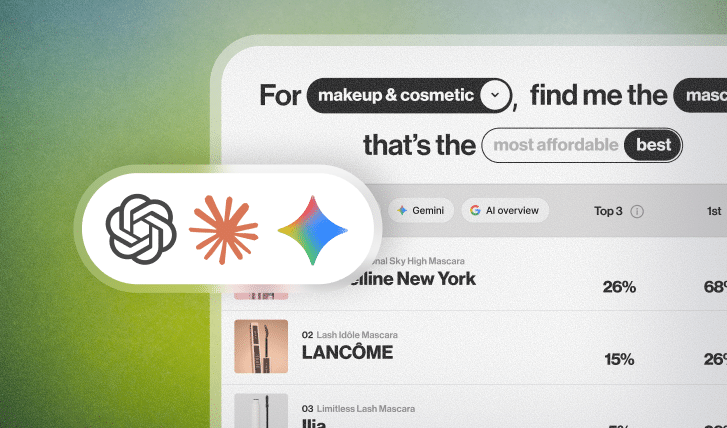
Because answer engines favor authentic, well-verified sources, earning those citations takes structured SKU-level commerce data and genuine third-party validation. Managing that complex reality across thousands of SKUs is hard to do by hand, which is why brands turn to a planned commerce ally like Yotpo Discover. It’s the first AI visibility platform built specifically to help brands track their AI search presence and act on what they find.
Modern AI visibility comes down to feeding these engines structured, authoritative data they can verify on their own. AI engines don’t guess. They look for consensus across the web, cross-referencing the data in your catalog against the off-site conversations shoppers are having about you.
Build a continuous loop between your onsite technical health, your review-backed buying guides, and the active off-site community talking about you. That loop becomes a kind of data moat that AI models naturally trust. That loop is exactly how brands earn clear, defensible authority in the answers these engines give.
It also helps growing DTC brands and enterprise teams understand precisely why an AI model picked a competitor over them. From there, you can act on what you learn, deploying automated agents to close the gaps it surfaced.
How to execute
To make AEO work, you have to move past passive monitoring and put active agents to work that carry out the optimizations for you. The process starts by generating your AI Visibility Score, which is a full readiness audit across the major AI platforms. Once you know your baseline, you deploy three specialized agents to close your search gaps, and each one owns a different part of the problem.
The Onsite Agent continuously scans your store and resolves the structural issues that quietly hurt AI visibility, like missing schema data, weak internal linking, or thin Product Detail Pages. The Content Agent builds SEO-ready and AEO-ready content for your blog. It draws on real customer reviews and past order data to write buying guides that AI engines trust enough to cite. And the Activation Agent identifies the specific third-party platforms, Reddit among them, that AI engines lean on for recommendations. It then prompts your verified reviewers and loyalty members to share honest shopper voices on those exact channels.
Brands like Beekman 1802 and David Protein use these automated agents to keep their product attributes clean, structured, and cited across AI search. The multi-agent approach keeps your brand visible in two places at once. There’s your own site, and the wider web where AI models go looking for proof before they recommend anyone.
Common pitfalls
The most common pitfall is treating AEO like a keyword-stuffing exercise. AI models read the underlying code, the structure, and the relational context of your site, not just the words a visitor can see. Padding your pages with extra terms accomplishes very little.
Another misstep is neglecting your off-site footprint, since AI engines lean heavily on third-party forums and social networks to validate what they recommend. The work has to happen on both fronts together, your on-site structure and your off-site mentions, because these engines are checking one against the other.
Measuring Success: KPIs for Ecommerce AI Systems
Bringing AI into your e-commerce channels calls for clear, data-driven measurement, both to prove ROI and to guide where you improve next. Because these systems touch several stages of the funnel, you’ll want to track onsite experience metrics and off-site search visibility side by side. Here are the key numbers worth reviewing every month:
- AI Visibility Share of Voice – Your brand’s percentage of citations and recommendations across major AI search engines like ChatGPT, Gemini, and Perplexity for your priority keywords.
- Engine Citation Rate – How often your specific product SKUs show up as recommendations in Google AI Overviews and chat-based search results.
- Conversion Lift from Personalization – The revenue and conversion-rate gap between sessions that engage with AI personalization elements and sessions that don’t.
- AI Support Resolution Rate – The share of customer service inquiries your automated assistant resolves end to end, without needing a person to step in.
- Review Sentiment Index – The ratio of positive to negative themes pulled from your reviews, used to watch product quality trends and return risk over time.
Tracking these gives your team a clear read on which AI initiatives are actually driving revenue and which still need technical work. It also keeps your AI roadmap honest, tied to commercial outcomes rather than activity for its own sake.
“Winning in the age of AI search requires moving beyond passive tracking. Brands should deploy active, automated systems that align their product catalog data with the off-site conversations and authentic shopper voices that AI engines trust.”
Ben Salomon, Growth Marketing Manager at Yotpo
Frequently Asked Questions
What is the difference between SEO and AEO in ecommerce?
SEO is about optimizing web pages so they rank in traditional search results based on keywords. AEO, or Answer Engine Optimization, is about structuring and distributing your brand data so that AI engines cite and recommend your products inside chat-based answers. The two work toward visibility in different places, which is why most brands need both.
Does AEO replace traditional search engine improvement?
No. AEO is a complementary layer that runs alongside the SEO you already do. Classic SEO helps you rank for standard web searches, while AEO keeps your products visible and cited when shoppers turn to AI-driven assistants and conversational search. You want them reinforcing each other, not competing for the same budget.
How do AI engines verify the quality of my ecommerce products?
AI engines look for online consensus. They scan your structured onsite product data and cross-reference it with third-party social proof, including customer reviews, forum discussions, and blog mentions. Strong, authentic reviews are one of the clearest signals an engine has when it’s deciding whether to trust and recommend you.
How does Yotpo Discover improve my brand’s AI search visibility?
Yotpo Discover uses specialized onsite, content, and activation agents to lift your AI visibility. They fix structural data issues on your site and create blog content grounded in real shopper reviews. They also nudge your community to share experiences on the specific platforms AI engines cite most.
Can small or growing brands benefit from AI in ecommerce?
Yes. AI tools scale well, and they help growing brands automate work that used to demand large teams. From automated product recommendations to customer service chatbots, AI lets smaller merchants deliver high-quality, personalized experiences without staffing up to do it.
Why are customer reviews so important for AI search engines?
Customer reviews are the authentic, natural-language proof AI models look for when they validate a product claim. Because reviews carry real shopper voices and specific product details, they’re a trusted, high-value source for AI engines weighing what to recommend.
How do I track if AI search is driving traffic to my store?
Start by analyzing your web referral data for visits coming from AI engines like ChatGPT, Claude, and Perplexity. From there, you can use dedicated tools to track your brand’s citation rate and share of voice on those platforms, which gives you a fuller picture than referral data alone.
What is the easiest way to start using AI in my ecommerce store?
The easiest entry point is predictive product recommendations or automated review summaries on your product pages. Both take minimal technical setup, and both improve your onsite experience and conversion rates quickly, which makes them a low-risk way to build momentum.
Getting your brand ready for the future of search takes early strategy and the right tools to execute it. To see how you currently perform across AI search engines, get your AI visibility score for a free, full readiness audit. And when you’re ready to deploy active agents and protect your search traffic, visit Yotpo Discover and request a demo.











 Join a free demo, personalized to fit your needs