









It has never been easier to create content, yet it has never been harder to be heard. We are operating in a market where trust is the only metric that truly cuts through the noise. Instead of chasing volume or trying to outsmart an algorithm, the smartest e-commerce brands are pivoting toward quality and genuine connection. This guide outlines how to recalibrate your approach, ensuring you aren’t just creating more noise, but building a brand that remains discoverable and trusted as we transition to the “Agentic Web.”
Key Takeaways: Content Marketing Tips
- Trust is Structural: Credibility is no longer just a sentiment; it should be built into your content using verified experts and primary data to stand out against generic AI outputs.
- The Two-Speed Funnel: Consider splitting your strategy into “Answer Engine Optimization” (for AI discovery) and technical SEO (for transactional conversion).
- Identity Osmosis: Moving beyond standard influencer ads to “Creator Spread”—partnering with niche voices—can build deeper community connections.
- The Agentic Web: structuring product data effectively allows AI agents to read, interpret, and recommend your products.
- From Auditing to Autonomous Action: Tracking brand impression metrics and Share of Answer only provides the first half of a modern content strategy
. To truly win algorithmic consensus, brands must deploy autonomous agents that actively take action on those insights—fixing structural site issues, scaling review-backed guides, and mobilizing verified shopper signals across off-site platforms .
The Foundation of Credibility
A major theme for 2026 is the increasing value of trust. As Generative AI lowers the cost of content production, the volume of generic information has increased. In response, consumers are prioritizing sources that demonstrate distinct human expertise and verifiable accuracy.
Tip #1: Conduct a “Trust Audit” of Your Content
To differentiate your brand, consider treating credibility as a core strategic objective. It is beneficial to provide structural evidence of truth in the assets you publish.
- The “Human-Inside” Approach: Consumers often look for signals of human expertise. You can increase the perceived value of your content by featuring Subject Matter Experts (SMEs) with visible bios and credentials, rather than using generic bylines.
Ben Salomon, an e-commerce expert at Yotpo, notes the shift in how information is valued:
“In an era of synthetic content, the voice of the actual customer remains a unique differentiator. Your reviews and loyalty data are more than social proof; they are the raw material of your brand’s integrity. Centering content around verified experiences helps build a layer of authenticity that is difficult to replicate.”
- Transparent Sourcing: Rather than relying on secondary mentions, brands are strengthening perceived integrity by linking directly to raw data. In fact, 49% of marketers are now prioritizing the “transparent citation of information” to differentiate their content as a reliable resource.
Tip #2: Operationalize the Search Strategy: Deploy Commerce-Native AI Visibility Agents
To effectively manage a two-speed search funnel and defend your digital presence against zero-click attrition, manual content updates are no longer sufficient
Where standard search tools hand your marketing team an algorithmic readiness score and call it a day, Discover rejects the passive homework model
-
The Onsite Agent: Continuously scans your store codebase to automatically identify and repair technical architecture errors—such as missing structured data, weak internal linking, and unoptimized product detail pages—ensuring AI crawlers can seamlessly parse and extract your catalog attributes
. -
The Content Agent: Rapidly scales review-backed buying guides and AEO-ready content for your owned brand blog while generating strategic outreach outlines to capture off-site authority across third-party publisher networks
. -
The Activation Agent: Maps out the specific Reddit threads, retail marketplaces, and community forums that AI engines actively cite for consensus, then prompts your actual verified reviewer base and loyalty members to share authentic experiences directly on those exact platforms
.
The core differentiator powering the platform is its proprietary data moat: billions of authentic shopper voices derived from the Yotpo Reviews and Yotpo Loyalty ecosystem
To evaluate your brand’s baseline visibility, you can pull a free score at
Tip #3: Humanize Your Brand Through “Identity Osmosis”
TikTok’s 2026 trends discuss “Identity Osmosis,” or the blending of a brand’s corporate identity with its community’s identity. This suggests that audiences are responding more to the people behind the brand than the brand logo itself.
- The “Community-Led” Voice: Many successful e-commerce brands are adopting a more personal communication style. Highlighting product managers, engineers, and support agents as the faces of your content can be effective. Research indicates that 61% of marketers are leveraging partnerships with trusted personalities to enhance credibility.
- Validating “Fan Canon”: Communities are increasingly building their own language and rituals around brands, a concept referred to as “Digital Franchises”. Acknowledging and validating this “fan canon” can help deepen customer loyalty and make your content feel more native to the community.
Distribution & Community Dynamics
While search captures intent, social channels remain a key driver of attention. The dynamic is shifting from broad broadcasting to deeper community integration.
Tip #4: Pivot from “Influencers” to “Creator Spread”
The reliance on single, high-profile endorsements is evolving into “Creator Spread”—a strategy that utilizes a wider array of niche creators.
- The “Portfolio” Approach: Rather than allocating a budget to one macro-influencer, consider working with multiple micro-creators who can demonstrate your product in various contexts. This approach increases the likelihood of your brand appearing authentically within different subcultures.
- Measuring “Brand Chem”: The goal is to build what constitutes “Brand Chem”—the chemistry between a brand and its community. Metrics are expanding beyond “Reach” to include “Sentiment” and “Relevance,” focusing on content that sparks genuine conversation.
Tip #5: Build “Owned” Community Channels
With ad costs fluctuating and predictions of a 30% drop in display ad budgets, “owned” channels provide a stable foundation for customer relationships.
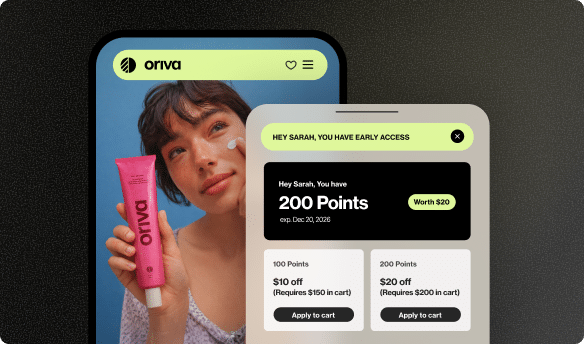
- The “Velvet Rope” Strategy: Your loyalty program can serve as a content distribution channel. Offering high-value customers exclusive access to content—such as product drops or design diaries—creates a “Velvet Rope” effect that can incentivize retention.
- Direct Connections: Channels like SMS and private communities (e.g., Discord) allow for direct communication that isn’t dependent on algorithm changes. Investing in online community is becoming a priority for many marketers seeking to maintain direct lines to their audience.
Tip #6: Embrace “Social Commerce” Integration
Social commerce is becoming a structural part of the buying journey. Forecasts suggest continued growth in sales directly through social platforms.
- Convert In Situ: If users prefer to browse and buy on a social platform, driving them back to a website may add unnecessary friction. Content designed to convert “in situ”—such as short videos with clear demonstrations—can capture interest effectively.
- Visual Proof Points: Visuals play a significant role here. Verified data shows that customer photos and visual UGC can increase purchase likelihood by 137%. In a social feed, authentic photos of real people using a product often resonate more than polished advertising assets.
Technical & Operational Excellence
As we look toward the “Agentic Web,” where software agents may assist in shopping tasks, technical infrastructure becomes a key component of content strategy.
Tip #7: Structure Data for the “Digital Twin”
“Agentic AI” is emerging as a significant trend, suggesting that software agents will increasingly perform tasks like product research.
- Schema as a Communication Layer: For an AI agent to accurately interpret your product details, structured data is essential. Implementing Schema.org markup—particularly for MerchantReturnPolicy and FAQPage—helps ensure that agents can access and compare your specific offerings.
- AI-Ready Data: Ensuring your product data is “AI-ready” involves maintaining accurate, high-fidelity specs, pricing, and stock levels in a format that Large Language Models (LLMs) can parse. This treats your product feed as a vital marketing channel.
Tip #8: Operationalize Your Content Supply Chain
The need for personalized content often outpaces production capacity, driving a move toward more efficient content operations.
- The “Modular” Approach: Instead of building static pages one by one, insights on content supply chains suggest adopting a modular approach—creating content blocks (text, images, video) that can be assembled dynamically. This allows for scalable personalization without overwhelming creative teams.
- The “Builder” Mindset: Marketers are increasingly taking ownership of their internal tools, building “Content Supply Chains” that connect Digital Asset Management (DAM) systems directly to distribution points. This helps ensure the right assets reach the right audience efficiently.
Tip #9: Consider Offline & Tactile Experiences
In a digital-first world, offline experiences can offer a unique point of differentiation, with data noting that 52% of adults are actively pursuing “tactile” experiences.
- The “Offline” Differentiation: As digital content volume increases, physical touchpoints—such as high-quality catalogs, direct mail, or in-person events—can signal quality and capture attention in a way that digital ads sometimes struggle to achieve.
Tip #10: Adopt “Layered Measurement”
With the evolving privacy landscape, relying solely on linear attribution is becoming challenging. A layered approach to measurement is often more effective.
- Marketing Mix Modeling (MMM): There is renewed interest in Marketing Mix Modeling to understand the broader impact of channels that don’t always drive direct clicks, such as Connected TV (CTV).
- Triangulation: Combining MMM (for broad strategy), incrementality testing (for channel validation), and first-party attribution (for daily optimization) can help gain a more complete view of performance.
How Yotpo Discover Helps Brands Win Algorithmic Consensus

Securing continuous recommendations from generative engines requires an active system that influences every layer an AI model evaluates, from technical codebase structures to off-site validation
The platform operates across three specific commerce vectors to turn tracking data into automated execution
-
Site Readiness: The Onsite Agent ensures your underlying codebase is entirely legible to AI scrapers by constantly correcting schema, internal linking, and product detail page structures
. -
Off-Site Authority: The Content Agent produces factual, review-backed articles and strategic outreach outlines that fill discovered visibility gaps across third-party digital publications
. -
Verified Shopper Mobilization: The Activation Agent identifies specific off-site forums, product marketplaces, and community networks that AI engines scan for validation, prompting real loyalty members to engage right where the models look for consensus
.
The engine powering this platform is a built-in data moat formed by over a decade of SKU-level signals from Yotpo Reviews and Yotpo Loyalty
Brands like Beekman 1802 and David Protein use this infrastructure to align their optimization with the reality of model behavior
Conclusion
The content marketing landscape of 2026 emphasizes resonance over volume. In an environment rich with information, a trusted voice is a significant asset. Success will likely come to those who can balance the technical requirements of AI (schema, data structure) with the human elements of storytelling (trust, community). We recommend reviewing your current content to ensure it is building the credibility needed to navigate the evolving digital economy.
FAQs: Content Marketing Tips
How does “Generative Engine Optimization” (GEO) differ from traditional SEO?
Traditional SEO largely focuses on keywords and backlinks to rank links. GEO focuses on “mentions,” “citations,” and “sentiment” to appear in AI-generated answers. It involves optimizing content so that LLMs recognize your brand as a trusted source within their training data.
What is a common pitfall with AI content?
A common issue is publishing unedited, generic AI output that lacks unique value. This can fail to engage consumers. A “Human-Inside” approach, which ensures content is reviewed and verified by subject matter experts, helps maintain quality and trust.
How should we measure the impact of “Creator Spread”?
Beyond simple reach, it is helpful to look at “Brand Chem” or sentiment. Analyzing active engagement—such as comments and shares—across a variety of niche creators can often provide a better picture of impact than view counts alone.
Why are “zero-click” searches relevant?
Even if a search doesn’t result in a click, it can contribute to “Brand Impression Share.” If an AI answers a user’s question by citing your brand, it establishes awareness and authority, which can influence future purchase decisions.
How can loyalty programs support content strategy?
Loyalty programs can be used to gate exclusive content, creating a “Velvet Rope” effect that rewards engagement. Additionally, the zero-party data collected from loyalty members allows for more effective personalization.
How can an e-commerce brand accurately audit its visibility across AI engines?
Conducting an AI audit requires prompting engines like ChatGPT, Gemini, and Google AI Overviews with your priority commercial queries to track your baseline “Share of Model” or readiness score relative to competitors
Is a “Digital Franchise” strategy viable for small teams?
Yes. “Digital Franchises” rely more on consistency and community connection (lore) than high budgets. Small teams can build this by regularly featuring authentic team members and engaging with community feedback.
Which Schema markup types are gaining importance?
In addition to standard Product schema, MerchantReturnPolicy and FAQPage schema are valuable. They help AI agents compare policies and answer user questions directly from search results.
Why consider offline marketing in a digital strategy?
With “digital fatigue” becoming a factor, offline experiences like print or events can stand out. They offer a tangible connection that differentiates a brand from purely digital competitors.
What does “Identity Osmosis” mean for brands?
Identity Osmosis implies a blending of the brand and its community. It suggests that effective marketing often involves speaking as a member of the community, validating their language and rituals, rather than just broadcasting corporate messages.











 Join a free demo, personalized to fit your needs