








Doorbusters at midnight don’t work like they used to. This guide covers real Black Friday ideas for ecommerce brands: offers, on-site UX, SEO, schema markup, and content built for 2026, a year when AI answers sit right next to the search bar. Shoppers ask ChatGPT or Gemini first now. Only brands those tools can find and cite make the shortlist.
Key takeaways
- AI answers now show up before the search results page for many shoppers. Get on-site content and structured data ready well before Thanksgiving week. Don’t leave it for the last minute.
- AI-referred shoppers act differently once they land on a site. They tend to convert at a higher rate, and they spend more time weighing products. That makes AI visibility a revenue question, not just a traffic one.
- Real Black Friday ideas fall into four buckets: on-site offers and UX, cross-channel promotion, tech SEO and schema markup, and content that AI engines and shoppers can both use.
- Real reviews and clean product data are trust signals AI engines tend to lean on when they decide what to cite. Review volume and steady, consistent listings matter more during BFCM than any other season.
- Yotpo Discover gives ecommerce teams a way to track and improve how their products show up across AI engines during the BFCM run-up. It works right beside the SEO and merchandising work this guide covers.
Why Black Friday ideas need an AI-visibility layer in 2026
Something shifted in the BFCM shopping pattern this year. It changes what a Black Friday idea looks like now. During BFCM 2025, AI-referred traffic to ecommerce sites grew 752% year over year, according to Yotpo’s BFCM 2026 AI Visibility Guide.
That’s not a niche channel anymore. It’s a fast-growing path shoppers take before they land on a store’s site. The same guide projects that AI-influenced ecommerce spend could reach $595 billion by 2028.
Traffic that starts with an AI answer tends to look different once it lands, too. Shoppers arriving from AI answers tend to convert about 31% higher than non-brand organic traffic, according to Yotpo’s guide. They also tend to spend around 45% more time evaluating products on-site. And they bounce roughly 33% less than visitors from other channels.
No brand controls what an AI engine says about it. That’s worth saying up front. Just how ChatGPT, Gemini, or any other model weighs a page, a review, or one passing mention stays unpublished. That weighting can shift overnight, with no notice and no changelog.
So what can a brand really do? Feed these systems better raw material: clear product data, honest reviews, and Black Friday content that answers the real questions shoppers type into a search bar. The rest of this guide covers just that, one real idea at a time.
Black Friday and Cyber Monday ecommerce ideas: build your 2026 promotional calendar
Black Friday falls on November 27 in 2026. Cyber Monday follows three days later, on November 30. But the shoppers a brand wants to reach aren’t waiting for Thanksgiving week to start looking. Around 75% of shoppers research Black Friday deals before mid-November, and roughly 40% begin buying in October, according to Yotpo’s BFCM 2026 AI Visibility Guide. A calendar that starts the week of Black Friday is already running behind.
AI engines give a brand one more reason to start early. None of them tend to pick up new content the second it goes live. Yotpo’s guide notes that ChatGPT can begin surfacing new content within about 1 to 3 weeks, longer for lower-traffic pages. Google AI Overviews typically reflect new content within about 14 to 45 days.
Building steady AI share of voice for BFCM usually takes 3 to 6 months. That means October’s content choices shape what shows up in November’s answers.
- Early to mid-October: publish gift guides, comparison content, and updated product pages so AI engines and search have time to index them.
- Late October to early November: open a preview window of top offers to loyalty members and email subscribers.
- November 27 (Black Friday) and November 30 (Cyber Monday): run the core promotion. Keep pricing steady across every channel: site, email, social, and store.
- December: keep reviews and holiday FAQ pages live and current. AI answers about gift-giving keep spreading for weeks after Cyber Monday ends.
Black Friday ecommerce ideas that convert on-site
A shopper lands on your site. Now the offer itself does most of the work. Tiered discounts that reward a bigger basket beat a single flat storewide markdown almost every time. So do bundle-and-save sets built around your real bestsellers, or one clearly labeled doorbuster on a hero product. Each tactic gives a shopper a reason to add one more item instead of checking out right away.
On-site urgency works best when it’s honest. Real countdown timers tied to a set promotion end date build trust. So do correct low-stock signals pulled from live stock, and a plain banner stating the sale’s exact start and end times. Fake scarcity does the opposite. It tends to erode the trust that gets a brand cited, whether an AI engine or a returning shopper checks if a deal claim held up.
Product pages carry more weight during BFCM than at any other time of year. A traffic spike also means a spike in first-time guests who have zero record with your brand. Fresh reviews, clear sizing or fit guidance, and answered questions right on the page all help a stranger decide fast.
Moving a product page from 0 to 100 reviews is associated with a 106.5% lift in conversion, according to Yotpo’s guide. That’s reason enough to fix review volume weeks before the sale starts, not scramble to do it during the sale itself.
Black Friday and Cyber Monday ecommerce ideas across channels
A strong on-site experience still needs traffic to find it in the first place. Email remains one of the highest-converting channels for a planned sale. A short teaser sequence in the two weeks before Black Friday works well on its own. Follow it with one clear reminder on the morning itself. That pairing tends to beat a single blast dropped on the day.
SMS works well in tighter moments: a stock alert on a fast-selling item, or a same-day nudge that a Cyber Monday code expires at midnight.
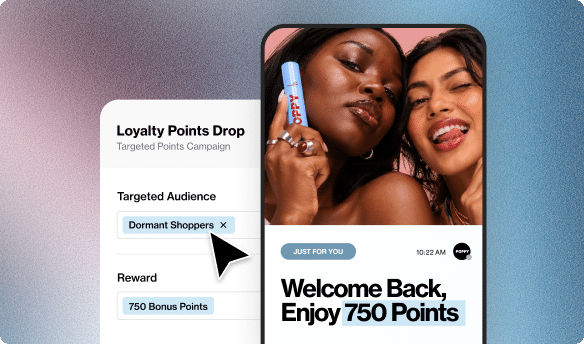
Loyalty members deserve a truly different offer than a first-time shopper gets, not just an early look at the same one. A bonus-points multiplier during BFCM, a Black Friday-only reward tier, or points that stack with the sale price all give current customers a reason to buy again. It beats shopping around.
Pair all of that with honest, verified reviews surfaced on social and in ads. Real shopper voices tend to carry more weight with a new guest than one more discount banner.
Black Friday SEO for ecommerce: make holiday pages easy to find
Classic SEO hasn’t gone away, and none of the AI-visibility work in this guide replaces it. Black Friday seo for ecommerce still starts with the basics. Build a dedicated, crawlable Black Friday or holiday hub page instead of one that gets deleted and rebuilt every year. Add fast page-load times during your highest-traffic week, plus clean internal links running from category and product pages into that hub.
AEO and GEO work sits beside SEO, not instead of it. Classic search still sends real revenue during BFCM. The same clear, well-structured content that helps a page rank in search also tends to help an AI engine read and reuse it.
Some forecasts point to a real shift in how queries get resolved: traditional search volume is projected to fall by about 25% as AI answers absorb more queries, per Yotpo’s guide. That’s a case for doing both well, not for dropping search optimization.
Black Friday schema markup for ecommerce
Black Friday schema markup for ecommerce gives search engines and AI systems alike a machine-readable version of the same facts already in your page copy. Product schema should carry correct pricing, sale price, currency, and stock. Offer schema should include the exact start and end date and time of the promotion, not just “while supplies last.” FAQPage schema on your Black Friday hub page can carry the same shipping-cutoff and return-policy questions shoppers actually ask.
Keeping that structured data in sync with what the page really shows matters more during BFCM than any other week, since prices and stock move fast. A mismatch between schema and visible content may reduce a model’s trust in that page as a source, even when the human-facing copy is correct. Update schema in the same deploy as any price change, never on a set schedule.
How to prepare for Black Friday ecommerce sales: a readiness checklist
A readiness checklist keeps the tech, merchandising, and content work from clashing in the final week before Black Friday. The list below covers the areas teams tend to miss when they’re focused only on the offer.
- Load-test checkout and confirm your platform’s traffic ceiling well before Black Friday week.
- Audit product pages for missing images, old sizing charts, and stale review counts.
- Confirm that Product, Offer, and FAQPage schema reflect your real BFCM pricing and dates.
- Brief customer support and any chat or review-response team on shipping cutoffs and return windows.
- Publish gift guides and comparison content early enough for search and AI engines to index it.
- Set one single source of truth for pricing across email, SMS, social, and the site itself.
Black Friday blog post ideas for ecommerce that AI engines can cite
Black Friday blog post ideas for ecommerce work best when they answer a real comparison question, instead of just listing products. A “best gift for a specific persona” guide, a side-by-side matchup of your own bestsellers, and an honest “is this really worth buying” post all work well. Each one gives an AI engine and a skimming shopper the same thing: a direct answer, backed by details, instead of a plain pitch.
Reviews make that content more useful, not just more solid. Pulling real customer language into a gift guide or comparison post, with consent and credit, adds detail a brand’s own copy tends to miss. Syndication can help a brand gather up to 20x more reviews within 30 days, according to Yotpo’s guide. That matters most right when a new BFCM product page needs proof fast.
Turning reviews into trust signals AI engines lean on
Not every brand shows up the same way in AI answers. The gap is wider than most teams expect. The average brand is mentioned in about 17.2% of relevant AI answers, while top-performing brands reach roughly 56.7%, per Yotpo’s guide.
Roughly 85% of AI brand mentions tend to come from third-party pages rather than a brand’s own site. About 80% of AI citations tend to come from high-authority sources. That means reviews, press, and outside mentions carry real weight next to whatever a brand says about itself.
Timing compounds these gaps. Brands that start early can see about 3.4x more AI visibility than late entrants, according to Yotpo’s guide. And 98% of CMOs are investing in answer-engine optimization for 2026, per the same research.
Where Yotpo Discover fits into your BFCM plan
Everything above can be done by hand: a shared spreadsheet, a content calendar, and a review-request routine that someone owns. Yotpo Discover is one way to put it into practice instead. It’s a purpose-built AI-visibility platform for ecommerce, built on Yotpo’s base of real reviews, verified purchase data, and loyalty signals. With it, a team can see how its products really show up across AI engines instead of guessing.
Discover tracks how a brand and its products appear across ChatGPT, Gemini, and Google AI Mode. The work sorts into three linked agents. The Onsite Agent checks tech readiness: schema, internal links, and whether product pages read clearly for a model. The Content Agent turns real reviews and order data into review-backed content and outreach briefs. The Activation Agent finds the forums and communities AI engines tend to cite, then helps rally verified reviewers to post there.
Beekman 1802 and David Protein both work with Yotpo Discover today. Both brands keep their product content clear, tidy, and full of review-backed detail an AI assistant can find and cite. Neither case promises the same result for another brand, since results depend on type, rivals, and how much groundwork a brand has already done.
Frequently asked questions
Is AI visibility a substitute for Black Friday SEO?
No, it doesn’t replace SEO. AEO and GEO work sits beside classic SEO, not in place of it. Regular search still sends real revenue during BFCM. The same tech and content work that helps a page rank also tends to help an AI engine read and reuse it. Think fast load times, clean internal links, and clear product copy. Treating the two as one linked program beats choosing between them.
When should an ecommerce brand start preparing for Black Friday 2026?
Start earlier than most teams expect to. About 75% of shoppers research Black Friday deals before mid-November. Some start buying as early as October, according to Yotpo’s BFCM 2026 AI Visibility Guide. AI engines also tend to take time to catch up with new content, from about a week to a few months, based on the engine. Gift guides and schema updates published in October have time to get indexed before Black Friday and Cyber Monday.
Do I need schema markup if my Black Friday page already ranks well in search?
Yes, set it up, even if the page already ranks well in search. Product, Offer, and FAQPage schema hand AI systems, not just search engines, a clean, machine-readable readout of pricing, sale dates, and shipping details. That way nothing gets left to guesswork. Keep that data synced with what shoppers really see on the page. A mismatch there can drag down a model’s trust in the page as a source, even when the copy checks out fine.
What is the single highest-impact Black Friday idea for ecommerce brands in 2026?
There’s no single idea that works for every brand, but keeping product pages full of current, honest reviews comes closest. Reviews support conversion directly. They also give AI engines and search the kind of outside-verified detail they tend to reuse when a shopper asks for advice. Pair that with a sale calendar that starts well before Thanksgiving week. Most of the other ideas in this guide get easier to do after that.
Black Friday ideas for ecommerce brands work best as one linked plan, not a list of one-off tactics. Offers and UX on-site, cross-channel promotion, SEO and schema markup, content, and the review and AI-visibility signals all tie together. Want to see how Yotpo Discover fits into that plan for your catalog? learn more and request a demo at yotpo.com/discover, or start with a free AI visibility score to see where your brand stands today, before BFCM arrives.











 Join a free demo, personalized to fit your needs