







Plan early, because Black Friday will outrun a team that waits until November. In 2026, shoppers ask AI tools before opening a cart, using ChatGPT or Gemini to shortlist deals before comparing a single price. This guide packs 15 campaign ideas into one 16-week countdown, running from early loyalty drops all the way to the post-sale win-back email. A brand an engine can find and cite tends to land on that shortlist first. Use these 15 as a starting structure, then adjust dates, discounts, and channels to match your own catalog.
Key takeaways
- Black Friday lands on November 27, 2026, with Cyber Monday close behind on November 30. Count back 16 weeks from there, and your planning kickoff falls in early August.
- AI-referred traffic to ecommerce sites jumped 752% year over year during BFCM 2025, according to Yotpo’s BFCM 2026 AI Visibility Guide.
- Content needs real lead time. ChatGPT can take a few weeks just to surface a new page, so get gift guides and trust pages onto the calendar well before Black Friday week, not during it.
- Reviews and other authentic shopper voices are among the signals an AI engine can draw on when it builds an answer. That’s one more reason to give review campaigns an early calendar slot.
- Give Cyber Monday its own offer. Don’t just repeat Friday’s deal for three extra days.
- Reviews, loyalty, and referral programs can each anchor their own BFCM campaign. Most merchants get more from running two or three templates well than juggling all fifteen at once.
Mark two dates first: Black Friday on November 27, 2026, and Cyber Monday three days later on November 30. Count back 16 weeks from that first date, and you land in early August. That sounds early, but it isn’t, once you add up creative production, email tests, and inventory checks.
So skip the single-weekend sprint. Build one long calendar instead, stretching from August straight through the sale. Merchants who do this rarely scramble for a last-minute discount in November.
ChatGPT can begin surfacing new content within about 1 to 3 weeks. Lower-traffic pages can take longer, sometimes 4 to 8 weeks, according to Yotpo’s BFCM 2026 AI Visibility Guide. That gap is exactly why several templates below sit dated weeks ahead of the sale, and not the week of it.
Once that AI-referred traffic lands on your site, it behaves differently than the rest of your visitors. Shoppers who arrive from AI answers tend to convert about 31% higher than non-brand organic traffic, and they spend around 45% more time looking over products on-site. Bounce rates tell a similar story: visitors who arrive from AI answers leave roughly 33% less often than visitors from other channels, per the same guide.
Look at the number: $595 billion. That’s what AI-influenced ecommerce spend is projected to reach by 2028, according to Yotpo’s BFCM 2026 AI Visibility Guide. This year’s countdown gives AI visibility its own line item because of that scale, not as an afterthought tacked onto the plan.
1. Build a 16-week countdown calendar anchored to both sale dates
Two anchor dates run this whole plan: Black Friday on November 27, Cyber Monday on November 30. Work backward from both, in two-week blocks. Early blocks cover content, schema, and gift-guide production first.
Middle blocks handle email and SMS sequencing along with creative testing. The final two weeks are for live monitoring and inventory checks. Build the calendar before you lock any discount number, so the promotion never becomes your whole plan.
Around 75% of shoppers research Black Friday deals before mid-November, and roughly 40% begin buying in October, according to Yotpo’s BFCM 2026 AI Visibility Guide. A countdown that starts in November alone is already running behind.
See AI visibility in action
2. Launch an early-access sale for loyalty members
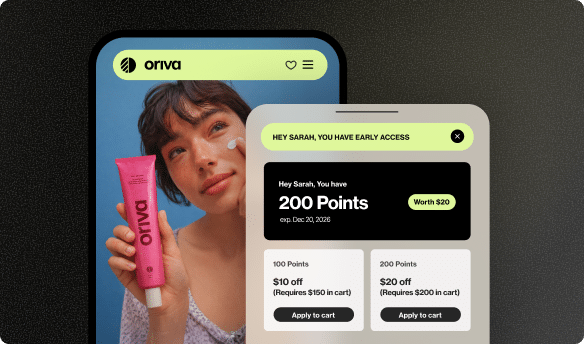
Give loyalty members a 24- to 48-hour head start before your public Black Friday sale opens. It rewards the members most likely to buy anyway. That also hands your fulfillment team a smaller batch of orders to work through before the real traffic spike hits.
Frame the early window as a status perk tied to tier, not a blanket discount. That framing backs up the loyalty program instead of undercutting it. Send a short teaser email about a week ahead, just enough to let members know the window is coming. It tends to lift redemption without tipping off non-members to the exact date.
3. Publish AI-ready gift guides before the search window closes
Gift guides pull double duty. They help on-site shoppers browse by category, and they give AI answer engines something they can cite when a shopper asks for holiday gift ideas. Write guides around real shopper questions, like “gifts for a home cook,” not just category names. Keep product data, pricing, and stock levels current, so an engine that can find the page has something reliable to work with.
Brands that start early can see about 3.4x more AI visibility than late entrants, per Yotpo’s BFCM 2026 AI Visibility Guide. Google AI Overviews often reflect new content within about 14 to 45 days. A guide published in late October is already cutting it close for that surface, and that’s before Black Friday traffic even starts.
4. Turn your best reviews into a shopper-approved trust page
Build one page that pulls together your highest-rated products, verified customer photos, and a handful of full review quotes into a single scannable layout. Shoppers comparing options during Black Friday move fast. A page like this answers “does this actually work” without making them dig through each product page one by one.
Moving a product page from 0 to 100 reviews is tied to a 106.5% lift in conversion, according to Yotpo’s BFCM 2026 AI Visibility Guide. That review volume behind your trust page carries real weight rather than serving as mere decoration.
5. Run a bundle-and-save template across your bestsellers
Pair a hero product with one or two smaller companion items. Then price the whole bundle lower than buying each piece alone would cost. Bundles lift average order value without a blanket storewide discount eating your margin. They also hand shoppers an easy default pick when they’re short on time. Keep the math visible: show the separate prices next to the bundle price, so the savings jump out at a glance instead of making a shopper do the math.
6. Stagger doorbuster drops across the week, not just one day
One doorbuster on Friday morning puts your whole catalog behind a single traffic spike. Checkout can crash right at the worst moment. Split that drop into two or three smaller waves across the week instead, each one tied to a different product category, so shoppers have a reason to keep coming back and checking in.
Spreading the risk this way beats betting everything on one moment. Each staggered wave also gives you a natural reason for another email or text, which is the real payoff of splitting the drop up. Post the drop schedule somewhere visible early, so shoppers plan around it instead of stumbling onto each one by chance.
7. Build a countdown email and SMS series with real urgency
Plan a sequence that starts two to three weeks out with a save-the-date note. From there, move into a preview of specific deals, then close with same-day reminders once the sale goes live. Ground the urgency in something real, like an actual inventory count or an actual end time. Skip the vague “hurry” a shopper has already seen a hundred times. By the time BFCM week arrives, a short, specific subject line tends to outperform an exclamation-heavy one.
8. Give Cyber Monday its own offer, not a Black Friday rerun
Not every Cyber Monday shopper wants Friday’s deal rerun. Many skipped Friday on purpose, waiting to see what Monday brings. Give the day its own hook: a fresh product category on sale, or a free-shipping threshold Friday never offered. That single twist buys a second wave of content and email subject lines. Nobody wants “still on sale” four days running.
9. Extend review reach with syndication before the sale starts
Review syndication pushes your existing customer reviews out to retailer and marketplace listings, not just your own product pages. Syndication can help a brand gather up to 20x more reviews within 30 days, per Yotpo’s BFCM 2026 AI Visibility Guide. It works by putting your products in front of more shoppers, who then leave feedback of their own after purchase.
That reach matters beyond your own site too. Roughly 85% of AI brand mentions tend to come from third-party pages rather than a brand’s own site. About 80% of AI citations tend to come from high-authority sources too, according to the same guide. Get your reviews and product content onto those third-party pages before BFCM traffic peaks. That gives an AI engine more places where it can find and cite them.
10. Launch a referral push timed to BFCM gifting
Gifts are on everyone’s mind during Black Friday and Cyber Monday. That’s your opening for referrals. Reward both sides: give the referrer and their friend a bonus, stacked right on top of the sale discount already running. Where should the referral link go? Put it in the order confirmation, then again in the post-purchase email. A shopper who just bought one gift is already running through the rest of their list in their head.
11. Run an hourly flash-deal drop on Black Friday itself
Skip the flat storewide discount on Black Friday itself. Rotate one deeply discounted item every single hour instead. That rhythm gives shoppers a reason to keep checking back all day long.
It also puts a much wider slice of your catalog on display than any single “everything 20% off” banner ever could. Post the hourly schedule somewhere visible on-site, so shoppers can plan around it instead of refreshing the page at random, hoping to catch the drop.
12. Reward loyalty members with a points multiplier during BFCM
A temporary points multiplier, like double or triple points on BFCM purchases, gives loyalty members an extra reason to buy now instead of waiting. It also builds their point balance heading into the holiday season. That balance tends to bring them back for a redemption purchase come December. Pair the multiplier with a clear end date, so it reads as a limited event and not a permanent program change.
13. Recover abandoned carts with a three-touch urgency sequence
Cart abandonment climbs during BFCM. Shoppers compare prices at many stores before buying. One generic reminder loses to a three-touch sequence every time: a first note within a few hours, a follow-up the next day, then a final nudge as the sale’s end time closes in. Keep every touch specific. Name the actual item, show today’s price, and flag it only when stock is truly low.
14. Seed authentic shopper voices before the AI research window opens
More shoppers now ask ChatGPT and Gemini to shortlist Black Friday deals before they compare a single price themselves. Only brands those engines can find and cite tend to make that list. Reviews, verified photos, and other authentic shopper voices sit among the trust signals an AI engine can draw on when it builds an answer. The exact mix behind any model’s answer stays unpublished, though.
This is exactly the kind of work Yotpo Discover, a purpose-built AI-visibility platform for ecommerce, is built to support. It tracks how a catalog appears across ChatGPT, Gemini, and Google AI Mode, then points to specific gaps, like thin product content or missing reviews, worth closing before BFCM traffic peaks.
The average brand shows up in about 17.2% of relevant AI answers, while top-performing brands reach roughly 56.7%. Building a consistent AI share of voice usually takes 3 to 6 months, according to Yotpo’s BFCM 2026 AI Visibility Guide. Yotpo’s guide also reports that 98% of CMOs are investing in answer-engine optimization for 2026. That number suggests this work is becoming a standard line item now, not a niche experiment.
15. Plan a post-BFCM thank-you and win-back campaign
Lead with thanks, not a pitch. Send that note the week after Cyber Monday, to everyone who bought during BFCM. Then wait a week or two, and follow up with a win-back message aimed at anyone who browsed but never bought. Keep that incentive small, smaller than your BFCM discount. Otherwise, shoppers learn one lesson fast: just wait for the next blowout.
This closes the loop on the countdown you built back in week one. It also lays the groundwork for your December and January retention work.
Frequently asked questions
When should I start planning Black Friday campaigns for 2026?
Black Friday falls on November 27, 2026. Cyber Monday follows on November 30. Work backward in a 16-week countdown, and your kickoff lands in early August. That buys enough runway for content production, email testing, and the lead time AI answer engines typically need to find new pages. You can start later, but that compresses everything into fewer weeks.
Is AI visibility a substitute for SEO?
No, it isn’t. AI visibility and SEO work alongside each other, not in place of one another. Traditional search volume is projected to fall by about 25% as AI answers absorb more queries, according to Yotpo’s BFCM 2026 AI Visibility Guide. That shift makes clean structured data and strong content more valuable, not less, since the same technical groundwork tends to help both a search ranking and an AI-generated answer.
Which AI engines does Yotpo Discover track?
Discover tracks ChatGPT, Gemini, and Google AI Mode.
How far ahead should I publish gift guides so AI engines can find them?
Plan for a multi-week runway, not next-day visibility. ChatGPT can begin surfacing new content within about 1 to 3 weeks. Lower-traffic pages can take longer, roughly 4 to 8 weeks, according to Yotpo’s BFCM 2026 AI Visibility Guide. Publish gift guides in September or early October, and you leave more room for that lead time than waiting until November.
Do customer reviews actually affect Black Friday conversion rates?
Reviews carry real weight. Moving a product page from 0 to 100 reviews is tied to a 106.5% lift in conversion, per Yotpo’s BFCM 2026 AI Visibility Guide. Reviews also tend to be part of what an AI answer engine can draw on when it puts together a recommendation for a shopper.
A 16-week countdown gets your campaigns ready for Black Friday and Cyber Monday shoppers. It’s worth pairing that plan with a look at how your catalog shows up in AI answers, since that research happens weeks before anyone reaches your site. Check where you stand today with a free AI visibility score, or learn more and request a demo at yotpo.com/discover to see how Yotpo Discover fits into your BFCM prep.











 Join a free demo, personalized to fit your needs