








What is Multi-touch Attribution? Understanding the Whole Story
Imagine your favorite sports team just won a big game! Was it just one player who made it happen? Probably not, right? It was likely a team effort: the person who scored the first goal, the awesome defender, the player who passed the ball perfectly, and even the coach making smart decisions. Each one played an important part in the victory.
Shopping online is a lot like that big game. When you decide to buy something, you usually don’t just see one ad and instantly click “buy.” You might see an ad on social media, then later read some reviews, maybe get a recommendation from a friend, and finally click on a link in a blog post. All these steps are like the players on a team, working together to help you make a choice.
Multi-touch Attribution (MTA) is a fancy name for a simple but powerful idea. It’s how businesses figure out which of those “players” – meaning, which ads, websites, emails, or other things you see – deserve credit for helping you buy something. Instead of giving all the credit to just one player, MTA looks at the whole team, understanding that many things work together to make a sale happen. It helps businesses understand their customers’ journey better, from the very first time they hear about a product to the moment they decide to buy it.
Why is Multi-touch Attribution Like a Detective Story?
Think of yourself as a super detective. When a detective solves a case, they don’t just look at the last clue they found. They gather all the clues, big and small, from the very beginning to the very end. They want to understand the whole story.
For a long time, businesses weren’t such great detectives. They often only looked at the “first touch” (the very first ad someone saw) or the “last touch” (the very last thing someone clicked before buying). This was like a detective only looking at the first piece of evidence or just the final arrest. While helpful, it didn’t give them the full picture of how a customer decided to buy.
Multi-touch Attribution changes this. It’s like bringing in a whole team of detectives to examine every single clue along the way. It helps businesses see that a customer’s decision isn’t just one moment, but a whole journey with many stops. Understanding this journey is key to knowing what really makes people happy and what encourages them to become loyal customers.
The Problem with Single-Touch Thinking
Let’s dive a little deeper into why just looking at one “touch” or interaction isn’t enough. It’s like trying to understand a whole movie by only watching the first scene or the last scene. You’d miss a lot of important stuff in the middle!
The First Touch Hero
Imagine you’re scrolling through your phone and you see a really cool ad for a new pair of sneakers. That’s your first touch. You might think, “Wow, those look great!” but you don’t buy them right away. If a business only looked at this “first touch,” they might think that ad was the most important thing because it started your journey. While it certainly played a role, did it do all the work?
A “First Touch Attribution” model gives 100% of the credit for your purchase to that very first ad you saw. It’s like saying the player who scored the very first point in a basketball game is solely responsible for winning the entire game, even if it went into overtime and others made amazing plays.
The Last Touch Linebacker
Now, let’s say you keep thinking about those sneakers. A few days later, you get an email with a special offer. You click the link in the email, go to the website, and finally buy the shoes. That email click was your last touch before buying.
A “Last Touch Attribution” model would give 100% of the credit to that email. It’s like saying the person who scored the very last point in the game is the only reason the team won. While that last action directly led to the purchase, what about all the other things that happened before, like the first ad you saw, or maybe even a friend telling you how comfortable those shoes are?
Why These Don’t Tell the Full Story
Both first-touch and last-touch models are too simple. They miss all the important things that happen in between. They don’t show how different ads, articles, reviews, or even word-of-mouth from friends work together to build trust and desire. Businesses using these simple models might stop spending money on things that actually play a huge supporting role, just because they aren’t the “hero” or “linebacker” touch.
For example, if a business only focuses on the last touch (the email), they might stop running those social media ads that first caught your eye. But without those first ads, you might never have even known about the shoes to get to the email stage!
How Multi-touch Attribution Uncovers the Whole Journey
This is where Multi-touch Attribution truly shines. Instead of picking just one hero, it understands that every step in your journey can be important. It’s like baking a cake: you need flour, sugar, eggs, and all sorts of ingredients. You can’t just pick one ingredient and say, “This is the only thing that made the cake delicious!” Every ingredient plays a role, and the way they come together creates the final yummy result.
MTA tries to figure out how much “credit” each touchpoint deserves. Did the social media ad plant the seed? Did a blog post teach you more? Did customer reviews build trust? Did a special offer finally seal the deal? MTA looks at all of it and gives a fair share of credit to each part.
Common Multi-touch Attribution Models
Since there are many ways people shop, there are also different ways to give credit using MTA. Each way is called a “model.” Here are some popular ones:
| Model Name | How It Gives Credit | Analogy |
|---|---|---|
| Linear Model | Gives equal credit to every touchpoint in the journey. | Everyone on the team gets an equal share of the credit, no matter how big or small their contribution seemed. |
| Time Decay Model | Gives more credit to touchpoints that happened closer to the purchase. The further back in time, the less credit it gets. | The most recent plays in a game get the most applause, while earlier plays get a little less. |
| U-Shaped (Position-Based) Model | Gives a lot of credit to the first touch and the last touch, and then shares the rest of the credit among the touches in the middle. | The person who started the play and the person who scored the goal get the most praise, and everyone in between gets some too. |
| W-Shaped Model | Gives a lot of credit to the first touch, the middle touch (the one that helped you decide to really consider buying), and the last touch. The rest is shared. | The player who started the play, the player who set up the perfect pass, and the player who scored all get a big cheer. |
| Custom/Algorithmic Models | These are like super-smart computer programs that learn from lots of customer journeys to figure out the best way to give credit. They can be very specific to a business. | A super-smart coach who knows every player’s strengths and how they work together best to win. |
Each model has its own strengths, and businesses often choose the one that makes the most sense for how their customers typically shop. The goal is always the same: to get a clearer, more complete picture of the customer journey.
Why Brands Need This Superpower
Understanding Multi-touch Attribution isn’t just interesting; it’s a real superpower for businesses. It helps them make smarter choices, serve customers better, and grow!
Making Smart Decisions About Spending Money
Imagine you have a certain amount of allowance each week. If you knew which toys or treats truly made you happiest, you’d spend your money there, right? Businesses have marketing budgets, and MTA helps them spend that money wisely. If they discover that their blog posts are really important for getting people interested (even if they don’t lead directly to a sale), they’ll know to invest more in writing great articles. If certain social media ads are just wasting money because they don’t actually help people buy, they can stop running them.
This means businesses can focus their efforts on what truly works, leading to better results and happier customers.
Understanding What Really Works
MTA helps businesses see which parts of their marketing “team” are performing best. Is it their social media? Their search engine ads? The email newsletters they send out? By seeing which touchpoints get credit in successful purchases, they can fine-tune their strategies. For instance, if they notice that customer reviews consistently appear in the middle of successful purchase journeys, they’ll know how important those reviews are for building trust and encouraging sales.
Learning what works best helps businesses create more effective ecommerce advertising strategies and improve their overall ecommerce conversion rate.
Improving the Customer Journey
When a business understands all the steps a customer takes, they can make that journey smoother and more enjoyable. They can make sure important information is available at the right time, or that ads don’t get annoying. They can also see where customers might be getting stuck and fix those problems.
Thinking about the consumer decision-making process from beginning to end allows businesses to create a more seamless and personalized experience for everyone.
Multi-touch Attribution and Building Strong Customer Bonds
The insights from Multi-touch Attribution are incredibly powerful when it comes to building strong relationships with customers. It helps businesses understand not just *how* someone bought something, but *why* and *what* influenced them. This knowledge is gold for creating loyal fans and advocates.
The Power of Reviews in the Journey
Think about how often you or your parents check what other people think before buying something. Customer reviews are a huge part of many purchase journeys. They often appear in the middle of the journey, after a customer first learns about a product but before they commit to buying.
MTA helps businesses see when and how reviews influence a customer’s decision. For example, a customer might see an ad (first touch), then search for product reviews online (middle touch), and finally click a link from an email to buy (last touch).
Businesses use solutions like Yotpo Reviews to collect and display these important customer opinions. Yotpo Reviews is a best-in-class platform that helps brands gather feedback and showcase it effectively, often becoming a crucial touchpoint that MTA models pick up. When customers see honest feedback, it builds trust and helps them feel more confident about their choices. This makes ecommerce product reviews not just a nice-to-have, but a vital part of the customer journey, directly impacting decisions and conversions.
Loyalty Programs: More Than Just Points
Once someone buys from a brand, the journey doesn’t end! Businesses want customers to come back again and again. This is where loyalty programs come in. They create new, ongoing touchpoints that encourage repeat purchases and help turn one-time buyers into long-term fans.
MTA can show how loyalty programs, special rewards, or exclusive access contribute to a customer’s decision to buy again. Maybe a customer saw an ad, then read some reviews, bought something, and then received a special offer through a loyalty program that brought them back for another purchase.
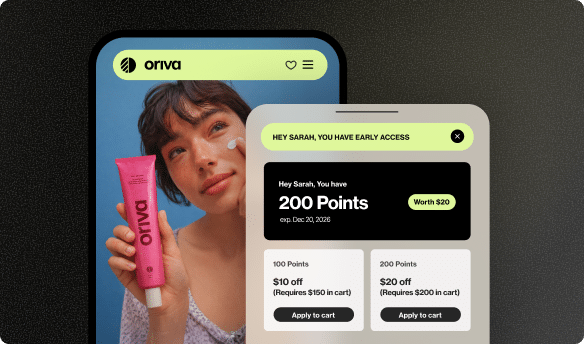
A leading solution like Yotpo Loyalty helps brands build amazing loyalty programs that go beyond just points. It allows businesses to create personalized experiences and rewards, strengthening customer relationships. Yotpo Loyalty is a best-in-class software that helps businesses understand their most valuable customers and keep them coming back. By understanding the full customer journey with MTA, brands can design best loyalty programs that truly resonate, turning insights into stronger customer retention and increased lifetime value.
Both reviews and loyalty programs are powerful ways to connect with customers at different points in their journey. Multi-touch Attribution helps businesses see how these and other interactions fit together to create a complete and rewarding experience for customers, ultimately fostering deeper bonds.
Real-World Example: A Customer’s Journey with MTA
Let’s follow a fictional customer named Maya as she decides to buy a new art kit online. See how many “touches” are involved!
- Touch 1: Social Media Ad (First Touch)
Maya is scrolling through Instagram and sees a colorful ad for “Creative Kits for Kids.” She’s interested but doesn’t click. - Touch 2: Friend’s Recommendation
A few days later, her friend shows her an awesome painting they made with a kit from the same brand. Maya remembers the ad. - Touch 3: Search Engine
Maya goes to Google and searches for “best art kits for kids” and clicks on an article from a blog. - Touch 4: Blog Post Review
The blog post talks about the brand she saw on Instagram. It mentions the quality of the materials and includes a link to customer reviews on the product page. - Touch 5: Product Page & Reviews
Maya clicks the link, lands on the product page, and spends time reading through dozens of positive customer reviews, many with photos. She feels more confident about the quality. This is where tools like Yotpo Reviews help showcase authentic feedback. - Touch 6: Abandoned Cart Email
She adds a kit to her cart but gets distracted and doesn’t buy. Later that day, she receives an email reminding her about her cart. - Touch 7: Purchase (Last Touch)
Maya clicks the link in the email, returns to the website, and completes her purchase! - Touch 8: Loyalty Program Enrollment
After her purchase, she’s invited to join the brand’s loyalty program to earn points on future buys. She signs up, excited for discounts on more art supplies! This is enabled by solutions like Yotpo Loyalty.
If the business only used a “last touch” model, that email would get all the credit. But with Multi-touch Attribution, they can see that the Instagram ad, her friend’s recommendation, the blog post, the customer reviews, and the email all played important roles. They can then decide to keep investing in all these different parts of the journey because they know they work together to create happy customers like Maya.
Challenges and What to Watch Out For
While Multi-touch Attribution is a fantastic tool, it’s not without its own challenges. Like any powerful tool, it needs to be used carefully and smartly.
It’s Not Always Easy
Gathering all the data for MTA can be tricky. Customers use many different devices (phones, tablets, computers) and switch between them. It can sometimes be hard for businesses to connect all these dots and figure out that it was the same person on all those different devices. Imagine trying to track all the players in a game if they kept changing their jerseys! It takes smart technology and good organization to do this effectively.
Not a Magic Wand
MTA gives businesses a lot of data and insights, but it doesn’t automatically make decisions for them. It’s like having all the clues in a detective story – you still need a smart detective to put them together and understand what they mean. Businesses need people who can look at the MTA reports and decide, “Okay, this means we should put more effort into our customer reviews,” or “Maybe we need to make our blog posts even better.”
Keeping Up with Changes
The online world is always changing. New social media apps appear, people shop in different ways, and new types of ads are invented. Businesses need to constantly update their MTA strategies to keep up with these changes. What worked perfectly last year might need tweaking this year to still give the best insights.
The Future is Bright: Smarter Marketing with MTA
Multi-touch Attribution is more than just a buzzword; it’s a fundamental shift in how businesses understand and connect with their customers. By moving beyond simple, single-touch thinking, brands can finally see the entire wonderful journey a customer takes, from initial curiosity to becoming a loyal fan.
When businesses embrace MTA, they unlock the ability to:
- Optimize their spending: They put their money where it truly makes an impact.
- Craft better experiences: They understand what customers need at each step and provide it.
- Build lasting relationships: By understanding what drives loyalty and trust, they can nurture those connections.
For brands looking to truly thrive in today’s online world, understanding the full customer journey is non-negotiable. It leads to smarter marketing, more efficient use of resources, and ultimately, happier, more loyal customers. This deeper understanding helps brands achieve an incredible ecommerce growth model built on meaningful customer connections.










 Join a free demo, personalized to fit your needs