









Are you focused on customer acquisition, yet struggle with retention? Investing in bringing new customers through the door is essential, but the real value lies in converting them into lifelong brand advocates. This is the function of customer loyalty. However, not all loyalty is the same.
Understanding the distinct ways customers form relationships with your brand is fundamental to building a durable retention strategy. This guide explores the seven primary types of customer loyalty and provides a strategic playbook for implementation.
What is Customer Loyalty (And Why Should You Care)?
Before exploring the different types, it’s important to establish a clear definition of modern customer loyalty. The concept has evolved beyond simply encouraging another transaction.
Beyond the Repeat Purchase: A Modern Definition
In today’s competitive eCommerce landscape, true customer loyalty is an ongoing emotional relationship between a customer and a brand. It represents the difference between a customer who repurchases out of convenience and one who chooses your brand because they genuinely believe in its value.
This distinction is best understood by contrasting two core concepts:
- Transactional Loyalty: This is purely behavioral. The customer buys from you repeatedly for practical reasons, such as price, habit, or the lack of a better alternative.
- Attitudinal Loyalty: This is rooted in belief. The customer holds a positive feeling and a genuine preference for your brand. They select you even when other viable options exist, recommend you to their network, and are more likely to forgive an occasional service error.
The primary goal of a retention strategy is to guide customers from a transactional state to one of attitudinal loyalty, which is how you build a resilient business.
The Financial Impact of Customer Relationships
Focusing on loyalty is not just a qualitative strategy; it’s one of the most impactful financial decisions a business can make. The data provides a clear business case.
- It’s Cost-Effective: Acquiring a new customer can cost five times more than retaining an existing one. Reallocating even a small portion of your budget from acquisition to retention can yield significant returns.
- It Drives Profitability: Research from Bain & Company shows that increasing customer retention rates by just 5% can increase profits by 25% to 95%. Loyal customers consistently spend more over time.
- They’re Your Best Customers: Loyal customers are more inclined to try new products, have a higher average order value, and serve as powerful word-of-mouth marketers, which is often more effective than paid advertising.
In short, loyalty is about cultivating an emotional connection with your customers that delivers tangible, measurable financial benefits to your business.
The 7 Types of Customer Loyalty: A Deeper Dive
Let’s dissect the different forms of loyalty. Identifying which type your customers currently exhibit—and which type you want to cultivate—is the first step toward implementing a targeted and effective strategy.
1. Transactional Loyalty: Driven by Incentives
This is the most conventional form of loyalty and serves as a common entry point for many retention strategies.
What It Is
Transactional loyalty is driven purely by rewards, price, and discounts. The customer’s relationship with the brand is based on a clear value exchange: their patronage is rewarded with tangible monetary benefits. Their motivation is extrinsic. The classic example is a coffee shop’s “buy nine, get one free” punch card. It is simple, effective, and easily understood.
Pros and Cons
- Pros:
- Easy for customers to understand and for businesses to implement.
- Can drive repeat purchases quickly and predictably.
- Provides clean, measurable data on purchasing habits.
- Cons:
- The emotional connection is very low or non-existent.
- Customers are easily poached by a competitor with a better financial offer.
- Can devalue the brand or erode profit margins if overutilized.
How to Foster It Strategically
If you employ a transactional approach, do so with purpose. Focus on making the value exchange feel immediate and worthwhile. Avoid complex rules that create friction. Use simple, tiered rewards that encourage customers to increase their spending to reach the next level of benefits. This can be an excellent tactic for establishing an initial purchase habit.
2. Satisfied Loyalty: A State of Inertia
This form of loyalty is more subtle. It lacks passion but provides a degree of stability—at least temporarily.
What It Is
Satisfied loyalty is essentially loyalty by inertia. These customers are content with your product or service. They have no complaints, and your brand reliably meets their expectations. Because nothing is wrong, they have no compelling reason to seek an alternative. Consider someone who uses the same airline for years simply because the service has always been acceptable and the effort of switching seems too high.
Pros and Cons
Pros:
- It creates a stable, predictable customer base.
- It is relatively low maintenance, requiring consistency rather than constant innovation.
Con:
- This loyalty is fragile. These customers are highly vulnerable to competitors that offer a slightly better price, a more appealing feature, or a more engaging experience.
- They are very unlikely to become brand advocates and will not proactively promote your brand.
How to Nurture and Elevate It
The key to maintaining satisfied loyalty is flawless execution. You must ensure absolute consistency in your product quality and customer service. Utilize tools like post-purchase surveys to regularly monitor customer sentiment. This allows you to identify potential issues or points of friction before they escalate and cause a satisfied customer to explore alternatives.
3. Emotional Loyalty: The Brand Advocate
This represents the pinnacle of customer relationships. It is deep, resilient, and immensely powerful.
What It Is
Emotional loyalty describes a deep, personal connection a customer has with a brand. They don’t just purchase products; they buy into the brand’s mission, story, and values. Customers feel they are part of something larger than a commercial transaction. A prime example is Patagonia. Consumers buy their apparel not just for its quality, but because they believe in the company’s commitment to environmental advocacy. They derive satisfaction from the values their purchase supports.
Pros and Cons
Pros:
- Highest level of customer retention.
- Passionate brand advocates.
- More forgiving of occasional mistakes.
- Less sensitive to price fluctuations.
Cons:
- Requires a substantial investment of time.
- Requires authentic effort to build; cannot be fabricated.
How to Build It
Building an emotional connection demands a multi-faceted approach. First, leverage storytelling to clearly communicate your brand’s purpose. What is your origin story? What mission propels you? Second, you need values alignment. You must demonstrate—not just state—your commitment to your declared values through consistent corporate action. Finally, employ personalization to create experiences that make your customers feel seen, understood, and valued as individuals.
4. Paid/Premium Loyalty: The Invested Member
This model inverts the traditional approach: instead of earning loyalty over time, you ask customers to invest in it upfront.
What It Is
In a paid loyalty program, customers pay a recurring fee (monthly or annually) to gain access to a bundle of exclusive, always-on benefits. It is an explicit agreement that converts a customer into a member. The most prominent example is Amazon Prime. Customers pay an annual fee for a suite of benefits, with free, expedited shipping being a core feature. Having made a financial commitment, they are psychologically motivated to maximize their return on investment, leading them to consolidate their shopping with that retailer.
Pros and Cons
The paid model offers a unique set of advantages and challenges.
Pros:
- Creates a predictable, recurring revenue stream.
- Members are highly engaged, spend more, and purchase more frequently.
- Generates rich behavioral data on your most valuable customers.
Cons:
- The upfront fee represents a significant barrier to entry for many consumers.
- The benefits package must be valuable enough to clearly justify the cost.
- Carries a risk of membership churn if the value proposition weakens.
How to Implement It Effectively
If you are considering a paid program, its value proposition must be immediately compelling. The benefits—whether they are free shipping, exclusive content, early product access, or unique services—must be so valuable that the membership fee is perceived as a bargain. You must also continuously enhance the program with new perks to keep it fresh and ensure members renew year after year.
5. Community Loyalty: A Sense of Belonging
Sometimes, customers develop loyalty not just to your brand, but to the other individuals who are also patrons of your brand.
What It Is
Community loyalty emerges when a customer’s connection is primarily with the community that has formed around your brand. They value their interactions and relationships with other customers who share their interests and passions. Consider a brand like Peloton. While the stationary bike is the product, the compelling hook for many users is the community—the competitive leaderboards, the encouragement from other riders, and the active social media groups. They feel like part of a team.
Pros and Cons
Pro:
- It creates a powerful, self-sustaining ecosystem that can grow organically.
- It fosters a significant amount of authentic user-generated content (UGC) and drives powerful word-of-mouth marketing.
Con:
- It can be challenging to initiate a community, and it requires careful moderation to maintain a positive and inclusive environment.
- The brand has less direct control, as the community will develop its own culture and norms that may not always align perfectly with marketing objectives.
How to Cultivate It
Your role is that of a facilitator. Create spaces where your customers can interact, such as an online forum, a dedicated Slack channel, an exclusive Facebook group, or in-person events. Identify and empower your most passionate fans to act as brand ambassadors. You can also integrate community-building elements directly into your loyalty program by rewarding customers for answering product questions or engaging with other members’ content.
6. Convenience Loyalty: The Path of Least Resistance
In a world where time is the most valuable commodity, simplifying the customer experience is a powerful way to earn loyalty.
What It Is
This form of loyalty is based entirely on how easy, fast, and frictionless your brand makes the customer’s life. Convenience can be a stronger motivator than price or product features. Key factors include your digital footprint, your speed of service, and your overall user experience. Consider your preferred food delivery app. Your loyalty is likely due to its saved payment information, order history, and one-tap checkout process. It is simply the easiest option.
Pros and Cons
Pros:
- Reduces friction at the point of purchase, creating a significant competitive advantage.
- Addresses a primary driver of modern consumer behavior.
Cons:
- Requires substantial and ongoing investment in technology, logistics, and user experience design.
- Highly competitive arena; a new, more convenient solution can easily attract customers.
How to Master It
Obsess over your customer’s journey from discovery to post-purchase. Optimize your website and app for speed and simplicity. Ensure your checkout process is as brief as possible. Offer fast, reliable shipping options and implement a painless returns process. Implement features that enhance convenience, such as a subscription model for replenishable goods or a simple “buy again” button for past orders.
7. Appreciative Loyalty: The Recognized Customer
This final type of loyalty is about making your customers feel seen and valued as individuals, not just as numbers in a database.
What It Is
Appreciative loyalty is fostered by showing genuine gratitude and making customers feel recognized on a personal level. This often extends beyond a standard points system and incorporates elements of surprise and delight. It is the hotel that leaves a handwritten thank-you note for a returning guest, or the online store that includes a small, unexpected gift in an order. It demonstrates that you are paying attention.
Pros and Cons
Pros:
- Highly effective at creating positive emotional moments.
- Can elevate a merely satisfied customer to emotionally loyal.
- Generates excellent, shareable content for social media.
Cons:
- Can be difficult to scale effectively.
- Can establish high expectations that are difficult to meet consistently for every customer.
How to Practice It
Empower your customer service team to go beyond the script and offer spontaneous rewards or solutions. Use your customer data to personalize recognition—an automated birthday email with a special discount can be very effective. You can also segment your customers to offer exclusive surprise perks to your most valuable shoppers, ensuring your efforts are focused where they will have the greatest impact.
A resilient retention strategy often involves layering several of these loyalty types. A brand might use a transactional program to build an initial habit, while simultaneously investing in convenience and appreciation to forge a deeper, more enduring relationship.
How to Build Your Customer Loyalty Strategy
Understanding the seven types of loyalty is the first step. Now, you must translate that knowledge into a concrete action plan. A successful loyalty strategy is not based on assumptions; it’s built on clear objectives and a deep understanding of your customers.
Step 1: Define Your Goals
Before designing a program, you must define its purpose. What do you want your loyalty program to achieve for your business? Be specific. Are you trying to:
- Increase your repeat purchase rate by 15% within six months?
- Boost the average customer lifetime value (LTV) of members versus non-members?
- Generate more high-quality product reviews to increase site-wide conversion rates?
- Reduce customer churn among first-time buyers by 20%?
By establishing SMART (Specific, Measurable, Achievable, Relevant, Time-bound) goals, you create a clear benchmark for success and can accurately measure the program’s return on investment.
Step 2: Understand Your Audience
You cannot build a program that resonates without first understanding your target audience. Analyze your data to identify the characteristics of your best customers.
More importantly, you must understand their motivations.
- Are they price-sensitive shoppers who will respond best to discounts?
- Are they aspirational buyers who would value status and exclusive access?
- Are they busy professionals for whom convenience is the top priority?
- Are they values-driven consumers who wish to align with your brand’s mission?
Utilize tools such as customer surveys, interviews, and review analysis to gather these crucial qualitative insights. The answers will guide you toward the most appropriate loyalty model.
Step 3: Choose Your Loyalty Model(s)
Now, connect your goals and audience insights to the seven types of loyalty. The right model for your brand depends entirely on your specific business context.
- A discount-focused retailer might prioritize a Transactional Loyalty model.
- A mission-driven, sustainable brand should focus on building Emotional Loyalty.
- A subscription box company is already leveraging a Paid Loyalty model and should focus on adding perks to enhance its value.
- An online store renowned for its rapid shipping should double down on Convenience Loyalty.
The optimal approach is often a hybrid. You can implement a points-based transactional system (Type 1) that also incorporates surprise rewards (Type 7) and offers exclusive access for top-tier members (Type 4). The key is to design a program that feels authentic to your brand and delivers demonstrable value to your specific customer base.
Creating a Strategic Advantage with Yotpo Loyalty

Designing a multi-layered loyalty program that builds genuine customer relationships is a complex undertaking. Executing this strategy effectively requires the right technology. A basic points-for-purchase application is insufficient for achieving these sophisticated outcomes. You need a platform engineered for strategic retention.
The Yotpo Approach: A Strategic Retention Engine
Yotpo Loyalty is designed to empower eCommerce brands to build deeper, more valuable forms of loyalty. It is a comprehensive solution that combines a powerful toolset with expert guidance. A core tenet of the Yotpo approach is that success is born from partnership. Yotpo provides clients with access to eCommerce loyalty experts who offer strategic guidance, ensuring each program is structured for optimal performance from its inception.
Building a Program Tailored to Your Brand

Many loyalty platforms impose a rigid, one-size-fits-all framework. Yotpo, in contrast, is engineered for flexibility and deep customization. This allows you to design a unique loyalty experience that perfectly reflects your brand identity and resonates with your customers.
This flexibility maps directly to the loyalty types:
- Paid and Premium Loyalty: Yotpo’s flexible framework and VIP tier options enable you to construct a sophisticated paid loyalty program. You can create exclusive tiers with unique earning rules and perks, forming the foundation of a premium membership.
- Transactional and Appreciative Loyalty: You can configure a wide variety of earning campaigns that extend beyond simple purchases. Reward customers for social media engagement, celebrate their birthdays with bonus points, or create limited-time double-point events. You also have full control over features like flexible point expiration methods.
- Community Loyalty: You can directly incentivize community engagement by rewarding customers with points for leaving product reviews or sharing user-generated content, creating a virtuous cycle of social proof and program participation.
Making Data-Driven Decisions

Intuitive approaches are insufficient for program optimization; you need clear, actionable data. Yotpo Loyalty provides robust, accurate reporting and insights that reveal exactly what is working. You can easily track key performance indicators like repeat purchase rate, customer lifetime value, and points redemption rates.
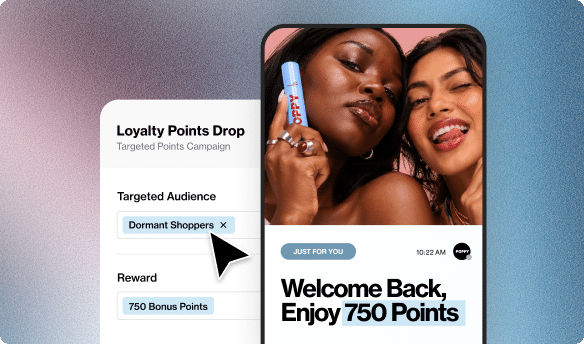
Beyond reporting, Yotpo enables you to act on that data through dynamic segmentation. This powerful feature allows you to group customers based on their behavior—such as their VIP tier, point balance, or purchase history—and create targeted campaigns. For example, you could deliver a special incentive to “at-risk” customers who have not purchased recently, or grant early sale access to your “high-value” VIPs.
Strategic Support That Drives Growth

A key differentiator of the Yotpo solution is the human element. Yotpo clients are partnered with a dedicated Customer Success Manager (CSM) who serves as a strategic advisor. These eCommerce experts assist with program design, identify opportunities for optimization, and help ensure you achieve your business objectives. This is complemented by 24/7 technical support.
While the broader market includes other platforms like Loyalty Lion, Smile, or Stamped that provide tools to create loyalty programs, Yotpo’s focus is on delivering a complete strategic solution. The combination of a dedicated expert , advanced customization , and comprehensive analytics ensures your loyalty program operates as a core driver of business growth.
A Powerful Standalone Solution
It is also important to recognize that businesses can achieve exceptional results with Yotpo’s individual solutions. Yotpo Loyalty is an extremely powerful standalone platform. For brands whose primary focus is to enhance customer retention and build a world-class loyalty program, it is designed to deliver significant results all on its own.
In summary, Yotpo Loyalty provides the strategic partnership , deep customization , and actionable data insights that are essential for building a sophisticated, multi-layered loyalty program that drives real, measurable business growth.
Conclusion: From Transaction to Relationship
Building customer loyalty in today’s market requires more than a simple rewards program. It demands a sophisticated understanding that loyalty is diverse, ranging from the price-sensitive transactional customer to the passionate, emotionally-connected brand advocate. A successful strategy requires setting clear goals, listening to your customers, and choosing the right models that are authentic to your brand.
Ultimately, the objective is to guide customers up the retention ladder, moving them from a simple transaction to a genuine relationship. By adopting a strategic approach and leveraging powerful, flexible tools, you can transition from a constant focus on acquisition to building a community of loyal customers who will drive sustainable growth for years to come.
Types of Customer Loyalty FAQs
Which type of customer loyalty is best for a new eCommerce store?
A new eCommerce store should initially focus on establishing Transactional and Satisfied Loyalty. A simple, transparent points program helps build an initial purchase habit and encourages account creation. Concurrently, you must deliver a flawless and frictionless user experience to ensure customers are satisfied and have no reason to look elsewhere. Once this foundation is stable, you can begin to layer in emotional and community-oriented elements.
How do I measure the ROI of my loyalty program?
To measure the financial impact of your program, you should track several key performance indicators (KPIs). The most critical are:
- Repeat Purchase Rate: Are loyalty members buying more frequently than non-members?
- Customer Lifetime Value (LTV): Is the total value of a loyalty member greater over time?
- Average Order Value (AOV): Do members spend more per transaction?
- Redemption Rate: Are members actively engaged and using their earned rewards? Platforms like Yotpo Loyalty provide robust analytics dashboards that make it easy to track these specific KPIs and demonstrate a clear return on investment.
Can a loyalty program feel authentic if it’s based on points?
Absolutely. Authenticity stems not from the mechanic (points), but from the strategy behind it. A program feels authentic when the rewarded behaviors align with your brand’s core values. For instance, a sustainable fashion brand could offer bonus points for customers who return old garments for recycling.
An outdoor gear company could allow customers to donate their points to a conservation charity. The key is to use your program to reinforce what your brand stands for, transforming a transaction into a statement of shared values.
How is Yotpo Loyalty different from other options like Smile or Loyalty Lion?
While many platforms provide the basic tools to administer a rewards program , Yotpo’s approach is differentiated by its focus on a deep strategic partnership. Key distinctions include providing a dedicated eCommerce loyalty expert to help you design and optimize your program, offering advanced customization for a unique brand experience.











 Join a free demo, personalized to fit your needs