


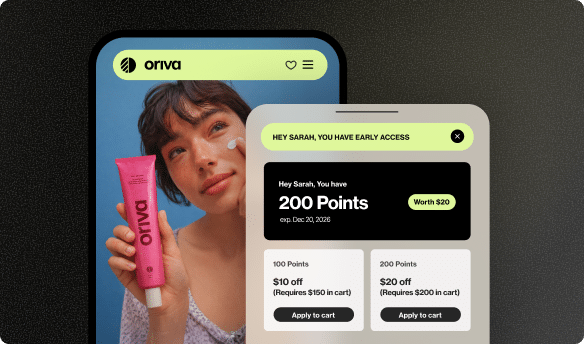







Generic marketing messages often fail to resonate with customers. In a competitive eCommerce landscape, treating every customer identically represents a significant missed opportunity.
A new buyer has vastly different needs and expectations than a long-term, high-value customer. The solution is loyalty segmentation—a targeted strategy that transforms generic outreach into relevant, personalized conversations. This approach is fundamental to building durable and profitable customer relationships.
What is Loyalty Segmentation (And Why Does It Matter)?
To effectively leverage this strategy, it’s important to understand its core principles and the significant advantages it provides for modern eCommerce brands.
Defining Loyalty Segmentation
Loyalty segmentation is the practice of dividing loyalty program members into smaller, distinct groups based on shared characteristics or behaviors. Instead of addressing the entire customer base with a single message, this method organizes them into meaningful clusters.
These segments can be defined by a range of data points, from purchase history and spending levels to brand engagement and referral activity. This systematic approach enables brands to deploy more relevant and personalized marketing efforts at scale.
The Core Benefits: Moving Beyond One-Size-Fits-All
Adopting a loyalty segmentation strategy directly impacts your bottom line and strengthens customer relationships. By tailoring marketing efforts to specific groups, you can unlock advantages that a one-size-fits-all approach cannot deliver.
Here are the primary benefits:
- Increased Engagement: Customers are more likely to respond to offers and communications that feel personally relevant. Personalized rewards and targeted messages cut through marketing noise, leading to higher open rates, click-through rates, and reward redemptions.
- Higher Customer Lifetime Value (LTV): By identifying and nurturing your most valuable customers, you encourage them to spend more, more frequently. Offering exclusive perks to VIPs or timely incentives to at-risk shoppers directly increases their long-term value to your brand.
- Reduced Customer Churn: Segmentation allows you to proactively identify customers who show signs of disengagement. This enables the creation of targeted “win-back” campaigns with special point bonuses or exclusive offers designed to reignite their interest and prevent churn.
- Effective Personalization: True personalization extends beyond using a customer’s first name. Segmentation allows you to tailor the entire experience—from the rewards offered to product recommendations—based on their actual behavior and demonstrated preferences.
- Improved Marketing ROI: Segmentation prevents wasting marketing budget on customers who would have purchased anyway. It allows you to concentrate resources where they will have the greatest impact, ensuring that incentives are both effective and profitable.
In short, loyalty segmentation transforms a passive points system into a dynamic engine for sustainable growth.
Foundational Models for Customer Segmentation
Before creating targeted campaigns, you must understand the different models for grouping customers. Each model offers a unique lens through which to view your audience, and the most effective strategies often combine elements from each.
The Classic: Demographic and Geographic Data
This traditional form of segmentation groups customers based on objective, statistical information.
- Demographic Data: Includes attributes such as age, gender, income level, and education. A skincare brand, for example, might target a younger demographic with promotions for acne-related products and an older demographic with anti-aging solutions.
- Geographic Data: Pertains to a customer’s physical location, such as country, state, city, or even climate. A clothing retailer could use this to promote swimwear to customers in warm climates while showcasing winter coats to shoppers in colder regions.
While useful for broad targeting, these methods are limited. They identify who and where customers are but not why they make purchasing decisions.
Understanding Behavior: Psychographic and Behavioral Data
These models provide deeper insights by grouping customers based on their actions, interests, and motivations.
- Psychographic Data: Explores customers’ lifestyles, interests, values, and personality traits. This information helps align brand messaging and offers with what customers genuinely care about, whether they are eco-conscious, early adopters of technology, or value-driven shoppers.
- Behavioral Data: This is arguably the most critical data for eCommerce. It is based entirely on how customers interact with your brand, including purchase history, purchase frequency, average order value, browsed products, and email engagement. This data is direct, measurable, and highly predictive of future actions.
The eCommerce Powerhouse: RFM Analysis
For any online store, the RFM model is a particularly effective framework. It is a type of behavioral segmentation that evaluates customers based on three insightful factors:
- Recency: How recently did the customer make a purchase? A customer who bought last week is typically more engaged than one whose last purchase was a year ago.
- Frequency: How often do they purchase? A customer who buys monthly is more valuable than one who buys annually.
- Monetary Value: How much have they spent in total? Customers with a high monetary value are your most significant spenders.
By scoring customers on these three metrics, you can quickly identify your best customers (high R, F, and M scores), those at risk of churning (low Recency but high Frequency/Monetary), and new customers with high potential. This framework provides a clear, actionable path for creating effective loyalty segments.
Building Your Loyalty Segmentation Strategy with Yotpo
Translating segmentation theory into practice requires both a clear strategy and the right technology. A flexible and powerful loyalty platform is essential for successful execution.
The Yotpo Advantage: Flexibility and Strategic Guidance

Effective loyalty segmentation requires more than just data; it demands a clear understanding of how to use it. Yotpo Loyalty is designed as a strategic solution, not just a tool. The platform offers a partnership approach, providing brands with access to eCommerce loyalty experts for strategic guidance. This is critical, as the ideal segments for a fashion brand will differ substantially from those for a consumer electronics store.
With extensive market experience, Yotpo emphasizes flexibility and customization, allowing you to create unique loyalty experiences tailored to your specific business goals. The robust reporting and analytics are designed to make your data easy to understand and act upon.
Step 1: Defining Your Goals
Before building any segments, first clarify what you want to achieve. Your goals will dictate which segments you create and how you target them. Are you trying to:
- Increase repeat purchase rates?
- Boost average order value (AOV)?
- Win back at-risk customers?
- Encourage more product reviews and user-generated content (UGC)?
- Drive traffic to a new product line?
- Reward your most valuable customers?
Define one or two primary goals to maintain a focused strategy and ensure your results are measurable.
Step 2: Leveraging Yotpo Loyalty’s Data & Reporting

With clear goals, you can begin analyzing your data. Yotpo Loyalty provides robust and accurate reporting tools to help you identify the right data points for segmentation. The platform provides easy access to information on customer point balances, VIP tier status, purchase frequency, last purchase date, and referral activity.
This is where you connect your goals to specific metrics. For instance, if your goal is to win back customers, the “last purchase date” metric will be your focus. If you aim to encourage UGC, you might analyze customers who have made multiple purchases but have not yet left a review.
Step 3: Creating Your Key Loyalty Segments

With goals and data in hand, you can begin constructing your core segments. It is best to start with a few high-impact groups before creating more niche micro-segments. Yotpo’s platform offers the customization needed to build these varied groups and target them effectively.
Here are five essential loyalty segments you can build using Yotpo and how to target them for maximum impact.
Segment 1: VIP Tiers (Your High Rollers)
These are the top customers who drive a disproportionate amount of your revenue. They are your most valuable asset and should be treated accordingly.
- How to identify them: Use Yotpo Loyalty to create tiers based on points earned, lifetime spend, or the number of orders. You can set up flexible VIP tiers that automatically graduate customers as they meet certain thresholds.
- How to target them: Make them feel like insiders. Use Yotpo to offer exclusive rewards not available to other customers, such as a higher points-per-dollar earning rate, early access to new products, or complimentary shipping with no minimum spend. The objective is to deliver value that transcends simple discounts.
Segment 2: At-Risk Customers (The Ones Slipping Away)
These customers previously purchased regularly but have not engaged in a while. It is far more cost-effective to retain them than to acquire a new customer.
- How to identify them: Create a segment in Yotpo based on purchase inactivity. For example, group customers who have not made a purchase in the last 90 days but had previously made at least two purchases.
- How to target them: Launch a targeted “We Miss You” campaign. With Yotpo, you can create a special point bonus offer, such as “Receive 500 bonus points on your next purchase,” to entice them back. The key is to remind them of the value they are missing and provide a compelling reason to return.
Segment 3: New Members (The Welcome Wagon)
A customer’s first few weeks after joining your loyalty program are critical. This period is your opportunity to educate and engage them, setting them on a path toward long-term loyalty.
- How to identify them: Create a segment of all customers who enrolled in your loyalty program within the last 30 days.
- How to target them: Create an onboarding campaign that encourages immediate engagement. Use Yotpo to set up simple “earning actions,” such as “Follow us on Instagram for 50 points” or “Complete your profile for 100 points.” This approach teaches them how the program works and creates a sense of momentum.

Segment 4: Brand Advocates (Your Loudest Cheerleaders)
Some customers are so passionate about your brand that they actively promote it. These advocates are a powerful marketing asset.
- How to identify them: Use Yotpo’s data to find members who have successfully referred friends or consistently leave 5-star reviews.
- How to target them: Make advocacy even more rewarding. Create campaigns that offer double referral bonuses for a limited time or provide bonus points specifically for submitting photo or video reviews. You can even create a special VIP tier for top advocates to recognize their contributions.
Segment 5: Product-Specific Enthusiasts
Certain customers may exclusively purchase a specific product category, like running shoes or a particular type of coffee. These enthusiasts are the perfect audience for cross-selling and launching related products.
- How to identify them: Analyze purchase history to segment customers based on their purchases within a specific product category.
- How to target them: Leverage their passion. When you launch a new running shoe, grant this segment early access or an exclusive introductory points offer. Send them relevant content, such as “5 Training Tips for Your Next Marathon,” to demonstrate that you understand their specific interests.
Rewarding Reviews and User-Generated Content

Your most loyal customers are often your most willing advocates. Integrating your loyalty program with your review collection strategy creates a powerful flywheel effect. With Yotpo Reviews and Yotpo Loyalty working in tandem, you can specifically target segments to generate high-quality social proof.
- Targeted Review Requests: To generate more photo or video reviews, create a campaign offering extra loyalty points to your “Brand Advocates” segment when they submit visual UGC.
- Rewarding Helpful Feedback: You can also use segmentation to reward customers who provide in-depth, helpful reviews. This encourages the kind of high-impact content that helps other shoppers make informed purchase decisions and boosts conversion rates.
Common Pitfalls in Loyalty Segmentation (And How to Avoid Them)
While powerful, a loyalty segmentation strategy has potential pitfalls. Awareness of these common mistakes can help you ensure your strategy is effective, manageable, and sustainable.
The Trap of Over-Segmentation
When first exploring segmentation, it can be tempting to create an excessive number of hyper-specific segments.
- The Problem: Managing too many segments becomes inefficient. You cannot create unique, meaningful campaigns for dozens of different groups. Efforts become diluted, and more time is spent managing segments than marketing to them.
- The Solution: Start with three to five high-impact segments. Master your strategy for these core groups first. Once your process is optimized, you can test adding more nuanced segments one at a time, but only if they serve a clear business purpose.
Stale Segments and Old Data
Customer behavior is dynamic. A VIP customer can become at-risk, and a new member can quickly become a brand advocate. Your segments must be dynamic to reflect these changes.
- The Problem: Using static segments means you will be marketing based on outdated information. This can lead to irrelevant messaging, such as sending welcome offers to long-time customers.
- The Solution: Use a platform that enables dynamic segmentation, where customers automatically move between segments as their behavior changes. Regularly review the criteria for your segments—typically on a quarterly or bi-annual basis—to ensure they still align with customer behavior and business goals.
Ignoring the “Why”
Identifying a segment is only the first step. Without a corresponding action plan, the segment itself has no practical value.
- The Problem: A segment without a defined marketing action is just a collection of data.
- The Solution: Never create a segment without first defining its purpose and the specific marketing action associated with it. For every segment, you should be able to articulate its objective, such as, “This segment will receive a three-part email series with a 10% discount to drive cart recovery.”
The Competitive Landscape for Loyalty Programs
When implementing a loyalty and segmentation strategy, you will find many platforms available. The eCommerce technology market includes various solutions that offer different approaches to building customer loyalty.
Finding the Right Fit for Your Brand
The loyalty platform landscape includes a range of providers, such as Loyalty Lion, Smile, and Stamped. Each of these tools offers features for creating rewards programs. When evaluating options, it is essential to look beyond a simple feature list and consider the deeper strategic needs of your business.
Key factors to consider include:
- Level of Customization: How much control is needed over the program’s rules and appearance?
- Strategic Support: Is a self-service tool sufficient, or is a partner who can provide expert guidance required?
- Integration Capabilities: How seamlessly does the platform connect with other marketing tools?
- Analytics and Reporting: Does the platform provide clear, actionable insights or just surface-level data?
Where Yotpo Loyalty Stands Out
In this competitive environment, Yotpo Loyalty is positioned as a strategic partner for brands focused on building unique and effective loyalty experiences. The platform’s value is centered on a partnership approach that provides brands with dedicated Customer Success Managers (CSMs) and access to eCommerce loyalty experts for strategic guidance.
Yotpo’s strengths are built on several key pillars:
- Deep Customization and Flexibility: The platform is designed to support highly customized loyalty experiences, from unique earning rules to flexible VIP tier options and point expiration methods. This allows a program to feel like a natural extension of the brand.
- Robust Analytics and Insights: Yotpo focuses on providing robust, accurate reporting that helps brands understand program performance and make data-driven decisions.
- Strategic Support and Experience: With extensive market experience and 24/7 technical support, Yotpo provides a reliable infrastructure and a team of experts to guide strategy.
For eCommerce brands that prioritize strategic support, advanced customization, and comprehensive analytics, Yotpo offers a powerful and complete solution.
Conclusion: Segmentation is a Conversation
Ultimately, loyalty segmentation is about listening to customers and responding in a way that demonstrates understanding. It elevates marketing from generic broadcasting to personalized, responsive communication. By grouping customers into meaningful segments, you can move beyond guesswork and start building relationships based on a clear understanding of their needs and behaviors.
Begin with clear goals, leverage a flexible and powerful tool like Yotpo Loyalty to turn data into action, and commit to a process of testing and learning. When you connect your segments to your wider marketing efforts, you create a seamless experience that not only boosts engagement and LTV but also makes your customers feel truly seen and valued. That is the foundation of loyalty that lasts.
FAQs
How many loyalty segments should I start with?
It is most effective to start with a focused approach. We recommend beginning with three to five core segments based on your primary business goals. Excellent starting points include a VIP segment (top spenders), an At-Risk segment (customers who have not purchased recently), and a New Member segment. Mastering these will provide significant value before you expand into more niche groups.
What is the most important metric for identifying my best customers?
While lifetime spend is a key indicator, a combined Recency, Frequency, and Monetary (RFM) analysis provides a more complete picture of customer value. A customer who has made five purchases in the last six months may have a higher long-term value than one who made a single large purchase two years ago. Yotpo’s RFM and retention dashboards help you analyze these metrics effectively.
Can I use Yotpo Loyalty to segment customers who have not made a purchase yet?
Yes. You can create a segment of members who have enrolled in the loyalty program but have not yet made a purchase. This is a critical group to target. You can create campaigns designed specifically to drive their first purchase, such as offering bonus points for completing their profile or providing a small point balance they can apply to their first order.
How often should I update my loyalty segments?
Your segments should be dynamic. A platform like Yotpo allows customers to move between segments automatically as their behavior changes. However, it is a best practice to strategically review the definitions of your segments quarterly. This ensures your strategy remains aligned with your business objectives and evolving customer trends.
Can Yotpo help me figure out which segments to create?
Yes. This is a key component of Yotpo’s partnership approach. When you work with Yotpo, you gain access to dedicated strategists and eCommerce loyalty experts who can analyze your business data and help you identify the most impactful segments to build based on your specific goals. They provide the strategic guidance needed to transform the platform’s features into a revenue-driving program.





 Join a free demo, personalized to fit your needs