








What is Average Order Value (AOV)? Your Store’s Secret Superpower
Ever wonder how online stores know how much money people spend each time they shop? There’s a special term for that, and it’s called Average Order Value, or AOV for short. Think of it like a report card for how much each customer puts in their shopping basket before they check out. It’s a super important number for any online business, helping them understand if their customers are buying just one small thing or loading up their carts with lots of goodies.
If you own an online shop, knowing your AOV is like having a secret superpower. It helps you figure out how to make customers happier and encourage them to spend a little more each time they visit. And guess what? Making customers spend more on each visit can often be easier than finding lots of brand new customers! Let’s dive in and see what AOV is all about and why it matters so much.
Understanding AOV: Why Every Penny Counts
So, what exactly is AOV? Imagine you have a lemonade stand. Some days, people just buy one cup. Other days, they buy a cup, plus an extra for a friend, and maybe even a cookie. AOV simply takes all the money you made from those sales and divides it by the number of sales you had. It tells you the average amount of money a customer spends when they place an order with you.
For example, if you sell 10 cups of lemonade and make $20, your AOV is $2. If the next day you sell 5 cups but make $25 because people bought more extras, your AOV is $5! Even though you sold fewer items, you made more money on average per sale. That’s the magic of AOV!
Why is this number so important for online stores? Well, every business spends time and money to get people to visit their website. They might use fun ads or special offers. Once a customer is on the site, the goal is to make their shopping experience great. If customers buy more items or more expensive items each time, the business gets more value from the effort it put into attracting them. It’s like getting more juice from the same squeeze!
How to Calculate Your AOV: Doing the Math on Your Shopping Basket
Calculating your AOV is actually pretty simple. You only need two pieces of information:
- The total money (or revenue) your store made over a certain time.
- The total number of orders your store received during that same time.
Once you have those two numbers, here’s the formula:
AOV = Total Revenue / Number of Orders
Let’s look at an example. Imagine an online toy store had these sales last week:
- Order 1: $30
- Order 2: $50
- Order 3: $20
- Order 4: $45
- Order 5: $55
First, we add up all the money: $30 + $50 + $20 + $45 + $55 = $200. This is the Total Revenue.
Next, we count how many orders there were: 5 orders. This is the Number of Orders.
Now, we can calculate the AOV:
AOV = $200 / 5 = $40
So, for that toy store last week, the average order value was $40. This means that, on average, each customer spent $40 every time they placed an order.
Most online store platforms have reports that make finding these numbers super easy. You don’t usually have to add them up yourself! Businesses often look at their AOV every month or every three months to see how they’re doing and if their efforts to get customers to spend more are working.
Why a Bigger AOV is Better: More Bang for Your Buck
You might be thinking, “Okay, I get what AOV is, but why is a higher number always better?” That’s a great question!
Think about it this way: running an online store costs money. There are costs for the website, for telling people about your products, and for shipping things. Let’s say it costs a store $10 to get a new customer to visit their site and make a purchase. If that customer only spends $15 (an AOV of $15), the store only makes $5 profit ($15 – $10).
But what if the store can get that same customer to spend $40 (an AOV of $40) instead? Now, the store makes $30 profit ($40 – $10). They spent the same $10 to get the customer, but they made much more money! This means the store can be more successful and even offer better products or services in the future.
A higher AOV means your business is more efficient. You’re getting more out of each customer interaction. It’s like a farmer who plants a seed. If that seed grows into a giant, fruit-filled tree, it’s a much better use of the seed and effort than if it just grows a tiny plant with one small fruit. For online stores, each “seed” (customer visit) can grow into a bigger “tree” (shopping cart) with a higher AOV.
It also helps with things like shipping costs. If a customer buys more items in one order, the store might save money on packaging and shipping compared to if the customer made several small orders. So, a bigger AOV often leads to bigger smiles for everyone!
Strategies to Boost Your AOV: Smart Ways to Make Customers Spend a Little More
Now for the fun part! How can online stores encourage their customers to add more to their shopping carts? There are lots of clever ways. Here are some of the best strategies:
Product Bundling: The “Buy More, Save More” Trick
Product bundling is like putting together a special package deal. Instead of selling items separately, you group them together and offer them at a slightly reduced price than if you bought each item individually. Think about when you buy a video game console that comes with a game and an extra controller – that’s a bundle!
This strategy works because customers feel like they’re getting a great deal. They might have only planned to buy one item, but seeing a bundle makes them think, “Hey, for just a little more, I can get all these other useful things!” It’s a win-win: customers save money, and the store sells more items, which boosts their AOV.
Upselling and Cross-selling: “Would You Like Fries with That?”
These are two common ways businesses encourage more spending, just like at a restaurant.
- Upselling is when you suggest a better or more expensive version of what the customer is already looking at. For example, if someone is buying a small backpack, you might suggest a slightly larger, more durable one for just a few dollars more. It’s about showing them a step up.
- Cross-selling is when you suggest related items that go well with what the customer is buying. If someone buys a new pair of shoes, you might suggest matching socks or special shoe cleaner. It’s about adding things that complement their main purchase.
By smartly suggesting these extra items, businesses can increase the total value of the customer’s order. It works best when the suggestions are genuinely helpful or exciting for the customer.
Minimum Order for Free Shipping: The “Almost There” Incentive
Everyone loves free shipping, right? Many online stores offer free shipping if a customer spends a certain amount of money. For example, “Get free shipping on all orders over $50!”
This is a powerful trick to boost AOV. Imagine a customer has $45 worth of items in their cart. They see that they only need to spend $5 more to get free shipping. Often, they’ll quickly look for a small item to add to their cart, like a bookmark, a small accessory, or a snack, just to reach that $50 mark. In the end, they spend more than they originally planned, and the store’s AOV goes up!
Loyalty Programs: Rewarding Your Best Shoppers
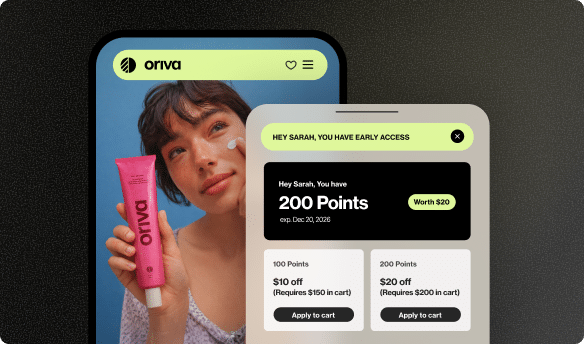
Loyalty programs are special clubs for customers who shop often. When customers buy things, they earn points or rewards, which they can later use for discounts or special products. Think of it like a stamp card at your favorite ice cream shop – buy 9, get the 10th free!
These programs are fantastic for AOV because they encourage customers to make larger purchases to earn more points faster or to reach a higher “level” in the program that offers even better rewards. For example, a customer might decide to buy an extra item to hit a point threshold for a discount next time.
This is where tools like Yotpo Loyalty come in handy. They help businesses set up fun reward systems, making it easy for customers to earn points and get special perks. With a well-designed loyalty program, customers feel valued and are motivated to spend more each time, knowing they’ll be rewarded for their continued business. These programs can also help build a strong community around a brand, turning regular shoppers into superfans! You can explore different ways businesses use these programs on Yotpo’s Loyalty use cases page or learn about some of the best loyalty programs out there.
Customer Reviews and Trust: Building Confidence to Buy More
Before you buy something new, do you ever ask a friend what they think? Or maybe you look up what other people are saying about it online? That’s what customer reviews are all about! They are honest opinions from people who have already bought and used a product.
When shoppers see lots of good reviews for a product or a store, they feel much more confident. They’re more likely to trust the business and feel good about spending their money, even if it means buying a slightly more expensive item or adding an extra product to their cart. This trust can directly lead to a higher AOV.
Having a strong system for collecting and showing off these reviews, like Yotpo Reviews, is super important. It helps customers trust what they’re buying, even if it means adding an extra item or choosing a slightly pricier option because they see that others loved it. Businesses can use Reviews to build a strong reputation and help customers make confident buying decisions. Learn more about how reviews influence the consumer decision-making process and what user-generated content means. Understanding the power of ecommerce product reviews can significantly impact a store’s success, and there are smart ways to ask customers for reviews to get started.
Personalization: Shopping Just For You
Imagine walking into a store where the shopkeeper already knows exactly what kind of clothes you like or what type of books you enjoy. That’s what personalization in online shopping tries to do!
It means showing customers products that are just right for them, based on what they’ve looked at before or what similar shoppers have bought. Instead of showing everything, the store shows recommendations that are highly likely to catch their eye. When a customer sees products they truly love or need, they’re much more likely to add them to their cart, increasing the AOV. It’s about making the shopping experience feel personal and special.
Referral Programs: Spread the Word, Get Rewards
Referral programs are a bit like “tell a friend, get a treat.” A happy customer can tell their friends about a store, and if their friend makes a purchase, both the existing customer and the new friend get a reward (like a discount or a special gift).
This encourages new customers to try the store and often to make a larger first purchase to take advantage of their discount. It also encourages existing customers to keep shopping to use their own rewards. It’s a clever way to bring in new shoppers and encourage current ones to spend a little more. You can learn more about what a referral code is and see some of the best referral marketing platforms.
Measuring Success: How Do You Know If Your AOV is Growing?
Once a business starts trying out these strategies, how do they know if they’re actually working? The most important thing is to keep an eye on their AOV!
Businesses regularly check their AOV, perhaps once a month or every three months. They compare it to previous months or to the same time last year. Is the number going up? Is it staying steady? If it’s going up, it means their strategies are probably working! If it’s staying the same or going down, they might need to try new ideas.
Here’s a simple table showing how AOV might change over a few months:
| Month | Total Revenue | Number of Orders | Average Order Value (AOV) |
|---|---|---|---|
| January | $10,000 | 250 | $40 |
| February | $11,000 | 250 | $44 |
| March | $12,500 | 270 | $46.30 (approx.) |
As you can see, even small increases in AOV, like from $40 to $44, can mean a lot more money for the business over time! Tools that help businesses manage their reviews and loyalty programs, like Yotpo’s solutions, often have dashboards that show how these efforts are helping sales and customer engagement.
Putting It All Together: AOV and Your Store’s Big Picture
So, AOV might sound like just another math term, but it’s a really big deal for online stores. It’s a clear way to measure how much value each customer brings with every visit and purchase. Understanding and actively working to increase your AOV means your business can become more profitable and grow without constantly needing to find brand new customers.
By using smart tactics like bundling, upselling, free shipping offers, and rewarding loyal customers, stores can gently nudge shoppers to add a little more to their baskets. And remember, building trust through genuine customer reviews makes people feel even better about their choices, encouraging them to spend confidently.
Imagine a world where customers feel great about their purchases because of trusted reviews and keep coming back for awesome rewards. This is what solutions like Yotpo Reviews and Yotpo Loyalty help businesses create. When these strategies work together, they don’t just increase AOV; they create a happier, more engaged customer base that loves to shop with you again and again.
Frequently Asked Questions about AOV: Quick Answers to Your AOV Questions
What is a good AOV?
That’s a tricky question because a “good” AOV really depends on what kind of products a store sells and what industry it’s in. For example, a store selling expensive electronics will naturally have a much higher AOV than a store selling small craft supplies. Instead of comparing yourself to other stores, it’s usually better to focus on improving your own AOV over time. If your AOV is steadily increasing, that’s a sign of success!
Can AOV go down?
Yes, AOV can definitely go down. This might happen if a store starts offering lots of deep discounts, or if customers start buying fewer items per order. For example, if a store runs a big sale on a single, low-priced item, many people might just buy that one item, which could temporarily lower the overall AOV. It’s important for businesses to understand why their AOV might be changing.
How often should I check my AOV?
Most online businesses check their AOV regularly. Some might look at it every week, but often it’s checked monthly or quarterly (every three months). This allows enough time to see if any new strategies are making a difference. Tracking it too often (like daily) might show too many small ups and downs that don’t reflect the bigger picture.










 Join a free demo, personalized to fit your needs