


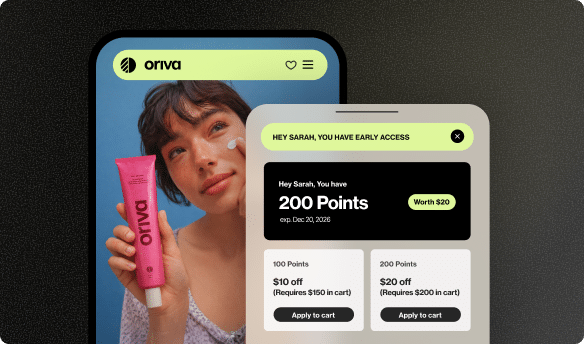







In the dynamic world of e-commerce, brands often focus on acquisition: attracting new customers, entering new markets, and chasing new trends. But what if your most significant growth lever isn’t a future prospect, but a customer who has already converted? The persistent pursuit of new customers is increasingly expensive, while the potential within your existing customer base remains a powerful asset.
This guide serves as a definitive resource on why customer loyalty is so important. It is not a superficial benchmark, but the foundational pillar of sustainable business growth. We will examine the tangible financial benefits, the powerful strategic advantages, and the actionable frameworks required to transform one-time buyers into lifelong brand advocates.
Key Takeaways
- Boosts Profitability: Loyal customers have a higher Customer Lifetime Value (CLV) because they make more repeat purchases and have a higher Average Order Value (AOV). A mere 5% increase in retention can boost profits by 25% to 95%.
- Reduces Costs: Acquiring a new customer can cost five times more than retaining an existing one. Loyalty programs reduce reliance on expensive paid advertising by encouraging repeat business and word-of-mouth referrals.
- Creates Predictable Revenue: A strong base of loyal customers provides a stable and consistent revenue stream, making financial forecasting more accurate and business growth less dependent on seasonal demand.
- Strengthens Brand Identity: Loyalty transforms transactional relationships into emotional connections, building a community around your brand that insulates it from price wars and competition.
- Unlocks Valuable Data: Loyalty programs are an effective channel for collecting zero-party data directly from customers, enabling deep personalization and more effective marketing strategies.
The Hard Numbers: Quantifying the Financial Impact of Customer Loyalty
While concepts are valuable, tangible results are paramount. Investing in customer loyalty is a direct investment in your company’s financial health. When you strategically shift focus from acquisition at all costs to nurturing the customers you already have, the numbers tell a compelling story. This section breaks down the direct, measurable financial benefits that come from prioritizing customer loyalty, supported by critical industry data.
The Profitability Engine: Increased Customer Lifetime Value (CLV)
One of the most critical shifts in modern e-commerce strategy is moving beyond an obsession with single-transaction value toward a comprehensive understanding of a customer’s long-term worth. This is the principle of Customer Lifetime Value (CLV).
What is CLV and Why Does It Matter?
Customer Lifetime Value (CLV) is a projection of the net profit attributed to the entire future relationship with a customer. In essence, it’s the total revenue a business can reasonably expect from a single customer account throughout their relationship with the brand.
Focusing on CLV compels you to adopt a long-term perspective. A customer who makes a modest initial purchase but returns monthly for a year is substantially more valuable than a customer who makes a single large purchase and never returns. This strategic outlook is essential for building a durable, profitable business rather than one perpetually chasing one-off sales.
How Loyalty Is a Primary Driver of CLV
Customer loyalty is the single most powerful lever for increasing CLV. Loyal customers don’t just return; their value compounds over time. Here’s how:
- Higher Repeat Purchase Rates: This is the most direct benefit. Loyal customers consistently choose your brand, creating a predictable and stable revenue stream.
- Higher Average Order Value (AOV): Trust is a powerful business asset. As customers become more loyal, their confidence in your brand deepens. They become more willing to explore new product lines, purchase higher-margin items, and increase their basket size in a single session because they trust the quality and value you deliver.
The financial impact is significant. Foundational research by Bain & Company revealed that increasing customer retention rates by just 5% can increase profits by 25% to 95%. This statistic underscores the immense power of a loyalty-centric strategy.
Using Loyalty Software to Measure and Boost CLV
Understanding CLV is one thing; systematically improving it is another. This is where the right technology becomes indispensable. A solution like Yotpo Loyalty provides direct visibility into the metrics that drive CLV. Its analytics dashboard enables you to seamlessly track the repeat purchase rate and AOV of your loyalty program members in comparison to non-members, allowing you to instantly quantify the program’s impact. Its team of experts also provides strategic guidance to help you build a dynamic program tailored to your business model.
The Acquisition Advantage: Reduced Customer Acquisition Costs (CAC)
The reality for many brands is that acquiring new customers is becoming progressively more difficult and expensive. The costs of paid advertising on major platforms are continually rising, and consumers are increasingly desensitized to conventional ads.
The Escalating Costs of New Customer Acquisition
The data is unequivocal: it can cost five times more to acquire a new customer than to retain an existing one. Every dollar invested in retention is a dollar saved on an increasingly expensive acquisition effort. When a business model relies solely on paid advertising to generate new sales, its profitability is subject to the volatility of ad auctions. A loyalty-focused strategy provides a crucial buffer against these escalating costs.
How Loyalty Significantly Reduces CAC
A strong base of loyal customers mitigates your reliance on paid acquisition through two primary mechanisms:
- Retention is More Cost-Effective than Acquisition: By focusing on securing a second, third, and fourth purchase from an existing customer, you generate revenue without incurring the high cost of acquiring a net-new buyer.
- Word-of-Mouth Marketing & Referrals: This is where loyalty evolves into a powerful growth engine. Loyal customers don’t just buy from you; they become advocates. Their recommendations are your most authentic and effective marketing channel. Formalizing this through a referral program transforms your customer base into a high-performing, low-cost acquisition channel.
Building a High-Performing Referral Engine
A well-structured referral program can be one of your most profitable marketing channels. Success hinges on making it simple to use and valuable for both the referrer and the recipient. A solution like Yotpo Loyalty includes powerful, out-of-the-box referral functionality designed to achieve just that. You can easily configure a dual-incentive system. For example, offer a new customer $10 off their first purchase, and once the purchase is complete, reward the referring customer with 1,000 points (a $10 value). This creates a potent incentive loop that drives new customer acquisition at a fixed, predictable cost.

Predictable Revenue and Stable Growth
The e-commerce landscape is often characterized by the fluctuations of seasonal demand. A loyalty-driven strategy helps smooth these curves, fostering a more stable and predictable business.
Moving Beyond Seasonal Demand
While promotional events and holiday sales are valuable, a sustainable business cannot be built on them alone. A large, loyal customer base provides a consistent baseline of revenue throughout the year. These customers purchase based on established needs and trust in your brand, independent of sales cycles. This consistency improves the accuracy of financial forecasting and makes strategic planning less speculative.
The Role of Subscriptions in Predictable Revenue
What is the ultimate expression of customer loyalty? A subscription. When a customer subscribes, they are making an ongoing commitment to your brand, guaranteeing recurring revenue. This is the cornerstone of predictable income. Many loyalty solutions integrate with subscription services to enhance this model. For example, customers can be allowed to apply loyalty points to their next subscription order, creating a frictionless experience that dramatically reduces churn and secures predictable revenue.
Focusing on customer loyalty pays direct financial dividends. It enhances the long-term value of each customer (CLV), substantially lowers acquisition costs through retention and referrals, and builds a stable foundation of predictable revenue.
The Strategic Edge: How Loyalty Fortifies Your Brand in a Crowded Market
Beyond direct financial gains, customer loyalty provides a formidable strategic advantage. In an e-commerce landscape defined by limitless choice, loyalty is what distinguishes fleeting brands from enduring ones. It constructs a competitive moat around your business that is not easily breached by discounts or advertising. This section explores the strategic imperatives of making loyalty a core business principle.
Building an Unshakeable Brand Identity
Price and product can be replicated. A genuine connection with your customers cannot. Loyalty initiatives are the instruments you use to elevate transactional relationships into emotional bonds, transforming your brand from a mere commodity into a vibrant community.
From Commodity to Community
When a customer joins your loyalty program, they are signaling a desire for a deeper relationship with your brand. This provides the permission and the channel to make them feel recognized and valued. A well-designed program, particularly one with tiers, fosters a sense of exclusivity and belonging. Customers are no longer just an order number; they are a “Gold Tier Member” with specific privileges. This sense of status is a powerful psychological driver that cultivates a deep, emotional connection to your brand.
Leveraging User-Generated Content (UGC) from Loyal Customers
Who is most likely to advocate for your brand online? Your loyal customers. They are your most passionate supporters and your most valuable source of authentic marketing content. User-generated content (UGC)—such as product reviews, photos, and videos—is trusted far more than brand-created advertising. A Stackla report found that 79% of people say UGC highly impacts their purchasing decisions. Your loyal customers are a rich source of this powerful social proof.
Turning Loyalty into Authentic Marketing
This is where the synergy of different marketing tools creates a strategic flywheel for growth. A best-in-class loyalty solution like Yotpo Loyalty can be engineered to work in concert with a leading reviews platform to generate high-quality UGC.
Consider this integrated workflow:
- Incentivize: Use your loyalty program to create campaigns that award points for leaving a review. Offer bonus points for including high-impact photos or videos.
- Collect: Following a purchase, a reviews solution automatically sends an intelligent, timed review request.
- Display: The high-quality review, complete with a “Verified Buyer” badge, is automatically published to the relevant product page.
- Convert: This authentic social proof increases trust for new visitors, boosting conversion rates and driving more sales.
- Repeat: The new customer is then invited to the loyalty program, activating the cycle once more.
While platforms like Okendo, Bazaarvoice, or Stamped.io offer robust solutions for review collection, integrating your loyalty and reviews strategies is key. This transforms UGC from a marketing asset into a core component of your comprehensive retention strategy.
A Direct Line to Your Customer: The Power of Zero-Party Data
In the wake of privacy regulations and the deprecation of third-party cookies, the methods by which brands understand and reach customers are undergoing a fundamental transformation. The future of personalization belongs to brands that can effectively collect and activate data directly from their customers.
What is Zero-Party Data?
Zero-party data is information that a customer intentionally and proactively shares with a brand. This includes product preferences, personal attributes for customization, and declared interests. It is the most valuable form of data because it is given with explicit consent and clear intent.
How Loyalty Programs Unlock Zero-Party Data
Your loyalty program is the ideal vehicle for collecting zero-party data through a transparent value exchange. Instead of merely tracking behavior, you can directly ask customers for their preferences and reward them for sharing.
Examples of zero-party data collection campaigns include:
- Onboarding Quizzes: “Take our style quiz to find your perfect fit and earn 50 points.”
- Preference Centers: “Tell us which products you’re interested in to receive more relevant content and earn 25 points.”
- Birthday & Anniversary Collection: “Share your birthday with us for a special reward and 100 bonus points.”
A Resilient Business Model: Your Defense Against Market Volatility
Market conditions fluctuate. New competitors arise. Economic shifts occur. A business built on a foundation of loyal customers is inherently more resilient and better equipped to navigate these challenges.
Insulating Against Price Wars and Competition
Loyal customers are demonstrably less price-sensitive. Their purchasing decision is based on more than a price tag; it’s founded on trust, positive past experiences, and their emotional connection to your brand. They value the total experience. Consequently, they are far less likely to be swayed by a competitor’s discount. This brand affinity acts as a powerful insulator against margin-eroding price wars.
Creating a Valuable Feedback Loop
Your most loyal customers are often your most constructive critics. Because they are invested in your brand’s success, they are more willing to provide honest feedback on products, services, and the overall experience. This feedback is an invaluable strategic asset. It is a direct line to your ideal customer, offering insights that can guide product development, marketing strategy, and operational improvements. This feedback can be systematically gathered through review requests and surveys sent to your most engaged customer segments.
Customer loyalty is a strategic imperative. It elevates your brand beyond a commodity, furnishes you with invaluable zero-party data for personalization, and builds a resilient business model that can withstand competitive pressures and market volatility.
Building Your Loyalty Strategy: A Practical Framework
Understanding why customer loyalty is important is the first step. Now, let’s transition from the “why” to the “how.” Building a successful loyalty strategy need not be complex, but it does demand a structured, thoughtful approach. This section provides a practical, step-by-step framework to help you design, launch, and optimize a loyalty program that drives tangible results.
Step 1: Define Your Goals and KPIs
Before designing any component of your program, you must define what you aim to achieve. A loyalty program is a powerful tool, but it is most effective when deployed with a specific purpose.
What Do You Want to Achieve?
Begin by identifying the primary business objective your loyalty program will support. Common goals for an e-commerce loyalty program include:
- Increase repeat purchase rate by 15% within six months.
- Boost Average Order Value (AOV) by 10% for loyalty members within the first year.
- Generate 50 new referred customers per month via the program.
- Drive a 25% increase in user-generated content (reviews, photos).
Selecting one or two primary goals will help you focus your program’s design and measure its success effectively.
Key Metrics to Track
Once you have your goals, you need to identify the Key Performance Indicators (KPIs) you’ll use to track your progress. A robust platform like Yotpo Loyalty provides a comprehensive analytics dashboard that makes monitoring these metrics straightforward. You’ll want to keep a close eye on your Customer Retention Rate, Repeat Purchase Rate, Points Redemption Rate, Referral Program ROI, and Program Enrollment Rate. A clear, centralized view of these critical metrics allows you to measure success and optimize your strategy in real-time.
Step 2: Design Your Program’s Structure
With your goals established, it’s time to design the core mechanics of your program. The two most common structures are points-based and tiered programs, each with distinct strengths.
- Points-Based Programs: This is the most straightforward model. Customers earn points for specific actions and redeem them for rewards. It’s best for brands seeking a simple and flexible program.
- Tiered Programs: Tiered programs introduce elements of gamification and exclusivity. Customers unlock elevated status levels for increasingly valuable benefits. This is best for aspirational brands looking to create a powerful incentive for customers to increase their engagement.
The most effective programs often fuse elements of both. With a flexible solution, you can design a hybrid model that makes the program accessible to all while providing a compelling incentive for your best customers to deepen their engagement.
Step 3: Choose Your Earning and Redemption Actions
The core of your program lies in the actions customers can take to earn points and the value they receive in return.
Rewarding More Than Just Purchases
A modern loyalty program must reward engagement. You want to incentivize the full spectrum of valuable behaviors that build a stronger customer relationship. With a platform like Yotpo Loyalty, you can easily configure a variety of “earning rules” to encourage these actions:
- ✓ Create an Account
- ✓ Make a Purchase
- ✓ Subscribe to Marketing Lists
- ✓ Follow on Social Media
- ✓ Leave a Product Review
- ✓ Add a Photo/Video to a Review
- ✓ Refer a Friend
- ✓ Enter a Birthday
Making Redemptions Simple and Appealing
If earning points is engaging, redeeming them must be effortless and exciting. Your rewards should be valuable and relevant to your customer base. Common reward types include fixed amount discounts, percentage discounts, free shipping coupons, or free products. A good loyalty solution makes the redemption process frictionless, allowing customers to redeem points for a coupon code with a single click—all without leaving your store.
Step 4: Promote Your Program Continuously
You can design the world’s best loyalty program, but its success is contingent on awareness and engagement. Promotion is not a one-time launch activity; it is an ongoing strategic effort.
- On-Site Promotion: Use a dedicated landing page, banners, and integrated messaging on product pages and at the cart to encourage enrollment.
- Off-Site Promotion: Drive sustained program engagement through proactive, multi-channel communication. Use your email and SMS channels to send welcome series, points balance updates, and targeted campaigns about double-point events or new rewards. The key is to integrate dynamic loyalty data—such as a customer’s real-time points balance or VIP tier—directly into any message without complex workarounds.
A successful loyalty strategy is a methodical process. It requires defining clear goals, designing a structure that fits your brand, offering compelling rewards, and executing a continuous promotional plan.
Conclusion: Loyalty is Your Most Valuable Asset
In today’s hyper-competitive e-commerce landscape, the strategic focus is shifting. The high-cost pursuit of new customers is yielding to a more intelligent, sustainable strategy centered on retention. Customer loyalty is no longer a peripheral initiative but a core business imperative.
As we have explored, the reasons why customer loyalty is important are clear and compelling. It directly drives profitability by increasing customer lifetime value. It creates a durable competitive advantage by lowering acquisition costs through advocacy and referrals. It builds a resilient brand fortified against price sensitivity and market volatility. And it provides you with the invaluable zero-party data required to win in the modern era of personalization.
Investing in the customers who have already chosen you is the single most effective strategy for long-term growth. In an age of infinite choice, building a loyal community is not just one way to succeed—it is the definitive way to build a brand that endures.
Frequently Asked Questions
Why is retaining customers cheaper than acquiring new ones?
Retaining customers is more cost-effective because you’ve already made the initial investment to attract them. Marketing to an existing customer who already trusts your brand requires less spending on advertising and outreach compared to convincing a complete stranger to make their first purchase.
How does customer loyalty impact word-of-mouth marketing?
Loyal customers are your most authentic and passionate advocates. They are more likely to share positive experiences with friends and family, write glowing reviews, and post about your products on social media. This organic, trusted marketing is incredibly powerful and comes at no cost.
What is the connection between loyalty and brand community?
A loyalty program is a perfect tool for building a brand community. By offering exclusive perks, early access to products, and a sense of shared identity (like VIP tiers), you make customers feel like insiders. This transforms a simple transactional relationship into a deeper, more emotional connection.
Can a good loyalty program help me compete with larger retailers?
Yes. Smaller brands can’t always compete on price, but they can win on customer experience. A well-designed loyalty program that offers personalized rewards and makes customers feel valued can create a level of brand affinity that larger, more impersonal retailers struggle to replicate.
How can I measure the success of my loyalty initiatives?
You can track several Key Performance Indicators (KPIs). Look for an increase in your Repeat Purchase Rate, a rise in Customer Lifetime Value (CLV), and a healthy Points Redemption Rate. If your program includes referrals, you should also monitor the number of new customers acquired through that channel.
What’s the difference between a points-based and a tiered loyalty program?
A points-based program is straightforward: customers earn points for actions and redeem them for rewards. A tiered program is more about status. Customers unlock new tiers with more valuable perks as they spend more, which encourages higher engagement and creates a sense of exclusivity. Many brands use a hybrid of both.
How can I get customers to sign up for my loyalty program?
Promotion is key. Create a dedicated landing page explaining the benefits, use on-site pop-ups and banners, and mention it in your marketing emails. A great tactic is to offer a small number of points just for creating an account to give them an immediate incentive to join.
Should I reward customers for things other than purchases?
Absolutely. Rewarding engagement is crucial for building a relationship. Offer points for actions like writing a review, following you on social media, or sharing their birthday. This encourages customers to interact with your brand even when they aren’t making a purchase.
How does customer loyalty protect my business during an economic downturn?
When consumers become more budget-conscious, they tend to stick with brands they trust. Loyal customers are less sensitive to price and are more likely to continue purchasing from you because their decision is based on past positive experiences and an emotional connection, not just the price tag.
What role does personalization play in a loyalty program?
Personalization is vital. Use the data you collect (like purchase history and preferences) to offer rewards and communications that are relevant to each customer. A personalized offer feels more thoughtful and is far more effective than a generic one.
Is a loyalty program suitable for a business that sells high-value, infrequent purchase items?
Yes, but the strategy needs to be different. Instead of focusing solely on purchase frequency, the program should reward engagement and advocacy. Offer points for referrals, detailed product reviews, or sharing photos. The goal is to keep the brand top-of-mind and leverage your customers’ enthusiasm to attract new buyers.
How quickly can I expect to see results from a new loyalty program?
You can see initial engagement metrics like enrollment rates and account creations almost immediately. However, the more significant financial impact, such as a noticeable lift in repeat purchase rate and CLV, typically becomes clear within three to six months as customers have time to earn and redeem rewards.
What’s the single biggest mistake brands make with their loyalty programs?
The biggest mistake is the “set it and forget it” mentality. A loyalty program is not a passive tool; it’s an active marketing strategy. You must continuously promote it, introduce new rewards, communicate with your members, and use the data it provides to improve the customer experience.











 Join a free demo, personalized to fit your needs