


Acquiring a new shopper is increasingly expensive, often impacting profit margins. While many brands continue allocating budgets to top-of-funnel ads, it can be highly beneficial to also engage the shoppers already active within your ecosystem. Consider shifting a portion of your strategy toward retention to help transform one-time buyers into dependable advocates.
By integrating a Magento 2 loyalty program extension, you can build a sustainable revenue model focused on Customer Lifetime Value (CLV). A well-architected program reduces the pressure of constant acquisition and systematically incentivizes repeat purchases, ultimately supporting your bottom line.
Key Takeaways: Magento 2 Loyalty Program Extension
- Focus on Profitable Retention: Prioritizing retention is a strong financial strategy. Shoppers enrolled in a structured loyalty program typically generate more incremental revenue and compound their value over time.
- Elevate the User Experience: E-commerce success requires moving beyond basic transactional points. Consider seamless onboarding, clear itemized reward histories, and personalized VIP tiers tailored to specific generational behaviors.
- Modernize Your Architecture: High-performing programs benefit from robust technical foundations. Utilizing headless architectures (like PWAs) and secure, API-driven extensions helps ensure fast and reliable experiences.
- Adapt for AI Overviews (GEO): Optimize your loyalty landing pages using Generative Engine Optimization (GEO). Implement deep schema markup and fact-dense content to maintain visibility in modern search environments driven by AI Overviews.
The Financial Case for Customer Lifetime Value
Continually acquiring new traffic is an expensive strategy that heavily impacts marketing budgets. A balanced path to sustainable growth relies on prioritizing retention alongside acquisition to maximize Customer Lifetime Value (CLV). A dedicated Magento 2 loyalty program extension serves as a primary tool for this shift, naturally encouraging shoppers to move from single-transaction visitors to dedicated brand advocates.
To evaluate this financial impact, consider calculating the Return on Investment (ROI) of a structured program. The formula is straightforward: compare the operational costs of your rewards—like discounts, shipping perks, and software fees—against the incremental revenue generated by your enrolled members. The data generally validates this approach. Shoppers enrolled in a loyalty program generate 12-18% more incremental revenue annually than non-members. Furthermore, well-managed programs can boost revenue by up to 25% annually.
The true power of CLV lies in its compounding effect. Customer value tends to accelerate the longer they remain within your ecosystem. Repeat customers spend 67% more in their third year with a brand compared to their first six months. By leveraging a Magento 2 loyalty extension, you create a framework that actively encourages this long-term purchasing behavior, though it requires continuous optimization to maintain engagement.
“Shifting a portion of marketing spend toward retention is a highly effective revenue multiplier,” explains Ben Salomon, Growth Marketing Manager. “When you build holistic, rewarding experiences for your existing shoppers, you encourage a compounding cycle of value that traditional acquisition often cannot match on its own.“
Confronting the Loyalty Illusion in E-commerce
Despite the clear financial benefits of retention, some brands operate under a disconnect widely known as the “Loyalty Illusion.” Data reveals a notable gap in market perception: while 90% of business executives believe brand loyalty has strengthened, only 40% of consumers agree.
The root of this illusion often lies in outdated, purely transactional points systems. Modern shoppers appreciate meaningful interactions, not just a basic “spend a dollar, earn a point” structure. When brands deliver generic experiences, they face a relevance gap:
- High Abandonment: Research indicates 71% of consumers may abandon a brand if their shopping experiences feel generic or irrelevant.
- Execution Shortfalls: Despite the demand for relevance, only 44% of brands currently execute real-time personalization effectively.
To help bridge this gap, your Magento 2 loyalty extension should support an experience-driven model. Consider moving past flat discounts to offer VIP tiers, exclusive product drops, and community-focused perks. Brands that prioritize these holistic strategies can achieve 1.9x higher retention rates and a 2.1x higher CLV. Making shoppers feel genuinely valued through personalized interactions helps foster lasting, profitable advocacy.
The Strategic Architecture of a Magento 2 Loyalty Extension
High-performing e-commerce environments require an infrastructure that can handle complex logic without compromising site speed. When evaluating a Magento 2 loyalty extension, understanding its strategic architecture on the Adobe Commerce 2.4.7 and upcoming 2.4.8 frameworks is highly recommended.
A notable technical shift is the PHP 8.3 compatibility mandate. Running loyalty programs during high-traffic events requires efficient, real-time reward calculations. Upgrading to PHP 8.3 provides improved memory management and execution speed to process these transactions smoothly, helping to prevent bottlenecking at checkout.
Furthermore, extension methodology has evolved. Best practices now favor moving away from monolithic, “in-process” PHP modifications that alter the core code. Instead, utilizing out-of-process extensibility through secure, API-driven architectures (like API Mesh) is advised. This decoupled approach preserves your database’s immutability, ensuring that core platform updates do not disrupt your custom loyalty logic.
Security is also a foundational architectural pillar. Loyalty points function as a form of “stored currency,” making member accounts targets for fraudulent takeovers. A robust extension integrates seamlessly with two-factor authentication (2FA) and rate-limiting protocols to safeguard your shoppers’ accrued value.
“Your loyalty program holds literal financial value for both the brand and the shopper,” notes Davis Belcher, Content Marketing Manager. “Transitioning to a secure, API-driven architecture helps ensure that this stored currency remains protected while maintaining the performance modern consumers expect.“
Native Magento Rewards Versus Specialized Loyalty Extensions
Adobe Commerce includes a native rewards system out-of-the-box. For basic operational needs, this built-in functionality covers the essentials. It allows merchants to configure Shopping Cart Price Rules, establish dynamic expiration dates for points, and integrate reward balances into the standard refund workflow.
However, scaling a brand often benefits from capabilities that extend beyond these foundational tools. The case for a specialized loyalty extension centers on flexibility and behavioral mechanics. Dedicated platforms introduce features like gamification, referral marketing, and dynamic VIP tiering. This specialization has a measurable financial impact; research indicates that 83% of businesses with dedicated loyalty platforms report a positive return on investment, averaging a 5.2x return on their initial program costs.
Tiered structures and referrals can fundamentally alter purchasing behaviors. By implementing VIP tiers, brands create an aspirational journey. Data shows that tiered VIP members spend 4.3x more on average than standard shoppers. Additionally, integrating a referral mechanic capitalizes on organic word-of-mouth. Customers acquired through these referral loops consistently yield a 16% higher Customer Lifetime Value.
“Relying solely on flat, transactional points can sometimes limit growth potential,” explains Mira Talisman, Growth CRO Team Lead. “Introducing gamified tiers and referral programs moves the strategy from simply discounting products to actively incentivizing continuous, high-value engagement.“
Eliminating UX Friction in Loyalty Program Onboarding
The success of a Magento 2 loyalty extension is closely tied to the user experience (UX) it delivers. Even generous rewards programs can struggle if shoppers find it difficult to join or navigate. According to research from the Baymard Institute—based on over 1,900 hours of usability testing—a significant 96% of e-commerce sites fail at least one crucial UX best practice during checkout and loyalty onboarding.
A primary cause of program abandonment is a lack of transactional transparency. Shoppers prefer a clear, itemized history of how they earn and redeem points. Industry benchmarks demonstrate that when users can easily verify their transaction history, engagement remains steady.
“If a customer has to navigate through multiple sub-menus to find their point balance, they may abandon the process,” notes Eli Weiss, VP Retention Advocacy. “A loyalty dashboard functions best when it is as intuitive as the ‘add to cart’ button.“
Furthermore, brands should balance member acquisition with guest accessibility. Forcing mandatory sign-ups to complete a purchase can introduce friction. Data indicates that approximately 25% of premium revenue originates from non-members checking out as guests.
Instead of gating the checkout process, consider incentivizing sign-ups by offering immediate perks. Studies show that 58% to 93% of users are open to joining a program right at the checkout screen when presented with instant benefits, such as free ground shipping.
Designing Tiered Structures for Generational Personas
Relying on a “one-size-fits-all” approach is a common hurdle when launching a Magento 2 loyalty program extension. Shoppers across different age groups value distinct types of rewards. To help maximize Customer Lifetime Value, consider structuring your VIP tiers around generational personas:
Gen Z: The Connection Seekers
Younger shoppers prioritize brand connections and shared values. They are highly receptive to memberships, with 82.6% indicating a high likelihood of subscribing to branded services when the value is clear. Consider incorporating ethical loyalty mechanics, such as point donations to charity, and rewarding social-sharing behaviors.
Millennials: The Loyalty Enthusiasts
Millennials are often the power users of e-commerce rewards programs. They respond well to hyper-personalization, instant-win mechanics, and surprise-and-delight offers. Offering early access to product drops or exclusive digital content within upper VIP tiers can encourage repeat purchasing.
Gen X: The Reward Commanders
Gen X shoppers appreciate control, transparency, and reliability. In fact, 72% of Gen X consumers state that consistent product quality is the most critical driver of their continued loyalty. They prefer clear dashboards to manage points and highly flexible redemption options.
Boomers: The Loyalty Traditionalists
Baby Boomers are generally highly price-conscious and prefer straightforward mechanics. They tend to favor simple, point-for-dollar discount structures over complex gamification, returning reliably when they understand exactly how their actions translate to savings.
By utilizing a flexible extension, you can segment these audiences and tailor your messaging to highlight the specific perks that resonate most deeply with each demographic.
The Zero-Click Search Shift and Generative Engine Optimization (GEO)
The discovery landscape is evolving. Traditional search behavior is shifting into a zero-click environment, where search engines deploy AI Overviews that synthesize answers directly at the top of the results page. This alters how new shoppers discover loyalty programs.
AI Overviews currently appear on 14% of all shopping queries. Consequently, approximately 58% to 60% of searches end without a click to an external website. For e-commerce brands, this structural shift has contributed to a 58% drop in overall organic click-through rates for top-ranking pages.
To maintain visibility alongside AI Overviews, merchants should adopt Generative Engine Optimization (GEO) tactics for their loyalty landing pages. This involves three strategic pillars:
- Definition-First Writing: Structure your content so search engines can easily extract the core value of your program. Use clear, concise sentences that directly answer common questions.
- Deep Schema Integration: Hardcode your VIP tiers, point values, and specific rewards directly into the site’s schema architecture.
- Fact Density: Prioritize verifiable data and concrete program rules over vague marketing copy. Modern discovery engines favor objective facts.
“If search engines cannot easily parse the financial value of your rewards program, your landing page may miss out on being cited in AI Overviews,” explains Davis Belcher, Content Marketing Manager. “Fact density and clear schema are becoming the baseline for discovery.“
Leveraging First-Party Data and Privacy-First Personalization
In a privacy-conscious web environment, e-commerce brands face a complex data paradox. Shoppers appreciate tailored experiences, yet they remain protective of their personal information.
Data shows that 80% of consumers stay loyal to personalized brands, and 90% will willingly share their personal data if it facilitates a smoother shopping experience. However, 61% of shoppers still lack trust in how brands utilize background tracking data.
A sophisticated Magento 2 loyalty extension helps navigate this by facilitating “zero-party data” collection. Instead of relying solely on inferred tracking, a loyalty program can act as a preference center. Merchants can explicitly ask consumers about their sizing or favorite categories in exchange for bonus points. Because the customer initiates this exchange willingly, trust is maintained. Syncing this data with a Customer Data Platform (CDP) enables privacy-compliant omnichannel marketing.
“Zero-party data turns privacy compliance into an advantage,” notes Eli Weiss, VP Retention Advocacy. “When a shopper voluntarily shares their preferences for loyalty perks, you can build campaigns rooted in verified intent.”
B2B Loyalty Mechanics on Adobe Commerce
With one-third of B2B organizations recently increasing their e-commerce investment by 11% or more, scaling an enterprise rewards program requires a specific approach. B2B purchasing involves complex approval chains and organizational hierarchies rather than single-buyer transactions.
A functional Magento 2 loyalty extension should integrate with the native Magento Company Accounts feature. This allows administrators to manage multiple users under a single corporate umbrella. Instead of rewarding just the individual buyer, the loyalty program attributes points to the overarching company account, encouraging the organization to consolidate their procurement with your brand.
B2B mechanics also utilize tailored pricing structures. High-tier loyalty members often require request-based pricing catalogs not visible to standard shoppers. When a VIP B2B client initiates a Request For Quote (RFQ), their loyalty status can automatically influence the negotiated pricing, fostering a collaborative, long-term vendor partnership.
Technical Performance: Headless Commerce and PWA Readiness
Consumers expect fast browsing experiences, and the technical foundation of your loyalty program impacts this directly. A migration is underway as brands shift toward decoupled or headless commerce architectures.
Operating on older template frameworks can sometimes limit mobile conversion rates. Data indicates that poorly optimized checkout flows can experience a 15% to 25% drop in mobile conversion due to slow loading interfaces.
Integrating a Magento 2 loyalty extension within a Progressive Web App (PWA) framework is a modern solution. PWAs merge website accessibility with native application speed. Decoupled environments often yield a 40% to 65% improvement in Core Web Vitals.
This architecture supports omnichannel loyalty features. Because the front-end presentation is separated from back-end logic, dashboards load rapidly. PWAs also enable offline functionality and direct-to-device push notifications to alert shoppers about VIP tier upgrades instantly.
A Three-Phased Strategy for Loyalty Implementation
Launching a comprehensive loyalty program benefits from a structured approach. Phased rollouts with measurable milestones often outperform simultaneous launches by allowing time for adjustment and optimization. Consider dividing your launch into three phases:
- Phase 1: Foundational Setup (Months 0-6) Establish your core architecture and unify customer identity resolution. Implement baseline earning rules, ensure your program’s landing page is optimized with GEO tactics for AI Overviews, and focus on operational stability to drive initial sign-ups.
- Phase 2: Emotional Loyalty and Gamification (Months 6-18) Organizations that optimize the post-launch experience can see increased ROI over time. Introduce dynamic VIP tier thresholds, surprise-and-delight perks, and referral marketing structures to encourage engagement.
- Phase 3: Advanced CLV Mechanics (Months 18+) Integrate your loyalty data with your CDP. Utilize zero-party data for hyper-personalized campaigns, and for B2B organizations, implement dynamic, hidden pricing catalogs tailored to top-tier vendors.
How Yotpo Helps Maximize Customer Lifetime Value
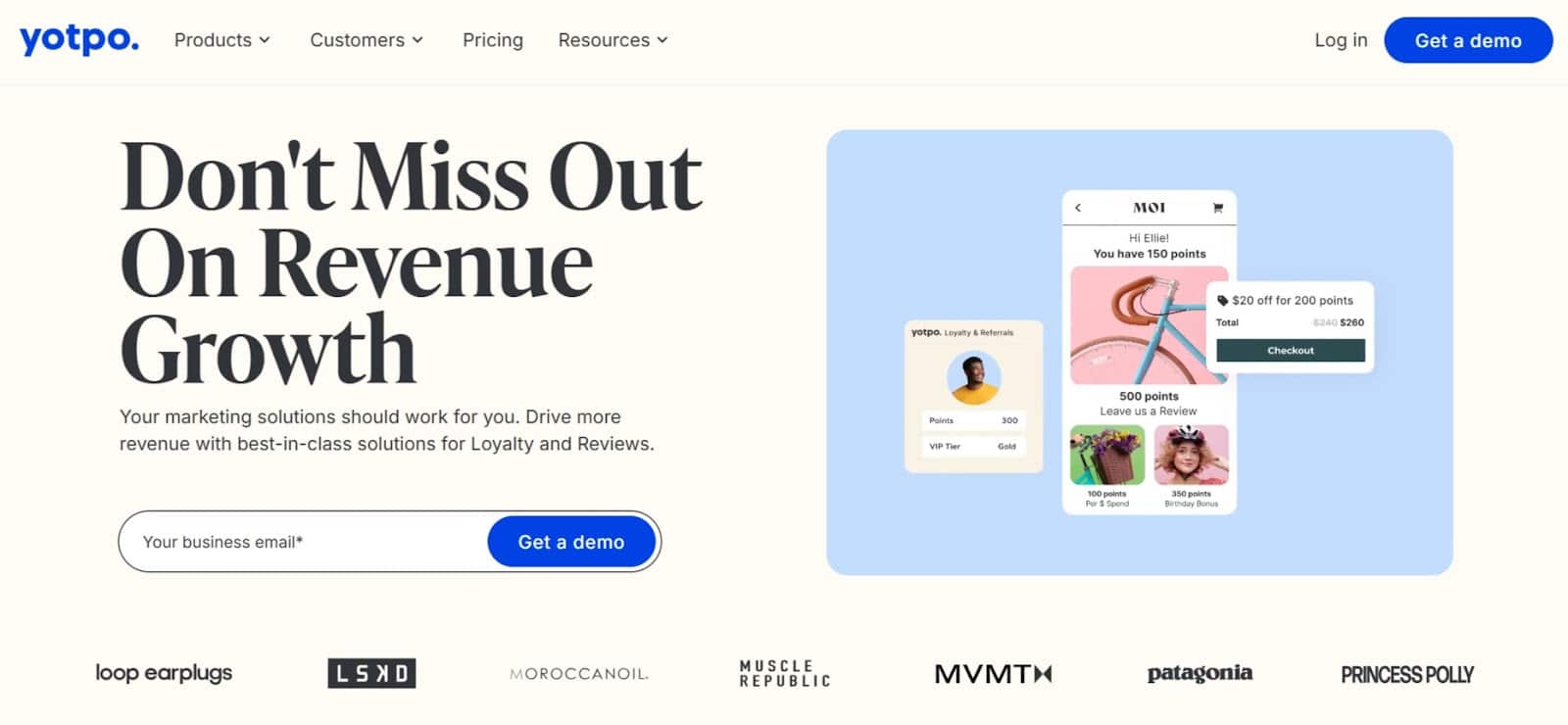
Consider utilizing Yotpo Loyalty to architect a highly customizable, tier-based structure that actively scales your Customer Lifetime Value. Yotpo’s integration on Magento 2 moves your strategy past basic points and into immersive, holistic retention. Furthermore, when deployed alongside Yotpo Reviews, the financial impact compounds.
Injecting visual UGC into your shopper’s journey yields a 137% purchase likelihood lift. By utilizing Smart Prompts—which are 4x more likely to capture high-value product topics—you continually generate fresh, fact-dense content. This synergy incentivizes repeat purchasing and provides search engines with structured data to help maintain your site’s visibility in AI Overviews.
Conclusion
Balancing acquisition with strong retention strategies is key to sustainable e-commerce growth. By deploying a strategically designed Magento 2 loyalty program extension, you can help shift your business model toward an experience-driven ecosystem. Focus on reducing onboarding friction, personalizing VIP tiers, and optimizing for AI Overviews. When you prioritize retention and systematically manage your Customer Lifetime Value, you build a resilient revenue engine capable of adapting to market shifts.
FAQs: Magento 2 Loyalty Program Extension
What is the primary difference between native Magento rewards and a dedicated loyalty extension?
Native Magento rewards cover essential functions, such as basic points accumulation and Shopping Cart Price Rules. A dedicated loyalty extension offers advanced behavioral mechanics like gamification, VIP tiering, and integrated referral programs, which collectively help drive a higher Customer Lifetime Value.
How does a loyalty program increase Customer Lifetime Value (CLV)?
A structured program encourages one-time buyers to become repeat customers by providing compounding value. Shoppers enrolled in these programs naturally generate 12-18% more incremental revenue annually, and their spending often increases the longer they remain in the program.
What is the “Loyalty Illusion” in e-commerce?
The Loyalty Illusion refers to a disconnect between corporate perception and consumer reality. While 90% of executives believe their brand loyalty is strong, only 40% of consumers agree, often because programs rely on generic discounts instead of personalized experiences.
How should I design my loyalty program to attract Gen Z versus Boomer shoppers?
Gen Z consumers value connection, ethical rewards (like point donations), and social-sharing perks. In contrast, Boomer shoppers heavily prefer straightforward, easy-to-understand mechanics, favoring point-for-dollar cash discounts.
Why is Generative Engine Optimization (GEO) important for loyalty landing pages?
Search engines frequently provide AI Overviews, which can cause traditional organic clicks to drop. GEO helps ensure your program remains visible by using definition-first writing, integrating deep schema architecture, and prioritizing verifiable facts.
What are the best practices for user experience (UX) when designing a loyalty dashboard?
Ensure transactional transparency so shoppers can view an itemized history of their points. Additionally, avoid hiding the sign-up process behind complex sub-menus; make it prominent while keeping guest checkout paths open.
How do loyalty extensions handle B2B pricing and company hierarchies?
Enterprise-grade extensions integrate with native Magento Company Accounts, allowing multiple users to accrue points under one corporate umbrella. They can also support dynamic pricing catalogs and apply loyalty status to the Request For Quote (RFQ) process.
Why is transitioning to a headless or PWA architecture helpful for loyalty extensions?
Legacy architectures can occasionally experience slower loading times, which may impact mobile conversion. Progressive Web Apps (PWAs) decouple the frontend experience, improving Core Web Vitals and enabling fast dashboard loads and direct mobile push notifications.
How can zero-party data from a loyalty program improve marketing personalization?
Instead of relying on inferred tracking, loyalty programs allow merchants to explicitly ask shoppers for their preferences in exchange for bonus points. This zero-party data builds trust and feeds into your Customer Data Platform for highly accurate marketing.
What is a recommended timeline for implementing a loyalty program on Adobe Commerce?
A phased rollout is often recommended. The first 0-6 months can focus on core infrastructure and GEO visibility. Months 6-18 can introduce features like VIP tiers and referrals, while subsequent months focus on advanced CLV tracking and dynamic pricing.





 Join a free demo, personalized to fit your needs