


Shoppers are no longer scrolling through endless pages of search results to find what they need. Instead, conversational AI engines and autonomous bots are actively synthesizing answers, bypassing traditional algorithms entirely. Securing brand visibility in 2026 requires a pivot toward optimizing for these Large Language Models (LLMs) and generative engines.
Answer Engine Optimization (AEO) is now a fundamental driver of e-commerce revenue. By structuring your catalog data and validating product claims through authentic sentiment, you can ensure AI confidently recommends your brand. Here is what you need to know about the platforms facilitating this shift.
Key Takeaways: Best AEO Tools for Ecommerce US 2026
- Generative engine optimization (GEO) is essential, as ChatGPT e-commerce traffic converts at a 31% higher rate than traditional organic search.
- Paid click-through rates on queries with AI Overviews have seen a significant 68% drop, emphasizing the need for robust organic AI citations.
- The top AEO tools focus on prompt-level visibility, entity schema management, and qualitative narrative tracking.
- Generative engines evaluate authentic customer sentiment and review data across the web to validate brand credibility.
- E-commerce brands must prepare their infrastructure for Agentic Commerce, where AI agents autonomously complete native checkouts.
The Shift to Generative Engine Optimization (GEO) in 2026
The Evolution from Keyword Matching to AI Synthesis
For the past two decades, the e-commerce discovery journey followed a predictable, sequential path: search engines crawled the web, indexed pages, and ranked them based on inbound link equity and keyword density. Shoppers would then sift through lists of blue hyperlinks to find the products they needed. Today, Large Language Models (LLMs) and generative answer engines—such as ChatGPT, Perplexity, and Google’s AI Overviews—have compressed this journey into a seamless “retrieved, cited, and purchased” model. Instead of relying purely on domain authority, these AI engines utilize vector-based, probabilistic models to synthesize direct answers.
This means the overlap between traditional search results and AI citations is remarkably thin. Recent data analysis indicates that only about 11% domain overlap exists between traditional top-ranking search results and the sources cited by major AI platforms. Brands can no longer assume that a high traditional search ranking automatically guarantees visibility in an AI-generated response. Optimizing for generative engines requires an entirely different architectural approach focused on factual density and semantic clarity.
The Erosion of Traditional Top-of-Funnel Traffic
The introduction of generative answers directly on the search engine results page (SERP) is causing significant volatility in legacy acquisition metrics. Informational queries that once drove massive amounts of top-of-funnel traffic are now being satisfied instantly, resulting in zero-click experiences.
The impact on traditional click-through rates (CTR) is substantial. An extensive 15-month study analyzing over 25 million impressions found that when AI Overviews are present, organic CTR experiences a steep 61% decline, dropping from historical averages down to roughly 0.61%.
Paid search visibility is also shifting, with traditional paid CTR falling by 68% on affected queries. Generative AI essentially acts as a highly effective qualification filter. It satisfies low-intent researchers immediately, which inherently reduces the sheer volume of users clicking through to e-commerce category pages, while simultaneously altering the standard customer acquisition pipeline.
Intent Compression and High-Value Conversions
While the reduction in top-of-funnel traffic requires an adjustment in strategy, it is vital to shift the focus from traffic volume to traffic quality. This phenomenon is known as “intent compression.” LLMs now handle the grueling research, comparison, and evaluation phases on behalf of the user. When an AI agent finally directs a shopper to your product page, that user arrives in a highly advanced state of purchasing readiness.
Consequently, generative traffic often yields superior commercial outcomes. Industry benchmarks reveal that e-commerce traffic originating from generative AI platforms converts at a 31% higher rate (1.81% compared to 1.39% for traditional organic search). This efficiency translates to roughly 10.6% higher revenue per session.
“Modern e-commerce growth strategies must prioritize the revenue-per-session value of AI referrals over pure vanity traffic metrics,” says Ben Salomon, Growth Marketing Manager. “We are moving away from trying to capture every possible click, and instead focusing on ensuring that when an AI engine does cite our products, it delivers a highly qualified, ready-to-buy shopper.“
Core Capabilities to Look for in Answer Engine Platforms
Prompt-Level Visibility and Citation Tracking
Because generative search lacks a traditional numbered ranking system, legacy SEO tools that track static keyword positions are becoming less effective. In an AI-first environment, success is measured by citation frequency and prompt-level visibility.
Brands need platforms capable of monitoring long-tail, conversational prompts to see how often their products are explicitly recommended. Securing these mentions is highly lucrative. Research quantifying the “Citation Advantage” shows that brands explicitly cited within an AI summary receive 35% more organic clicks and 91% more paid clicks compared to those omitted from the generative response. Evaluating an AEO tool means ensuring it can track your brand’s share of voice across diverse LLM ecosystems, providing a clear picture of where your products stand in conversational search.
Schema Diagnostics and Entity Resolution
Structured data is the non-negotiable bedrock of Generative Engine Optimization. While LLMs are sophisticated at understanding natural language, they rely heavily on structured frameworks like JSON-LD to confidently extract definitive facts.
An effective Answer Engine platform must offer deep schema diagnostics and entity resolution capabilities. It should actively audit your product detail pages (PDPs) and flag any data mismatches that could cause an AI to hallucinate or bypass your product entirely.
For example, if your structured data presents conflicting pricing, lacks real-time inventory status, or features unstructured review aggregates, an AI engine will likely favor a competitor with a cleaner data structure. A robust AEO tool acts as a diagnostic safeguard, ensuring that the critical “digital facts” about your catalog are flawlessly formatted for machine ingestion.
Multi-Domain Sentiment and Perception Management
Generative engines do not rely solely on the marketing copy provided on your website; they are designed to cross-reference your proprietary claims against vast third-party source graphs. Before an AI recommends your product, it evaluates authentic sentiment across community forums, digital PR mentions, and external review ecosystems.
Therefore, modern AEO tools must feature qualitative tracking mechanisms. It is no longer just about if an AI mentions your product, but how it describes it. Does the LLM associate your brand with “premium durability” or “budget-friendly convenience”? Multi-domain perception management tools analyze this underlying sentiment, allowing e-commerce marketers to identify narrative discrepancies.
If an AI engine is misinterpreting your value proposition based on outdated forum posts, these platforms alert you, enabling your team to launch targeted content strategies to gently guide and correct the machine’s perception over time.
17 Best AEO Tools for E-commerce in 2026
Evaluating the right software for your brand involves looking past traditional keyword rankings and focusing on prompt visibility, schema diagnostics, and narrative tracking. Here are 17 tools leading the market for digital retailers.
1. Goodie: The Comprehensive Agentic Commerce Optimizer
Goodie operates as a premier full-stack platform for e-commerce brands leaning into generative optimization. It tracks citations across ChatGPT, Google AI Overviews, and Amazon Rufus. For e-commerce managers, its unique value lies in executing in-platform feed remediations, allowing for one-click updates to platforms like Shopify or BigCommerce. Furthermore, it offers sophisticated closed-loop revenue attribution down to the SKU level, helping you connect visibility directly to sales.
2. Conductor: Unified Enterprise Intelligence
Conductor remains the enterprise-grade choice for massive retail portfolios. Recognizing the shift toward GEO, it excels at ingesting vast volumes of generative search tracking data. If you are managing thousands of web properties, Conductor is ideal for coordinating cross-functional teams—from technical to content marketing—ensuring overarching compliance with LLM data requirements.
3. Profound: Precision Analytics and Reverse-Engineered Prompt Volumes
Profound functions as an analytical powerhouse for deep data visualization. It utilizes a “Prompt Volumes” capability to quantify exact natural language queries, alongside an automated AEO-optimized FAQ generator. This tool is an excellent fit for brands with internal engineering teams looking to reverse-engineer AI demand and align their product development with real-time conversational trends.
4. Passionfruit Labs: Specialized AI Citation Tracking
Passionfruit Labs offers a highly focused, specialized AI citation tracking system. It strips away technical bloat to provide clear visibility metrics across ChatGPT, Perplexity, and Google. By integrating directly with GA4 and Shopify, Passionfruit Labs allows marketers to correlate AI search visibility directly with downstream sales revenue, making it highly actionable for growth teams.
5. Semrush (AI Toolkit): The Seamless Ecosystem Extension
For established marketing teams, the Semrush AI Toolkit serves as a seamless ecosystem extension. It blends legacy keyword integration with modern AI visibility reports and sentiment analysis. This hybrid approach allows larger organizations to consolidate their workflows, protecting traditional search revenue while methodically pivoting toward generative optimization strategies.
6. Vismore: The High-Velocity Growth Marketing Engine
Vismore is built for speed and iterative content deployment, functioning as a high-velocity growth marketing engine. It utilizes task-based workflows focusing on immediate, revenue-generating prompts. Instead of treating AEO as a slow technical task, Vismore treats it as agile marketing, making it ideal for brands looking to rapidly saturate AI ecosystems with their narrative.
7. Revere AI: Advanced Narrative and Perception Management
Revere AI is the qualitative specialist of the group, focusing heavily on advanced narrative and perception management. It tracks the underlying sentiment, context, and precise narrative that LLMs attach to your products. By identifying brand positioning discrepancies, it empowers marketing teams to launch targeted campaigns that correct and guide the machine’s perception of the brand.
8. Nudge: Shoppable AI Funnels and SKU Analytics
Nudge distinguishes itself by bridging the gap between AI discovery and actual transaction. It focuses heavily on shoppable AI funnels, tracking prompt-level visibility and converting that data into SKU-specific performance metrics. For e-commerce brands, Nudge is highly valuable for ensuring that when an AI agent recommends a product, the subsequent user journey is optimized for immediate conversion.
9. Gauge: Actionable Visibility Prioritization
Gauge operates as a robust analytics platform that monitors large prompt sets across various AI search tools. It reveals how often—and how favorably—your brand appears compared to competitors. Gauge is specifically designed to translate raw AI-answer data into prioritized actions for your content and growth teams, making it easier to pinpoint exactly which product pages need structural improvements.
10. Peec AI: Accessible Competitive Intelligence
Peec AI provides a highly accessible entry point for growing e-commerce businesses that need competitive intelligence without enterprise-level costs. It specializes in monitoring how rivals appear in AI answers, sending alerts when a competitor is cited more frequently in your product category. This allows smaller brands to conduct targeted content gap analyses and quickly update their structured data to regain visibility.
11. Ahrefs (Brand Radar): Layered Search Visibility
Ahrefs has expanded its renowned toolset with Brand Radar, making it an excellent choice for SEO-first teams looking to layer on AI visibility tracking. It monitors brand mentions and citation share across platforms like ChatGPT and Copilot. If your team is already comfortable with traditional search optimization, this tool allows you to smoothly transition into AEO by revealing which topics you dominate in AI responses and which require more depth.
12. BrightEdge: Advanced Generative Parsing
BrightEdge leverages its Generative Parser technology to help large e-commerce brands track visibility specifically within Google’s AI Overviews and other generative formats. For digital retailers, it provides actionable insights into how product queries trigger AI responses, enabling teams to protect their market share by identifying exactly which conversational queries intercept traditional traffic. It also tracks the convergence of organic and paid shopping ads within AI answers.
13. seoClarity (ArcAI): Deep AI Answer Intelligence
Designed for massive e-commerce catalogs, seoClarity’s ArcAI suite offers extensive tracking capabilities for ChatGPT, Gemini, and Perplexity visibility. The platform excels at analyzing complex search intent at scale, helping brands optimize thousands of product detail pages (PDPs) simultaneously. By leveraging its deep data repository, e-commerce managers can understand the specific entity associations LLMs make with their products, ensuring content aligns smoothly with machine-learning algorithms.
14. AIclicks: Native AI Visibility Platform
Built specifically for the generative era, AIclicks provides a granular look at the citation sources and sentiment patterns that drive AI recommendations. It offers a complete 360-degree view of your presence across major LLMs in one unified interface. For e-commerce marketers, it is highly valuable for tracking real-time visibility and utilizing its citation-level sentiment analysis to identify and capture hidden citations that traditional crawlers might miss.
15. Bear AI: Automated Semantic Optimization
Bear AI stands out for its comprehensive optimization capabilities across all major AI search engines. Its core strength is real-time citation tracking combined with automated content suggestions. For serious AEO practitioners in retail, its semantic analysis engine identifies optimization opportunities that improve product conversion performance, ensuring that your catalog data maps seamlessly to the probabilistic models used by generative engines.
16. Schema App: End-to-End Schema Management
Because structured data is the non-negotiable bedrock of Answer Engine Optimization, Schema App is essential for organizations managing complex product data at scale. It handles the authoring, deployment, and governance of product, review, and FAQ schema across large e-commerce sites. By ensuring flawless JSON-LD execution, it removes computational ambiguity, providing definitive facts like price and availability to prevent AI hallucinations.
17. Yext: Knowledge Graph and Entity Management
Yext is indispensable for brands that need to manage their digital facts across the broader AI ecosystem. It allows retailers to build a centralized knowledge graph, ensuring that real-time data—like pricing, inventory, and physical store locations—is accurately fed to LLMs. This strict entity management is highly effective at establishing consensus validation, ensuring that autonomous agents confidently and accurately recommend your brand.
Advanced GEO Strategies for Digital Retailers
Structuring Content for Machine Readability
When adapting product display pages (PDPs) for LLM ingestion, consider moving away from verbose, flowing marketing narratives in favor of high factual density. Generative engines require clear, structured frameworks to rapidly extract and synthesize answers. Brands might find it highly beneficial to utilize strict E-E-A-T (Experience, Expertise, Authoritativeness, and Trustworthiness) frameworks and format key product features into nested bulleted lists.
Furthermore, optimizing for a Flesch Reading Ease score between 60 and 80 is recommended. Maintaining this level of clarity reduces the computational friction parsing algorithms encountered, ensuring the AI can easily digest, categorize, and relay your product information to potential shoppers without ambiguity.
High-Level AI Audits and Strategic Planning
Transitioning to AEO is a structural evolution, which is why treating “AI Audits” as high-level strategic conversations rather than immediate tactical fixes is crucial. Executive alignment is necessary to fully map your current entity structure and ensure it integrates smoothly with AI engines over the long term.
These audits help brands step back and evaluate whether their underlying data infrastructure—from how SKUs are categorized to how inventory feeds are maintained—is genuinely prepared to meet the strict technical thresholds required by modern generative models.
Preparing for Multi-Modal and Visual AI Search
The convergence of text-based queries with visual discoverability is reshaping how consumers shop. Consider the immense scale of visual search: Google Lens now processes over 20 billion visual searches monthly, a significant portion of which possess direct commercial intent.
To capture this growing segment of multi-modal search, e-commerce managers should ensure their product catalogs feature high-resolution imagery paired with deep EXIF metadata. By combining descriptive, keyword-rich alt-text with synchronized JSON-LD markup, digital retailers can create a cohesive data loop, allowing AI to precisely match a user’s smartphone camera query with the exact product in your inventory.
The Impact of Authentic Customer Sentiment on LLM Algorithms
How Generative Engines Validate Brand Trust
Generative models do not recommend products based solely on the claims a brand makes on its own website; they seek consensus validation. To verify the accuracy of marketing copy, LLMs actively cross-reference product claims against vast third-party source graphs, looking for consistent, authentic human experiences across the web.
When an AI model identifies high volumes of fresh, relevant user-generated content (UGC) echoing the brand’s core value propositions, it gains the semantic context needed to confidently cite that product in a response. This makes authentic customer sentiment a foundational pillar of any comprehensive GEO strategy.
Strategies for Capturing Deep Conversational Context
Standard five-star ratings, while helpful for immediate visual trust on a PDP, lack the textual depth required by LLMs to understand the nuanced context of a product. Generative engines feed on specific, conversational language—the exact kind of long-tail phrasing found in detailed customer reviews.
To generate this rich text naturally, consider utilizing AI-powered smart prompts during the review collection process. Shoppers who interact with smart prompts are 4x more likely to mention high-value topics, providing the exact semantic data LLMs crave. The commercial impact of this contextual data is significant; having just 10 reviews on a product yields a 53% uplift in conversion. Furthermore, encouraging shoppers to upload customer photos alongside their reviews provides the rich multi-modal data that yields a 137% purchase likelihood lift.
Amplifying Content Velocity
AI models heavily favor recent information, meaning the velocity at which a brand collects reviews is just as critical as the volume. Collecting reviews rapidly ensures that your brand narrative stays current, providing a steady stream of fresh sentiment data for AI ingestion across the web.
To maximize this velocity, integrating diverse collection channels is highly recommended. For instance, sending SMS Review Requests (powered via integrations like Klaviyo or Attentive) seamlessly meets the shopper where they are, resulting in a 66% higher conversion rate than traditional email requests. This accelerated collection cycle continuously feeds the generative algorithms with the real-time, authentic validation they require to keep recommending your products.
How Yotpo Helps E-commerce Brands Build Trust
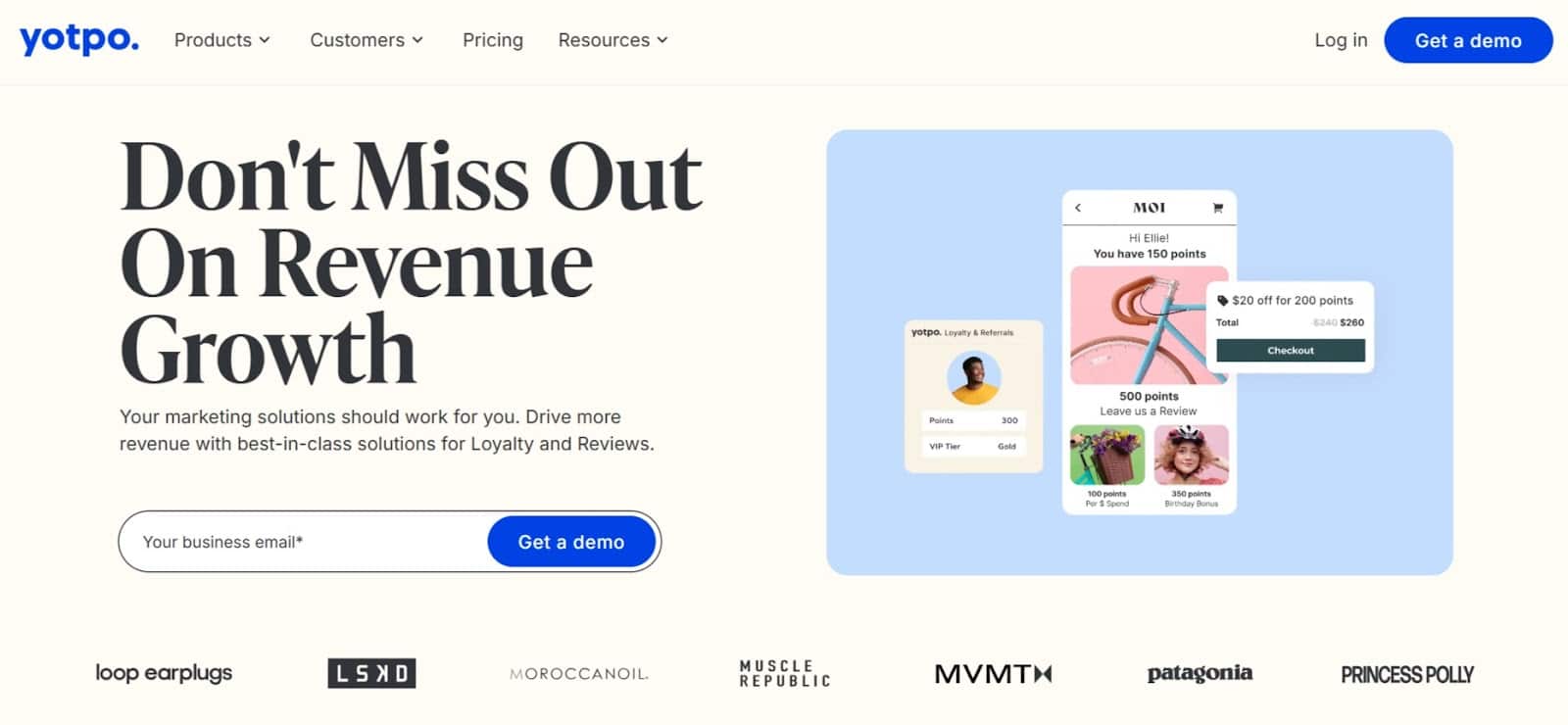
For e-commerce brands navigating the shift to generative search, Yotpo serves as a strategic advisory partner to help scale the authentic user-generated content that AI engines require. By leveraging Yotpo Reviews, brands can utilize AI-powered smart prompts that naturally generate the detailed, context-rich sentiment modern digital ecosystems prioritize for citation and discoverability.
When paired with a customized, tier-based Yotpo Loyalty program, you foster deep, ongoing community engagement that ensures a consistent, high-velocity stream of quality feedback from your most valuable customers. Together, these tools not only provide the multi-domain consensus needed to validate your brand for Large Language Models, but they also directly impact your bottom line—in fact, shoppers who see and interact with this UGC convert 161% higher than those who do not.
The Future of Retail: Embracing Agentic Commerce
Transitioning to Autonomous AI Shopping Agents
As generative search matures, the next frontier for digital retailers is the transition from AI-assisted discovery to full Agentic Commerce. In this emerging model, artificial intelligence does more than just synthesize information; autonomous shopping agents actively anticipate consumer needs, navigate complex product catalogs, and seamlessly execute native checkouts on the shopper’s behalf without requiring continuous human intervention.
Instead of a customer browsing a website, adding items to a cart, and filling out payment details, they simply delegate the task to an AI proxy—such as instructing a bot to “Find and purchase the best-rated noise-canceling headphones under $200 that can be delivered by Friday.”
This shift presents a substantial opportunity for forward-thinking retailers. According to recent research from McKinsey & Company, agentic commerce represents a structural evolution that will orchestrate up to $1 trillion in U.S. B2C retail revenue by 2030, with global transaction volumes projected to reach between $3 trillion and $5 trillion.
To capture a share of this revenue, brands should recognize that their ultimate end-user is increasingly becoming a machine. Optimizing these autonomous agents requires moving beyond traditional visual merchandising and focusing on structural data integrity, ensuring that AI bots can effortlessly read, verify, and transact within your ecosystem.
Adapting to Emerging Integration Protocols
As AI agents gain the ability to perform complex, multi-step actions, the industry is rapidly standardizing how these models connect to external storefronts and databases. We are seeing the rise of standardized integration frameworks, most notably Google’s Universal Commerce Protocol (UCP) and OpenAI and Stripe’s Agentic Commerce Protocol (ACP). These protocols act as a universal translation layer, allowing Large Language Models to securely plug into an e-commerce platform’s live inventory, pricing feeds, and checkout systems in real time.
By utilizing these protocols, an AI assistant can dynamically read a Shopify or BigCommerce catalog, confirm stock levels, and securely pass payment information via APIs without ever loading a traditional front-end webpage. For e-commerce managers, exploring these integrations is a highly beneficial strategic step. Digital storefronts that rely solely on human-centric visual interfaces may miss valuable discovery opportunities as agentic protocols become more common. Preparing your tech stack today ensures that your brand remains highly accessible, trusted, and ready to transact seamlessly in an AI-mediated future.
Conclusion
Transitioning from traditional SEO to Generative Engine Optimization is a vital step for digital retailers. Selecting the right AEO tool is now an operational necessity for 2026, enabling you to track prompt-level visibility, manage entity schema, and correct AI narratives. As conversational engines and autonomous agents become permanent fixtures in the consumer shopping journey, adapting your data infrastructure ensures you remain discoverable.
By leaning into factual density and authentic customer sentiment, your brand can confidently navigate this AI-driven landscape and capture high-intent, ready-to-buy shoppers.
FAQs: Best AEO Tools for Ecommerce US 2026
What is the main difference between traditional SEO and AEO?
Traditional SEO relies on deterministic systems, matching keywords to queries and ranking pages based on inbound link equity and domain authority to provide a list of blue hyperlinks. Answer Engine Optimization (AEO), on the other hand, is built for probabilistic models used by Large Language Models (LLMs). Instead of trying to rank a specific URL, AEO focuses on providing clear, factual, and highly structured data so that generative AI engines can synthesize direct answers and cite your brand as an authoritative source.
How do Answer Engine Optimization tools measure success?
Unlike legacy SEO tools that track static keyword positions, modern AEO platforms measure success through prompt-level visibility and citation tracking. These tools analyze how frequently your brand is explicitly recommended across various generative engines like ChatGPT or Google’s AI Overviews. Furthermore, they track qualitative metrics like narrative sentiment and intent-compressed conversion rates, helping e-commerce managers understand not just if they are visible, but how much revenue those high-intent AI referrals are driving.
Why are AI Overviews causing a drop in traditional click-through rates?
AI Overviews are creating “zero-click” environments by satisfying top-of-funnel, informational queries directly on the search engine results page. When shoppers ask broad questions, the AI synthesizes a comprehensive answer immediately, removing the user’s need to click through multiple websites to gather information. While this reduces overall traffic volume, it acts as a highly effective qualification filter. By the time a shopper does click through a cited link, they have completed their initial research phase and are highly prepared to make a purchase.
Can small e-commerce businesses compete in Generative Engine Optimization?
Absolutely. Generative engines effectively level the playing field because they prioritize factual accuracy, contextual relevance, and multi-domain consensus over massive historical domain authority. Smaller e-commerce brands can outmaneuver larger competitors by focusing heavily on niche authority, maintaining flawless technical schema, and cultivating a high volume of authentic customer sentiment. If a small business provides an AI with clearer data and more robust review context than a legacy retailer, the LLM is highly likely to recommend the smaller, more relevant brand.
How does JSON-LD schema impact AI visibility?
JSON-LD schema acts as a direct, machine-readable language that removes all computational ambiguity for Large Language Models. When AI agents crawl a product display page, they look for structured data to definitively confirm facts like current pricing, real-time inventory availability, and aggregate review scores. Flawless schema prevents AI hallucinations and ensures that generative engines feel completely confident when synthesizing and recommending your products to shoppers.
What role do customer reviews play in an AEO strategy?
Customer reviews are a foundational pillar of Answer Engine Optimization because they provide the multi-domain consensus and fresh, contextual language that AI models require to evaluate product quality. Generative engines cross-reference a brand’s marketing claims against third-party user-generated content to validate trust. Detailed reviews—especially those collected using smart prompts—supply the specific, long-tail conversational phrasing that aligns perfectly with the hyper-specific queries shoppers naturally input into platforms like Perplexity or ChatGPT.
Are traditional paid search campaigns still effective in 2026?
Traditional paid search campaigns are still highly effective, but they require a strategic pivot. With the rise of generative search, continuing to bid heavily on broad, top-of-funnel informational queries often yields diminishing returns due to lower click-through rates. Instead, e-commerce marketers are finding success by reallocating budgets toward high-intent, cited commercial queries and ensuring their paid shopping ads are structured to integrate seamlessly into AI-generated answers and multi-modal search environments.
What is Agentic Commerce?
Agentic Commerce represents the next evolutionary phase of digital retail, where AI transitions from merely recommending products to actively executing tasks. In this model, autonomous shopping agents can anticipate a consumer’s needs, navigate complex product catalogs, and securely execute native checkout processes without continuous human intervention. For brands to participate in Agentic Commerce, their data infrastructure must be fully integrated with emerging universal protocols, allowing these AI proxies to seamlessly read inventory and process transactions.
How often should an e-commerce brand monitor its AI visibility?
Due to the dynamic, constantly evolving nature of Large Language Models, continuous monitoring is highly recommended. Unlike traditional search algorithms that update periodically, generative AI narratives can shift rapidly based on new data ingestion and shifting sentiment trends across the web. Utilizing high-velocity AEO tools allows growth marketers to track these shifts in real time, identify emerging narrative discrepancies, and quickly deploy targeted content updates to maintain a highly favorable brand perception.
How does visual search integrate with Answer Engine Optimization?
Visual search is becoming deeply intertwined with generative AI, as shoppers increasingly use smartphone cameras to initiate queries. To capture this multi-modal commercial intent, digital retailers must ensure their product catalogs are optimized visually as well as textually. This involves pairing high-resolution imagery with deep EXIF metadata, descriptive alt-text, and synchronized JSON-LD markup. This cohesive data loop allows AI engines to instantly and accurately match a visual query with the corresponding product in your digital inventory.











 Join a free demo, personalized to fit your needs