


Selecting the right reviews platform is a critical decision for any eCommerce brand. While Okendo is a recognized solution, your business’s unique requirements may demand a different approach. The market offers a range of powerful tools, each with distinct advantages. Whether your strategy calls for deeper analytics, better marketing integrations, or a more strategic partnership, an Okendo alternative exists that can align perfectly with your objectives.
Key Takeaways: Okendo Alternatives
- Strategy is Key: Choosing an Okendo alternative isn’t just about features; it’s about matching a platform to your brand’s specific growth strategy, whether that’s maximizing conversions, syndicating to retailers, or integrating with other tools.
- Yotpo for Conversion: Yotpo Reviews stands out for brands that want to turn customer feedback into a powerful conversion tool, focusing on high-quality visual content, strategic on-site display, and wide syndication to channels like Google and Target.
- Niche Solutions Exist: Different platforms cater to specific needs. Bazaarvoice is built for enterprises focused on retail syndication, Loox is ideal for brands that rely on visual aesthetics, and Judge.me offers a budget-friendly option for smaller businesses.
- Integration Matters: Consider how a reviews tool will work with your other marketing software. Some, like Yotpo, offer powerful synergies with loyalty programs, while others, like Junip, are designed to connect with a variety of third-party apps.
Why Look for an Okendo Alternative?
Okendo is a capable platform offering a suite of features that help brands collect and leverage customer reviews. So, why might a business seek an alternative? The reason typically involves evolving needs and new strategic goals.
Brands often explore other options when they require:
- A Deeper Focus on Conversions: Businesses increasingly seek solutions where reviews are not just collected but are strategically used to drive sales through compelling visual content and optimized on-site displays.
- Deeper Analytics and Insights: The goal is to move beyond basic metrics to truly understand customer sentiment, which in turn drives product development and marketing strategy.
- Broader Syndication: Brands need to syndicate their user-generated content (UGC) to major channels like Google, Facebook, and key retail sites to maximize visibility and impact.
- A Strategic Partnership: Many businesses look for a partner, not just a provider, who offers expert guidance on maximizing the return on their user-generated content.
The search for an alternative is not about identifying shortcomings in one platform but about matching the right tool to a specific growth strategy.
The Top 8 Okendo Alternatives for eCommerce Brands
Here are the leading platforms that brands are adopting to scale and refine their customer feedback strategies.
1. Yotpo Reviews

Yotpo Reviews helps brands turn customer feedback into conversion-driving assets. Its philosophy is built on the principle that to maximize impact, customer feedback should be high-quality, authentic, and strategically displayed. The platform is designed to transform reviews from simple ratings into powerful tools that build trust and accelerate purchases.
Why Yotpo Wins vs. Okendo
While both platforms help brands collect and display reviews, Yotpo delivers far greater depth, automation, and intelligence, especially for brands focused on conversion and insights.
- Higher Review Completion Rates: With In-Mail Review Requests, shoppers can submit reviews directly within an email – no redirects required. Okendo requires a separate page load, which adds friction and reduces submissions.
- Smarter AI Features: Yotpo offers AI Reviews Summaries, Smart Sorting, and AI-Assisted Replies to surface key themes, rank the most persuasive reviews, and simplify responses. These capabilities make it easy for shoppers to find the most relevant information and for brands to turn large volumes of feedback into actionable insights. Okendo’s AI is limited to basic summarization without actionable insights.
- Visibility in AI Search Engines: Beyond on-site intelligence, Yotpo ensures your brand and reviews are discoverable in AI-driven search experiences — including ChatGPT, Gemini, Claude, Perplexity, and Grok. As more shoppers rely on these engines to research products, Yotpo’s structured, machine-readable content helps your brand show up accurately and competitively where purchasing decisions increasingly begin.
- Actionable Performance Analytics: Yotpo’s Reviews Atlas goes beyond counts and star ratings, assessing conversion potential and benchmarking against competitors. Okendo provides only standard performance metrics.
- Deeper Customization: Yotpo’s drag-and-drop email editor, advanced widgets, and mobile-optimized displays enable full creative control and on-brand experiences.
- Broader Syndication: Reviews collected through Yotpo can appear on Google, Facebook, TikTok Shop, and major retailers like Target, driving visibility far beyond a brand’s own site.
Yotpo continuously sets the standard for innovation in the reviews space, consistently introducing new features well before competitors. Historically, Okendo has released similar capabilities roughly 12–18 months later, meaning brands that choose Yotpo benefit from market-leading innovations right from the start.
Key Capabilities of Yotpo Reviews
Yotpo’s feature set manages the entire review lifecycle, from collection and moderation to publication and analysis.
Collecting High-Impact Reviews
Yotpo prioritizes the quality of user-generated content, helping brands collect rich, detailed feedback that aids purchasing decisions and increases revenue. This is accomplished through several methods:
- Automated Requests: Yotpo automates review collection through email, SMS, and In-Mail Review Requests, ensuring shoppers can submit reviews seamlessly. Intelligent triggers send requests at the optimal post-purchase moment, while In-Mail Review Requests let customers complete their review directly within the email, significantly boosting completion rates. In contrast, Okendo requires shoppers to open a separate page to submit their review, adding friction to the process. Yotpo’s customizable, mobile-friendly forms further enhance response rates and overall review quality.
- Visual UGC: Yotpo simplifies the process for customers to upload photos and videos with their reviews. This visual proof is highly effective for building trust, as it offers potential buyers an authentic view of a product’s quality and real-world application.
Strategic Review Display
After collecting valuable reviews, Yotpo provides powerful tools to display them effectively. It offers a variety of customizable on-site widgets that can be placed on product pages, category pages, or homepages. These include:
- Review carousels and visually engaging galleries for UGC.
- An AI-powered Reviews Summary widget that highlights key topics from customer feedback.
- Smart sorting and filtering capabilities, allowing shoppers to find the most relevant information based on product variants or other criteria.
Deeper Insights and Analytics
Yotpo enables brands to understand the sentiment behind their ratings. Instead of merely tracking stars, you can analyze customer feedback to identify trends and actionable insights. AI-powered features offer a deeper understanding of customer opinions, providing valuable data for product improvement and marketing message refinement.
Cross-Channel Impact and Syndication
Yotpo’s syndication capabilities are a key differentiator. The platform allows brands to distribute their reviews across an extensive network of official partners, including Google, Facebook, TikTok Shop, and major retailers like Target. By placing authentic user feedback on these critical channels, brands can enhance their visibility, build credibility, and drive conversions directly at the point of discovery and sale.
The Yotpo Advantage
Yotpo Reviews is a powerful standalone solution, and its value can be enhanced when used with Yotpo Loyalty. It is important to recognize that Yotpo’s products are effective even when used individually. However, when combined, they create synergies that improve the overall customer experience.
- Synergy with Yotpo Loyalty: Brands can seamlessly reward customers with loyalty points for leaving reviews, particularly for high-value actions like including a photo or video. This incentivizes the creation of compelling UGC.
It’s also worth noting that Okendo offers a basic loyalty add-on alongside reviews. However, its loyalty product lacks the depth and flexibility of Yotpo Loyalty, which includes advanced segmentation, tiered rewards, and many integrations. For brands seeking true retention growth, Yotpo delivers a unified ecosystem rather than a simple add-on.
In short, Yotpo offers the AI sophistication, flexibility, and scale that modern eCommerce brands need – capabilities that go well beyond Okendo’s standard review management tools.
2. Bazaarvoice
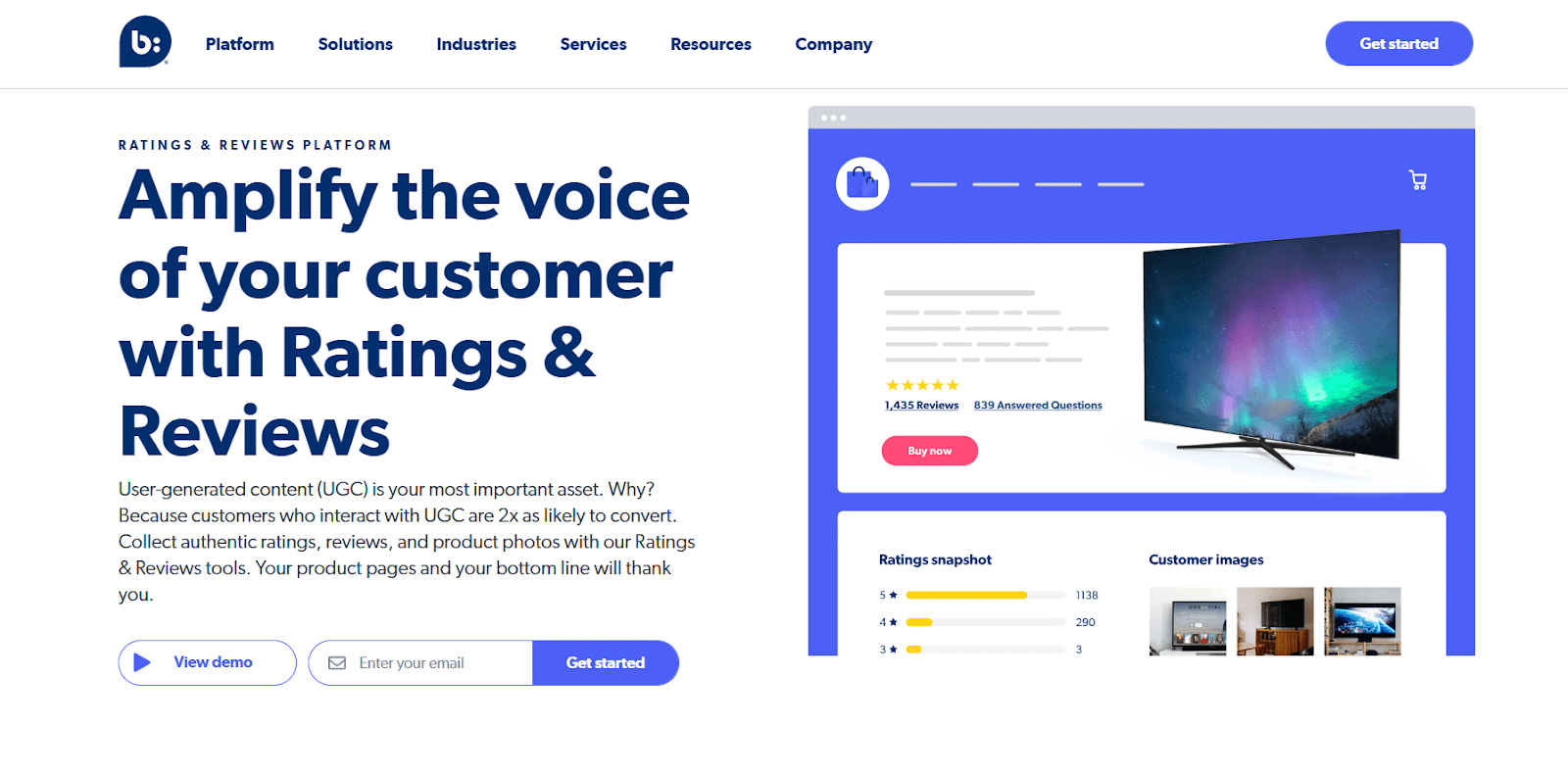
Bazaarvoice is a user-generated content platform. It is primarily utilized by large-scale enterprise companies.
Key Features
- Collection of product reviews.
- A Questions & Answers function for product pages.
- Product sampling programs to generate initial reviews.
- A syndication network with a number of large retailers.
Primary Use Case
The platform is used by enterprise brands whose products are sold through third-party retail channels and require reviews to be displayed on those retailers’ websites.
3. Klaviyo Reviews
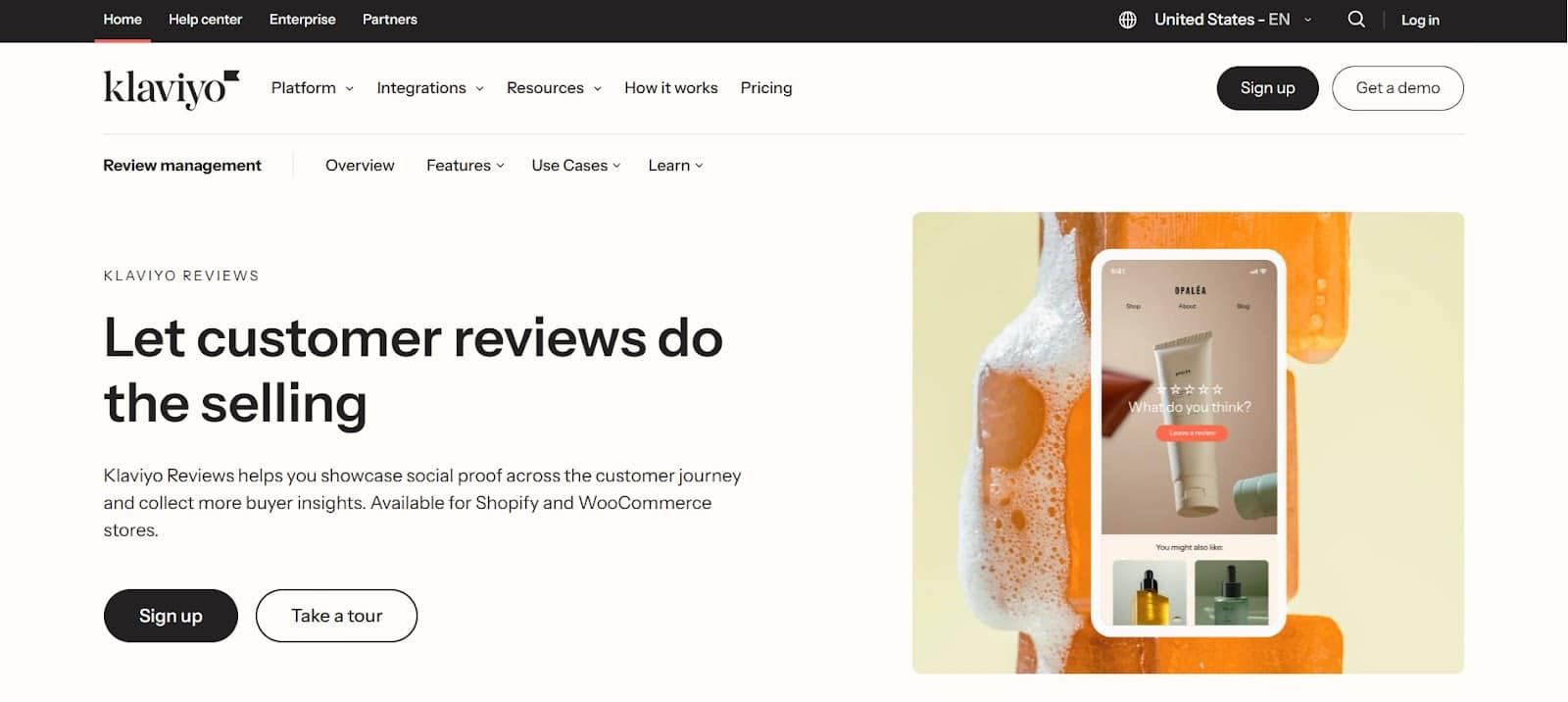
Klaviyo Reviews is a feature integrated within the main Klaviyo platform. It allows existing Klaviyo users to collect customer reviews.
Key Features
- Review data is stored within the same system as the user’s existing customer profiles and marketing data.
- Review requests can be triggered using Klaviyo’s automation flows.
- Provides basic widgets for displaying collected reviews on a website.
Primary Use Case
The feature is for businesses already using the Klaviyo platform for email or SMS marketing who want to consolidate review collection within the same system.
4. Reviews.io
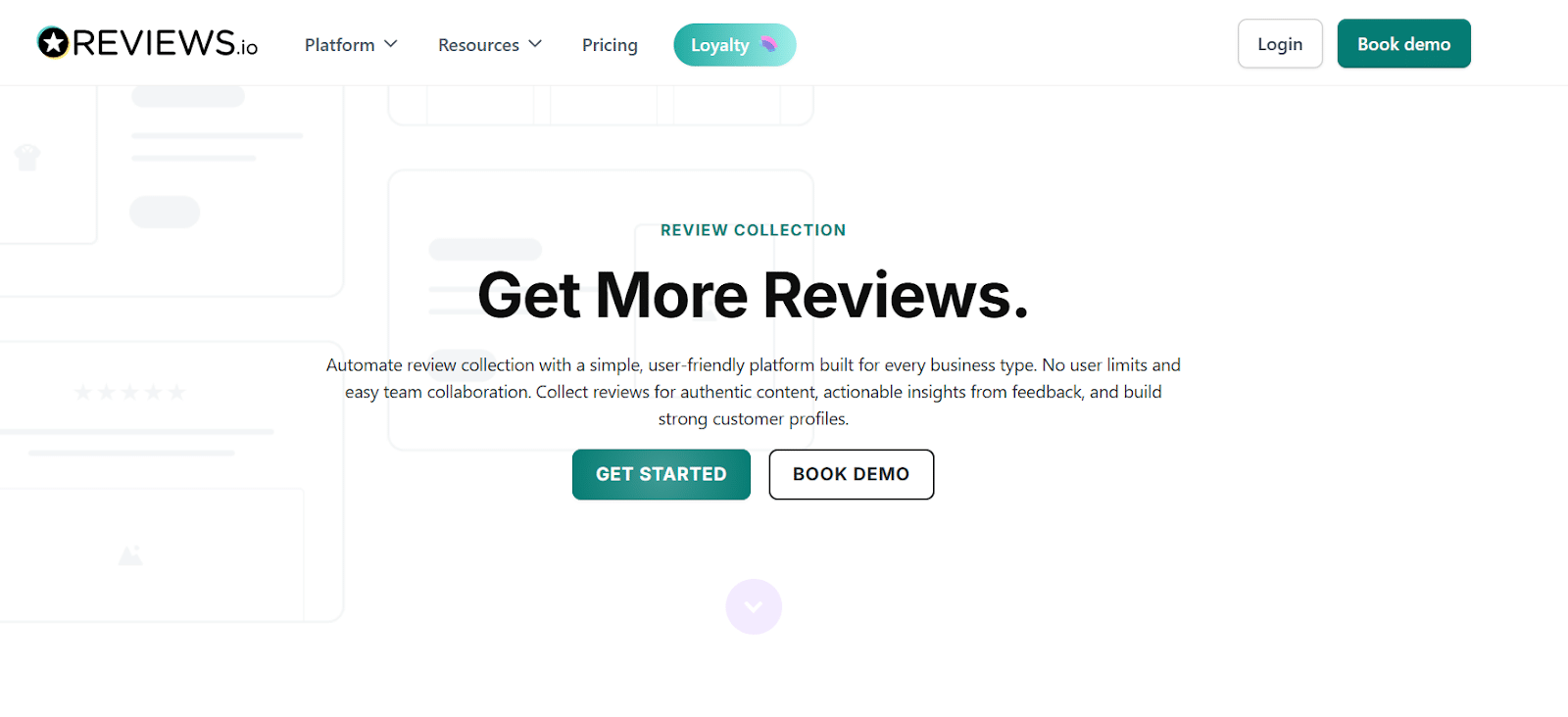
Reviews.io is a platform for collecting company and product reviews. The company is a licensed Google Review Partner.
Key Features
- Collects feedback on both the company and its products.
- Functionality for customers to submit video reviews.
- Tools to publish review content to social media channels.
- Integrates with several eCommerce platforms.
Primary Use Case
The platform is used by businesses that intend to incorporate video testimonials into their marketing activities.
5. Stamped.io

Stamped.io is a customer marketing platform that includes functions for reviews, loyalty, and referrals in one product.
Key Features
- A system for collecting product and site reviews.
- A Q&A feature for product pages.
- An integrated loyalty and rewards program.
- Functionality to conduct Net Promoter Score (NPS) surveys.
Primary Use Case
The product is for businesses that want to use a single platform for review collection and loyalty program management.
6. Judge.me

Judge.me is a review application available on the Shopify app store that provides review collection features.
Key Features
- Its paid plan does not limit the number of review requests.
- Adds rich snippets for SEO to product pages.
- Supports photo and video review collection.
- Allows for customization of its widgets and emails.
Primary Use Case
The application is used by small to medium-sized businesses looking for a review solution with a lower price point.
7. Loox

Loox is a review platform that focuses on the collection of visual reviews, specifically customer photos.
Key Features
- The platform is structured to collect photo reviews.
- Provides visually-focused widgets and galleries for displaying photos.
- Sends automated emails to request reviews with photos.
- Offers functionality to give discounts to customers who submit photos.
Primary Use Case
The platform is used by brands in visually-oriented industries like apparel or home decor.
8. Junip
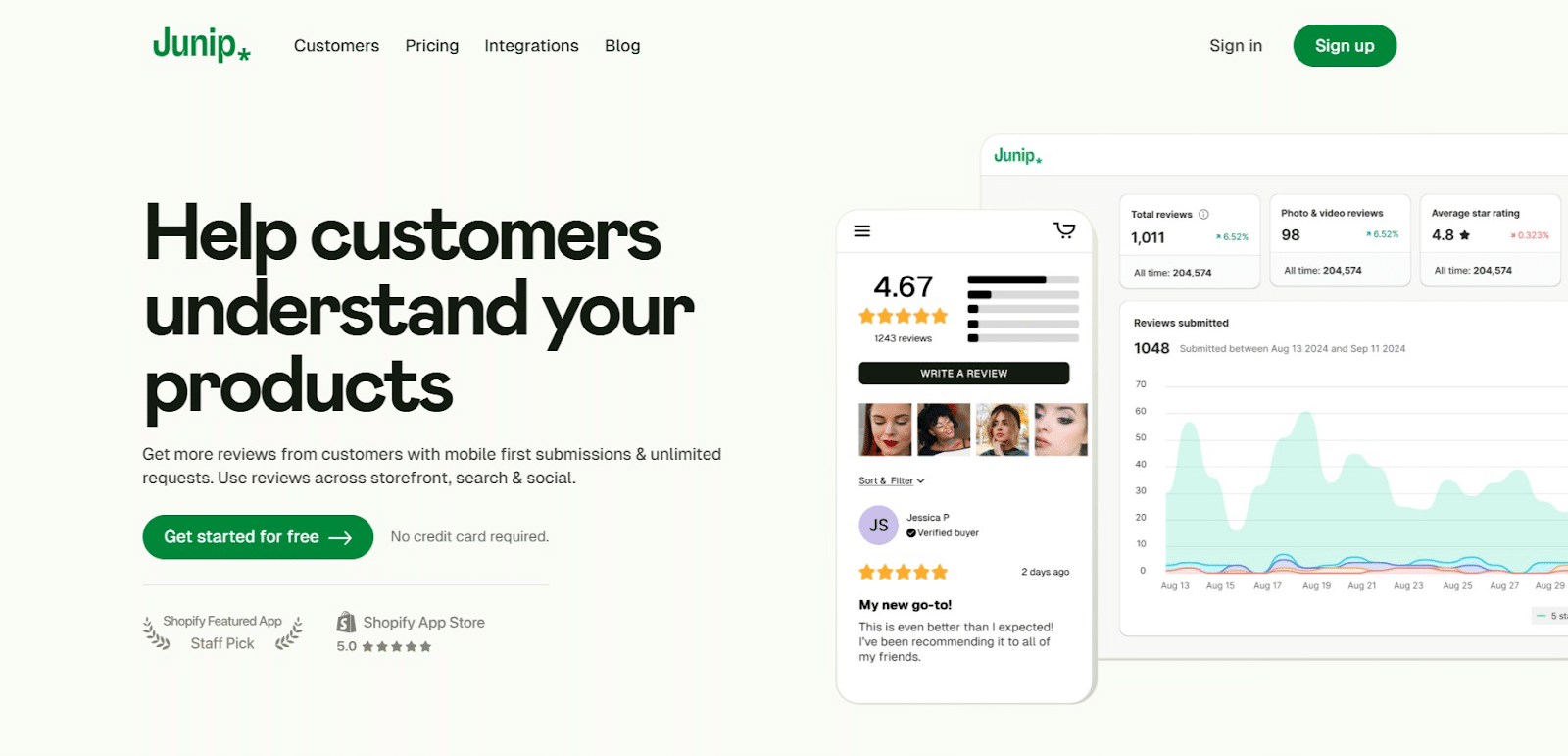
Junip is a review platform designed to integrate with other marketing technology products.
Key Features
- Integrates with email and SMS tools like Klaviyo and Postscript.
- The review submission form is designed for ease of use.
- On-site widgets are built to be lightweight and customizable.
- Provides a flexible platform for brands with development resources.
Primary Use Case
The platform is for direct-to-consumer brands that use a variety of separate, integrated marketing tools.
How to Choose the Right Okendo Alternative for Your Brand
The optimal choice depends entirely on your specific business requirements.
Key Factors to Consider
- Integration Needs: Determine if you need a standalone tool or a solution that works well with a larger marketing ecosystem. An integrated approach, like pairing Yotpo Reviews with Yotpo Loyalty, offers significant data synergy.
- Business Size & Scalability: Your company’s scale is a key factor. Solutions range from those ideal for SMBs, like Judge.me, to those built for global enterprises, like Bazaarvoice.
- Feature Priorities: Identify what matters most. Is it video reviews (Reviews.io), retail syndication (Bazaarvoice), or visual content for a fashion brand (Loox)?
- Budget: Your budget will help narrow the options. Compare the pricing models of each platform to find one that aligns with your financial planning.
- Strategic Support: Decide if you prefer a self-serve tool or a partnership approach. Solutions like Yotpo offer dedicated customer success managers for strategic guidance.
By mapping your needs against the strengths of each platform, you can select the right solution with confidence.
Conclusion
While Okendo is a capable platform, the eCommerce reviews landscape is diverse and filled with excellent alternatives. The best platform is ultimately the one that aligns with your brand’s unique goals, budget, and strategic vision.
Whether you require the conversion-focused power of a platform like Yotpo, the enterprise retail syndication of Bazaarvoice, or the budget-friendly functionality of Judge.me, an Okendo alternative exists to help you transform customer feedback into a powerful growth engine.
Frequently Asked Questions: Okendo Alternatives
What’s the main difference between Yotpo and Okendo?
The primary difference lies in strategic focus. Yotpo Reviews is designed to turn customer feedback into conversion-driving assets by emphasizing the collection of high-quality visual UGC, offering advanced on-site display options, and providing broad syndication to key channels like Google and Target. Okendo is also a strong reviews tool, but Yotpo’s approach is deeply rooted in maximizing the marketing impact of every review.
How does visual content in reviews impact sales?
Visual content like customer photos and videos dramatically increases trust and confidence. It provides shoppers with authentic, real-world proof of a product’s quality, fit, and appearance. This helps answer questions that product descriptions can’t, reducing purchase anxiety and leading to higher conversion rates. Data shows shoppers are significantly more likely to buy after seeing customer photos.
What is review syndication and why does it matter?
Review syndication is the process of distributing your product reviews to third-party retail and search sites. It matters because it puts your social proof in front of shoppers wherever they are, not just on your website. Platforms like Yotpo syndicate to partners like Google, Facebook, and major retailers, which boosts visibility, increases click-through rates on ads, and builds credibility at critical points in the customer journey.
How can I measure the ROI of a reviews platform?
You can measure ROI through several key metrics. Track the conversion rate of shoppers who interact with review widgets versus those who don’t. Monitor the increase in click-through rates (CTR) on Google Shopping ads once star ratings are enabled. You can also analyze site traffic from SEO improvements driven by UGC and attribute sales to specific review-related campaigns.
Are there free Okendo alternatives?
Some platforms, like Judge.me, offer a free plan with basic features, making them a good starting point for new or small businesses. However, these free plans typically have limitations on review request volume or advanced features like visual content collection and syndication. Paid plans are usually necessary to unlock the full strategic value of a reviews program.
How important is AI in modern review platforms?
AI is becoming increasingly important. In platforms like Yotpo, AI helps in several ways. It can summarize thousands of reviews into key topics, giving shoppers a quick overview and helping brands identify product trends. It also assists in moderating content and can even prompt customers with relevant questions to encourage more detailed feedback, improving the overall quality of collected reviews.
What should I look for in a platform’s analytics?
Look for analytics that go beyond simple star ratings. A strong platform should provide insights into customer sentiment, identify common topics mentioned in reviews, and track the performance of your review collection efforts. The goal is to get actionable data you can use to improve your products, marketing messages, and overall customer experience.
How does a Q&A feature help my product pages?
A Questions & Answers (Q&A) feature allows potential customers to ask specific questions directly on a product page, which can be answered by your team or past customers. This builds a community-driven knowledge base, addresses purchase blockers in real-time, and provides valuable content that improves your site’s SEO.
Can I migrate my existing reviews from Okendo to another platform?
Yes, most leading review platforms, including Yotpo, make it easy to import your existing reviews from Okendo or other providers. This ensures you don’t lose the valuable social proof you’ve already built. The migration process is typically straightforward and supported by the new platform’s team.
How do loyalty programs and reviews work together?
They create a powerful cycle of engagement. You can use a loyalty program, like Yotpo Loyalty, to reward customers with points for leaving a review. You can offer even more points for higher-value contributions, like adding a photo or video. This incentivizes the creation of a rich UGC, which then helps convert new customers, who can then be enrolled in the loyalty program.
What is the difference between a product review and a site review?
A product review is feedback on a specific item a customer purchased. A site review is feedback about the overall shopping experience, including customer service, shipping, and the website’s usability. Both are valuable. Product reviews influence individual purchase decisions, while site reviews build trust in your brand as a whole and can appear in Google Seller Ratings.
How long does it take to implement a new reviews solution?
Implementation time varies depending on the platform and the complexity of your site. However, for most modern platforms on eCommerce sites like Shopify, the basic setup can be completed in a day or less. This typically involves installing an app, importing existing reviews, and customizing the on-site widgets and email templates.
What kind of support should I expect from a reviews provider?
Support levels can vary. Some budget-friendly options may only offer email or chat support. More strategic partners like Yotpo provide a dedicated Customer Success Manager (CSM) who acts as an extension of your team. They offer expert guidance on best practices, help you optimize your strategy, and ensure you’re getting the maximum value from the platform.











 Join a free demo, personalized to fit your needs