


2026 feels different. The frantic rush to adopt every new tool has settled into something more practical. It is less about chasing the next big disruption and more about making the technology we already have actually work for the bottom line.
This shift marks a move toward structural maturity. It’s not just about what is new, but what is sustainable. From the quiet rise of autonomous AI agents to the surprising durability of brick-and-mortar retail, the trends defining this year are about building a foundation that holds up when the market shifts. This guide maps out those fundamental changes and how to navigate them.
Key Takeaways: Top 10 Marketing Trends to Watch in 2026
- Value Over Discount: Consumers are increasingly calculating “Total Cost of Ownership,” prioritizing durability and resale potential over the lowest sticker price.
- Agentic AI: As autonomous AI buyers enter the funnel, brands need to ensure their data is optimized for machine readability.
- GEO vs. SEO: Generative Engine Optimization (GEO) is becoming a key focus as “blue links” are supplemented by AI Overviews.
- Social Commerce Maturity: The funnel is evolving into a “pretzel” shape where discovery and purchase often happen simultaneously within social platforms.
- Marketing Ops 3.0: Teams are bifurcating into “The Laboratory” for innovation and “The Factory” for scaled execution.
- Offline Renaissance: A segment of consumers is retreating to physical “Third Spaces” to validate product quality and escape digital saturation.
- Nostalgia Economics: Heritage assets and “retro” aesthetics are becoming useful tools for building trust and familiarity.
- Tangible Sustainability: Green claims are increasingly marketed as financial value, focusing on durability and resale markets.
- Trust Operations: With privacy concerns remaining central, transparent data governance is becoming a frontline marketing feature.
- Human-Led Sales: In B2B, buyers are placing a higher premium on trusted experts and authentic human connections over automated outreach.
Trend 1: The Structural Shift to a “Value Ecosystem”
For the past decade, “value” in e-commerce was often synonymous with “price.” When demand softened, the standard response was to run sales or reduce margins to drive volume. In 2026, this dynamic is evolving.
We are witnessing a shift toward a broader definition of value. In fact, 70% of retail executives agree that value-seeking behaviors—such as prioritizing durability and resale potential over initial sticker price—have become a consistent consumer mindset.
Moving Beyond Deep Discounting
The modern consumer often calculates the “Total Cost of Ownership” (TCO) for a purchase. The question is shifting from “Is this cheap?” to “Will this last? Can I resell it? Does the brand stand behind it?”
While consumers remain price-conscious in some categories, many are “trading up” for products with proven longevity or high resale value. This suggests that the secondhand market is becoming a driver of new product value—if an item holds its value on platforms like Poshmark, it may justify a full-price purchase today. Re-commerce is growing 2-3 times faster than the firsthand market, reinforcing this shift.
Expert Insight: Tiering Benefits
This shift suggests brands can protect margins by offering non-monetary value. Ben Salomon, Growth Marketing Manager at Yotpo, advises brands to consider “value adds” over price drops.
“Strategies that focus on ‘soft benefits’ often outperform deep discounting in the long run. Instead of a blanket 20% off, consider offering your top-tier loyalty members early access to new drops or exclusive products. This helps train your most loyal customers to value access and experience rather than just waiting for a markdown.” — Ben Salomon
Actionable Strategy: Market “Cost-Per-Wear”
To adapt to this ecosystem, marketing language can pivot to emphasize long-term value:
- Display Durability Data: Use customer reviews to highlight longevity (e.g., “Worn 50+ times and still looks new”).
- Integrate Resale Info: Mentioning the estimated resale value of an item on the Product Detail Page (PDP) can help frame the price as an investment.
- Service as Value: 40% of a brand’s perceived value now stems from non-price factors like ease of returns and customer service quality.
Trend 2: Agentic AI and the Challenge of Visibility
While previous years focused on conversational AI, 2026 is seeing the rise of Agentic AI—autonomous digital agents capable of researching specifications and executing tasks.
By the end of 2026, 40% of enterprise applications will feature embedded task-specific AI agents, up from less than 5% in 2025.
The Importance of Machine Readability
For e-commerce brands, this highlights the importance of technical visibility. When a consumer uses an AI tool to “Find the best noise-canceling headphones under $300 with a 2-year warranty,” the agent primarily analyzes data rather than creative assets.
If product specs, return policies, and inventory levels are not structured in a machine-readable format (like Schema.org markup or accessible APIs), a brand may be less likely to surface in these AI-curated results.
The Emerging “Machine Customer”
This shift will impact both B2B and B2C brands. As buyers utilize AI to create shortlists, traditional marketing channels may need to work harder to influence consideration. Eventually, “agentic commerce” could scale negotiation across multiple suppliers simultaneously.
Actionable Strategy: Optimize for the Machine
To prepare for this shift, marketing operations can focus on data structure:
- Structured Data: Ensure product pages are rich with structured metadata (SKU, availability, price currency, shipping details).
- Review Mining for AI: AI agents often rely on “verified sentiment” to validate recommendations. A healthy volume of detailed, text-based reviews provides the data these agents use to assess quality.
Trend 3: Generative Engine Optimization (GEO)
As search behaviors evolve, the industry is seeing a transition from traditional SEO to GEO (Generative Engine Optimization). A key objective for marketers is now to supply AI-powered search campaigns with high-quality assets that answer engines (like Google’s AI Overviews) can digest and serve to the user.
The Evolution of Search
Shopping journeys are increasingly involving AI-driven interactions, with half of retail executives expecting this to become the norm.
Consumers are often moving from simple keyword searches to complex, conversational queries. If content cannot answer these specific questions directly, it may be less effective in capturing intent.
Expert Insight: “Information Gain”
Success in this environment involves providing unique value to the model. Ben Salomon explains the concept of “Information Gain.”
“AI models prioritize unique facts and verified data. To succeed in GEO, brands should focus on ‘Information Gain’—providing specific use-cases or verified customer sentiment that doesn’t exist elsewhere. Reviews are a strong asset here, as they are a primary source of real-time, unique data about a product’s actual performance.” — Ben Salomon
Actionable Strategy: Become “Answer-Ready”
To optimize for GEO, content can be structured for clarity and authority:
- Structure Your FAQs: Write FAQs to directly answer specific questions in clear, concise paragraphs that AI models can easily reference.
- Leverage User-Generated Content (UGC): Verified reviews provide the “freshness” signals that Large Language Models (LLMs) often prioritize.
- Focus on Entity Authority: consistently publishing data-rich assets helps establish the brand as a credible “entity” for specific categories.
Trend 4: The “Pretzel-Shaped” Journey & Social Commerce
The linear marketing funnel is evolving into a more complex, looping path often described as a “pretzel.” Industry reports indicate that discovery, research, and purchase frequently happen simultaneously—often without the user leaving a social app.
Social Commerce continues to grow as a central channel. US social commerce sales will surpass $100 billion in 2026, with sales nearly quadrupling since 2023.
The Platform as a Point of Sale
With TikTok US ad revenue projected to reach $17.17 billion in 2026, social platforms are becoming robust sales channels.
However, relying solely on third-party platforms can create dependency. While the transaction may happen on social, brands benefit from anchoring the customer relationship within their own ecosystem.
Actionable Strategy: Omnichannel Retention
To navigate this landscape, brands can integrate their retention strategies across channels:
- Connected Loyalty: Ensure that purchases made on social platforms earn points in your loyalty program. This incentivizes the customer to engage with your owned channels (email/SMS) for future purchases.
- Syndicated Social Proof: Push verified reviews to social shops to increase conversion rates where the traffic is highest.
Trend 5: Marketing Ops 3.0: The Laboratory vs. The Factory
Marketing organizations are increasingly restructuring to manage both innovation and scale. This is leading to a bifurcation into two distinct functions: The Laboratory and The Factory.
The Bifurcation of Teams
This shift is partly driven by the trend toward in-housing. 94% of retail executives expect to bring more marketing activities in-house to improve speed and agility.
- The Laboratory (Innovation): Small teams dedicated to testing new tools (like AR or new AI agents) without the pressure of immediate ROI.
- The Factory (Execution): Automated environments where proven tactics are executed at scale, often assisted by AI. This allows for personalization without massive headcount increases.
Balancing Speed with Governance
2026 is a year where brands aim to match the velocity of consumer behavior.
Actionable Strategy: Governance as a Feature
- Implement AI Guardrails: As automation scales, governance becomes critical. Ensure AI tools have clear parameters regarding pricing and promises.
- Strategic Oversight: While execution may be automated, strategy remains human. Senior marketers play a key role in auditing the logic of AI systems rather than just approving individual assets.
Trend 6: The Renaissance of Offline (“The Third Space”)
Despite the dominance of digital, physical retail is experiencing a resurgence, driven in part by digital fatigue. A third of consumers will explicitly choose offline brand experiences over online ones in 2026.
The Store as a “Third Space”
Retail stores are increasingly serving as community hubs—or “Third Spaces.”
- Customer Acquisition: Physical stores can lower Customer Acquisition Cost (CAC) by serving as a high-trust entry point for the brand.
- Luxury Growth: This trend is notable in the high-end market, where retail square footage in the US luxury sector increased by 65% in the first half of 2025.
Expert Insight: Phygital Integration
Mira Talisman, Yotpo’s Growth CRO Team Lead, emphasizes the importance of connecting these experiences.
“Customers rarely think in terms of ‘channels.’ If they visit a store, they expect the brand to recognize their loyalty status. The resurgence of offline retail works best when it is fully integrated. Connecting POS systems with online loyalty data ensures a consistent experience regardless of where the customer shops.” — Mira Talisman
Actionable Strategy: The Connected Associate
- POS Loyalty Integration: enabling store associates to redeem loyalty points and view VIP status at the register creates a seamless experience.
Trend 7: Nostalgia Economics and the “Remix”
In times of economic fluctuation, consumers often gravitate toward the familiar. Nostalgia has emerged as a notable economic theme for 2026.
However, this trend is evolving into a “Nostalgic Remix.” Younger audiences are not just consuming the past; they are participating in it by “remixing” brand heritage—using vintage logos or designs in modern creative contexts.
The Value of Heritage
- Brand Likability: Nostalgic campaigns have been shown to improve brand likability, offering a sense of stability in a fast-moving feed.
Expert Insight: Leveraging History
Ben Salomon suggests brands leverage their existing history as a trust signal.
“In a market full of new, fleeting trends, history can be a competitive advantage. Using ‘Since $$Year$$’ or highlighting archival products can create a sense of continuity and safety that appeals to buyers looking for established quality.” — Ben Salomon
Actionable Strategy: The “Vintage” Challenge
- Asset Libraries: Consider releasing vintage assets for creators to use.
- UGC Campaigns: Encourage customers to post photos of older products to demonstrate durability.
- Retro-Drops: Re-releasing classic items can tap into this demand for the familiar.
Trend 8: Sustainability as Tangible Value
Sustainability is increasingly viewed through a financial lens. With regulations like the EU’s Digital Product Passport (DPP) influencing standards, sustainability is shifting from an ethical preference to a Tangible Value proposition.
Consumers are looking for sustainable products that deliver financial performance: durability, energy efficiency, or resale value.
The Growth of Re-Commerce
The re-commerce (resale) market will grow 2-3 times faster than the firsthand market through 2027.
This offers an opportunity to frame high-quality items as investments. If a product has a strong resale market, the effective cost to the consumer is lower.
Expert Insight: Operationalizing the Loop
Mira Talisman notes that sustainability can drive retention.
“We are seeing ‘trade-in’ programs becoming a loyalty behavior. allowing customers to trade in used items for loyalty points helps operationalize sustainability. It encourages the customer to stay within the brand ecosystem rather than selling on a third-party marketplace.” — Mira Talisman
Actionable Strategy: Highlight Longevity
- Durability Data: Use reviews to prove longevity.
- The “Investment” Angle: Positioning products as “built to hold value” aligns with this financial mindset.
Trend 9: The Focus on Privacy and Trust Operations
As AI adoption accelerates, maintaining consumer trust is critical. Forecasts predict a potential 20% surge in class-action lawsuits related to AI privacy and accuracy in 2026.
This environment creates a need for “Trust Operations”—ensuring that AI interactions are transparent and compliant.
The Role of Zero-Party Data
Zero-Party Data—data that a customer proactively shares—remains a secure foundation for personalization.
- Compliance: Unlike third-party data, zero-party data is consent-based.
- Consumer Preference: 81% of executives believe Generative AI could weaken brand loyalty if it commoditizes the interface. Asking customers for their preferences directly can build stronger relationships than relying on algorithmic assumptions.
Actionable Strategy: Transparency
- Label AI: Clearly labeling AI assistants helps manage user expectations.
- The “Data Trade”: Being explicit about why data is collected (e.g., “Tell us your size so we can recommend the right fit”) builds trust.
- Review Verification: “Verified Buyer” badges serve as important trust signals in an era of content abundance.
Trend 10: Human-Led Sales in B2B
In the B2B sector, there is a noticeable shift toward Human-Led Sales. As buyers face increasing volumes of automated outreach, the value of authentic, expert interaction has grown. Buyers now trust product experts significantly more than general sales outreach.
The Role of the Expert
We are seeing technical experts—product managers and engineers—playing a larger role in the sales process.
- Expert Validation: Buyers often view human experts as critical validators for complex purchase decisions.
- Authenticity: Technical breakdowns and honest industry analysis often build more authority than polished marketing collateral.
Actionable Strategy: Facilitate Connection
- Consultation Focus: Positioning calls as consultations with experts rather than standard sales demos can improve engagement.
- Employee Advocacy: Encouraging technical teams to share their expertise on social platforms can help humanize the brand.
How Yotpo Helps Brands Navigate 2026
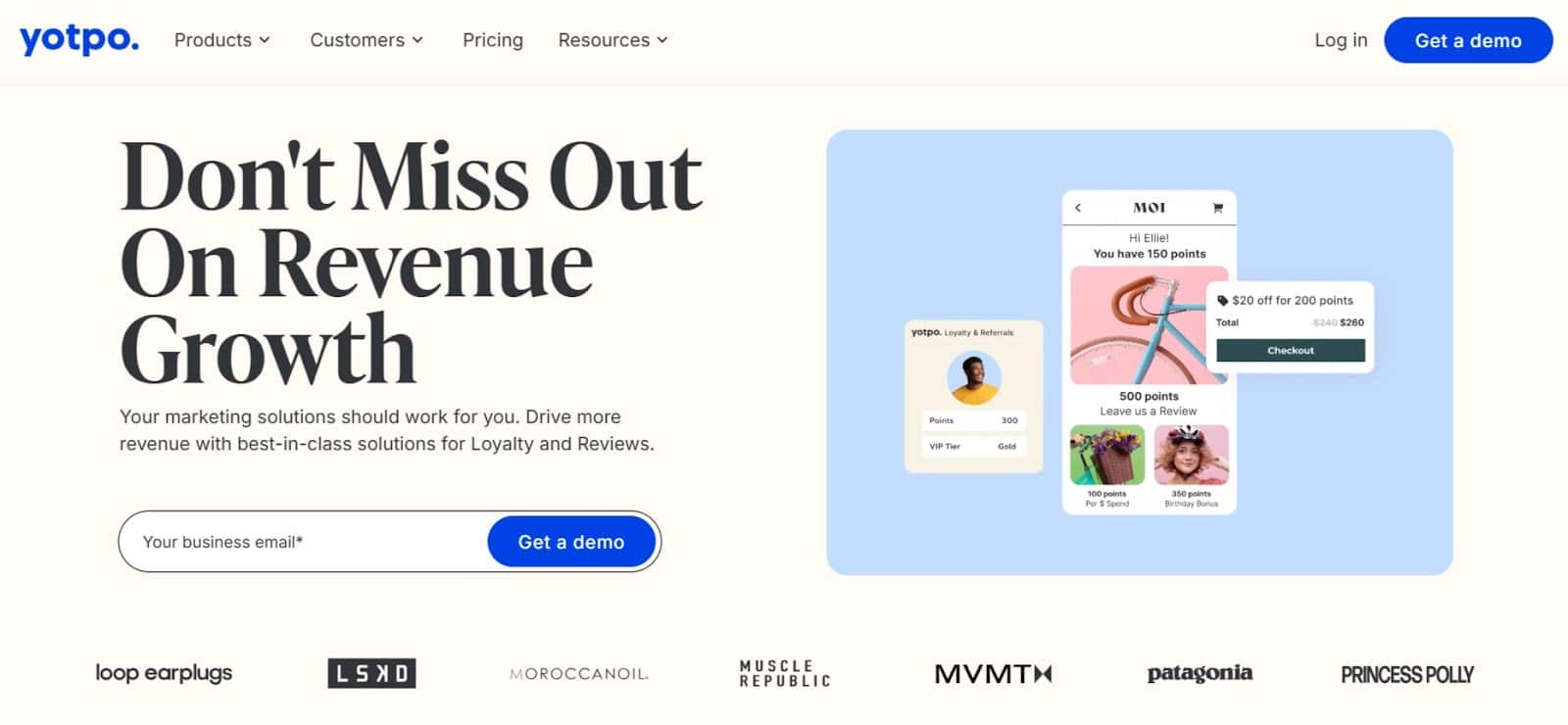
In a market defined by savvy consumers and advancing technology, Yotpo serves as infrastructure for retention and verification. By utilizing Yotpo Reviews to generate verified content that supports GEO strategies, and Yotpo Loyalty to build value tiers that protect margins, brands can adapt to the 2026 ecosystem. We help brands move beyond simple discounting by turning customer data into a tool for deepening connection and building lasting trust.
Conclusion
2026 is a year of “Hybridity”—where advanced technology powers human experiences. The brands that thrive will likely be those that use AI to become more transparent and reliable, while keeping the customer relationship central. For brands that prioritize value and trust, this structural maturity represents a significant opportunity for sustainable growth.
FAQs: 10 Top Marketing Trends to Watch in 2026
What is the most critical marketing trend for 2026?
The most critical trend is the shift from “price-seeking” to “value-seeking.” 70% of retail executives agree this is a permanent change. Consumers are increasingly looking at the “Total Cost of Ownership”—including durability and resale value—rather than just the lowest initial price.
How will Agentic AI impact e-commerce sales?
Agentic AI introduces “machine customers” that can research and filter products on behalf of humans. By 2026 , 40% of enterprise apps will use these agents. This makes technical “readability” (like Schema markup) essential for brands to remain visible.
What is the difference between SEO and GEO?
Traditional SEO focused on ranking “blue links.” GEO (Generative Engine Optimization) focuses on optimizing content for AI answer engines (like AI Overviews). Success in GEO often depends on “Information Gain”—providing unique, verified data that the AI can cite as an authority.
Why is offline retail making a comeback?
Digital fatigue is leading some consumers back to physical stores. A third of consumers plan to prioritize offline experiences in 2026 . Stores are evolving into community hubs that offer sensory validation that digital channels cannot replicate.
How can brands use nostalgia in their marketing?
Nostalgia in 2026 is often about the “Remix.” Younger consumers want to engage with brand heritage creatively. Brands can open their archives and encourage users to play with vintage assets, building a sense of familiarity and trust.
What is “Marketing Ops 3.0”?
Marketing Ops 3.0 refers to the splitting of marketing teams into “The Laboratory” (for innovation and testing) and “The Factory” (for scaled execution). This structure helps brands balance the need for speed with the ability to experiment.
Is social commerce replacing the traditional website?
For many discovery and purchase journeys, social platforms are central. With US social commerce sales projected to pass $100 billion in 2026 , platforms are key sales channels. However, brands are advised to use connected loyalty strategies to maintain the customer relationship across channels.
How does sustainability drive revenue in 2026 ?
Sustainability is increasingly a financial proposition. The resale market is growing 2-3 times faster than the firsthand market. Brands can drive revenue by marketing the “resale potential” of items, which can lower the effective cost for the buyer.
What are the risks of using AI in marketing?
Privacy and accuracy are key risks. Forecasts predict a potential rise in lawsuits related to AI data and “hallucinations.” Brands should focus on transparency and Zero-Party data to mitigate these concerns.
How should B2B strategies change in 2026?
B2B strategies are shifting toward “Human-Led Sales.” As automated outreach increases, buyers value authentic expertise. Brands should empower internal experts to act as trusted advisors and facilitate high-touch consultations.











 Join a free demo, personalized to fit your needs