


Let’s be honest: just tossing a generic 10% discount code at past customers isn’t enough to keep them coming back. When shoppers choose to spend money with your Adobe Commerce store, they want an experience that actually recognizes their unique habits and preferences. Building a thoughtful Magento 2 loyalty program is one of the most effective ways to turn those casual buyers into long-term brand advocates.
Whether you are navigating the complexities of a B2B catalog or scaling a fast-growing retail brand, shifting your focus from basic point-chasing to a genuine value exchange can help stabilize revenue and build a community that actively chooses you over the competition.
Key Takeaways: Magento 2 Loyalty Program
- Automate Milestone Rewards: Utilize native GraphQL data, such as the date_of_first_order field, to seamlessly recognize customer anniversaries without adding manual overhead to your team.
- Eliminate Redemption Friction: Offer seamless checkout experiences by fully integrating virtual rewards and digital perks directly into the shopping cart.
- Engage the Silent Loyalist: Implement instant value drops for habitual buyers who purchase frequently but ignore traditional marketing campaigns.
- Align With Shopper Values: Move beyond purely transactional discounts by offering experiential rewards—like early access or charity donations—that resonate deeply with modern demographics.
- Structure for B2B Scale: Leverage built-in corporate tiers and quote management tools to build a multi-layered retention framework tailored for institutional buyers.
The Strategic Evolution of Magento Retention
The e-commerce landscape is evolving rapidly in how consumers perceive value and engage with retention programs. For years, merchants relied heavily on basic point-scoring systems to drive repeat purchases. However, data from early 2025 indicates that maintaining brand devotion requires more deliberate effort, with the concept of “true loyalty”—defined as a deep, trust-based connection between a shopper and a brand—dropping to just 29%.
Simultaneously, program fatigue is setting in. The average consumer is now enrolled in eight different loyalty programs but actively participates in only five. This creates a noticeable “loyalty illusion.” While merchants assume their growing enrollment numbers indicate success, a significant portion of their customer base feels little to no emotional connection to the brand itself.
Despite these challenges, a well-executed retention strategy remains one of the most powerful levers for profitability. With advertising costs continuing to rise, prioritizing existing buyers is a highly effective strategy. Acquiring a new shopper can cost up to five times more than retaining an existing one, making a robust retention engine a financial necessity. Furthermore, 72% of consumers state that an effective loyalty program makes them more likely to spend with their preferred brand, and 56% report actively increasing their overall spending because of program benefits.
“A successful Magento 2 loyalty program operates invisibly in the background,” explains Davis Belcher, Content Marketing Manager. “It shouldn’t feel like a chore for the customer to participate; it should feel like a natural extension of the shopping experience.“
To bridge the gap between enrollment and active engagement, Magento merchants must evolve their strategies into integrated value exchanges. Shoppers want to feel recognized not just for their spending power, but for their continued preference. This means shifting focus from purely transactional discounts toward seamless redemption, transparent point tracking, and experiential rewards that genuinely resonate with the end consumer.
Technical Foundations: Architecting Rewards in Adobe Commerce
The success of a modern retention strategy is intrinsically linked to the underlying platform architecture. Adobe Commerce (formerly Magento 2) offers native capabilities and recent core updates that empower merchants to orchestrate highly responsive, frictionless loyalty experiences. For scaling brands, leveraging these technical foundations is the first step toward reducing latency and improving the user journey.
Granular Seniority Tracking via GraphQL
Understanding exactly how long a customer has been shopping with your brand is essential for delivering timely, personalized rewards. Recent platform documentation highlights the availability of the date_of_first_order field within the GraphQL API payloads. By exposing this specific data point headlessly, merchants can programmatically calculate customer “seniority.”
This capability allows you to automate highly personalized “anniversary” rewards or trigger specific tier-advancement logic directly in the storefront without forcing the system to execute resource-heavy, complex database queries. It ensures that loyal customers are recognized at the exact right moment in their journey.
Webhooks and Real-Time Data Synchronization
When shoppers earn or redeem points, they expect to see their updated balances instantly. In modern headless architectures, relying on slow batch updates can cause frustration and cart abandonment. Adobe Commerce 2.4.7 introduced enhanced webhook support, allowing for real-time updates to external services.
By utilizing webhooks, your store can instantly transmit transaction data to third-party loyalty engines, ensuring that point balances, tier statuses, and available rewards are perfectly synchronized across your website, mobile app, and physical point-of-sale systems.
“When the technical architecture supports real-time data flow, you eliminate the friction that typically causes customers to abandon their rewards,” notes Eli Weiss, VP Retention Advocacy. “Fast, seamless redemption is the ultimate driver of retention.“
Seamless Virtual Reward Processing
Modern loyalty programs increasingly rely on non-tangible rewards, such as VIP digital access, downloadable assets, early product drops, or experience vouchers. Processing these items incorrectly can add unnecessary steps to the checkout flow. Within Adobe Commerce, properly utilizing attributes like is_virtual ensures that digital-only rewards are processed effortlessly. By conditionally hiding shipping information and delivery selection for virtual items, merchants can drastically reduce checkout friction.
Solving the Guest Checkout Leakage Problem
A historic challenge for e-commerce marketers has been point leakage during guest checkouts. Shoppers often speed through the purchase process without logging in, resulting in unrecognized value and skewed Customer Lifetime Value (CLV) metrics. Advanced API integrations within the Adobe Commerce ecosystem now support the automatic merging of guest orders with customer accounts. By matching the email address upon subsequent registration, the system retroactively assigns the earned points. Bridging this gap guarantees that every transaction contributes accurately to the customer’s profile, fostering goodwill and encouraging future account creation.
Mastering the “Silent Loyalist”
When analyzing customer bases, merchants often dedicate the majority of their marketing budget to highly vocal, socially engaged shoppers. However, this approach ignores a massive segment of highly profitable buyers. Recent 2025 consumer surveys reveal that 52% of U.S. shoppers are classified as “silently loyal”.
These are individuals who repurchase consistently but rarely interact with marketing emails, write public reviews, or engage with complex, gamified reward systems. They do not broadcast their devotion to your brand, but their steady purchasing behavior forms the financial backbone of your store.
The Value of Habitual Purchasing
The importance of the silent loyalist becomes clear when examining broader e-commerce conversion data. An extensive 2025 study of over 3,000 online stores found that only 14.77% of shoppers return to make a second purchase. The hurdle to get a shopper to return just once is incredibly high.
However, once a buyer transitions into a habitual cycle, their value skyrockets. The same data indicates that the median order value for a returning customer is significantly higher than that of a first-time buyer. For consumable categories—like health supplements, beauty products, or pet supplies—these silent loyalists operate on a highly predictable replenishment cycle that requires zero marketing spend to activate.
Rewarding Without Friction
The greatest risk with silent loyalists is assuming they are unengaged and bombarding them with aggressive marketing tactics to force participation. Because their loyalty is habit-driven, adding unnecessary friction to their journey can actually push them away.
“Brands often overcomplicate their rewards,” notes Eli Weiss, VP Retention Advocacy. “Sometimes the most effective loyalty tactic is simply acknowledging a customer’s tenth purchase with a seamless, unexpected perk.”
To retain this cohort on Adobe Commerce, your loyalty program must operate invisibly. Consider utilizing these low-friction strategies:
- Instant Value Drops: Automatically apply point balances or surprise discounts directly at the checkout screen, bypassing the need for the customer to log into a separate rewards portal.
- Automated Replenishment Perks: Reward customers who utilize subscription or auto-ship features with an accelerated point multiplier, reinforcing their habitual behavior.
- Milestone Acknowledgments: Use backend automation to trigger a simple, unprompted reward—such as a digital gift card or free shipping—when they cross a specific tenure or order count threshold.
Value-Based Loyalty for Modern Consumers
The demographics driving e-commerce revenue are shifting rapidly, bringing a stark generational divide in how rewards are perceived. While older cohorts generally prioritize simple product quality and bulk discounts, Millennials and Gen Z are fundamentally reshaping the retention landscape. They demand brand alignment, authentic community, and experiential rewards over basic point accumulation.
The Shift to Purpose-Driven Retention
For younger consumers, loyalty is increasingly rooted in shared values. Recent data shows that 54% of U.S. consumers are loyal to at least one brand specifically because it takes a public stance on social issues. Furthermore, 70% of Gen Z shoppers say they are loyal to a brand they inherently love and trust, and most of them are willing to pay a premium for a product just to demonstrate that loyalty.
Conversely, traditional “earn-and-burn” models are becoming less effective with these demographics. A 2025 market analysis found that nearly half of Gen Z consumers would switch to a competitor after just one bad experience, and their loyalty is largely driven by “values resonance.” If a brand’s stated purpose does not align with its actions, younger shoppers will quickly migrate to a competitor.
Experiential Rewards and Community Building
To capture this market, Magento merchants must evolve their program structures to express their brand’s purpose. Moving from a purely transactional “participate-and-save” model to a “participate-and-belong” model requires a focus on experiential rewards.
Data highlights that Millennials and Gen Z heavily prioritize community and exclusivity. Around 34% of Gen Z shoppers note that feeling like part of a brand’s community is a critical factor in their loyalty.
You can operationalize this sentiment within your Adobe Commerce store by offering:
- Charitable Donations: Allow customers the option to convert their earned points into a cash donation for a partnered, brand-aligned charity directly within the checkout flow.
- Exclusive Early Access: Utilize Magento’s customer group functionalities to grant VIP tier members 24-hour early access to limited-edition product drops or seasonal sales.
- Community Events: Reward top-tier spenders with invitations to exclusive webinars, community forums, or in-person brand events, fostering a sideways, peer-to-peer loyalty experience that resonates deeply with younger demographics.
Overcoming the Loyalty Experience Gap
The primary reason retention programs fail is a disjointed user experience. If a customer has to navigate through four different pages just to figure out how many points they have, they will likely abandon the effort entirely. In fact, 40% of consumers admit to sometimes forgetting to redeem their hard-earned rewards.
“If your loyalty tiers don’t reflect the actual purchasing cadence of your user base, you’re just building friction,” advises Mira Talisman, Growth CRO Team Lead. “Data should dictate the reward milestones.”
Providing customers with a clear, unambiguous view of their saved value directly in the cost summary or cart flyout is a necessary tactic. Transforming redemption into a one-click, self-service transaction ensures that the program feels like a benefit rather than a burden.
Synergizing Customer Content and Retention
While points and tiers are the foundation of retention, the integration of customer feedback is what accelerates organic growth. A truly optimized store uses its most loyal customers to help convert new ones.
Additionally, consistently gathering fresh review content provides the vital, structured data that modern AI Overviews rely on to summarize product sentiment for inquisitive shoppers directly on the search engine results page. Shoppers who interact with user-generated content and customer feedback are known to convert 161% higher than those who view standard product pages. Furthermore, simply displaying 10 reviews on a product page can yield a 53% uplift in overall conversion.
You can incentivize this behavior by offering reward points for written feedback or photo uploads. Visuals are particularly powerful, driving a 137% lift in purchase likelihood. To collect this content faster, consider utilizing SMS Review Requests powered by integrations with providers like Klaviyo or Attentive. These mobile-first requests boast a 66% higher conversion rate than traditional email requests, allowing you to rapidly scale your catalog’s social proof while rewarding your best buyers.
Navigating B2B Loyalty Complexity
Adobe Commerce is heavily favored by medium-to-large B2B enterprises due to its capacity to handle complex, scalable catalogs. In the B2B sector, loyalty is institutional rather than individual. Rewards must be structured to accommodate corporate accounts rather than single shoppers.
Merchants can utilize native B2B drop-in components to facilitate this:
- Company Management: Create “Corporate Tiers” that allow a shared reward pool across multiple buyers within the same organization.
- Quote Management: Allow sales teams to use accumulated institutional rewards to bridge the gap during contract negotiations.
- Requisition Lists: Simplify the purchasing journey for habitual B2B buyers, acting as a form of operational loyalty.
Managing dozens of international sites and brands from a single admin panel, while routing rewards logic seamlessly through ERP and PIM systems, makes the platform the optimal choice for high-volume B2B loyalty ecosystems.
Consolidating Your Magento 2 Tech Stack with Yotpo
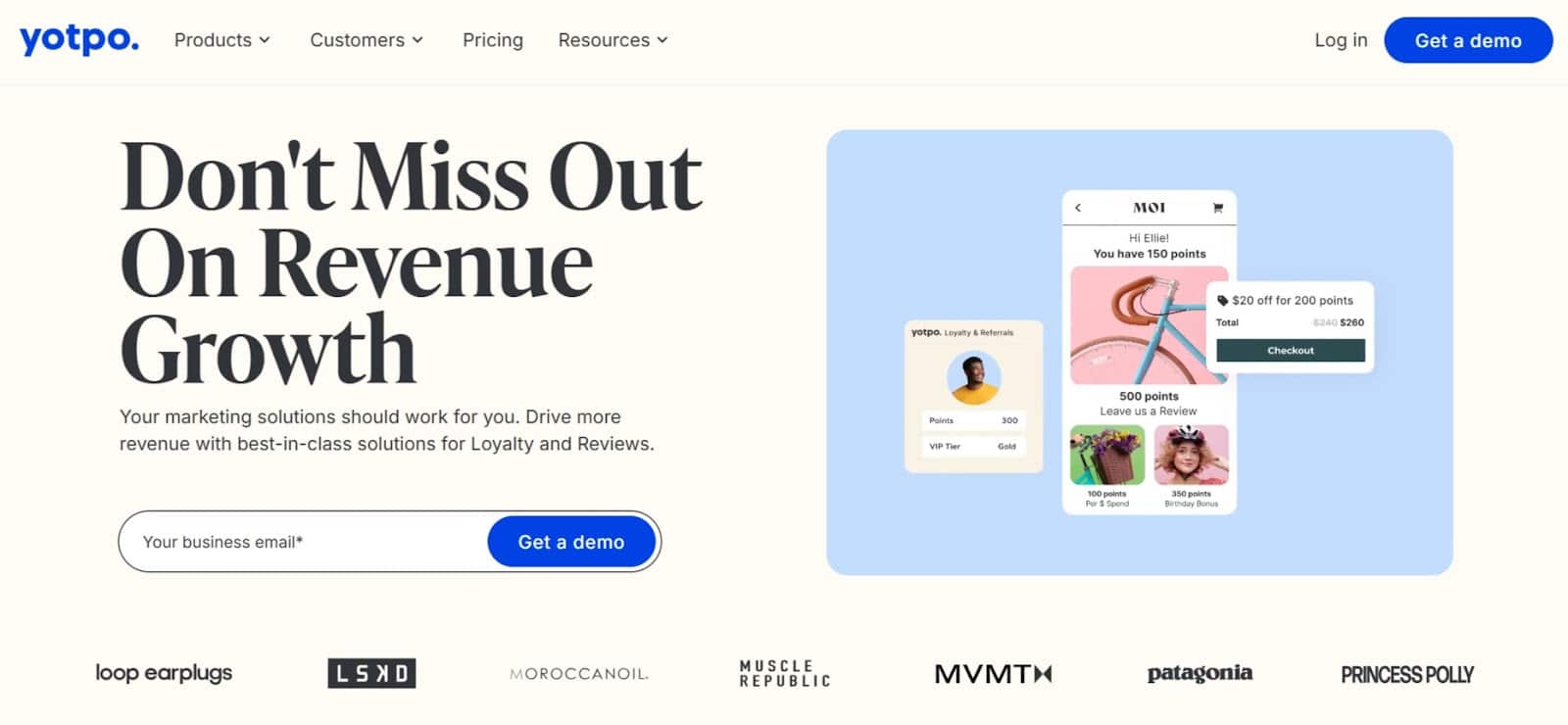
Managing these diverse requirements—from headless data synchronization to experiential B2B tiering—requires a tech stack that works in tandem with Magento’s native architecture rather than against it. By integrating Yotpo Loyalty and Yotpo Reviews into your Adobe Commerce environment, you can seamlessly orchestrate customized retention structures from a single, unified hub.
Consolidating your strategy allows you to easily deploy those experiential rewards, leverage intelligent prompts that are 4x more likely to capture high-value customer feedback, and syndicate that content to key search partners. Ultimately, this transforms your everyday shoppers into a powerful engine for both recurring revenue and organic brand advocacy.
Conclusion
Scaling a retention strategy on Adobe Commerce requires a deep understanding of customer behavior and platform architecture. By leveraging the latest technical updates and shifting toward value-driven, experiential rewards, merchants can build programs that truly resonate with modern shoppers. The goal is to move beyond simple transactional discounts and foster genuine emotional connections.
When your infrastructure natively supports seamless point redemption, guest order merging, and targeted feedback collection, your retention efforts become a natural extension of the shopping experience, driving sustainable, long-term growth for your store.
FAQs: Magento 2 Loyalty Program
How does Adobe Commerce handle loyalty points natively?
Adobe Commerce offers native functionality that allows merchants to allocate points based on purchases, registrations, and other predefined behaviors. These points can be tracked within the customer dashboard and applied as store credit during the checkout process, with granular data available via the platform’s API architecture.
What is the difference between B2B and B2C loyalty in Magento?
B2C loyalty focuses on individual consumer behavior, emphasizing emotional connection and frequent, smaller purchases. B2B loyalty on Magento is institutional, utilizing features like Company Management to create corporate tiers where multiple buyers within an organization contribute to and redeem from a shared reward pool.
How can I reward customers for leaving product reviews?
Merchants can integrate specialized review platforms with their loyalty engine to automatically disperse points when a customer submits a verified review or uploads a photo. This incentivizes content creation, which directly aids in converting future shoppers.
What is a “silent loyalist” and how do I retain them?
A silent loyalist is a customer who makes frequent, habitual purchases but rarely engages with marketing emails or social media. Retaining them requires reducing checkout friction, offering instant point redemption, and acknowledging their milestones without requiring them to actively participate in complex gamification.
Can guest checkouts earn loyalty points on Magento?
Historically, guest checkouts resulted in point leakage. However, modern API configurations allow merchants to automatically merge guest order data with a newly created customer account by matching the email address, ensuring no earned value is lost.
How do virtual rewards function within a Magento 2 loyalty program?
Virtual rewards—such as digital gift cards, exclusive content access, or VIP memberships—are handled using the is_virtual product attribute. This allows the platform to conditionally bypass shipping steps during checkout, providing a frictionless redemption experience for non-tangible perks.
What role does headless architecture play in customer retention?
A headless commerce setup allows merchants to decouple the front-end user experience from the back-end database. This enables brands to load loyalty dashboards, point balances, and tier statuses instantly across web, mobile apps, and in-store point-of-sale systems without heavy latency.
How can I measure the ROI of my e-commerce loyalty strategy?
Beyond basic enrollment numbers, merchants should track Customer Lifetime Value (CLV), repeat purchase rate, and redemption rates. Monitoring how often points are actually spent is a strong indicator of whether the rewards hold real value to your customer base.
Why are experiential rewards becoming more popular?
Younger demographics, particularly Gen Z and Millennials, prioritize brand alignment and community over simple discounts. Experiential rewards, such as early product access, VIP events, or the ability to donate points to charity, foster a deeper emotional connection than standard point-scoring.
How do SMS review requests integrate with Magento loyalty?
By utilizing integrations with SMS providers like Klaviyo or Attentive, merchants can send highly converting text messages asking for feedback. When seamlessly connected to the retention engine, the customer can be instantly awarded loyalty points upon completing the review directly from their mobile device.





 Join a free demo, personalized to fit your needs