


Your customers are still searching for you, but they aren’t clicking on your website anymore. They are getting the full story directly from ChatGPT or Google’s AI Overview without ever leaving the interface. This quiet shift in behavior has created a blind spot for brands that only look at traditional analytics.
If you are still relying solely on organic rank trackers, you are measuring a metric that matters less every day. The new goal isn’t just to rank first on a list of links; it’s to be the single, trusted answer the AI synthesizes for the user. To stay visible in this environment, you need new infrastructure. This guide analyzes the essential tools required to track, measure, and optimize your brand’s presence across ChatGPT, Gemini, and Perplexity.
Key Takeaways: LLM Monitoring Tools
- From Ranking to Citation: Success is defined by “Answer Inclusion”—being cited in the AI-generated narrative—rather than just a position on a SERP.
- Volatility is High: AI results are probabilistic. 93.7% of links in AI Overviews come from pages outside the top 10 organic results, creating a massive “Visibility Gap” between SEO wins and AI wins.
- Market Bifurcation: The tool landscape is divided into Enterprise Intelligence platforms (historical data) and Agile Optimization suites (rapid testing).
- New Metrics: KPIs such as “Share of Model,” “Sentiment Score,” and “Citation Provenance” are replacing traditional Click-Through Rate (CTR) for awareness goals.
Understanding the Shift to Generative Search
To effectively evaluate monitoring tools, it is crucial to understand the difference between retrieval-based search and Generative AI. This shift fundamentally alters how brand visibility is measured.
From Indexing to Synthesis
For decades, search engines retrieved lists of links. Today, generative engines synthesize information. Models like GPT-4o and Gemini read documents, extract entities, and generate natural language responses. Brands are no longer competing for a click; they are competing to be the primary source of the answer.
This drives a decline in traditional search traffic. Search engine volume is expected to drop 25% by 2026 as users embrace AI chatbots. Consequently, the primary KPI for the coming year is “Answer Inclusion.”
The “Visibility Gap”
Ranking highly in organic search does not guarantee visibility in AI answers. LLMs prioritize semantic relevance and structural clarity over domain authority alone. This creates a “Visibility Gap” where brands dominating traditional SEO may be absent from the AI response, while challengers with highly structured content—often found in forums or detailed reviews—capture the citation.
Why AI Rankings Fluctuate
Marketers must adjust to the variability of AI visibility. While traditional SEO rankings were relatively stable, LLMs are probabilistic engines. They predict the next word in a sequence based on likelihood, introducing inherent variability.
Tracking data shows that significant portions of AI Overview rankings can change within an 8-week period. This is a feature of how models handle ambiguity. Effective monitoring tools now use “Multi-Sampling,” running the same prompt multiple times to establish a reliable baseline of visibility rather than a single snapshot.
Methodology for Tool Selection and Analysis
The selection of tools for this guide is based on a rigorous evaluation of the current market. We prioritized platforms that offer distinct value across different business needs, using the following criteria:
1. Technical Architecture
The method of data gathering matters.
- API Wrappers: Fast and cost-effective, but may miss dynamic elements like local packs or personalized ads.
- Client-Side Mimicry: Simulates a real user browser session, capturing the full experience including “hover” states and injected content.
2. Model Coverage
A comprehensive strategy tracks visibility across the major platforms:
- Google AI Overviews
- ChatGPT (OpenAI)
- Perplexity
- Claude (Anthropic)
- Gemini (Google)
3. Data Granularity
We looked for tools that provide depth beyond simple rankings:
- Sentiment Analysis: Is the mention positive or negative?
- Positioning: Is the brand in the main answer or a footnote?
- Citation Provenance: Can the tool identify the specific source URL (e.g., a blog post vs. a review site)?
4. Enterprise Readiness
For larger organizations, we prioritized tools offering SOC 2 Type II compliance, Single Sign-On (SSO), and robust API integrations for data warehousing.
The 15 Best LLM Monitoring Tools for Brand Visibility in 2026
The following tools are categorized by their primary utility to help you choose the right solution for your specific maturity level and budget.
1. Semrush Enterprise AIO & AI Visibility Toolkit
Best For: Integrated Search Intelligence & Historical Data
Semrush serves as a comprehensive operating system for search marketing. By combining traditional SEO data with generative metrics, it offers a unified view of a brand’s digital footprint. Its updated toolkits specifically target AI Overview tracking across varying device types.
- Key Feature: Unified AI Visibility Score. This metric simplifies data from multiple platforms into a single KPI, helping teams assess overall “AI Health.”
- Strategic Value: The platform tracks follow-up queries, showing if your brand appears when a user refines their search (e.g., moving from “best shoes” to “most durable shoes”).
2. Profound
Best For: Enterprise Reputation Defense & Accuracy
Profound is designed for accuracy, making it a strong choice for regulated industries like finance and healthcare. It uses client-side mimicry to simulate real user sessions, reducing the risk of “hallucinated” data that can come from simple API calls.
- Key Feature: Citation Provenance Engine. Profound identifies the specific source URL the AI used to generate a claim, enabling teams to understand exactly where the information is sourced.
- Strategic Value: With SOC 2 Type II compliance, it meets the rigorous security standards required by enterprise IT teams.
3. Authoritas
Best For: Share of Voice & Volatility Modeling
Authoritas applies a data-science approach to AI visibility. It is ideal for teams that need to quantify “market share” in a fluid environment. Its “Universal SERP” architecture tracks the interplay between organic rankings and AI Overviews.
- Key Feature: Branded vs. Unbranded Flow Analysis. This separates queries into navigational (brand name) and informational (category) searches.
- Strategic Value: The platform helps contextualize ranking drops, showing if a fluctuation is brand-specific or part of a wider market algorithmic shift.
4. ZipTie.dev
Best For: Agile Optimization & “Success Scores”
ZipTie.dev focuses on actionability. It is designed for teams that need to run rapid experiments and see results quickly. It simplifies complex metrics into actionable “success” ratings.
- Key Feature: AI Success Score. A unified metric weighing visibility against commercial intent, correlating AI presence with potential traffic.
- Strategic Value: The tool provides specific recommendations, such as structural changes to content, that can improve the likelihood of citation in Google’s AI Overviews.
5. BrightEdge Generative Parser™
Best For: Global Enterprise & Intent Hierarchy
BrightEdge is a standard for Fortune 500 companies. Its Generative Parser™ tracks the “Intent Hierarchy” of Google’s AI deployment, helping large brands understand macro trends.
- Key Feature: Deployment Rate Tracking. The tool tracks how often AI Overviews trigger for specific industries, helping teams allocate resources based on actual AI prevalence.
- Strategic Value: “Visual Format Analysis” identifies whether the AI prefers text, lists, or images for your keywords, guiding content strategy.
6. SE Ranking
Best For: Mid-Market Agencies & Historical Context
SE Ranking offers robust historical data tracking at a price point accessible to mid-sized agencies. It provides clear visualizations of how AI features appear alongside traditional organic results.
- Key Feature: SERP Feature History. Visualizes the stability of AI placements over time, allowing correlation with algorithm updates.
- Strategic Value: The “Competitor Intersection” report highlights exactly where competitors are triggering AI answers, revealing content gaps.
7. Brand24
Best For: “Input-Side” Reputation Monitoring
Brand24 monitors the “inputs” of the AI ecosystem—forums, news sites, and discussions—as well as the outputs. This allows for predictive reputation management by spotting rising topics before they become dominant AI answers.
- Key Feature: Influential Creator Discovery. Identifies specific forum posters or authors frequently cited by LLMs, enabling targeted influencer outreach.
- Strategic Value: Sentiment analysis acts as an early warning system, detecting negative narratives in the training data phase.
8. Advanced Web Ranking (AWR)
Best For: Localized AI Tracking
AWR is known for its accuracy in tracking localized rankings. As AI results become increasingly geo-specific, AWR allows brands to see how AI responses vary by city or region.
- Key Feature: Geo-Specific AI Parsing. Accurate tracking of AI Overviews across thousands of specific locations.
- Strategic Value: Essential for brick-and-mortar retailers ensuring their local inventory and details are correctly synthesized by AI.
9. MarketMuse
Best For: Content-First Teams & Topical Authority
MarketMuse combines monitoring with content intelligence. It helps users identify “topical gaps” that prevent them from being cited as an authority by LLMs.
- Key Feature: Competitive Content Heatmaps. Visualizes where your content lacks the depth or semantic richness compared to the sources currently winning AI citations.
- Strategic Value: Focuses on “Information Gain,” helping teams produce unique statistics and insights that LLMs favor.
10. Sistrix
Best For: Visibility Indexing & European Markets
Sistrix provides a clean “Visibility Index” that now incorporates AI features. It is particularly strong for brands operating in European markets where AI deployment regulations vary.
- Key Feature: AI Opportunity Keywords. Filters keywords to show where an AI Overview is present but your brand is not yet cited.
- Strategic Value: Simplifies complex data into a single, trackable visibility curve.
11. Conductor
Best For: Corporate Share of Voice & Reporting
Conductor focuses on high-level reporting suitable for executive stakeholders, translating technical metrics into business insights regarding share of voice.
- Key Feature: Persona-Based Insights. Tracks visibility changes based on user intent classifications (e.g., “Early Stage” vs. “Ready to Buy”).
- Strategic Value: Best-in-class dashboards for demonstrating the ROI of GEO investments to leadership.
12. Surfer
Best For: Content Workflow Integration
Surfer integrates monitoring into the content creation process, ideal for teams that want to audit and optimize in one workflow.
- Key Feature: Auto-Optimization. Suggestions based on the current top-performing AI citations, helping you structure content to match the AI’s preferred format.
- Strategic Value: Creates a continuous loop of “Audit → Optimize → Track,” streamlining operations.
13. Botify
Best For: Technical SEO & Rendering
Botify focuses on the technical side, ensuring that AI crawlers can successfully render and read complex e-commerce sites.
- Key Feature: Crawler Budget Analysis. Tracks how search bots interact with JavaScript and rendering paths to identify “Rendering Gaps.”
- Strategic Value: Ensures critical entity data (like pricing and specs) is technically accessible to LLMs.
14. Similarweb
Best For: Traffic Leakage Analysis
While primarily a traffic intelligence tool, Similarweb is essential for understanding where traffic goes when it doesn’t come to you. It helps track the rise of AI platforms as referral sources.
- Key Feature: Outgoing Traffic Analysis. Identifying which sites (like Reddit or Quora) are gaining traffic from your target keywords, indicating they are the preferred AI sources.
- Strategic Value: Identifying third-party platforms you must partner with to maintain visibility.
15. Sprout Social
Best For: Social Listening & Brand Sentiment
As LLMs ingest real-time social data (like X/Twitter firehoses and Reddit APIs), social listening becomes a proxy for LLM monitoring. Sprout allows you to track the conversational sentiment that feeds the models.
- Key Feature: Sentiment Trends. Tracks the emotional tone of brand mentions across the social web.
- Strategic Value: Helps brands manage the “conversational corpus” that trains future model responses.
Strategic Application: From Monitoring to Optimization
Monitoring is the diagnostic phase. To improve visibility, e-commerce leaders should consider implementing a Generative Engine Optimization (GEO) strategy.
The “Information Gain” Imperative
Models like Claude 3.5 and Gemini appear to reward “Information Gain.” Rather than publishing generic definitions, focus on providing new data. Use tools to identify where AI answers are generic, and publish content with unique statistics or original research. This “Citation Worthiness” acts as a digital endorsement.
Optimizing “Entity Presence”
Conversions often happen off-site in the zero-click economy. Ensure that when an LLM mentions your brand, it accurately conveys your core value proposition, pricing tier, and target audience. If monitoring shows the AI misrepresenting your product (e.g., listing it as “Enterprise only” when you have a free tier), correcting this via clear signaling on your “About Us” page and structured data is a priority.
The Role of Reviews and Freshness
A powerful signal for LLMs is “freshness” and verified human experience. Static pages can appear stale to an AI model, but a stream of user reviews provides a constant influx of relevant text.
As Ben Salomon, Growth Marketing Manager at Yotpo, notes,
“Social proof is the currency of e-commerce trust. It transforms static product pages into living conversations.”
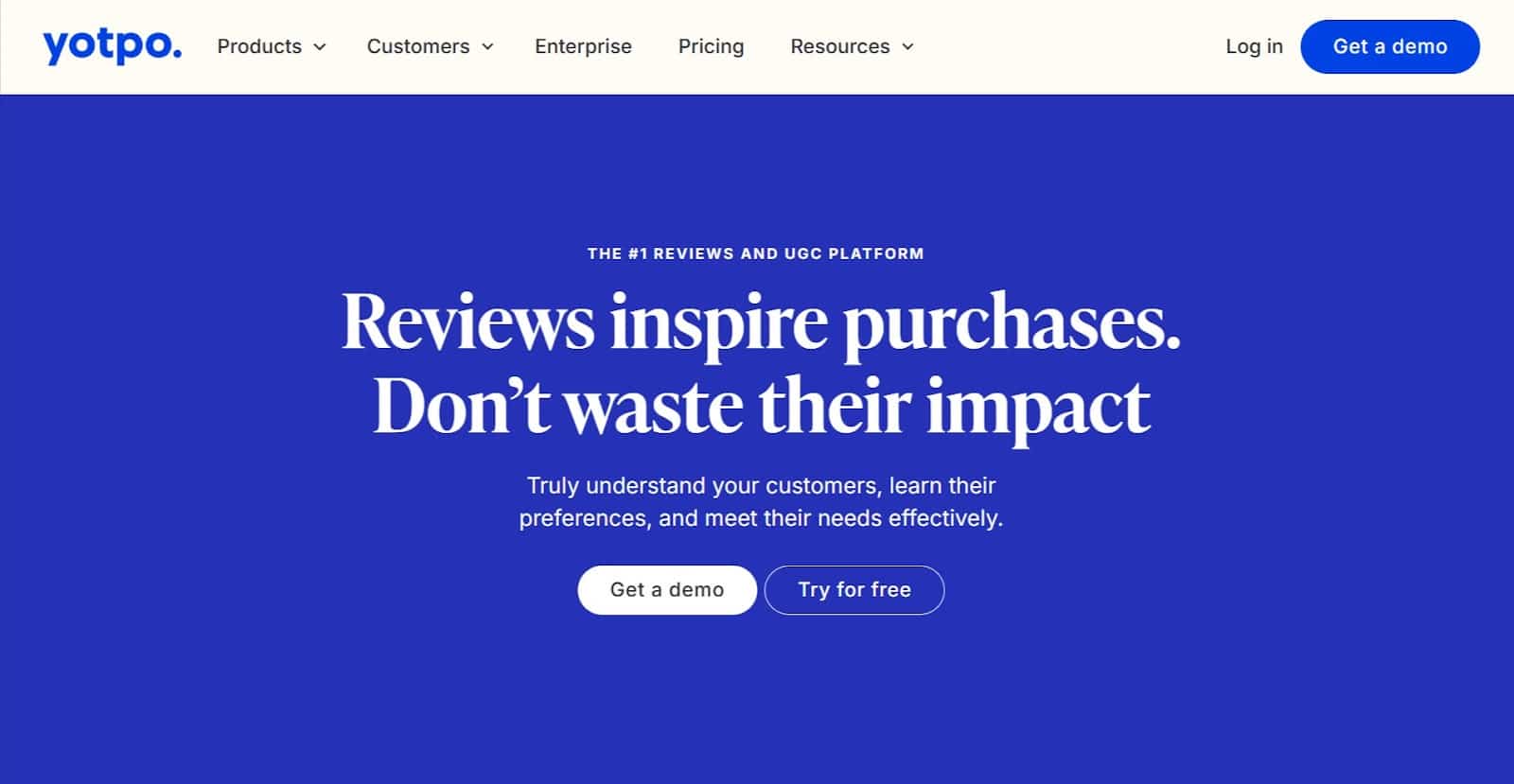
Integrating Yotpo Reviews helps ensure product pages are updated with the long-tail keywords and natural language users employ in chat prompts.
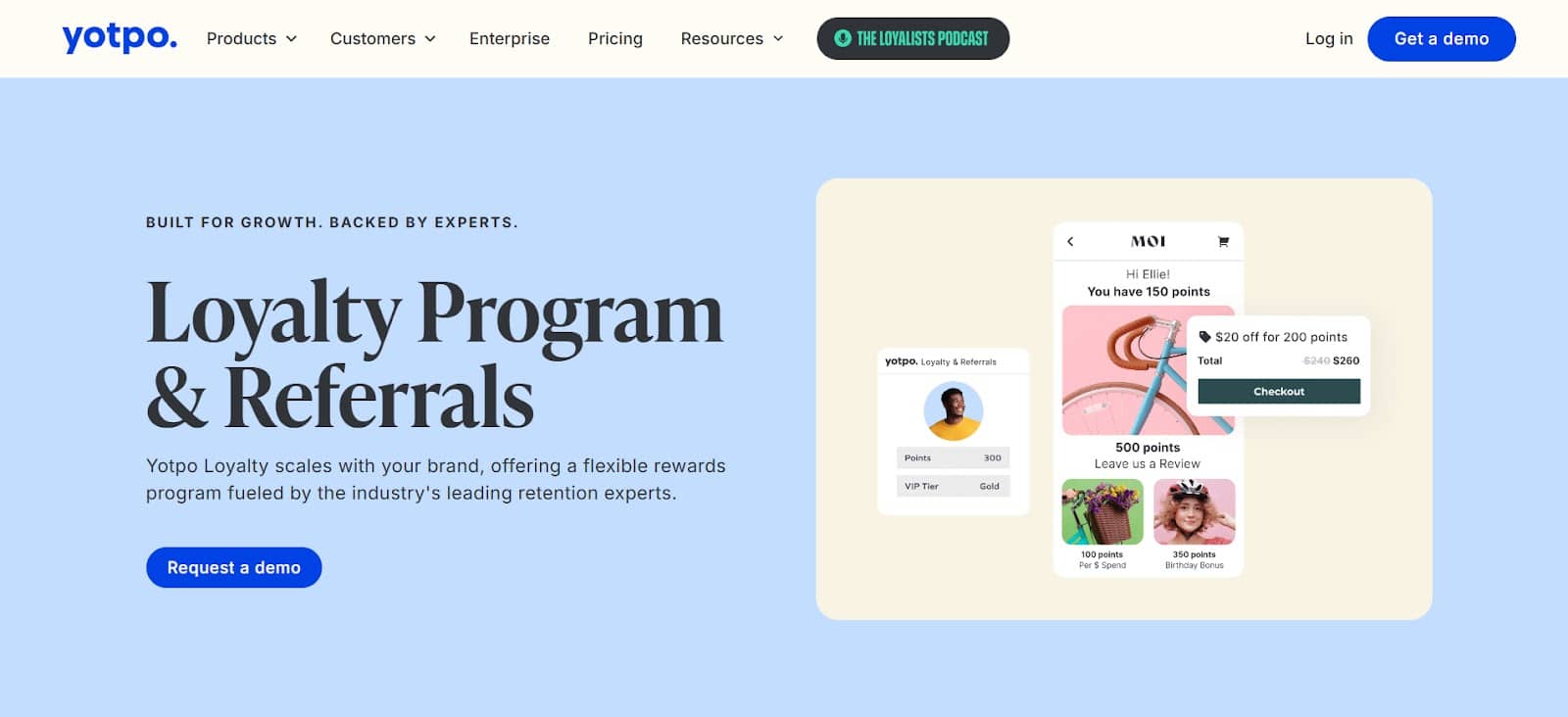
Additionally, Yotpo Loyalty programs can incentivize the creation of this content, building a self-sustaining engine of freshness that signals relevance to AI models.
Digital PR for Citation Provenance
Since monitoring tools can identify the source of an AI’s claim, off-page SEO increasingly resembles Digital PR. Building “Reference Links” to the third-party sources the AI trusts (like reputable review sites or news outlets) can be highly effective. If an AI cites a specific platform for your category, improving your presence there is a strategic move.
Conclusion
The shift to generative search is a structural evolution of the web. The tools listed above offer solutions for various maturity levels, from enterprise intelligence to agile optimization. For the data-driven enterprise, platforms like Profound offer deep infrastructure. For agile teams, tools like ZipTie.dev provide speed. Understanding these new metrics—and having the right infrastructure to track them—is the first step toward managing brand visibility in this new landscape.
FAQs: LLM Monitoring Tools
What is the difference between SEO and GEO?
SEO (Search Engine Optimization) focuses on ranking links in search engines to drive clicks. GEO (Generative Engine Optimization) focuses on optimizing content to be “cited” and synthesized by AI models, prioritizing “Answer Inclusion” and brand visibility.
How often do LLM rankings change?
LLM rankings tend to be more volatile than traditional results. While organic rankings can remain stable for months, data suggests that AI citations can fluctuate significantly within an 8-week period due to the probabilistic nature of the models.
Can I use traditional rank trackers for AI Overviews?
Generally, no. Traditional trackers look for static HTML elements. AI Overviews are dynamic and often personalized. Accurate tracking requires specialized tools that use “client-side mimicry” to render the answer exactly as a user would see it.
What is “Citation Provenance”?
Citation Provenance refers to the specific source URL the AI used to generate a claim. It matters because LLMs often rely on trusted third-party sites. Knowing the source allows you to focus optimization efforts on those specific platforms.
How do reviews impact my visibility in ChatGPT?
Reviews provide fresh, semantically rich content. They often contain the specific phrasing users type into prompts. A consistent stream of verified reviews can signal to the AI that a brand is active, relevant, and trusted by humans.
Is it possible to remove negative mentions from an AI answer?
Direct removal is difficult unless the content violates specific safety policies. The most effective strategy is “Displacement”—generating high-quality positive content and securing citations from authoritative sources to dilute negative mentions and shift the narrative over time.
Which LLM monitoring tool is best for small businesses?
For small businesses, tools like MarketMuse (for content auditing) and ZipTie.dev (for affordable scoring) are strong starting points, offering actionable insights without the high cost of enterprise suites.
Does structured data (Schema) help with AI visibility?
Yes. LLMs rely heavily on structured data to understand entities (like products, prices, and reviews). Implementing robust Schema markup makes it easier for the model to parse and cite your content accurately.
How long does it take to see results from GEO efforts?
Unlike traditional SEO which can take months, changes in AI visibility can happen faster due to the dynamic nature of inference models, but results are also more volatile. Consistency in “freshness” signals is key to maintaining a position.
Do these tools work for B2B brands as well as B2C?
Absolutely. While B2C brands focus on product queries, B2B brands can track “best solution” or strategic queries. The fundamental mechanism of “Answer Inclusion” applies regardless of the business model.





 Join a free demo, personalized to fit your needs