


Generative AI hasn’t just changed how shoppers find your products; it’s fundamentally rewritten the rules of discovery. While traditional search rankings still matter, capturing highly qualified traffic now means optimizing for Answer Engines and Large Language Models (LLMs).
As consumers increasingly bypass standard results in favor of AI Overviews, e-commerce brands are pivoting from chasing raw clicks to securing verifiable brand citations. In this guide, we explore the best AI SEO tools for 2026 to help you navigate Generative Engine Optimization (GEO) and position your store as a trusted entity in an evolving landscape.
Key Takeaways: Best AI SEO Tools for 2026
- The strategic shift to GEO: Generative Engine Optimization is now a foundational practice. Brands must pivot from measuring raw organic traffic to tracking “AI Share of Voice” and explicit brand citations across major LLMs.
- Structuring for Answer Engines (AEO): To become a machine-readable “Data Entity” that autonomous AI agents trust, e-commerce stores must prioritize modular formatting, robust schema markup, and explicit answers.
- Focusing on pipeline ROI: With Forrester data indicating that enterprises are heavily scrutinizing AI investments, the most effective tools are those that move beyond theoretical traffic lifts and demonstrate tangible pipeline value and cost-efficiency.
- Adopting the Hybrid Strategist model: Software cannot replace human insight. The most successful teams use AI workflows to scale routine tasks, while relying on human subject matter experts to validate content, prevent hallucinations, and maintain authentic brand trust.
The Shift from Traditional Search to Answer Engines
The mechanics of how customers find, evaluate, and purchase products are shifting rapidly. To build a resilient visibility strategy, e-commerce brands need to understand the behavioral changes driving the adoption of AI-powered search.
The Psychology of Search Fatigue
Shoppers are experiencing unprecedented search fatigue. Frustrated by scrolling past sponsored placements and sifting through heavily monetized affiliate content, buyers are looking for direct, curated answers. Recent behavioral studies show that 37% of consumers now initiate their searches with AI platforms instead of traditional search engines. Even more telling, 64% of shoppers rely on AI tools specifically to discover and research products before making a purchase.
This transition is driven by a desire for speed and clarity. AI engines parse complex comparisons and synthesize reviews instantly, providing a streamlined path to purchase. For e-commerce brands, this means top-of-funnel discovery is no longer just about ranking on the first page; it is about being included in the initial, AI-curated summary.
The Normalization of the Zero-Click Environment
The rise of AI Overviews and native LLM responses has led to a significant increase in “zero-click” searches—queries where the user gets their answer directly on the results page without clicking through to a website. While this sounds alarming on the surface, savvy marketers view this as a powerful engagement filter rather than a loss of traffic.
AI Overviews effectively filter out low-intent, strictly informational visitors who are unlikely to convert. When these features are present, they can actually increase engagement by over 10% for specific query types. The users who do choose to click through the cited links in an AI summary have already validated their interest based on the AI’s recommendation. They arrive on your product pages highly qualified and primed to convert.
From Traffic Quantity to Citation Quality
Because AI acts as an intermediary, the traditional metric of raw organic traffic volume is becoming less indicative of business health. Instead, the focus is shifting toward citation quality.
When an LLM recommends a product, it curates a very short list of options, often excluding competitors entirely. Earning a direct citation within these summaries carries immense weight, essentially acting as a third-party endorsement from the AI itself. Shoppers who engage with these curated links demonstrate remarkably high purchase intent, meaning that a lower volume of highly targeted, AI-referred traffic can ultimately yield a stronger return on investment than a high volume of unrefined clicks.
Understanding Generative Engine Optimization (GEO)
Adapting to this new discovery landscape requires a deliberate shift in strategy. This is where Generative Engine Optimization (GEO) becomes an essential component of your marketing toolkit.
Defining GEO in 2026
Generative Engine Optimization (GEO) is the practice of structuring and creating content so that it is confidently cited, recommended, or summarized by Large Language Models (such as ChatGPT, Perplexity, and Claude) and AI Overviews.
While traditional SEO focuses heavily on backlink profiles, keyword density, and technical crawlability to secure a position on a list of links, GEO focuses on factual density, semantic relationships, and brand credibility. To succeed in GEO, your content must be easily digestible by autonomous AI agents looking for definitive, verifiable answers.
Tracking AI Share of Voice
One of the most significant changes introduced by GEO is how we measure success. Tracking standard keyword rankings from 1 to 10 no longer provides a complete picture of your visibility. Instead, forward-thinking brands are tracking their AI Share of Voice (SoV).
AI Share of Voice measures the percentage of times your brand is explicitly mentioned or recommended within AI-generated responses for your target topics, compared to your competitors. Monitoring this metric helps you understand your true visibility in the spaces where modern consumers are actually making their purchasing decisions.
Answer Engine Optimization (AEO) and Data Entities
A core pillar of GEO is Answer Engine Optimization (AEO). AEO is the tactical process of formatting your content for machine ingestion. Because LLMs construct answers by pulling from disparate data sources, your brand needs to present itself as a clear, structured “Data Entity.”
To optimize for Answer Engines, consider implementing the following structural updates:
- Modular Formatting: Break content into clear, easily scannable sections using H2 and H3 tags structured as direct questions and answers.
- Robust Schema Markup: Ensure your product pages utilize comprehensive schema markup (including price, availability, and aggregate ratings) to feed explicit data directly to AI crawlers.
- Answer-First Writing: Place the direct, definitive answer to a query at the very beginning of a paragraph or section, followed by the supporting context. This allows LLMs to extract the most critical information without parsing through unnecessary fluff.
The ROI of AI SEO: Navigating Enterprise P&L Realities
As generative AI matures from an experimental novelty into a core business function, executive leadership is demanding strict financial accountability. Purchasing an AI tool simply to generate content faster is no longer a viable strategy; these platforms must demonstrably impact the bottom line.
The ROI Disconnect
There is currently a significant gap between inflated vendor promises and the actual value delivered to enterprise organizations. In fact, due to intense pressure to deliver measurable EBITDA lift, enterprises are deferring 25% of their planned AI software spend into 2027.
The experimentation phase is over. E-commerce teams can no longer justify their software budgets based on vague productivity metrics like “hours saved.” Instead, they must prove how AI-driven SEO directly contributes to incremental revenue growth, customer acquisition cost (CAC) reduction, and improved conversion rates.
CFO Oversight and Cost Optimization
Chief Financial Officers (CFOs) are actively recalibrating how marketing technology is evaluated. When reviewing your AI SEO tech stack, financial leaders are looking at specific cost-reduction and revenue-generation levers:
- Cost Avoidance vs. Legacy Costs: Can the AI tool execute complex data parsing or content clustering that previously required expensive third-party agency fees?
- Minimizing Token Waste: Does the platform offer efficient model selection (e.g., routing simpler tasks to cost-effective models while saving high-tier LLMs for complex semantic analysis) to prevent ballooning API costs?
- Tangible Pipeline Value: Does the increase in “AI Share of Voice” translate into verifiable, high-intent referral traffic that converts?
“When we evaluate AI investments, we look past the hype of automated creation,” advises Mira Talisman, Growth CRO Team Lead. “The true measure of a successful AI SEO platform is its ability to map semantic discovery directly to on-site conversion. If it doesn’t move the needle on pipeline revenue, it’s just an expensive toy.”
The Human Capital Paradox
A common budget trap is over-indexing on technology while under-investing in the people operating it. Recent industry data highlights a startling disparity: while many organizations allocate up to 45% of their budgets to AI software, they dedicate a mere 9% to training and human development.
Software alone cannot drive sustainable e-commerce growth. AI tools are exceptional at identifying data gaps, generating schema, and scaling repetitive workflows, but they lack the nuanced understanding of your brand’s unique value proposition. Achieving real ROI requires investing in teams who can critically evaluate AI outputs, refine strategy, and inject the human empathy necessary to resonate with buyers.
Google’s Algorithmic Evolution: The Topic-by-Topic Expertise Mandate
To combat the massive influx of synthetically generated content, major search engines have fundamentally altered how they evaluate and rank websites. Understanding these algorithmic shifts is crucial for selecting an AI SEO tool that builds long-term equity rather than short-term gains.
The End of Broad Domain Authority
Historically, massive websites could rank for highly competitive keywords simply by leveraging their overall domain authority, even if they only wrote about a specific topic once. This approach is rapidly becoming obsolete.
Following the February 2026 Google Discover Core Update, search algorithms now prioritize expertise strictly on a “topic-by-topic basis.” This means a highly focused, niche e-commerce store with dense, interconnected content clusters around a specific product category will consistently outrank a broader retail giant that only touches on the topic superficially. Multi-topic publishers are losing visibility to specialists who demonstrate deep, semantic authority in a single vertical.
Entity-First Indexing & Local Relevance
Modern search algorithms no longer just read keywords; they map relationships between concepts to understand entities. When optimizing an e-commerce catalog, your brand must clearly establish the relationship between your products, their attributes, your location, and your customer demographics.
AI SEO tools are highly effective at building these semantic maps. By structuring your site as a clear, locally relevant data entity, you signal to algorithms that your store is not just a collection of keywords, but a verifiable business offering tangible solutions.
Elevating E-E-A-T in an AI World
Because LLMs are trained on existing data, they naturally produce content that represents the “average” of what is already available online—a phenomenon known as synthesized parity. To stand out, brands must lean heavily into E-E-A-T (Experience, Expertise, Authoritativeness, and Trustworthiness).
Algorithms are actively tuned to reward original insights, lived experience, and proprietary data that AI cannot easily replicate. While you can use AI tools to outline, structure, and optimize your content, the core value—the human operator experience, the unique customer stories, and the brand’s distinct perspective—must remain your ultimate competitive differentiator.
The “Hybrid Strategist” Framework
As artificial intelligence permeates marketing workflows, the role of the SEO professional is undergoing a massive shift. Navigating this transition requires abandoning the fear of replacement and embracing a highly leveraged operational model.
Addressing Practitioner Sentiment
The transition to generative search has understandably caused friction within the marketing community. Industry surveys reveal that 77% of SEO professionals harbor deep concerns about AI answer cannibalization—fearing that LLMs will intercept their top-of-funnel traffic. However, the same data reveals a promising pivot: 58% of these professionals are actively adapting by evolving into “Hybrid Strategists.”
A Hybrid Strategist understands that their value no longer lies in executing repetitive manual tasks like meta-tag generation or basic keyword grouping. Instead, their value is in systems architecture, prompt engineering, and maintaining the brand’s unique narrative against a sea of automated content.
Raising the Corporate AIQ (Artificial Intelligence Quotient)
To thrive in 2026, e-commerce teams must adopt what is known as the “Intern Mental Model.” This framework treats AI tools not as autonomous experts, but as highly capable interns who require clear instructions and mandatory oversight.
By raising your team’s Corporate AIQ, you empower them to use AI to scale 80% of routine, data-heavy workflows—such as mapping out content clusters or analyzing competitor entity structures. The human subject matter experts then dedicate their deep focus to validating the final 20%. This critical human layer prevents AI hallucinations, ensures factual accuracy, and injects the empathy necessary to convert a reader into a buyer.
“The most successful brands aren’t letting AI run on autopilot,” notes Ben Salomon, Growth Marketing Manager. “By adopting the Hybrid Strategist mindset, e-commerce teams can scale their content operations dramatically without ever compromising on trust or losing their authentic brand voice.“
The 17 Best AI SEO Tools for 2026: Categorized for Enterprise Growth
With the philosophical and strategic groundwork laid out, we can now evaluate the technology capable of executing these strategies. The following 17 platforms represent the best AI SEO tools for 2026, categorized by their primary strategic function within an enterprise e-commerce tech stack.
Advanced Visibility and GEO Tracking Platforms
Traditional rank trackers are blind to the zero-click environment. These platforms specialize in parsing, tracking, and diagnosing your brand’s presence inside Large Language Models and AI Overviews.
- Ahrefs Brand Radar: Recognizing the shift from blue links to conversational answers, Ahrefs has introduced Brand Radar. This tool tracks your brand mentions and explicit citations across over 260 million monthly prompts, covering indexes like ChatGPT, Perplexity, and Google AI Overviews. It is essential for calculating your true AI Share of Voice and understanding exactly which prompt categories drive the most valuable visibility.
- Writesonic (Action Center): Moving beyond simple content generation, Writesonic’s Action Center allows brands to diagnose the technical barriers preventing LLMs from crawling their site. It effectively tracks your presence across emerging models like Copilot and Grok while auditing your schema markup and robots.txt files for AI-crawler compliance.
- SE Ranking: SE Ranking has adopted a highly modular approach for 2026, blending its traditional technical auditing tools with advanced daily AI prompt tracking. It allows teams to visualize conversational shifts in real-time, mapping out exactly how user queries are evolving from static keywords to complex, multi-part prompts.
- BrightEdge (Generative Parser): A true enterprise powerhouse, BrightEdge’s Generative Parser provides granular visibility into AI Overviews. Recent data from the platform reveals that only about 17% of sources cited in AIOs overlap with the traditional top 10 organic results. BrightEdge detects exactly which queries trigger these overviews and analyzes how a brand’s content is synthesized, allowing for highly targeted AEO strategies.
- Conductor (AI Insight Engine): Conductor’s AI Insight Engine excels at mapping semantic gaps. Rather than just reporting on rankings, it analyzes the conversational context of AI queries to identify where your brand is missing from the dialogue, subsequently measuring the actual pipeline revenue impacted by AI-driven discovery.
- Botify (AI Technical Crawler): Because autonomous agents require machine-readable formatting, technical SEO is more critical than ever. Botify’s AI Technical Crawler ensures that massive, enterprise-level e-commerce sites are perfectly structured, technically sound, and fully accessible for frictionless LLM ingestion.
Content Orchestration and AEO Structuring
Once you understand your visibility gaps, you need tools designed to build content that LLMs explicitly trust. These platforms focus on entity mapping, structural formatting, and semantic density.
- Clearscope: To satisfy Google’s topic-by-topic expertise mandate, Clearscope utilizes a “Query Fan-out Awareness” feature. This helps brands anticipate the follow-up questions users (and AI agents) will ask, allowing teams to build incredibly dense, interconnected content clusters that establish undeniable topical authority.
- Surfer SEO (Surfy): Surfer has expanded its capabilities with Surfy, an in-line AI assistant. Beyond standard coverage gap analysis, Surfy uses dedicated token pools to help editors refine, rephrase, and inject necessary entities into specific text fragments in real-time, ensuring content remains tightly aligned with LLM expectations without losing its human touch.
- MarketMuse: MarketMuse remains a leader in deep topic modeling. By offering personalized difficulty scores based on your site’s existing topical authority, it ensures that your new content perfectly fulfills the deep semantic and structural requirements that Answer Engines look for when selecting citations.
- Frase (Frase Agent): Operating as an automated strategist, the Frase Agent actively identifies structural updates specifically designed to secure AI citations. It guides writers to implement answer-first formatting and modular layouts, transforming standard blog posts into highly referenceable data assets.
- InLinks: To become a true “Data Entity,” your code must speak the language of algorithms. InLinks automates the deployment of advanced schema markup and internal entity linking, drawing clear, machine-readable connections between your products, your brand, and your industry context.
- WordLift: Taking entity optimization a step further, WordLift allows brands to build custom knowledge graphs. By injecting proprietary data, product specifications, and unique insights directly into an organized graph, it essentially spoon-feeds your brand’s unique value into the LLM reference ecosystem.
Agentic Workflows and Scale Infrastructure
Scaling content operations requires robust orchestration. These platforms manage the deployment of multiple AI models, enforce strict brand guidelines, and ensure human oversight at scale.
- AirOps: Designed for high-performing teams, AirOps features a visual, drag-and-drop Workflow Builder. Crucially, it mandates “Human-in-the-Loop” review gates, meaning workflows pause automatically for human approval before publication. This allows brands to scale production across 30+ AI models while preventing blind, unchecked automation.
- Jasper (Enterprise): Pivoting heavily toward enterprise needs, Jasper now functions as an agentic orchestrator. Its “agentlakes” architecture allows organizations to manage fragmented AI deployments safely. With strict brand voice adherence and company knowledge bases, Jasper ensures that every piece of content—from blog posts to ad copy—remains perfectly on-brand and secure.
- Writer: Designed for highly regulated industries, Writer takes a compliance-first approach to AI generation. It ensures that all AI-generated content automatically adheres to strict legal parameters, corporate style guides, and brand messaging rules before it ever reaches the publishing stage.
- ContentKing (by Conductor): The speed of AI search means technical errors can result in immediate drops in visibility. ContentKing provides real-time, 24/7 AI monitoring capabilities, alerting your team to broken links, schema failures, or server issues before they negatively impact your inclusion in AI Overviews.
- HubSpot AI (SEO Assistants): For teams looking to consolidate their tech stack, HubSpot has integrated AI-driven SEO assistants directly into its CRM and CMS platform. It seamlessly injects content recommendations and structural optimization tips right into the marketer’s existing publishing workflow, bridging the gap between SEO and broader marketing operations.
Preparing for Answer Engine Optimization (AEO)
As we look toward the immediate future, e-commerce marketers must prepare for the next evolution of search: autonomous AI agents. We are moving from a world where humans search for products to a world where AI agents search, evaluate, and purchase products on behalf of humans.
The Future of B2B and B2C Procurement
The traditional customer journey is being reshaped by agentic AI. Recent projections from Gartner predict that by 2028, one-third of all enterprise applications will integrate agentic AI, and these autonomous agents will directly influence up to 20% of all e-commerce transactions by the end of the decade.
In this environment, your brand is no longer just selling to a human shopper; you are selling to a digital concierge. These agents are programmed to bypass flashy marketing copy and navigate directly to verifiable specifications, pricing structures, and aggregate peer reviews to make instant, logical purchasing decisions.
Machine-Readable Products
To win the recommendation of an autonomous agent, your product catalog must be entirely machine-readable. Brands need to rigorously structure their product data, ensuring that specifications, shipping timelines, return policies, and availability are clearly labeled with advanced schema markup.
“We are moving into an era where your first customer interaction might not be with a human at all, but an AI agent evaluating your product specs against a user’s prompt,” explains Eli Weiss, VP Retention Advocacy. “Structuring your product data for immediate machine extraction ensures these autonomous agents can confidently recommend your brand to the end consumer.“
How Yotpo Helps: Fueling AI Engines with Authentic Customer Reviews
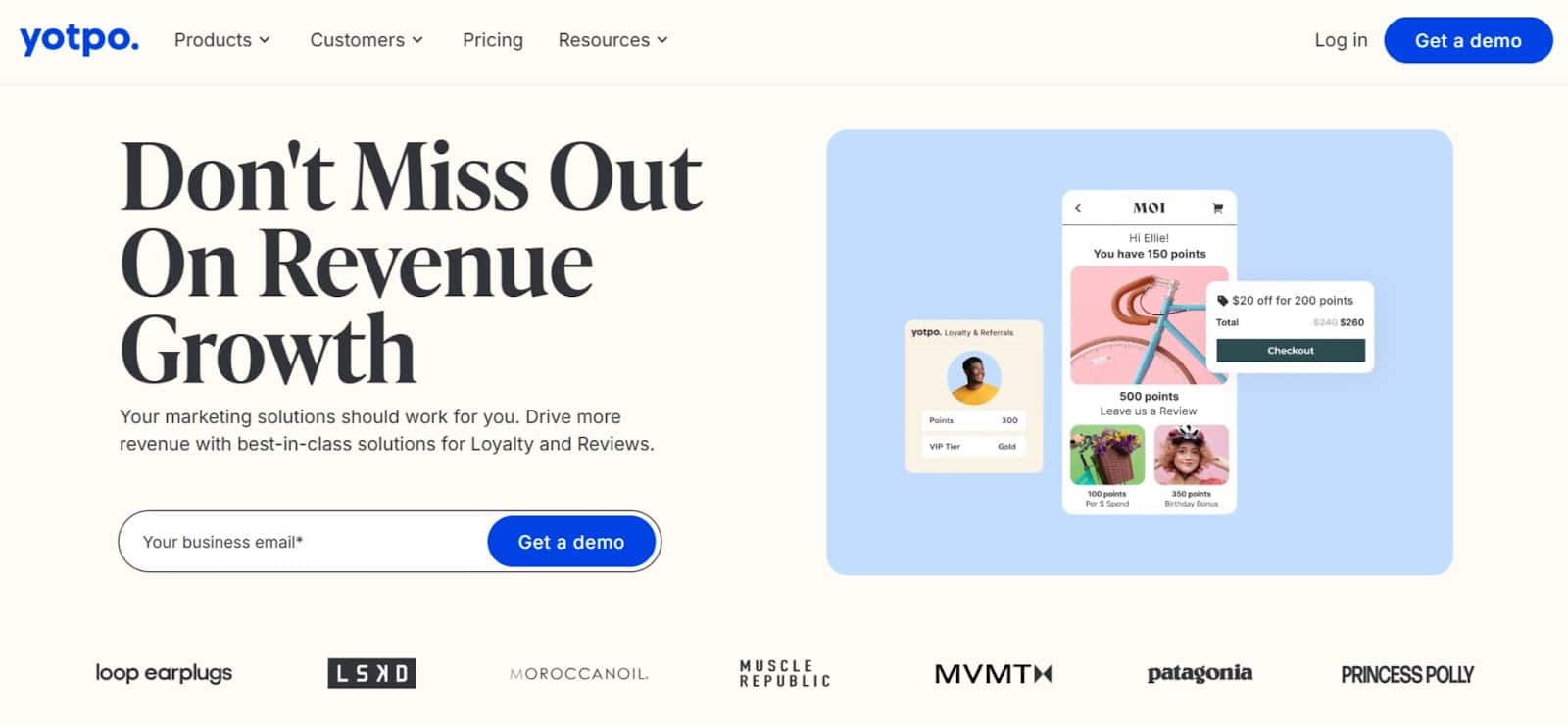
As AI engines continuously scrape the web for the most accurate, up-to-date data, user-generated content acts as a critical signal of trust and relevance. Consider utilizing Yotpo Reviews to automatically collect and syndicate keyword-rich, localized content at scale. By leveraging AI-powered Smart Prompts, shoppers are 4x more likely to mention high-value topics, feeding directly into the semantic relevance LLMs crave. This constant stream of authentic feedback profoundly impacts the bottom line; shoppers who interact with reviews convert at a 161% higher rate, and collecting just 10 reviews can result in a 53% uplift in conversion.
You can accelerate this collection by integrating SMS Review Requests via partners like Klaviyo or Attentive, which yield 66% higher conversion than email alone. Finally, pairing this strategy with Yotpo Loyalty allows you to create tier-based structures that reward and incentivize the continuous generation of this critical, AI-feeding UGC.
Conclusion
The transition to Generative Engine Optimization is not a fleeting trend; it is the new foundation of e-commerce discovery. While navigating zero-click environments and conversational algorithms can feel daunting, the right AI SEO tools provide the clarity and structure needed to thrive. By pairing advanced technological orchestration with human-led strategy, brands can secure highly qualified traffic and become trusted entities in the AI ecosystem. Embrace the Hybrid Strategist mindset, prioritize verifiable answers over empty keywords, and position your brand to win in the era of the Answer Engine.
FAQs: Best AI SEO Tools for 2026
What is Generative Engine Optimization (GEO)?
Generative Engine Optimization is the modern practice of structuring and creating content specifically so that it is confidently cited, recommended, or summarized by Large Language Models and AI Overviews.
How do AI Overviews impact traditional e-commerce traffic?
While raw informational traffic volumes may decrease due to zero-click environments, AI Overviews act as a powerful engagement filter. The traffic that does click through the AI’s curated citations is highly qualified, pre-validated, and primed to convert.
Why is topic-by-topic expertise more important than domain authority in 2026?
Following recent algorithm updates, search engines now prioritize deep semantic knowledge in specific verticals. Broad, multi-topic publishers are losing visibility to highly focused, niche sites that build dense, interconnected content clusters around specific products.
Can AI SEO tools completely replace my human marketing team?
No. While AI tools excel at scaling repetitive workflows and identifying data gaps, human subject matter experts are absolutely necessary to validate content, prevent AI hallucinations, ensure legal compliance, and maintain authentic brand empathy.
What is an “agentlake” in the context of AI tools?
An “agentlake” is an advanced orchestration architecture used by enterprises to safely manage, govern, and monitor multiple fragmented AI agents and LLMs across different company departments from a single source of truth.
How do customer reviews influence AI search visibility?
Reviews provide the constant stream of fresh, highly relevant, and structurally sound data that LLMs require. Because AI engines crave verifiable facts, authentic user-generated content acts as a critical signal of trust and semantic relevance.
What metrics should I track when using an AI SEO platform?
Modern e-commerce teams are shifting focus from traditional 1-to-10 SERP rankings toward tracking “AI Share of Voice,” conversational prompt visibility, explicit citation frequency, and tangible pipeline revenue generation.
How can I optimize my product pages for autonomous AI agents?
Focus heavily on Answer Engine Optimization (AEO) by using modular formatting, robust schema markup, and clear entity relationships. Ensure pricing, availability, and aggregate ratings are entirely machine-readable.
Are traditional rank-tracking tools still relevant?
They are evolving rather than disappearing. Traditional rank tracking must now be paired closely with GEO tracking and AI prompt visibility tools to provide a complete, actionable picture of your overall search ecosystem.
How can e-commerce brands safely scale content with AI?
Brands should utilize Agentic orchestrators that mandate “Human-in-the-loop” review gates. This ensures that while production scales, all content still passes human quality checks for brand voice adherence and legal compliance before publication.





 Join a free demo, personalized to fit your needs