


Finding the right product used to mean scrolling through pages of search results and comparing tabs. Now, a shopper can simply ask an AI assistant for the best option and get a single, definitive answer instantly. If your e-commerce brand isn’t structured to feed these generative engines exactly what they need, you risk being left out of the conversation entirely.
Answer Engine Optimization (AEO) ensures your products become the top recommendation when large language models synthesize buying advice. To help you build this new foundation, let’s look at the 10 best AEO tools designed to capture and measure generative visibility.
Key Takeaways: Best AEO Tools for Ecommerce
- Zero-click discovery: Generative AI interfaces are shifting the buyer journey toward immediate, synthesized answers instead of traditional search results.
- AEO vs. SEO: Answer Engine Optimization prioritizes structured data perfection, semantic entities, and authoritative citations over traditional keyword density.
- Essential infrastructure: The best AEO tools for ecommerce offer advanced capabilities like multi-LLM simulation and prompt-level visibility tracking.
- Content structure matters: Generative Engine Optimization (GEO) requires formatting content for frictionless machine extraction using clear, hierarchical HTML.
- UGC drives visibility: Conversational, user-generated content like customer reviews provides the fresh data LLMs need to recommend your products confidently.
Understanding the Shift to Answer Engines in 2026
The Rise of the Zero-Click Funnel
Consumer search behavior is fundamentally changing. Shoppers are increasingly bypassing traditional search engine results pages in favor of generative AI interfaces that deliver immediate, synthesized answers. Traditional search engine volume has been projected to decline by 25% by 2026 as users turn to AI chatbots and virtual agents.
The sheer scale of this adoption highlights the urgency for e-commerce brands. ChatGPT now processes roughly 2.5 billion prompts every day and boasts over 800 million weekly active users globally. Meanwhile, AI-native search engines like Perplexity are handling more than 780 million queries per month, catering to users who want multi-sourced research summarized instantly.
For e-commerce, this creates a “zero-click” funnel. Instead of opening multiple tabs to read product descriptions and compare prices, a shopper simply asks an LLM (Large Language Model) to identify the best options. The AI evaluates the web, compiles the data, and presents a definitive recommendation directly in the chat interface. If your brand’s data is not structured in a way that these Answer Engines can easily parse, you risk losing visibility during the critical discovery phase.
Defending Branded Search Terms in Generative Interfaces
Initially, generative AI features were largely restricted to informational queries—questions like “how to clean suede shoes.” However, AI Overviews are now actively intercepting the commercial and transactional stages of the buying journey. AI Overviews now appear on over 18% of commercial queries and 13.94% of transactional queries.
More surprisingly, these summaries are increasingly intercepting navigational and branded searches. While they initially appeared on less than 1% of navigational queries in early 2025, that figure has rapidly jumped to over 10%. This means that even when a shopper explicitly searches for your brand or a specific product, an AI engine might summarize your product features, aggregate external sentiment, and compare your item against alternatives before the user ever reaches your website.
“When generative AI intercepts a branded search, the goal shifts from just securing the top link to ensuring the AI tells the most accurate, compelling story about your product,” notes Ben Salomon, Growth Marketing Manager. “Brands need to adopt a defensive posture, making sure their structured data and customer sentiment are perfectly aligned for machine comprehension.”
Relying solely on traditional search rankings is no longer a complete strategy. E-commerce teams should consider how their brand is portrayed within these generative responses, ensuring that the AI has access to accurate, high-quality information to synthesize.
What is Answer Engine Optimization (AEO)?
Defining AEO for the Ecommerce Landscape
Answer Engine Optimization (AEO) is the strategic process of measuring, analyzing, and improving how favorably a brand appears within AI-generated responses. While traditional optimization focuses on driving human traffic to a specific webpage, AEO focuses on becoming the definitive source of truth that LLMs and AI Overviews cite when answering user prompts.
In the e-commerce landscape, AEO involves optimizing your digital footprint so that models like ChatGPT, Claude, and Google’s AI engines can confidently recommend your products. This means ensuring your product specifications, pricing, and authentic customer feedback are easily extractable. It is not just about ranking; it is about providing clear, deterministic facts that reduce the computational effort required for an AI to understand what you sell and why it holds value.
AEO vs. Traditional SEO: Core Differences
To adapt to this environment, marketers should understand the fundamental distinctions between traditional Search Engine Optimization (SEO) and Answer Engine Optimization (AEO). While they share a foundational goal of visibility, their methodologies and success metrics differ significantly.
- Keyword Density vs. Semantic Entities: Traditional SEO often relies on keyword coverage and search volume to capture user queries. AEO, utilizing Generative Engine Optimization (GEO) principles, focuses on semantic entities—the relationships between concepts, brands, and product attributes. LLMs do not look for exact keyword matches; they look for contextual relevance and interconnected data points.
- Long-Form Narratives vs. Structured Data Perfection: Historically, long-form content was designed to keep users on a page and signal authority. Answer engines, however, prioritize structured data. They rely heavily on precise schema markup (such as Product, FAQ, and Review schemas) to bypass natural language ambiguity and extract hard facts instantly.
- Backlinks vs. Authoritative Citations: In traditional SEO, a backlink is a vote of confidence. In AEO, visibility is heavily influenced by authoritative brand citations and sentiment across the web. While you cannot directly force an LLM to crawl an on-site widget, the conversational data generated by authentic customer reviews, community discussions, and digital PR feeds the broad data ecosystem that LLMs train on and retrieve from.
By shifting focus from merely acquiring clicks to providing structured, authoritative answers, e-commerce brands can build a resilient foundation for the generative AI future.
Essential Capabilities of Enterprise AEO Infrastructure
Multi-LLM Simulation and RAG Diagnostics
Modern generative search engines rely on a framework known as Retrieval-Augmented Generation (RAG). Instead of simply generating text from pre-trained memory, models pull real-time, external documents into their context window before formulating a response. For an e-commerce brand, this means your visibility depends heavily on whether the AI correctly retrieves your product pages over competitors’ pages.
Enterprise AEO tools provide multi-LLM simulation capabilities, allowing marketers to test identical queries across multiple foundational models like GPT-4o, Claude 3.5, and Gemini. This diagnostic testing reveals how different AI systems retrieve, weight, and summarize your data. By observing the RAG process in a simulated environment, teams can identify missing context, clarify ambiguous product descriptions, and optimize their structured data before the content is pushed to live generative interfaces.
API-First Data Extraction vs. Web Scraping
As generative engines evolve, traditional methods of gathering search visibility data are becoming less reliable. Standard web scraping often breaks when search engine layouts change, and many platforms actively block automated scraping tools to protect user data. To maintain compliance and ensure data integrity, modern AEO infrastructure relies on API-first extraction.
Rather than parsing brittle HTML, API connections interface directly with search engines and LLM platforms to pull structured JSON data. This approach guarantees higher stability and scalability. In fact, nearly 34.8% of developers have completely transitioned to web scraping APIs over custom manual scripts to ensure consistent, compliant data delivery. For enterprise e-commerce teams, API-first platforms are essential for feeding accurate brand visibility metrics directly into internal business intelligence dashboards.
Prompt-Level Share of Voice Tracking
In traditional SEO, success is measured by keyword ranking positions. In the AEO landscape, the primary metric is Answer Share of Voice (ASoV). This metric calculates the percentage of inclusion your brand secures within AI answers for a specific set of conversational prompts.
Because LLMs typically only recommend a shortlist of three to five brands per query, tracking prompt-level visibility is critical. AEO tools analyze the exact conversational inputs, modifier words (e.g., “best budget,” “most durable”), and logical constraints users type into chat interfaces. By mapping out which specific questions trigger your brand as a recommendation, you can pinpoint exactly where you are losing ground to aggregators or direct competitors.
“Understanding your share of voice at the prompt level is the foundation of generative optimization. If you don’t know which specific questions trigger your brand, you cannot build a meaningful strategy to answer them,” notes Davis Belcher, Content Marketing Manager.
10 Best AEO Tools for Ecommerce
Selecting the right technology stack is a critical step in adapting to generative search. The best AEO tools for ecommerce provide the actionable insights needed to measure and refine how LLMs interpret your brand.
1. Conductor (Best for Unified Enterprise Intelligence)
Conductor stands out for its ability to connect AI search visibility directly to enterprise revenue metrics. Recently, Conductor launched a Model Context Protocol (MCP) server integration that allows marketing teams to analyze official brand citations directly within ChatGPT. By combining AEO insights with traditional pipeline data, Conductor helps larger e-commerce organizations confidently attribute business ROI to their generative search optimizations.
2. Profound (Best for Entity-Graph Audits)
Profound specializes in helping brands understand exactly how they appear within conversational AI flows. Over 60% of consumers now begin their product research with AI assistants. Profound’s dedicated ChatGPT Shopping module tracks SKU-level visibility and sentiment, making it highly valuable for e-commerce. Furthermore, its unique “Prompt Volumes” feature acts as the AI equivalent of keyword search volume, revealing exactly how often specific questions are asked across different regions.
3. Contently (Best for Automated Workflow Execution)
While primarily known as a content marketing platform, Contently has integrated sophisticated AI Studio capabilities that evaluate content against answer-engine ranking signals. It provides mathematical scoring to ensure product descriptions and educational content meet the strict structural requirements of LLMs. It also assists in generating automated schema blueprints, ensuring that the underlying code of your e-commerce site is easily parsed by generative engines.
4. AthenaHQ (Best for Scale-Up Agile Integration)
AthenaHQ is built for mid-market and scaling e-commerce teams that need to move quickly. Its standout feature is the Action Center, which seamlessly integrates with project management tools like Jira and Linear. When the platform detects a drop in generative visibility or a negative shift in AI sentiment regarding a specific product, it automatically creates and assigns optimization tickets to the appropriate engineering or content teams, bridging the gap between insight and execution.
5. Semrush (Best Hybrid SEO/AEO Platform)
For teams transitioning slowly from traditional search to generative search, Semrush offers the most familiar interface. The platform recently expanded its capabilities with the AI Visibility Toolkit, introducing metrics like mentions, cited pages, and keywords triggering Google’s AI Overviews. Industry data shows that AI Overviews are steadily encroaching on transactional queries, appearing on over 18% of commercial searches. This makes Semrush an excellent tool for monitoring how legacy keyword strategies overlap with modern AEO performance.
6. Ahrefs (Best for Foundational Brand Monitoring)
Ahrefs remains a powerhouse for monitoring the broader digital ecosystem that feeds LLMs. Through its Brand Radar capabilities and extensive backlink index, Ahrefs helps e-commerce brands track the foundational semantic entities linked to their domain authority. By understanding where your brand is cited across high-authority publications and forums, you can better predict how favorably foundational models will weight your product data during the retrieval process.
7. SerpApi (Best Raw Data Feed for Developers)
Not all e-commerce teams want an out-of-the-box software solution. For organizations with strong internal data science teams, SerpApi provides the raw JSON data feeds necessary to build custom tracking dashboards. SerpApi specializes in accurately extracting real-time results from Google’s AI Overviews, allowing developers to pull precise citation data, source links, and generated text directly into their proprietary business intelligence systems.
8. RankScale (Best LLM Simulation Lab)
RankScale acts as a dedicated testing environment for your generative optimization efforts. Its powerful /simulate module allows marketers to perform comprehensive pre-launch Quality Assurance. Before publishing a new product page or a major site architecture update, teams can use RankScale to calculate “delta scores” across GPT-4o, Claude 3, and Gemini, ensuring that the new content structure results in a positive lift in AI recommendation frequency.
9. Goodie AI (Best AEO Starter Kit for Mid-Market)
For leaner e-commerce teams that lack dedicated technical SEO resources, Goodie AI offers an accessible entry point. The platform utilizes a proprietary “AEO Periodic Table” to visually break down the elements required for generative visibility. Goodie AI focuses heavily on automated schema patches, analyzing your product pages and providing ready-to-implement JSON-LD code snippets to instantly improve machine readability.
10. Otterly AI & Peec AI (Best for Rapid GEO Audits)
Otterly AI and Peec AI are agile, budget-friendly platforms designed for rapid Generative Engine Optimization (GEO) auditing. They excel at providing immediate visibility benchmarking without requiring extensive enterprise onboarding. With lightweight integrations to tools like Trello, these platforms allow marketing managers to quickly identify missing citations, evaluate AI brand sentiment, and execute fast content iterations to capture emerging conversational trends.
Structuring Ecommerce Content for Generative Engine Optimization (GEO)
Embracing the Inverted Pyramid Style
In traditional digital marketing, content was often padded with long introductions to keep users on the page and hit word-count targets. However, LLMs are designed to prioritize content that requires minimal computational effort to parse. Recent foundational research from leading universities demonstrates that applying Generative Engine Optimization (GEO) techniques—such as authoritative formatting and direct answering—can increase a website’s visibility in AI responses by up to 40%.
To capitalize on this, e-commerce marketers should embrace the “inverted pyramid” style of writing. This journalistic approach dictates that the most critical, definitive answer must appear at the absolute top of the page or section. When describing a product, immediately list its primary value proposition, target use case, and key specifications in the first paragraph. By structuring your content to deliver the answer first and the supporting narrative second, you significantly reduce the friction for AI engines attempting to extract and cite your data.
The Role of Hierarchical Semantic HTML
While human shoppers are influenced by visual layouts and CSS styling, answer engines only read the underlying code of your website. Therefore, the formatting of your content is just as important as the words themselves. Generative engines heavily rely on semantic HTML to understand the hierarchy and relationship of information on a product page.
Brands should maintain strict adherence to logical heading tags (H1, H2, H3) without skipping levels. Information that compares products or lists features should not be buried in dense paragraphs; instead, it should be formatted using HTML lists (<ul>, <ol>) and data tables (<table>). A well-structured HTML table comparing your product’s specifications against industry standards acts as a direct, frictionless feed for an LLM that is constructing a comparison chart for a user. By utilizing clear, semantic code, you help ensure the AI extracts your product details accurately rather than guessing based on unstructured text.
The Critical Importance of Schema Markup and Semantic Entities
Feeding Structured Data to LLMs
If semantic HTML provides the structure, schema markup provides the undisputed facts. Schema markup (specifically JSON-LD) is a standardized vocabulary that translates human-readable content into explicit, deterministic data points for machines. For e-commerce brands, relying solely on natural language to convey product details is a significant risk in the AEO era, as it leaves room for AI hallucination or misinterpretation.
To secure visibility in AI Overviews, implementing robust e-commerce schema is non-negotiable. This includes Product schema to declare exact pricing and availability, AggregateRating and Review schemas to highlight social proof, and FAQPage schema to directly answer common buyer objections. Pages with comprehensive schema markup are significantly more likely to be utilized as primary sources by generative retrieval systems.
“When you rely on natural language alone, you force the AI to guess your product’s specifications,” explains Mira Talisman, Growth CRO Team Lead. “Schema markup removes that guesswork entirely. It serves the exact data points the engine needs to confidently and accurately construct a recommendation.“
Multimodal Optimization and Visual Search Catalysts
Answer engines are no longer restricted to text-based analysis; they are increasingly multimodal, meaning they process and generate responses using images, video, and audio. Google’s Shopping Graph, which underpins much of its AI-driven e-commerce recommendations, now continuously monitors over 50 billion product listings, cross-referencing text descriptions with high-fidelity visual assets.
To optimize for this multimodal environment, e-commerce brands must ensure their visual assets are pristine and properly tagged. This involves providing high-resolution product images from multiple angles, implementing 3D models, and offering virtual try-on assets where applicable. Because platforms like Perplexity and Google’s AI Overviews often populate their answers with visual product cards, ensuring your images have descriptive, keyword-rich alt text and are embedded alongside relevant structured data acts as a powerful catalyst for generative citations.
The “Reddit Factor” and User-Generated Content
Why Conversational Data Feeds AI Engines
Sterile, heavily branded corporate copy is rarely the deciding factor for modern consumers, and Large Language Models are programmed to reflect this reality. When retrieving information to construct an answer, AI engines actively seek out conversational, human-centric data. They look for authentic sentiment, real-world durability tests, and nuanced pros and cons that only exist within User-Generated Content (UGC).
This demand for experiential data is why search giants are investing heavily in conversational platforms, evidenced by deals such as the $60 million annual licensing agreement between Reddit and Google. LLMs rely on these detailed, first-hand accounts to understand the context around a product.
If an AI is asked, “Are these boots comfortable for a 12-hour shift?” it will bypass the manufacturer’s product description and immediately scan customer reviews to synthesize a truthful answer. Brands that lack a deep well of conversational UGC leave the AI with insufficient data, reducing the likelihood of being confidently recommended.
How Yotpo Helps Fuel Your AEO Strategy
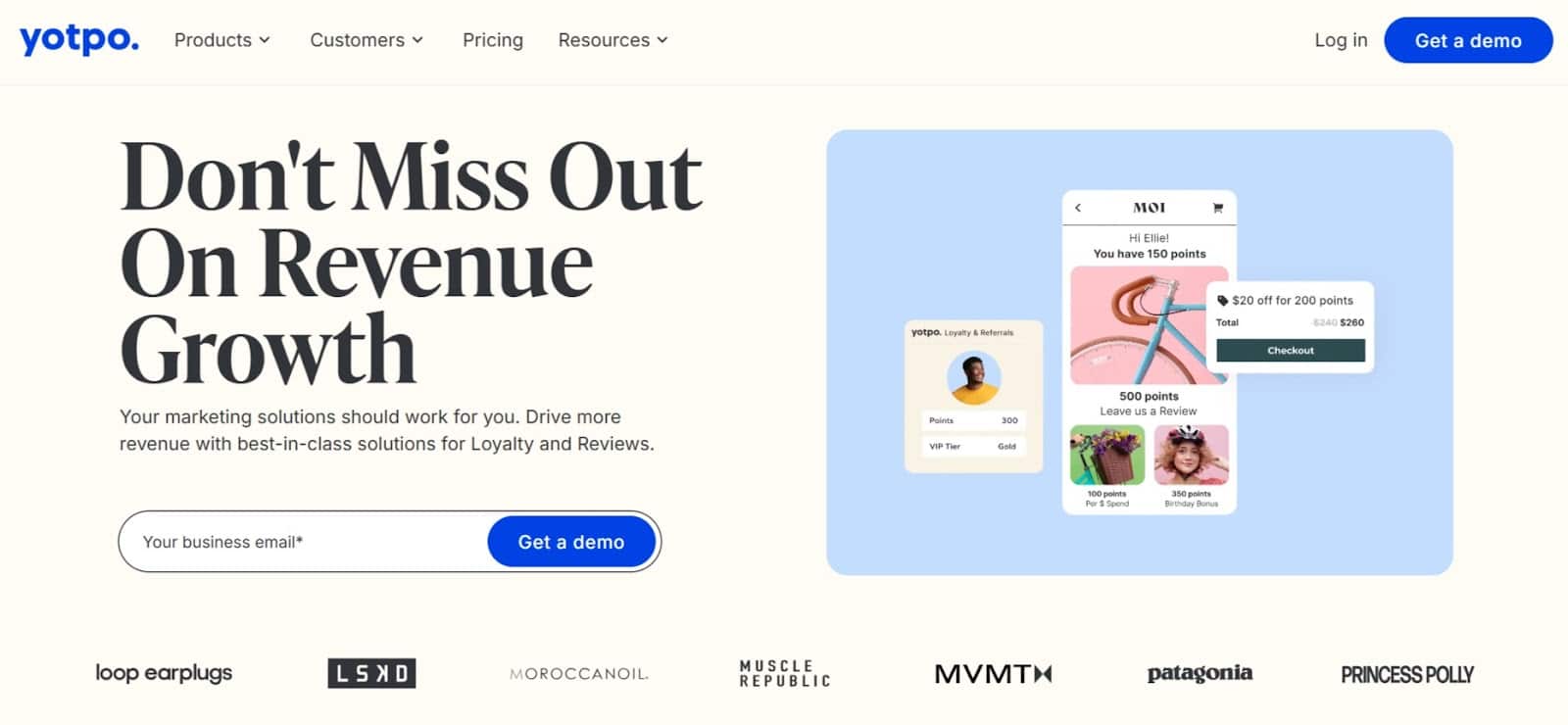
To ensure LLMs have the fresh, conversational data they need to cite your brand favorably, building a continuous pipeline of authentic social proof is essential. Yotpo Reviews and Yotpo Loyalty provide the underlying infrastructure to capture this vital content. By utilizing AI-powered smart prompts, you are 4x more likely to capture high-value, detailed topics from shoppers rather than generic one-word feedback.
This generates the exact semantic data that answer engines crawl to assess product sentiment. Furthermore, combining this with SMS Review Requests—powered effortlessly via integrations with platforms like Klaviyo or Attentive—results in a 66% higher conversion rate compared to traditional email requests alone.
By actively fostering brand advocates through Yotpo Loyalty, you encourage returning customers to leave comprehensive feedback and high-fidelity customer photos, which generate a 137% purchase likelihood lift. Ultimately, shoppers who interact with this rich layer of reviews and UGC convert 161% higher than those who do not. Gathering just 10 reviews on a product can result in a 53% uplift in conversion, providing both human buyers and generative AI models with the undeniable proof they need to trust your brand.
“Authentic customer voices are the most valuable data asset a brand possesses in the generative AI era,” notes Eli Weiss, VP Retention Advocacy. “When you systematically collect detailed, conversational reviews, you are actively writing the script that LLMs will use to recommend your products to future shoppers.”
Preparing for Assistive Agent Optimization (AAO)
The Mechanics of Agentic Checkout
While Answer Engine Optimization focuses on visibility during the discovery phase, the industry is already shifting toward the next evolution: Assistive Agent Optimization (AAO). The future of generative interfaces is not just conversational; it is agentic. Rather than merely synthesizing a list of recommendations for the user to click, autonomous AI agents are being designed to execute tasks on the user’s behalf.
In an agentic checkout scenario, a consumer might prompt their AI assistant with, “Buy me the highest-rated pair of trail running shoes in a size 10 under $130, and use my saved payment method.” The AI agent will independently crawl e-commerce sites, verify stock levels, select the correct variant, add the item to the cart, and complete the transaction without the human ever loading the brand’s homepage. Optimizing for this machine-to-machine commerce requires a fundamental shift from visual user experience to flawless backend technical architecture.
Technical Prerequisites for Machine-to-Machine Commerce
To prevent an AI agent from abandoning a transaction, an e-commerce website must meet strict technical prerequisites. Generative agents operate on microsecond decision-making processes; they do not have the patience of a human shopper. If a site suffers from slow server response times or utilizes complex, javascript-heavy checkout flows that block automated crawlers, the agent will simply time out and purchase from a competitor whose infrastructure is more accessible.
To prepare for Assistive Agent Optimization, brands should consider prioritizing API-readability and headless commerce architectures. Exposing real-time, structured inventory data is essential to prevent an AI from attempting to purchase out-of-stock variants, which leads to failed transactions and negative algorithmic reinforcement. By ensuring your site speed, structured data, and checkout pathways are highly optimized for machine interactions, you safeguard your revenue in a future where AI acts as the primary buyer.
“As we move toward agentic commerce, optimizing for human readability alone is insufficient,” notes Ben Salomon, Growth Marketing Manager. “Brands need to ensure their technical infrastructure is perfectly aligned for machine-to-machine interactions, where the AI serves as the primary transaction vehicle.”
Conclusion
As generative AI shifts the foundation of product discovery, adapting your e-commerce strategy is a logical and necessary progression. Answer Engine Optimization (AEO) provides the framework to ensure your brand remains visible, authoritative, and easily understood by the language models guiding today’s consumers.
By prioritizing structured data, semantic clarity, and a continuous pipeline of authentic user-generated content, you can build a highly resilient digital presence. Consider utilizing these tools and techniques to provide the clearest, most helpful answers to both the shoppers and the AI engines seeking your products.
FAQs: Best AEO Tools for Ecommerce
What are the best AEO tools for ecommerce startups?
For startups and smaller teams, platforms that offer rapid insights without massive enterprise retainers are ideal. Tools like Goodie AI provide accessible, automated schema patches, while platforms such as Otterly AI and Peec AI deliver rapid visibility benchmarking. These solutions help leaner operations establish a strong generative presence and execute fundamental Generative Engine Optimization (GEO) techniques without needing dedicated, in-house data science teams.
How long does it take to see ROI from AEO tools?
Unlike traditional paid advertising, AEO is a foundational strategy that requires a compounding approach. E-commerce brands typically begin to see measurable shifts in their Answer Share of Voice (ASoV) within a few months of implementing structural changes, such as schema markup perfection and systematic review collection. Because Large Language Models update their training data and retrieval indexes periodically, consistency in feeding them high-quality, structured information is key to long-term return on investment.
Do traditional SEO tools still work for Answer Engines?
Yes, but their application is evolving. Foundational platforms like Semrush and Ahrefs remain highly valuable because they are actively integrating AI visibility metrics—such as tracking which keywords trigger AI Overviews. However, traditional tools should ideally be used alongside modern AEO platforms to monitor semantic entity relationships and prompt-level visibility, moving beyond basic keyword density to measure true conversational share of voice.
What is the difference between AEO and GEO?
Answer Engine Optimization (AEO) is the overarching strategy of optimizing a brand’s digital presence to be recommended by AI interfaces. Generative Engine Optimization (GEO) refers to the specific, actionable techniques used to achieve that goal. For example, structuring content using the inverted pyramid style, applying precise semantic HTML, and utilizing authoritative citations are all GEO tactics that feed into a broader AEO framework.
How do LLMs process ecommerce product pages?
Large Language Models prioritize efficiency and structure. When parsing a product page, they typically bypass visual styling and focus entirely on the underlying semantic HTML and structured data. They look for explicit factual points delivered through JSON-LD schema, logical heading tags, and structured data tables. By reducing the computational effort required to extract product specifications, brands make it much easier for LLMs to process and recommend their items.
Can small brands compete with enterprise AEO tools?
Absolutely. In the generative search landscape, niche authority and authentic user sentiment often outweigh sheer domain size. Small brands can compete effectively by utilizing agile AEO tools to monitor their specific product categories and by leaning heavily into user-generated content. A continuous stream of high-quality, conversational reviews can provide the nuanced, experiential data that AI engines favor over sterile corporate copy.
Why is schema markup critical for AEO?
Schema markup acts as a direct translator between your website and an AI engine. Relying solely on natural language product descriptions introduces ambiguity, forcing the AI to interpret your content. Schema, specifically structured as JSON-LD, delivers deterministic, hard facts—such as exact pricing, stock levels, and aggregate review scores—eliminating guesswork and significantly increasing the likelihood of accurate, confident AI citations.
How does user-generated content influence AI recommendations?
Answer engines are programmed to seek out diverse, authentic perspectives when synthesizing a recommendation. User-generated content, such as customer reviews and community Q&As, provides the conversational sentiment and real-world context that AI models crave. Shoppers detailing their personal experiences with a product give the LLM the nuanced data required to answer highly specific, experiential prompts from future buyers.
Are AI Overviews cannibalizing website traffic?
While generative interfaces are increasing the prevalence of “zero-click” searches for purely informational queries, they are also changing the nature of the traffic that does click through. AI Overviews often synthesize research so effectively that when a user finally navigates to an e-commerce site, they arrive with significantly higher purchase intent. The goal is to ensure your brand is the definitive recommendation within that overview, capturing the highly qualified buyer.
What is Agentic Commerce and how does it relate to AEO?
Agentic commerce is the anticipated evolution of digital shopping, where autonomous AI assistants not only answer queries but actively execute transactions on a user’s behalf. While AEO focuses on making your products visible during the AI discovery phase, agentic commerce requires optimizing your backend infrastructure—such as APIs and headless checkout flows—so that these AI agents can seamlessly interact with your inventory and complete purchases without human intervention.











 Join a free demo, personalized to fit your needs