


When a shopper wants to find the perfect product today, they rarely want to sift through pages of standard search results. Increasingly, they are opening an AI assistant, describing their exact needs, and letting the model curate the best options. For e-commerce brands, this behavioral shift presents an incredible opportunity to reach high-intent buyers exactly when they are ready to purchase.
To capture this growing traffic, you might consider utilizing Answer Engine Optimization (AEO) platforms. These specialized tools help transform your catalog into the structured, machine-readable data that AI engines naturally trust and recommend.
Key Takeaways: Best AEO Platforms for Ecommerce Brands
- Capture higher intent: AI-referred traffic delivers significant retail value, often resulting in a conversion rate lift of up to 31% compared to standard search behavior.
- Evolve your strategy: Modern search visibility often benefits from shifting focus away from traditional keyword density and exploring deep entity-graph audits and conversational question mapping.
- Upgrade your tech stack: Supplementing legacy tools with specialized enterprise software can help brands accurately track and influence cross-engine LLM citations.
The Evolution of Search: Why AEO Platforms Are Essential
The digital commerce landscape is steadily transitioning toward what industry experts call “agentic commerce.” In this environment, shoppers no longer rely solely on manually navigating through layered category pages or scrolling through endless product grids. Instead, autonomous AI agents can act as helpful proxies, assisting with the initial discovery, specification comparison, and evaluation phases.
To participate smoothly in this new ecosystem, brands are exploring ways to optimize for an algorithmic trinity: Large Language Models (LLMs) that synthesize natural language, Knowledge Graphs that map the semantic relationships between entities, and traditional Search Indexes that ground the AI with real-time data like pricing and inventory.
“Brands that want to remain visible in generative synthesis must prioritize machine-readable credibility,” notes Davis Belcher, Content Marketing Manager. “It’s no longer just about human persuasion; your product data must be structured in a way that an AI can confidently extract and recommend.“
Understanding the Visibility Paradox
An interesting anomaly is currently unfolding in search analytics, creating what is known as the visibility paradox. Recent industry data indicates that while overall search impressions have increased by 49%, traditional click-through rates have simultaneously dropped by 30%.
This discrepancy often exists because AI Overviews and native LLM answers are effectively satisfying user intent directly on the results page. Today, even if your product page holds a top traditional ranking, it does not automatically guarantee an AI engine will cite your brand in its generated response. Generative Engine Optimization (GEO) focuses on earning those specific, contextual citations.
The True ROI of Generative Engine Optimization (GEO)
While AI platforms currently drive less overall traffic volume than traditional search, the commercial quality of that traffic is remarkably high. A recent comprehensive 12-month analysis of e-commerce brands found that ChatGPT referral traffic converts at 1.81% compared to 1.39% for standard non-branded organic search—a massive 31% conversion lift.
Furthermore, despite occasionally steering users toward highly specific, lower-priced items, ChatGPT traffic yields a 10.3% higher net Revenue Per Session.
This distinct advantage is driven by a concept known as “intent compression.” By the time a shopper actually clicks a link provided by an LLM, the AI has typically already helped them evaluate trade-offs, compare technical specifications, and summarize reviews. They bypass the typical top-of-funnel browsing phase and arrive on your product page highly qualified and ready to explore a purchase.
Resolving the AI Analytics Attribution Gap
One of the common hurdles e-commerce marketers face today is accurately measuring the financial impact of their AEO efforts. Standard analytics platforms like GA4 can sometimes undercount AI-driven revenue due to cross-device friction and the loss of referring data.
When a shopper asks a mobile app like ChatGPT or Perplexity for a product recommendation, they frequently receive a highly curated list of brands. However, rather than clicking a direct link from within the AI interface, the user will often open their native mobile browser and perform a direct search for your brand name to complete the journey. In your analytics dashboard, this transaction is often attributed to “branded organic search” or “direct traffic,” potentially obscuring the AI’s role in the initial product discovery.
To help bridge this attribution gap, brands might consider implementing post-purchase surveys directly on the checkout confirmation page. A simple, multiple-choice “How did you hear about us?” questionnaire allows you to capture zero-party data and more accurately triangulate AI discovery. When you cross-reference this survey data with your traditional analytics, you may uncover that AI engines are driving a much larger percentage of your top-of-funnel acquisition than standard session tracking suggests.
Evaluating the Best AEO Platforms for Ecommerce Brands
As the search ecosystem transitions, supplementing traditional search tracking tools with newer technologies can provide a strategic advantage. Brands can utilize specialized enterprise software to more accurately track cross-engine LLM citations, map complex entity relationships, and measure the direct financial impact of Generative Engine Optimization. The following platforms represent modern post-website visibility architecture.
1. Conductor: The Premier Enterprise End-to-End Solution
Conductor has evolved into a comprehensive AEO platform designed for enterprise scale. Recent industry benchmarking reveals that ChatGPT currently leads the AI search landscape, driving an average of 87.4% of all AI referral traffic across major industries. To better understand this traffic, Conductor utilizes API-powered AI tracking to monitor how Large Language Models ingest and display a brand’s data.
For e-commerce teams, Conductor’s AI Writing Assistant can be particularly valuable. It allows marketers to generate semantic, question-based product descriptions at scale by fusing brand guidelines with real-time AI search insights. Instead of simply tracking basic keyword rankings, the platform helps teams orchestrate high-quality, structured content that AI engines can easily understand, cite, and view as an authoritative source.
2. BrightEdge: Advanced AI Overview Volatility Tracking
BrightEdge offers excellent tools for brands closely monitoring Google’s generative search features. Their proprietary parser technology provides granular tracking of AI Overviews, measuring not just your presence in an answer, but the physical pixel footprint of generative results on the page.
Interestingly, while 54.5% of AI Overview citations across all industries now come from pages that also rank organically, the e-commerce sector is a unique outlier, showing only a 22.9% overlap. This indicates that traditional e-commerce ranking factors do not automatically equal AI visibility. Furthermore, BrightEdge data highlights a nuance in brand sentiment: ChatGPT is 13 times more likely to surface negative brand sentiment near the point of purchase compared to Google. BrightEdge allows marketers to track these volatility metrics and adjust their content to proactively manage their brand reputation.
3. Profound: Deep Entity-Graph Auditing
Profound positions itself as a deep-dive analytics platform for tracking entity-graph relationships across ChatGPT, Claude, and Perplexity. Rather than focusing heavily on hands-on content generation, it excels at providing enterprise-grade visibility scores and citation authority metrics.
For e-commerce brands, Profound can be highly effective at surfacing the missing product attributes that might cause LLMs to favor other options. For example, if an AI engine consistently recommends another brand because your product pages lack explicit, machine-readable mentions of warranty details or specific material sourcing, Profound’s prompt intelligence aims to highlight this exact content gap.
4. Goodie: The Full-Stack GEO Platform for Consumer Brands
Goodie provides a strategic framework built around what they call the “AEO periodic table.” This platform is particularly helpful for mid-market e-commerce brands looking to systematically map complex buyer personas to conversational queries.
Rather than providing raw data dumps, Goodie assists teams in structuring their site architecture to answer the highly specific, long-tail questions that users naturally feed into LLMs. By visualizing how different generative engines weigh various on-page elements, Goodie helps content teams prioritize the specific structural updates that will be most effective in agentic search environments.
5. Semrush AI Visibility Toolkit: The Ecosystem Integration
For teams already deeply embedded in standard search workflows, the Semrush AI Visibility Toolkit offers a seamless transition into GEO concepts. Launched as an integrated solution, it pulls full AI Overview JSON data directly into standard reporting, allowing marketers to view their AI Visibility Score right alongside familiar ranking metrics.
Recent data indicates that the share of transactional queries triggering an AI Overview has grown to 13.94%, suggesting that generative AI is moving deeper into the bottom-of-the-funnel purchasing journey. Semrush helps brands monitor which competitors appear frequently in specific prompt categories across ChatGPT, Perplexity, and Gemini, while highlighting what types of content formats generate the most direct AI citations.
6. AthenaHQ: Technical Troubleshooting and Action-Oriented SEO
AthenaHQ focuses heavily on the technical execution of AI visibility. While other platforms provide deep analytics, AthenaHQ translates those insights into actionable, proprietary SEO tickets.
If a website contains broken schema markup, sluggish JavaScript rendering, or layout shifts that affect machine-readability, AthenaHQ aims to automatically diagnose the issue and provide a clear workflow to resolve it. This is highly beneficial because LLMs rely on flawlessly structured data to parse product specifications accurately. AthenaHQ is worth considering if your development team appreciates direct, prioritized technical guidance to maintain an AI-friendly site architecture.
7. Revere AI: Advanced Brand Perception Management
Visibility is only one aspect of AEO; sentiment is another. Revere AI specializes in advanced brand perception management, tracking semantic associations across generative outputs.
If you want your luggage brand to be inextricably linked with the entity of “durability” in an AI’s knowledge graph, Revere AI tracks how effectively your digital PR and off-page AEO efforts are cementing that association. By monitoring how third-party reviews, influencers, and forum discussions shape the LLM’s understanding of your brand, Revere AI helps marketers guide the narrative before the AI synthesizes a final answer for a shopper.
Platform-Specific AI Search Architectures You Need to Know
Generative optimization is not monolithic. Because each AI engine utilizes different retrieval mechanisms and partners with entirely different data ecosystems, brands can benefit from adapting their strategies to fit specific platform architectures.
Google AI Overviews and Agentic Checkout
Google’s Gemini models often rely on a “fan-query technique,” where the AI breaks a complex user prompt into several smaller, parallel searches to synthesize a comprehensive answer. While AI Overviews initially focused on informational searches, they are increasingly surfacing for commercial intent.
Currently, Google’s AI often favors mid-funnel research, effortlessly synthesizing buying guides and feature comparisons. With the upcoming integration of Agentic Checkout functionalities utilizing Google Pay, the engine will likely assist with transactions more autonomously. To prepare for this environment, e-commerce managers are encouraged to ensure their product feeds are cleanly integrated with Google Merchant Center and that their pages utilize robust, descriptive schema markup to answer comparison questions.
ChatGPT and Shopping Query Fan-Outs (QFOs)
When a shopper asks ChatGPT for product recommendations, the LLM does not just rely on its static training data. Instead, it can execute Shopping Query Fan-Outs (QFOs)—generating specific, invisible search queries to check real-time pricing and availability data directly from Google Merchant Center and broader web indexes.
Because ChatGPT references these external feeds to ground its recommendations, maintaining accuracy in your Merchant Center feeds is highly advantageous. If your product variants, pricing, or stock levels are misaligned in your feed, ChatGPT may favor a competitor whose data is cleaner and more easily machine-readable.
Perplexity Shopping and the Merchant of Record Model
Perplexity has entered the e-commerce space by offering an information-first shopping experience that integrates directly with live product data. A standout feature is the Instant Buy integration with PayPal, which allows users to research a product and complete the checkout process directly within the Perplexity chat interface.
The strategic advantage of this architecture is that it can reduce cart abandonment friction while ensuring the retailer remains the “Merchant of Record.”
“When brands retain the merchant of record status within an AI interface, they preserve the post-purchase relationship,” notes Eli Weiss, VP Retention Advocacy. “You keep your first-party data, process your own returns, and control the ongoing loyalty loop, which is critical for long-term retention.“
Amazon Rufus and Noun Phrase Optimization
Rufus, Amazon’s generative AI shopping assistant, represents a notable shift in marketplace discovery. Instead of relying purely on standard SEO tactics like exact-match keyword mapping, Rufus evaluates the conversational context, intent, and even the visual elements of a product listing.
To optimize for Rufus, brands might consider pivoting toward “Noun Phrase Optimization.” This involves naturally clustering specific, conversational long-tail phrases throughout your product descriptions and A+ content. For example, instead of just targeting “running shoes,” consider natural use-cases like “lightweight trail running shoes for wide feet.” Because Rufus also utilizes advanced image recognition to “read” infographics, ensuring your visual assets include clear text overlays can also be a helpful strategy.
Strategic Implementation Framework for Ecommerce AEO
Understanding how AI platforms operate is a great first step; brands can then actively adjust their daily marketing workflows to capture this visibility. Consider reallocating a portion of your search budget to experiment with these specific structural and strategic adjustments.
Transitioning from Keyword Mapping to Question Mapping
Traditional search relied heavily on broad head terms like “leather boots.” In an AEO environment, shoppers use natural, conversational language to ask highly specific questions. To capture this intent, consider transitioning your content strategy from strict keyword mapping to broader question mapping.
Try structuring your product pages using direct, full-sentence conversational prose that addresses complex use cases. Instead of a simple bulleted list of features, embed paragraphs that answer questions like, “Are these leather boots suitable for daily winter commuting in heavy snow?” By matching the natural syntax shoppers use in their AI prompts, you may increase the likelihood that an LLM will parse and recommend your product.
Guaranteeing Machine-Readable Credibility Through Semantic Structure
Large Language Models can sometimes struggle to crawl pages laden with heavy, unoptimized JavaScript. To help ensure AI engines can easily digest your product catalog, prioritize clean, semantic HTML. Using proper hierarchy tags (H2, H3) and well-structured lists (UL, LI) makes it significantly easier for a machine to extract your specifications.
Furthermore, integrating advanced JSON-LD structured data is a highly recommended practice. Check that your product pages feature comprehensive Product, FAQ, and How-to schema markups. When you feed an AI explicit, categorized data—rather than forcing it to guess the context of your page—you improve your machine-readable credibility. Adding multimodal assets, such as clearly labeled diagrams and alt-text-heavy images, also gives AI models more helpful context.
Utilizing Yotpo for Machine-Readable Signals
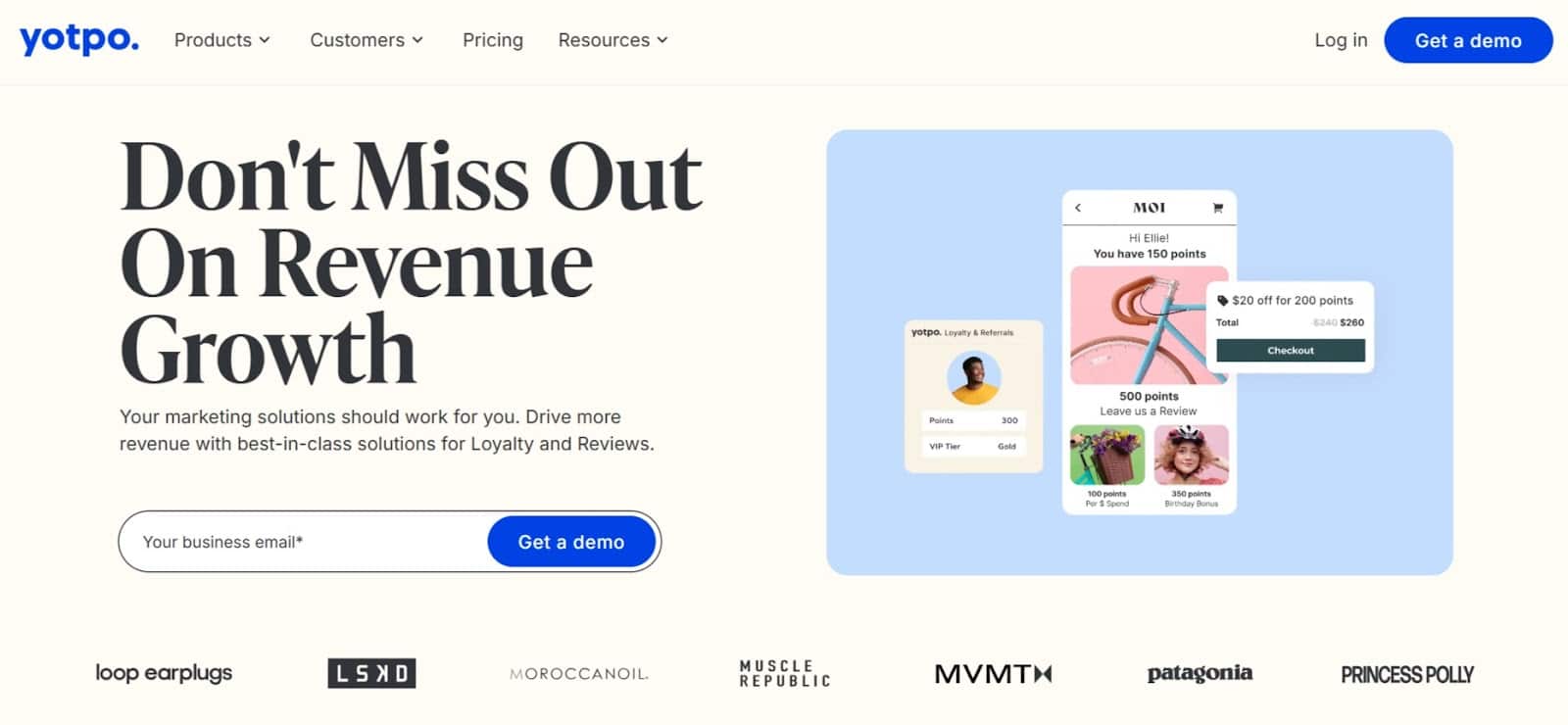
Large Language Models thrive on fresh, natural language data, making user-generated content one of the strongest signals for Generative Engine Optimization. By utilizing Yotpo Reviews alongside Yotpo Loyalty, brands can help foster a continuous loop of high-quality, machine-readable text that AI engines can reference to understand product nuances.
Utilizing SMS Review Requests—powered via integrations like Klaviyo or Attentive—can generate 66% higher conversion compared to email requests alone, naturally populating your pages with vital conversational data. This is a valuable strategy, as just 10 reviews on a product can yield a 53% uplift in conversion, and shoppers engaging with this content convert 161% higher.
“Our data shows that utilizing AI-powered smart prompts makes shoppers 4x more likely to mention specific, high-value attributes like fit, material, and durability—the exact conversational data points LLMs look for,” advises Ben Salomon, Growth Marketing Manager. By engaging these active reviewers through customized Yotpo Loyalty tiers, you encourage your catalog to remain a dynamic, credible source for AI assistants.
Expanding Off-Page Authority and Conducting AI Audits
AI models do not just evaluate what your website says about your products; they often look for independent verification from third-party sources. Expanding your off-page presence across digital PR channels, relevant forums, and editorial publications can help build the citation signals that LLMs use to evaluate a brand’s authority.
To manage this thoughtfully, brands can treat AI audits as high-level strategy conversations rather than just technical checklists. These audits help map your current entity graph presence so you can prepare for future algorithm shifts.
“Analyzing user evaluation windows before demand surges allows brands to seed content effectively,” notes Mira Talisman, Growth CRO Team Lead. “An AI audit helps you understand exactly where your entity graph might be lacking, giving you the chance to build off-page authority before the AI synthesizes its answers for shoppers.“
Automating Technical Workflows via Generative Prompts
E-commerce catalogs often contain thousands of SKUs, making manual optimization highly challenging. Brands might explore leveraging LLMs internally to help automate technical workflows and scale their metadata generation.
To execute this effectively, engineering a thoughtful prompt is essential. Ensure your internal generative prompts contain four specific components: the System (defining the AI’s role), the Instruction (the exact task), the Data (your brand guidelines and product specs), and the Output Format (e.g., HTML or JSON). By organizing this prompt architecture, your team can streamline bulk metadata updates and run efficient cannibalization audits across larger inventories.
Conclusion
Transitioning from traditional search to generative AI can feel like a major shift, but it presents a valuable opportunity to connect with shoppers on a deeper level. By exploring specialized AEO platforms and structuring your product catalog with clear, machine-readable data, you help ensure your brand remains a trusted recommendation for AI assistants.
Ultimately, optimizing for these modern engines is just an extension of optimizing for your customers—answering their specific questions and providing authentic, high-quality information exactly when they are ready to make a purchase.
FAQs: Best AEO Platforms for Ecommerce Brands
What is the primary difference between SEO and AEO?
SEO traditionally focuses on optimizing web pages to rank higher on a list of search engine results using keywords and backlinks. AEO (Answer Engine Optimization) focuses on structuring your data and content so that conversational AI assistants can more easily synthesize and cite your brand when answering complex user queries.
How do LLMs utilize product reviews and UGC?
LLMs constantly scan the web for fresh, natural language text to understand the real-world context of a product. High-quality product reviews and user-generated content provide the natural conversational phrasing and specific use-case validations that AI engines often look for when preparing to recommend an item to a shopper.
What is “intent compression” in AI search?
Intent compression occurs when an AI assistant handles the top-of-funnel research phase for a shopper. By the time the user clicks through to your website from an LLM recommendation, the AI has typically already helped them evaluate features and compare options, resulting in a highly qualified visitor ready to explore a purchase.
Why might traditional analytics platforms undercount AI traffic?
When shoppers discover a brand via a mobile AI app like ChatGPT or Perplexity, they often leave the app and search for the brand directly in their mobile browser to complete the transaction. Standard analytics platforms like GA4 can sometimes misattribute this to “direct traffic” or “branded organic search,” masking the AI’s initial role.
What is a Shopping Query Fan-Out (QFO) in ChatGPT?
A Shopping Query Fan-Out is a background process where ChatGPT breaks down a user’s prompt and generates multiple, invisible search queries to verify real-time pricing, stock, and specification data from sources like Google Merchant Center, aiming to ensure its recommendations are accurate.
How does Perplexity’s Merchant of Record model benefit retailers?
Perplexity’s Instant Buy feature allows users to checkout directly within the AI interface while keeping the brand as the “Merchant of Record.” This benefits retailers because they retain ownership of the first-party customer data, manage the fulfillment, and can seamlessly invite the shopper into their post-purchase loyalty programs.
What is Generative Engine Optimization (GEO)?
Generative Engine Optimization (GEO) is the specialized practice of optimizing a brand’s digital presence to encourage visibility and citations within AI-generated responses (like AI Overviews or ChatGPT outputs), focusing on entity relationships and clearly structured, machine-readable data.
How might ecommerce brands adjust their search marketing budgets today?
Many industry experts suggest reallocating roughly 20% to 30% of a traditional search marketing budget toward AEO experimentation. This could include exploring specialized tracking platforms, conducting deep entity-graph audits, and restructuring product pages to address natural, conversational questions.
What schema markup is most helpful for AEO?
For e-commerce AEO, Product schema is the foundation, helping AI understand pricing, availability, and reviews. Additionally, adding robust FAQ and How-to schema markup is highly recommended, as it directly supports the structured, question-and-answer format that LLMs often utilize when synthesizing responses.
How do AI Overviews impact mid-funnel versus bottom-funnel queries?
Currently, AI Overviews often excel at satisfying mid-funnel research intent, such as synthesizing buying guides or comparing product features. However, as autonomous agent capabilities expand—such as integrating digital wallets for direct checkout—these overviews are steadily evolving to assist with bottom-funnel, transactional queries as well.











 Join a free demo, personalized to fit your needs