


If you’ve recently asked a question online and received a clear, synthesized summary instead of a list of websites, you’ve seen Answer Engine Optimization (AEO) in action. For e-commerce brands, this shift is an opportunity to ensure your product information is as easy for an AI model to understand as it is for a person.
By focusing on AEO, you can help AI Overviews and LLMs accurately represent your catalog. It’s about being the most helpful, verified resource for shoppers exactly where they are getting their answers.
Key Takeaways: AEO for Ecommerce
- A Shift in Discoverability: AI Overviews and LLMs often provide direct answers to queries, making it beneficial for brands to focus on securing AI citations alongside traditional rankings.
- The Power of Structured Data: Utilizing robust JSON-LD schema markup acts as a digital roadmap, providing the clear, machine-readable data AI engines need to accurately represent your products.
- Prioritize Information Gain: LLMs prioritize unique, verifiable data points over repetitive copy. Providing original research and technical specifications increases the likelihood of your brand being referenced.
- The Role of Digital Consensus: AI engines frequently look for third-party validation. Building off-site signals through digital PR and customer reviews is a helpful way to establish objective credibility.
Understanding the Shift from Traditional SEO to AEO
The Rise of AI Engines and LLMs
The architecture of digital discoverability is evolving from a system of link retrieval toward one of information synthesis. For years, e-commerce visibility focused on capturing real estate on Search Engine Results Pages (SERPs) to drive user clicks. Today, platforms such as Google’s AI Overviews, alongside conversational agents like ChatGPT and Perplexity, can synthesize multi-source answers directly at the point of inquiry.
This evolution is reflected in current economic projections, which suggest that an estimated $750 billion in US revenue will funnel through artificial intelligence-powered search by 2028. To adapt, consider a shift in perspective: the goal is to ensure your brand’s data and products are correctly ingested and cited by Large Language Models (LLMs). This interconnected discipline, often called Answer Engine Optimization (AEO) or Generative Engine Optimization (GEO), helps ensure that when an AI agent formulates a response, your catalog serves as a reliable reference.
How Consumer Psychology is Changing
Conversational AI can help reduce cognitive load for shoppers by collapsing a multi-step research journey into a single interaction. Instead of sifting through several category pages, a shopper might ask a specific question and receive a synthesized answer.
While top-of-funnel organic click-through rates for queries triggering AI Overviews have shifted by roughly 61%, the traffic that does click through to a website often exhibits higher intent. In fact, some visitors referred by AI platforms have shown conversion rates significantly higher than traditional organic search visitors. Trust is also becoming more associated with these synthesized answers; 44% of users who use conversational search now cite it as a primary source of digital information.
Strategy 1: Implement Robust Schema Markup and Structured Data
The Importance of Machine-Readable Data
Large Language Models favor data sources that minimize computational friction. Highly unstructured prose can sometimes make it difficult for a model to extract specific facts. Formatting your product information for machine consumption is a practical way to ensure accuracy.
JSON-LD schema markup acts as a clear organizational tool for your product details, transforming a web page into a structured data source. When data is organized effectively, AI engines can more confidently recommend your brand. Studies suggest that properly implementing structured data makes content 50% more likely to be pulled into generative AI responses. This approach helps prevent algorithmic hallucinations and ensures the AI accurately reflects your offerings.
Expanding Beyond Basic Product Schema
Many brands traditionally focus on the minimum requirements: name, price, and availability. In the era of AEO, consider a more comprehensive approach.
Expanding your structured data to include shipping policies, material composition, and aggregate consumer ratings provides more context for LLMs. Detailed review sentiments, when marked up clearly, allow AI engines to understand how real customers experience your products. Additionally, using broader organizational entity structures—linking your social profiles and verified corporate information—helps build a robust knowledge graph that signals credibility to AI engines.
Strategy 2: Prioritize Information Gain and Fact Density
Moving Past Redundant Content
Generative search engines are designed to synthesize consensus quickly. If a product page simply repeats information found on numerous other sites, there is less incentive for an algorithm to cite that specific source. Focus instead on “Information Gain”—a measure of the new, unique data a page provides.
To earn citations in AI Overviews, consider providing original value such as proprietary research, anonymized customer data, or highly technical specifications. Providing unique, experience-based data points can help secure citation frequencies of 40-60% in AI-generated responses by filling the data gaps where models might otherwise struggle for information.
Anticipating Natural Language Queries
AI models look for fact density and clear structures. Replacing sweeping marketing claims with concise, verifiable statements can improve your visibility.
One effective method is to mirror the natural language queries your customers use. Structuring content in a direct Question-and-Answer format provides the “structured knowledge” that LLMs prefer. For instance, using headers as direct questions followed by a concise 40-60 word answer can improve the chances of your content being featured. Incorporating quantitative evidence, such as dimensions or percentages, provides the concrete facts models look for, which can increase visibility in AI responses by up to 22%.
Strategy 3: Optimize Your Site Architecture and URL Structures
Descriptive, Human-Readable Slugs
Your website’s underlying architecture provides the foundational context for AI bots. This begins with URL structures. Generic product IDs (e.g., /item?id=84739) offer limited semantic value to a parsing algorithm.
Consider replacing these with descriptive, human-readable slugs that include the category and primary attribute (e.g., /mens-footwear/trail-running-shoes/waterproof). This structural clarity acts as a signal that validates the structured data found within the page. When search engines can identify content themes quickly, it improves crawl efficiency, helping the AI engine ingest your most important pages.
Building Logical E-commerce Hierarchies
The way products are grouped forms a semantic map for generative engines. A flat, well-linked architecture typically performs better than deep, disconnected hierarchies. When pages are buried too many clicks from the homepage, search bots may not index them as effectively.
Organizing your catalog into a logical hierarchy helps AI engines map the relationships between categories and products. If an algorithm understands that a specific jacket belongs to an “extreme winter gear” category, it can more confidently recommend it for complex, conversational queries.
Strategy 4: Cultivate Off-Site Signals and Third-Party Consensus
The Role of Digital Public Relations in GEO
Large Language Models often seek out off-site validation to confirm the claims made on a brand’s own domain. This reframes the role of Digital PR: rather than just pursuing brand awareness, consider it a way to build algorithmic credibility.
Securing mentions in reputable publications and industry journals provides the trust signals generative engines rely upon. Research into AI citation patterns indicates that a large portion of citations driving brand visibility on generative platforms originate from earned media. Injecting specific, fact-dense data points into the global press ecosystem ensures that accurate information is available for LLMs to cite.
Why LLMs Trust Independent Reviews and Forums
AI engines place significant weight on community-driven insights and authentic conversations. Encyclopedic domains and enthusiast forums are frequently cited across major AI platforms.
User-generated platforms like Reddit have become widely cited sources in AI Overviews, accounting for a notable percentage of total citations. Proactive community management—facilitating authentic discussions and maintaining a presence on third-party review sites—helps ensure that the data LLMs scrape aligns with your brand’s actual performance and positioning.
Strategy 5: Leverage Customer Reviews to Fuel AI Engines
Generating Fresh, Conversational Content
Collecting authentic customer reviews generates the type of natural language data that LLMs utilize. When customers describe a product in their own words, they often use the same phrasing and address the same pain points as future shoppers using AI prompts.
This user-generated content (UGC) provides the context AI models use to understand real-world sentiment. Furthermore, displaying this authentic feedback can improve the experience for visitors; data shows that shoppers who engage with reviews and UGC convert 161% higher than those who do not.
Capturing High-Value Product Attributes with Smart Prompts
To influence AEO effectively, consider collecting reviews that are dense with specific product attributes. A generic “Great product” review offers less semantic context than one discussing durability or material feel.
Using AI-powered prompts during the collection process can guide customers to mention these high-value topics. Utilizing these prompts makes a brand 4x more likely to capture descriptive, attribute-rich reviews.
“When customers write highly descriptive reviews, they are essentially providing the conversational data that future buyers will search for,” notes Eli Weiss, VP Retention Advocacy. Additionally, visual UGC can lead to a 137% purchase likelihood lift when shoppers interact with customer photos or videos.
Strategy 6: Adapt Key Performance Indicators for the AI Era
Shifting from Organic Traffic to Share of Citation
As conversational agents provide more answers directly on the search interface, raw inbound traffic to informational pages may shift. Consider monitoring “Share of Citation”—tracking how frequently your brand or product is referenced when an LLM answers a category-level question. Monitoring your inclusion rate across various AI platforms provides a clearer picture of your visibility in a zero-click search environment.
Measuring High-Intent Engagement Quality
Visitors who click through from an AI summary often arrive with high intent, having already received a synthesized recommendation. Instead of focusing solely on session volume, consider measuring Value-Per-Visit (VPV) and engagement depth for these cohorts.
“It is helpful for brands to recalibrate their dashboards to prioritize the quality of traffic arriving from conversational agents,” suggests Ben Salomon, Growth Marketing Manager. Analyzing micro-conversions and add-to-cart rates for this traffic can reveal the tangible impact of your AEO efforts.
Strategy 7: Synergize Paid Media with AI Overviews
The Remonetization of the Search Interface
Search engines are increasingly integrating Product Listing Ads directly alongside AI-generated responses. Recent industry data shows that user engagement is shifting toward these integrated Shopping Search Ads within the AI overview field.
Ensuring your product feeds are accurate and structured is critical when ads are displayed in these contextual environments. A strategic reallocation of budget toward robust paid search and Google Merchant Center optimization can help maintain visibility as the search interface evolves.
Maximizing Click-Through Rates with the Citation Advantage
There is a psychological synergy between organic AI citations and paid media. When a brand is cited within generative text, it can improve perceived credibility. This “Citation Advantage” represents a critical counterbalance to overall traffic declines. Research analyzing millions of impressions reveals that brands cited in AI Overviews earn a 35% relative click advantage in organic results compared to non-cited competitors.
This trust halo extends directly to paid efforts; when a brand is cited in an AI summary, the perceived validation can drive a 91% lift in paid CTR for ads on the same query. Aligning GEO efforts with a review-rich paid strategy can help capture shopper attention effectively, especially since ads displaying Seller Ratings see a 17% increase in CTR.
Strategy 8: Prepare for the Horizon of Agentic Commerce
Designing Modular E-commerce Architectures
We are entering an era of Agentic Commerce, where AI agents can act on behalf of a user to research and execute purchases. As 44% of users who have tried conversational search show a preference for it, preparing your infrastructure is a forward-looking step.
Consider designing a modular architecture that functions as a structured database optimized for machine-to-machine (M2M) communication. When AI agents can parse your inventory and variant data easily, your brand is better positioned to capture these automated sales.
Facilitating Machine-to-Machine Transactions
Autonomous agents look for machine-readable interfaces and APIs to confirm product availability and shipping constraints. Developing structured URL templates and secure endpoints can allow AI models to bypass traditional navigation and facilitate transactions. Ensuring your catalogs are exposed through standardized attributes can reduce checkout friction for these agents.
Strategy 9: Build a Strategic AI Audit Process
Conducting High-Level Strategy Conversations
An AI visibility audit evaluates how effectively an LLM can extract meaning and trust your content. This is often more of a strategic conversation than a simple technical diagnostic.
“An AI audit is a strategic look at how effectively your brand’s information is being translated into machine-readable logic,” notes Mira Talisman, Growth CRO Team Lead.
Evaluating whether your content is structured and reasoning-ready can help identify gaps in your generative visibility.
Mapping Your Current Generative Visibility
Tracking visibility in the AI era often requires “multi-sampling”—deploying category queries across various LLMs to map your brand’s inclusion rates. Track your source of citation within your specific category and analyze the provenance of those citations. Research indicates that for branded queries, a significant portion of citations come from earned media and third-party forums.
Strategy 10: Enhance Brand Loyalty to Drive Organic Consensus
Tier-Based Structures and Customer Retention
Sustained brand authority is supported by a dedicated, returning customer base. Cultivating loyalty provides the behavioral signals that AI engines associate with a trustworthy entity. A small increase in customer retention can significantly improve overall profitability. Consider implementing tier-based loyalty structures with accurate reporting to increase customer lifetime value and establish the long-term engagement metrics search engines value.
Transforming Loyal Customers into Brand Advocates
Loyal customers are often the ones posting on independent review sites and forums—the very sources LLMs scrape for validation.
“A structured loyalty program can help drive continuous off-site consensus by encouraging your best customers to share their experiences,” notes Davis Belcher, Content Marketing Manager.
Emotionally engaged customers are often more likely to recommend a company, helping fuel the third-party platforms with the user-generated content that AI engines prioritize.
How Yotpo Helps
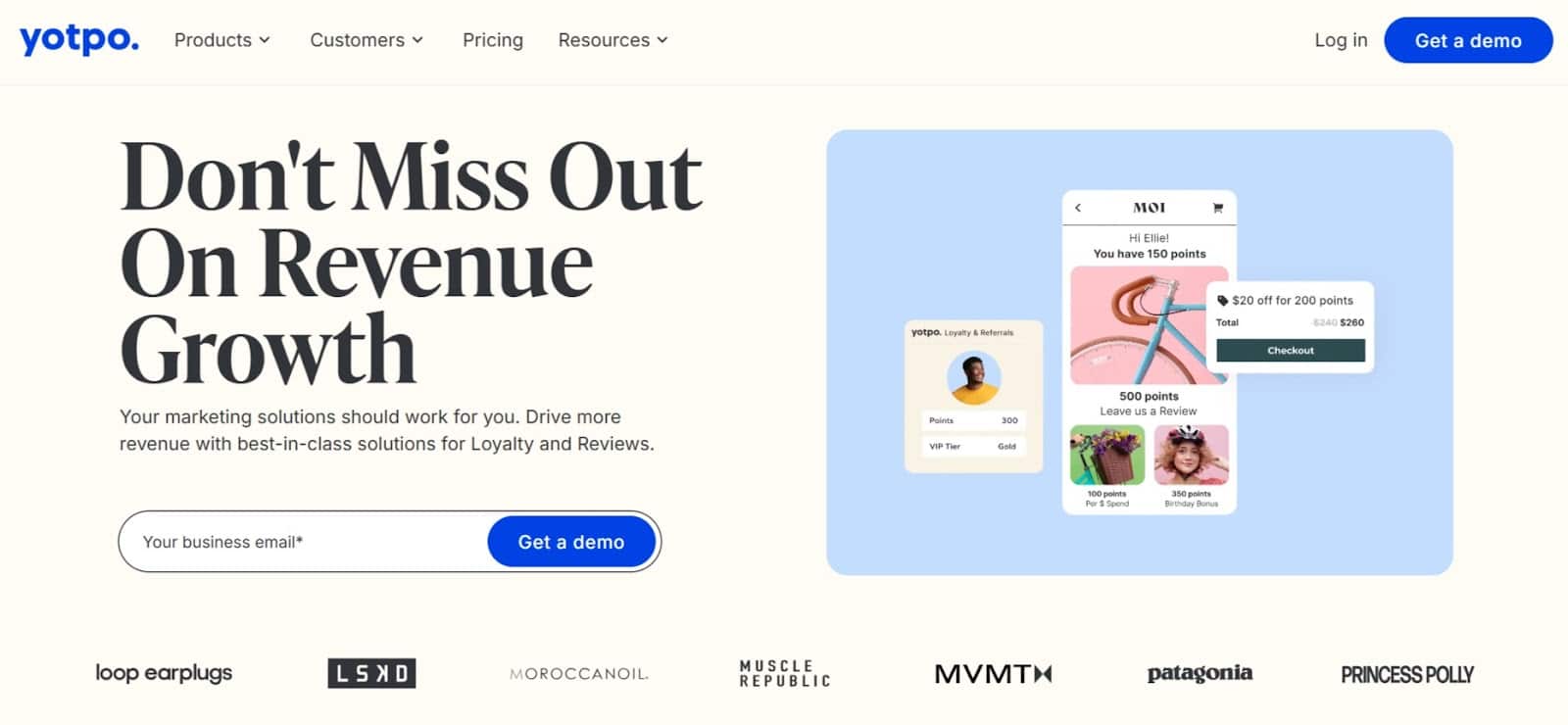
As the e-commerce landscape evolves, Yotpo provides tools that help brands build credibility and digital consensus. With Yotpo Reviews, brands can use AI-powered smart prompts to collect the attribute-rich user-generated content that feeds into LLMs. Through SMS Review Requests powered by integrations (e.g., Klaviyo), brands can capture feedback efficiently, often seeing a 66% higher conversion than traditional email requests.
Combined with Yotpo Loyalty, which supports customized, tier-based structures and accurate reporting, e-commerce managers can strategically turn shoppers into brand advocates who generate the off-site signals necessary for visibility in an AI-driven ecosystem.
The transition toward Answer Engine Optimization represents an evolution in how commercial information is established. Discoverability is increasingly a matter of digital consensus. By formatting your catalog for machine consumption and cultivating a loyal customer base, you can build a resilient digital footprint. Consider these strategies as a long-term investment in your brand’s authority, ensuring your store remains a primary answer in the era of artificial intelligence.
FAQs: AEO for Ecommerce
What is the difference between SEO and AEO?
Traditional SEO focuses on keyword frequency and link retrieval to rank on results pages. AEO (Answer Engine Optimization) focuses on formatting deterministic data and unique Information Gain so that LLMs can directly synthesize and cite your content in conversational answers.
How do AI Overviews impact e-commerce traffic?
While top-of-funnel organic clicks may shift as AI answers questions directly, the traffic that does click through from AI Overviews is often highly filtered, which can result in stronger engagement and conversion rates.
What is Generative Engine Optimization (GEO)?
GEO is the discipline of optimizing content so that generative AI models trust and cite it. It relies on digital PR, off-site consensus, and structured data to ensure a brand’s information is recognized as credible by language models.
How can I measure my brand’s visibility in LLMs?
Consider monitoring “Share of Citation” by querying various AI models with category-level questions to see how frequently your brand is recommended or referenced.
What role does structured data play in AEO?
JSON-LD schema markup acts as a foundational organizational tool. It provides machine-readable pairs that define your product attributes and reviews, helping AI engines cite your data accurately.
How do customer reviews influence AI recommendations?
Customer reviews provide the natural language and conversational context that LLMs use to understand real-world application, offering the off-site validation necessary to verify commercial claims.
Why are third-party platforms like Reddit important for AEO?
LLMs often look for consensus on user-generated forums and independent review sites to establish objective truth, making these platforms a key source for AI citations.
How does Agentic Commerce change the checkout process?
Agentic Commerce involves autonomous AI agents acting for a user. This shift requires secure APIs and structured URLs so agents can read inventory and execute transactions without traditional visual navigation.
Should I change my paid search strategy for AI engines?
It is helpful to ensure your Google Merchant Center data is highly accurate, as the synergy between organic AI citations and adjacent paid placements can improve click-through rates.
What is Information Gain, and how do I achieve it?
Information Gain measures the amount of unique data a page provides. It is achieved by moving past repetitive content to publish proprietary research or technical insights not found in a model’s general training data.





 Join a free demo, personalized to fit your needs