


Shoppers aren’t just scrolling through endless search results anymore; they are having direct conversations with AI to find exactly what they want to buy. Generative engines are rapidly becoming the new storefronts, synthesizing complex purchasing decisions into instant, highly specific recommendations.
This shift means Large Language Models (LLMs) like ChatGPT, Claude, and Google’s AI Overviews are fundamentally changing how consumers discover products. To maintain visibility, brands must adapt to Answer Engine Optimization (AEO), structuring their data so AI can easily read, understand, and confidently cite their products as the best solution.
Key Takeaways: AEO Ecommerce
- The shift to AI platforms is accelerating: With traditional search volume projected to decline by 25% by 2026, consumers are increasingly turning to generative engines for instant product discovery and recommendations.
- AEO goes beyond traditional SEO: Answer Engine Optimization focuses on structuring semantic data and providing dense text to secure direct citations from AI, rather than just chasing domain authority and blue links.
- Funnel compression changes the journey: AI Overviews collapse the traditional buying cycle, shifting the burden of persuasion from your product landing pages directly to the AI’s synthesized output.
- Organic rank does not guarantee visibility: Large Language Models prioritize information gain and clarity. In fact, 93.8% of sources cited by AI overviews do not currently rank in the top organic search results.
- UGC is your strongest data asset: Authentic, machine-readable user-generated content acts as a powerful, continuous data feed for AI engines evaluating product quality, sentiment, and comparison features.
Understanding the Macro-Economic Shift to Answer Engine Optimization
How LLMs and AI Overviews Are Changing Discovery
For over two decades, digital discovery relied on a straightforward exchange: users entered keywords, and search engines provided a directory of relevant links. This Information Retrieval (IR) model treated the search engine as a gateway, passing traffic directly to brand websites.
Today, that architecture is transforming. Large Language Models (LLMs) and generative interfaces like ChatGPT, Perplexity, and Google’s AI Overviews operate as destinations rather than mere gateways.
Instead of pointing shoppers to external websites to find an answer, these systems read the web, synthesize the information, and deliver a comprehensive, multi-modal response directly on the interface. For e-commerce brands, this means visibility is no longer just about earning a click; it is about earning a citation within a generative response.
The Macro-Economic Impact on Search Volume
This technological transition is already reshaping consumer behavior at scale. Current projections indicate a structural 25% decline in traditional search engine queries by 2026, as shoppers turn to virtual agents for answers.
The financial implications of this shift are significant. By 2028, an estimated $750 billion in consumer spending will funnel directly through AI-powered search channels. While these numbers represent a notable change, this is an excellent strategic pivot point for e-commerce growth. Brands that proactively adapt their content structures to feed these AI models can establish an early, highly lucrative advantage in a evolving digital landscape.
Differentiating Between Traditional SEO, AEO, and GEO
To navigate this new environment, it is helpful to understand the distinct disciplines of search optimization:
- Traditional SEO: Historically focused on securing the highest possible rank in the “blue links.” Strategies rely heavily on domain authority, topological link building (backlinks), and keyword density.
- AEO (Answer Engine Optimization): Focuses on structuring your brand’s data so that voice assistants and AI chatbots can instantly retrieve factual, concise answers. It prioritizes semantic clarity, rich snippets, and direct Q&A formats.
- GEO (Generative Engine Optimization): The evolution of AEO. GEO involves optimizing a brand’s entire digital footprint—including user-generated content, technical glossaries, and external citations—so that multi-modal LLMs synthesize your product as the optimal choice during complex, conversational queries.
The New Consumer Journey: Funnel Compression in AI Engines
The Omniscient Sales Associate Effect
The traditional e-commerce buyer’s journey—moving slowly from awareness to consideration, and finally to a decision—is becoming increasingly compressed. Generative engines act like an omniscient sales associate, capable of evaluating hundreds of products and aggregating millions of reviews in seconds.
Because AI overviews can instantly compare features, extract sentiment from reviews, and present a curated list of recommendations, the awareness and consideration phases now happen simultaneously within the AI interface. Consequently, the burden of persuasion shifts. Brands must now convince the mathematical logic of the LLM of their product’s value long before a human shopper ever lands on their product page.
How AI Overviews Intercept Transactional Intent
Initially, generative search focused heavily on informational, top-of-funnel queries (e.g., “how to clean a coffee maker”). However, AI models are rapidly advancing deeper into the purchasing funnel.
Recent data reveals that AI interception on high-value, transactional queries is expanding rapidly, growing from 1.98% to 13.94% over the past year. When a shopper searches for “best running shoes for flat feet under $150,” the AI now intercepts that mid-to-lower funnel intent, providing a definitive list of products complete with pros and cons. This intercepts the shopper before they can browse traditional category pages, making inclusion in the AI’s output critical for lower-funnel success.
The “Shopping Saturation Lag”
While the shift toward generative search is accelerating, e-commerce brands currently benefit from a phenomenon known as the “shopping saturation lag.” Generative models excel at text synthesis, but they still occasionally struggle to process highly visual, localized, or real-time inventory data with perfect accuracy.
Because of this, bottom-of-funnel queries that rely heavily on visual comparison or immediate local stock availability are slightly more resilient to text-heavy AI overviews. This lag provides a temporary buffer for traditional Pay-Per-Click (PPC) and shopping ad campaigns, allowing brands a short window of time to restructure their organic data for AEO before generative features fully saturate the visual shopping experience.
The Great Decoupling: Why Organic Rank No Longer Guarantees Visibility
Algorithmic Differences Between Ranking and Citation
Historically, securing a position in the top three organic search results was the ultimate metric of digital success. However, generative engines process information differently than traditional search algorithms.
Current research highlights a profound decoupling between traditional ranking and AI visibility. While traditional SEO relies heavily on domain authority and backlinks, generative engines do not simply summarize the top-ranking pages. In fact, an astounding 93.8% of the links provided in Google’s generative responses did not match any of the traditional top 10 organic search results. This occurs because LLMs are not strictly looking for the most popular or heavily linked page; they are looking for the most structurally sound, factual, and easily extractable answer to a highly specific user prompt.
The Value of Information Gain for LLMs
To understand why this decoupling is happening, brands must understand the concept of “information gain.” Traditional search algorithms often rewarded websites for compiling and aggregating existing information, provided the site had high topological authority (a strong backlink profile).
LLMs, conversely, are prediction engines. When constructing an answer, they actively seek out unique data points, explicit facts, contrarian viewpoints, and proprietary statistics that add net-new value to the model’s baseline knowledge. Generative models prioritize this semantic clarity and data density over domain authority. If your product page simply repeats the same manufacturer descriptions as five other retailers, it offers less information gain, potentially reducing its likelihood of being cited.
Rethinking the Traditional E-commerce Category Page
The standard e-commerce Product Listing Page (PLP) is beautifully designed for human browsers: it features high-resolution imagery, minimal text, and infinite scrolling. Unfortunately, this design can be challenging for LLMs to interpret.
Because traditional category pages are often image-heavy and text-poor, AI engines frequently bypass them. Instead, LLMs pull from data-dense buying guides, editorial reviews, and technical comparison charts that explicitly define the differences between products. To remain visible, brands might reconsider their site architecture, injecting more machine-readable, descriptive text into their category and collection pages without compromising the human user experience.
15 Best Strategies to Optimize Your E-commerce Site for AI Engines
1. Transition to Atomic Data Structures
Generative models prefer information that is modular and self-contained. Rather than writing long, sprawling narratives about a product’s history, consider breaking your content down into “atomic” data structures.
This means using predictable blocks of text: clear definitions, bulleted checklists, and standalone statistical points. When an AI crawler scans your page, it should be able to lift a single paragraph or bullet point that perfectly answers a question without needing the surrounding context to make sense of it.
2. Implement HTML Fragment Anchors for Precise Citations
LLMs are designed to provide direct answers and cite their sources accurately. You can facilitate this by implementing HTML fragment anchors (jump links) throughout your long-form content and product descriptions.
By adding an id attribute to your headers (e.g., <h2 id=”technical-specs”>), you create a specific URL that points directly to that section of the page. This helps AI engines cite the exact span of text they used to formulate their answer, increasing the likelihood that they will choose your content over a competitor’s less-structured page.
3. Fortify Google Merchant Center and Business Profiles
As search engines integrate generative AI directly into the shopping experience, they rely heavily on their own internal databases to validate facts and prevent hallucinations.
Ensure your external data feeds—particularly Google Merchant Center and your Google Business Profile—are 100% accurate and updating in real-time. If an AI overview is preparing to recommend your product but your Merchant Center feed shows conflicting pricing or out-of-stock status, the model will likely pivot and recommend an alternative brand to preserve the accuracy of its response.
4. Ensure Flawless Execution of Core Schema Markup
Schema markup translates your human-readable website into a machine-readable format. For Answer Engine Optimization, utilizing clean, nested JSON-LD markup is highly recommended.
Ensure that your Product, Offer, and AggregateRating schemas are perfectly executed and free of errors. This removes all linguistic ambiguity for web crawlers, allowing the LLM to instantly understand your product’s price, availability, and overall customer sentiment without having to parse complex HTML structures.
5. Transform Subjective Reviews into Machine-Readable Data
Customer reviews are no longer just social proof for human shoppers; they are a critical data feed for AI engines. Generative models scan user-generated content (UGC) to understand nuances, sentiment, and specific use cases that are not mentioned in standard product descriptions.
“When we look at how AI evaluates products, authentic customer feedback feeds the comparative logic of the model. Structured, specific reviews give LLMs the exact pros and cons they need to confidently recommend a product over another,” notes Ben Salomon, Growth Marketing Manager.
By prompting customers to mention specific attributes (like sizing, durability, or material), you create a rich layer of semantic data that AI can easily ingest and synthesize.
6. Build Intent-Mapped Content Ecosystems
Relying solely on optimized product pages may limit your overall reach. Consumers are giving AI chatbots incredibly complex, multi-layered prompts (e.g., “What is the best hypoallergenic dog food for a senior golden retriever with joint issues?”).
To capture this traffic, consider building intent-mapped content ecosystems. Create comprehensive resource centers, buying guides, and educational hubs that directly address these complex scenarios. By surrounding your products with deep, informational content, you position your brand as a helpful authority that the AI can cite.
7. Optimize for “Query Fan-Out” and Multi-Modal Synthesis
When a user asks a complex question, LLMs often perform a process known as “query fan-out.” The model breaks the primary question down into several smaller sub-queries, searches for the answers independently, and then synthesizes them into a single response.
To optimize for this, your content strategy should ideally have depth. If a user asks about the “best espresso machine,” the AI might fan out to search for “espresso machine durability,” “espresso machine cleaning process,” and “espresso machine warranty.” Brands that explicitly cover all these sub-topics on their site are far more likely to be retrieved during the synthesis phase.
8. Structure Comparison Guides with Explicit Pros and Cons
One of the most common use cases for generative search is product comparison. Shoppers rely on AI to weigh the benefits of Product A versus Product B.
Make it effortless for the AI to extract this data by hosting your own highly structured comparison guides. Use clear tables, explicit “Pros” and “Cons” lists, and objective data points. When you format comparisons in a way that mathematical models can easily read, you guide the narrative rather than leaving the AI to piece it together from third-party forums.
9. Defend Your Below-the-Fold Paid Search Real Estate
As AI Overviews and generative answers take up more visual space at the top of the search engine results page (SERP), traditional paid ad inventory is frequently pushed further down the screen.
To defend your visibility, it is helpful to adjust your paid search strategy. Focus heavily on high-intent Shopping Ads, which are currently more resilient to generative displacement, and consider utilizing dynamic search ads that complement the informational queries triggering the AI overviews.
10. Prioritize High-Density Text Over Aesthetic-Only Visuals
E-commerce design heavily favors minimalist aesthetics and large, high-quality photography. While beautiful imagery is crucial for conversion, it provides very little context for an AI crawler.
To succeed in AEO, try balancing visual appeal with high-density text. Ensure that product pages include detailed, descriptive paragraphs, comprehensive FAQs, and robust technical specifications. The more dense, relevant text you provide, the easier it is for the model to extract and feature your product.
11. Develop Technical Glossaries and Resource Hubs
Many consumer journeys begin with informational intent—a shopper trying to understand a specific term or technology before making a purchase decision.
Developing a structured technical glossary or a deep-dive resource hub on your site allows you to capture this top-of-funnel traffic. When an AI cites your glossary to explain a complex term (like “hyaluronic acid” in skincare), it establishes early brand authority, increasing the likelihood that the AI will recommend your products in subsequent, transactional prompts.
12. Facilitate Generative Share of Voice (SOV)
Traditional SEO measures success by tracking raw keyword rankings and click-through rates (CTR). In the generative era, these metrics offer an incomplete picture.
Marketers might consider shifting their mindset toward measuring Generative Share of Voice (SOV). This involves utilizing AI visibility tools to track how often your brand is mentioned, recommended, or cited within the actual outputs of platforms like ChatGPT and Perplexity. Tracking visibility and brand sentiment within these answers is a far more accurate gauge of your AEO performance.
13. Leverage SMS Review Requests to Boost Data Density
Because LLMs prioritize fresh, frequent, and highly specific data, accelerating your review collection is a powerful AEO tactic. Consider utilizing SMS Review Requests through integrations like Klaviyo or Attentive to rapidly scale your UGC volume.
Data shows that SMS requests yield a 66% higher conversion rate compared to traditional email requests. Furthermore, generating just 10 reviews on a product can result in a 53% uplift in conversion. By using SMS to capture detailed customer feedback quickly, you continuously feed the AI engines the fresh data they crave.
14. Conduct High-Level AI Audits for Long-Term Strategy
Preparing for generative search requires a shift in strategic thinking. Brands should conduct comprehensive AI audits to understand exactly how large language models currently perceive their catalog and content ecosystem.
These audits involve analyzing server logs to track AI crawler behavior, identifying content gaps where competitors are being cited instead, and evaluating the overall “entity strength” of the brand. This high-level strategic exercise helps leadership understand where they stand today, and what architectural changes are required to remain visible tomorrow.
15. Prepare Infrastructure for Agentic Commerce and API Ordering
Looking ahead, generative search is evolving into “agentic commerce.” In this near-future scenario, autonomous AI agents won’t just recommend products; they will actively select, add to cart, and purchase items on behalf of the consumer.
To prepare for zero-click transactions, brands can begin modernizing their catalog architectures. This means ensuring your inventory, pricing, and fulfillment data can be seamlessly accessed and executed via machine-readable APIs, allowing AI agents to interface directly with your store’s backend.
The Role of User-Generated Content in Generative Search
Why Conversational Data Appeals to LLMs
If you observe which external sites are most frequently cited by generative AI platforms, you will notice a heavy reliance on community forums and highly conversational platforms. LLMs are mathematically designed to mimic human language, meaning they actively seek out conversational data to understand real-world context, unfiltered sentiment, and specific use cases.
Manufacturer descriptions sometimes lack the nuanced context for an AI to determine if a product is truly “the best.” Conversely, User-Generated Content (UGC) provides the semantic richness that models crave. When a shopper writes a detailed review explaining how a specific hiking boot held up during a rainy trek in the Pacific Northwest, they provide unique, localized data.
Brands that actively collect and display this conversational data natively on their site create a powerful, localized data feed that AI engines can easily extract and cite.
Maximizing the Value of Customer Photos and Prompts
Not all reviews are equally valuable to an Answer Engine. A simple “five stars, great product” offers less information gain to a machine learning model. To optimize UGC for AI, brands must actively guide the feedback process.
Consider utilizing dynamic, AI-powered review requests. Data shows that utilizing smart prompts makes a brand 4x more likely to capture high-value, model-friendly topics like fit, material, and durability. Furthermore, visual data plays a crucial role in modern generative synthesis. Including customer photos alongside these detailed reviews results in a 137% purchase likelihood lift.
“When we structure user-generated content effectively, we aren’t just building trust with the human shopper; we are literally feeding the AI the exact qualitative data it needs to confidently rank our product above a competitor’s,” notes Eli Weiss, VP Retention Advocacy.
Navigating the Future: Agentic Commerce and Zero-Click Transactions
Understanding Agentic AI in Retail
The current iteration of Answer Engine Optimization primarily focuses on visibility—ensuring the AI recommends your product to a human user who then clicks a link to complete the purchase. However, the retail landscape is rapidly approaching the era of “agentic commerce.”
Driven by the Agentic Commerce Protocol (ACP), this shift allows AI assistants to transition from passive advisors to active participants. In a fully agentic scenario, a consumer can simply tell their AI, “Reorder my usual protein powder and find a new pre-workout under $40.”
The AI agent will autonomously scan the web, select the optimal products, apply a discount code, and execute the payment without the consumer ever navigating to a traditional checkout page. This creates a “zero-click” transaction environment where your site’s API, rather than its visual storefront, handles the conversion.
The Consumer Trust Deficit and Transitionary Strategies
While the technology for autonomous AI purchasing exists today, widespread adoption faces a significant psychological hurdle. Current data reveals a distinct consumer trust deficit: industry analysis on agentic commerce highlights that many shoppers still worry an AI agent might select the wrong product or fear losing control over their purchasing decisions.
Most consumers still demand the psychological safety of a brand-owned checkout process, where they can personally verify shipping costs, return policies, and secure payment gateways. Therefore, the best strategy for e-commerce managers is transitionary. Consider modernizing your backend data architecture to ensure real-time inventory and pricing are accessible for future AI integrations, while continuing to invest heavily in a high-trust, seamless on-site experience for your human shoppers.
How Yotpo Helps Brands Navigate the Generative Web
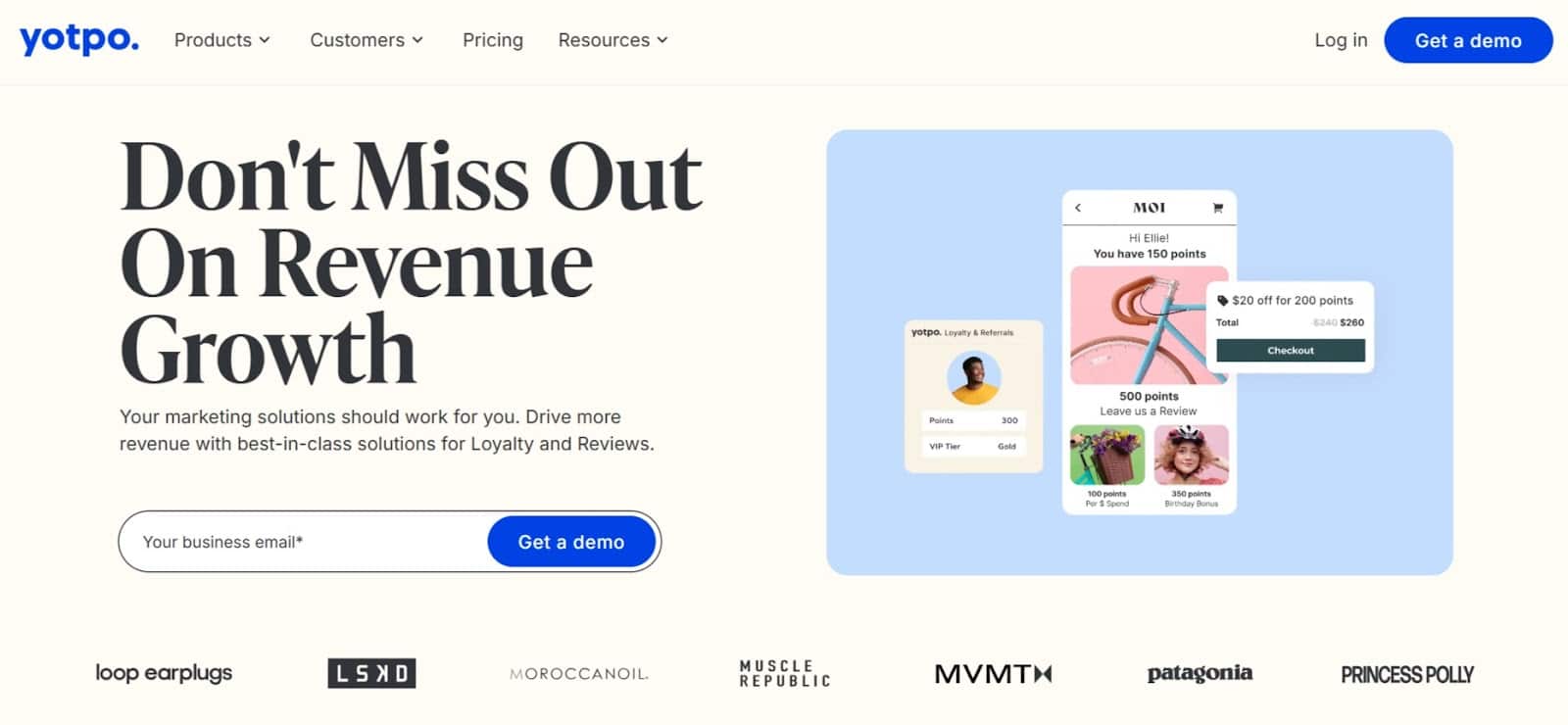
As search transitions to generative AI engines, thoughtfully structuring your site’s data becomes a distinct competitive advantage, and this is where Yotpo provides strategic value. By utilizing Yotpo Reviews and Yotpo Loyalty, brands can seamlessly generate the machine-readable, semantic data and structured user-generated content that Large Language Models actively seek out.
Yotpo’s AI-powered review prompts help capture the specific, high-density product attributes that fuel generative recommendations, while tailored loyalty programs ensure a continuous loop of fresh, authentic customer feedback. Together, these tools provide the robust data ecosystem and strategic support necessary to help your products stand out as the definitive, citable answers in the new era of conversational discovery.
Adapting to Answer Engine Optimization doesn’t require abandoning your current marketing strategies; rather, it’s about evolving how your data is structured for a new type of digital consumer. By focusing on semantic clarity, robust schema markup, and authentic user-generated content, you can position your brand to thrive in a generative search landscape. The transition to AI-driven discovery presents a unique opportunity to build deeper trust and visibility. Start small, audit your current data structures, and consider how your content can best serve both human shoppers and the AI agents assisting them.
Conclusion
The shift toward AI-driven discovery represents a profound opportunity for e-commerce brands to connect with shoppers more effectively. While traditional SEO remains vital, embracing Answer Engine Optimization ensures your products are actively recommended in this conversational landscape.
By prioritizing structured data, deep semantic clarity, and authentic user-generated content, you can effortlessly guide both AI models and human buyers toward your brand. Start updating your content strategies today, and position your business to thoughtfully thrive as generative engines become the primary digital storefronts of the future.
FAQs: AEO Ecommerce
What is the difference between traditional SEO and AEO in e-commerce?
Traditional SEO focuses heavily on domain authority, topological link building (backlinks), and keyword placement to rank high in the standard blue links on a search results page. AEO (Answer Engine Optimization) focuses on structuring semantic data, providing direct answers, and offering high information gain. The goal of AEO is to ensure AI models (like ChatGPT or Google’s AI Overviews) can easily extract and cite your information in conversational responses.
How do AI Overviews impact traditional organic click-through rates?
AI Overviews often provide the answer directly on the search engine results page (SERP), which can reduce traditional organic click-through rates for simple informational queries. However, as generative features continue to expand—surging 58% across major industries into 2026—securing citations within these summaries is critical for capturing high-intent shoppers early in their newly compressed buying journey.
Why is schema markup critical for generative engine optimization?
Schema markup, particularly JSON-LD, translates your human-readable website into a perfectly structured, machine-readable format. For generative engines, executing flawless Product, Offer, and AggregateRating schemas removes linguistic ambiguity. This allows the LLM to instantly verify facts like pricing, stock status, and review sentiment without having to guess or parse complex site code.
Can AI engines crawl our product review widgets directly?
No, AI engines do not currently crawl or index the JavaScript-based product review widgets directly. While these widgets are vital because they beautifully display social proof for your human shoppers, the LLMs cannot typically execute the visual code to read them. Instead, your AEO strategy should focus on how your reviews are structured within the page’s core HTML and schema markup, as this is what feeds the broader data ecosystems that LLMs rely on for comparative logic.
What does “information gain” mean in the context of Large Language Models?
Information gain refers to the unique, net-new value a piece of content adds to a generative model’s baseline knowledge. Rather than repeating standard manufacturer descriptions that exist on fifty other websites, LLMs actively look for unique data points, specific use cases, and distinct pros and cons. E-commerce content with high information gain is significantly more likely to be cited by an AI engine.
How should e-commerce brands structure their blogs for AI engines?
E-commerce blogs should transition toward highly structured, atomic data formats. Consider using clear semantic headings, bulleted checklists, explicit definitions, and HTML fragment anchors (jump links) throughout the content. This allows AI crawlers to easily lift a specific, self-contained paragraph that perfectly answers a user’s sub-query during the generative synthesis process.
What role does Google Merchant Center play in an AEO strategy?
Google Merchant Center acts as a foundational truth source for AI Overviews in the shopping category. Because LLMs are designed to prevent hallucinations and provide accurate recommendations, they heavily cross-reference external data APIs. Maintaining a 100% accurate, real-time feed ensures the AI can confidently recommend your product without the risk of pulling outdated pricing or inventory errors.
How does agentic commerce differ from generative search?
Generative search involves an AI synthesizing information and recommending a product to a human user, who then clicks a link to manually complete the purchase. Agentic commerce represents the next technological step: an autonomous AI agent actively selects the product, adds it to the cart, applies any relevant discounts, and executes the checkout process on behalf of the consumer, resulting in a true “zero-click” transaction.
Why are traditional product category pages often bypassed by AI Overviews?
Traditional Product Listing Pages (PLPs) are historically optimized for human browsing. They feature large, beautiful images and minimal text to encourage scrolling. Because they lack dense, descriptive text and explicit comparative data, they offer very little context for an AI crawler to extract. Consequently, LLMs frequently bypass them in favor of text-heavy buying guides and highly structured comparison articles.
How can e-commerce managers measure success in an AEO strategy?
Success in AEO requires shifting away from tracking raw organic traffic and traditional keyword rankings. Instead, managers should measure Generative Share of Voice (SOV) by utilizing specialized AI visibility tools to track how frequently their brand is mentioned, recommended, and cited positively. As search algorithms continue to evolve into conversational interfaces throughout 2026, tracking this visibility is a far more accurate gauge of your actual performance.











 Join a free demo, personalized to fit your needs