


Shoppers are no longer just searching for products; they are asking sophisticated artificial intelligence to do the shopping for them. When a customer types a complex query into an AI engine, the system synthesizes data from across the web to deliver a single, definitive answer.
To maintain visibility in this generative landscape, brands should consider evolving their digital architecture. By structuring your site’s data and content specifically for Large Language Models (LLMs), you can ensure your products remain discoverable. Let’s explore how to adapt your strategy for this new frontier.
Key Takeaways: AEO AI Approach for Ecommerce Brands
- The Shift to Generative Engine Optimization (GEO): Traditional search techniques are evolving, requiring brands to format data specifically for ingestion by Large Language Models (LLMs) and AI Overviews.
- Navigating the Citation Gap: Ranking highly in standard search results no longer guarantees visibility. AI engines frequently cite sources that provide the best direct answers and structured facts.
- High-Intent Zero-Click Discoveries: While overall organic search clicks may decrease, the visitors who do click through from generative interfaces are highly qualified and primed for conversion.
- Algorithmic Consensus via UGC: LLMs rely heavily on third-party validation to establish trust. Syndicating user-generated content, like reviews, across multiple platforms helps build undeniable product authority.
- Structured Data as Digital Shelf Space: Utilizing a comprehensive JSON-LD schema acts as your new digital real estate, clearly communicating complex pricing, product attributes, and availability directly to AI engines.
Understanding the Shift to Generative Engine Optimization (GEO)
The Mechanics of AI Overviews and LLMs
Generative engines do not operate like traditional web crawlers that simply index and retrieve documents based on keyword frequency. Instead, Large Language Models (LLMs) synthesize information to construct conversational, definitive answers in real-time.
When a shopper enters a prompt, the AI evaluates entities, relationships, and web-wide consensus to determine the most accurate response. To remain visible, your e-commerce architecture needs to prioritize clear, structured facts that an AI can easily extract and confidently present to the user.
The Difference Between Traditional SEO and AEO
Traditional Search Engine Optimization (SEO) focuses on improving page-level ranking factors—like backlink profiles and keyword density—to climb the list of blue links. Answer Engine Optimization (AEO), or Generative Engine Optimization (GEO), shifts the focus entirely.
GEO is about optimizing for fact-level extraction. Rather than trying to rank a single comprehensive landing page, the goal is to ensure that specific product details, pricing, and authentic user sentiments are structured so flawlessly that an AI engine chooses your brand as its primary source of truth.
Decoding the “Citation Gap” in Generative Engines
Holding a top organic ranking is incredibly valuable, but it no longer ensures visibility in generative responses. There is a growing disconnect between traditional rankings and AI citations, commonly referred to as the citation gap.
Recent analysis reveals that only about 17% of sources cited in AI Overviews also rank in the organic top 10 for the exact same query. This means generative engines are actively looking past the first page of search results to find the most structured, helpful, and direct answers. Brands that adapt their content specifically for AI ingestion can capture visibility even if they don’t hold the top traditional ranking spot.
How the “Query Fan-Out” Model Retrieves Information
To understand how LLMs select their sources, it helps to understand the “query fan-out” process. When a shopper asks a multi-layered question—such as, “What is the best hydrating face serum for sensitive skin under $40?”—the AI does not conduct a single search.
Instead, the system breaks the prompt into dozens of hyper-specific sub-queries. It simultaneously checks the web for pricing, scans ingredient lists for sensitive skin compatibility, and evaluates user sentiment to find consensus on hydration. To succeed under the fan-out model, your product pages must clearly address all of these granular variables through structured data and conversational copywriting.
The Financial Impact of AI Search on E-commerce Revenue
Measuring the Growth of Commercial AI Queries
Initially, generative search features were primarily triggered by informational queries. However, the technology has rapidly evolved to handle complex shopping behaviors. Recent industry data shows that AI Overviews now trigger for 18.57% of commercial searches. As AI engines become more adept at processing transactional queries, they are stepping directly into the path to purchase, acting as a digital concierge between the shopper and your checkout page.
Visual Hierarchy Disruption and the 1,200-Pixel Challenge
The introduction of generative answers fundamentally alters the physical layout of the digital shelf. The visual space occupied by an AI Overview is substantial, averaging over 1,200 pixels in height.
On a standard desktop screen, this massive content block pushes the first traditional organic search result completely below the fold. For e-commerce brands, this creates a stark reality: if your product is not cited within the AI summary, the shopper may never scroll far enough to see your traditional organic listing.
The Zero-Click Paradox for High-Intent Buyers
Because AI Overviews answer consumer questions so thoroughly within the search interface, many users never need to click a link to gather their research. Consequently, organic click-through rates (CTR) for queries featuring AI Overviews have dropped by as much as 65%.
While a drop in top-of-funnel traffic can seem concerning, it creates a highly beneficial “zero-click paradox.” The AI acts as a filter, answering basic questions and comparing options before the click happens.
“As generative engines handle the early stages of product research, the shoppers who actually click through to your site are arriving with significantly higher intent,” says Amit Bachbut, Director of Growth Marketing. “The goal is no longer maximizing raw traffic, but ensuring your product data is so accurate that the AI confidently passes that high-intent buyer directly to your checkout.”
By optimizing for generative engines, you ensure that the traffic you do receive is deeply qualified and highly primed for conversion.
10 Best Strategies to Build Your AEO AI Approach
1. Audit and Upgrade Your Entity Architecture
Consider conducting an AI Audit as a high-level strategy conversation to evaluate your brand’s domain readiness. This helps you understand exactly how LLMs currently perceive your products and categories across the digital landscape.
“An AI audit isn’t just a technical checklist; it is a strategic conversation to understand how effectively your brand’s entities are mapped across the web,” says Amit Bachbut. “It tells us exactly where we stand and how to prepare our data for the future.”
2. Treat Structured Data as Your Digital Shelf Space
Implementing granular JSON-LD schema markup is essential for removing ambiguity for generative engines. Industry analysis from 2025 shows that proper schema implementation can lead to an up to 40% increase in click-through rates. Think of structured data as your new digital shelf space, clearly communicating attributes directly to the AI.
3. Pivot to Conversational Copywriting and Natural Language
Move away from fragmented keyword optimization and embrace a conversational, Q&A format. Generative engines look for definitive answers written in natural language. Structuring your product pages to directly answer common consumer questions helps the AI easily extract and cite your content.
4. Target Long-Tail and Multi-Variable Prompts
Shoppers are using AI to ask highly complex, multi-layered questions rather than simple keywords. Your content should be designed to address these nuanced, multi-variable queries thoroughly.
“Shoppers are asking increasingly specific questions, and our content must mirror that natural human inquiry,” notes Mira Talisman, Growth CRO Team Lead. “If your product page cannot answer a five-variable question, the AI will simply find a source that can.”
5. Syndicate User-Generated Content for Algorithmic Consensus
To establish trust, LLMs seek consensus across multiple platforms. Syndicating your reviews ensures your products are validated continuously. Furthermore, shoppers who see reviews and UGC convert 161% higher than those who don’t, making syndication a powerful tool for both AI visibility and human conversion.
6. Encode Granular Business Logic into JSON-LD
Move beyond basic product schema. Ensure you encode dynamic variables like loyalty tier eligibility, historical pricing, and nuanced product variants directly into your JSON-LD. This depth of data helps AI confidently recommend your product over competitors with thinner markup.
7. Leverage Smart Prompts for Rich Context Extraction
Generative engines need specific details—like fit, material quality, and use cases—to construct accurate answers. Utilizing AI-powered smart prompts during the review collection process makes it 4x more likely to capture these high-value topics from your customers.
8. Optimize Visual Assets for Multi-Modal AI Processing
Modern AI evaluates images alongside text to understand the full context of a product. Encourage your community to upload photos with their feedback. Customer photos provide massive contextual value for visual search processing and create a 137% purchase likelihood lift when shoppers interact with them.
9. Prepare for the Intersect of Organic AI and Paid Placements
As generative search interfaces mature, paid advertisements are increasingly appearing directly within or alongside AI Overviews. It is prudent to prepare your strategy for a hybrid environment where organic GEO efforts and targeted paid placements work hand-in-hand to capture attention.
10. Update Performance Tracking and Attribution Models
Relying solely on traditional rank-tracking will not provide a complete picture of your AEO success. Brands should shift toward measuring their “share of voice” within AI answers and utilize probabilistic attribution models to capture the growing influx of AI-driven referral traffic.
Building Omnipresent Authority Through Customer Consensus
Why LLMs Prioritize Third-Party Validation
Generative models do not simply trust a brand’s own website to tell the full story. Instead, they infer authority by searching for algorithmic consensus across the entire web. A brand’s product page is just one small fraction of the data an LLM considers; the engine actively seeks out third-party validation, user sentiment, and earned media to construct a trustworthy recommendation.
Leveraging High-Quality Reviews for Fresh LLM Context
Because LLMs require a constant stream of fresh data to remain accurate, authentic customer reviews provide an invaluable source of continuous, conversational context. Reaching just 10 reviews on a product yields a 53% uplift in conversion. To drive this necessary volume efficiently, consider utilizing SMS review requests powered via integrations (such as Klaviyo or Attentive), which consistently yield 66% higher conversion than traditional email requests.
“Generative engines infer trust directly from customer consensus,” explains Eli Weiss, VP Retention Advocacy. “A steady stream of high-quality, authentic reviews provides the exact third-party validation that LLMs require to confidently recommend your brand.”
Integrating Loyalty Programs to Drive Authentic UGC
A structured loyalty program is one of the most effective ways to generate the deep, attribute-rich reviews that AI engines favor. By offering specific tier-based rewards for detailed feedback or photo uploads, you naturally incentivize the exact type of comprehensive user-generated content that helps establish omnipresent brand authority.
How Yotpo Helps Brands Navigate Generative Discovery
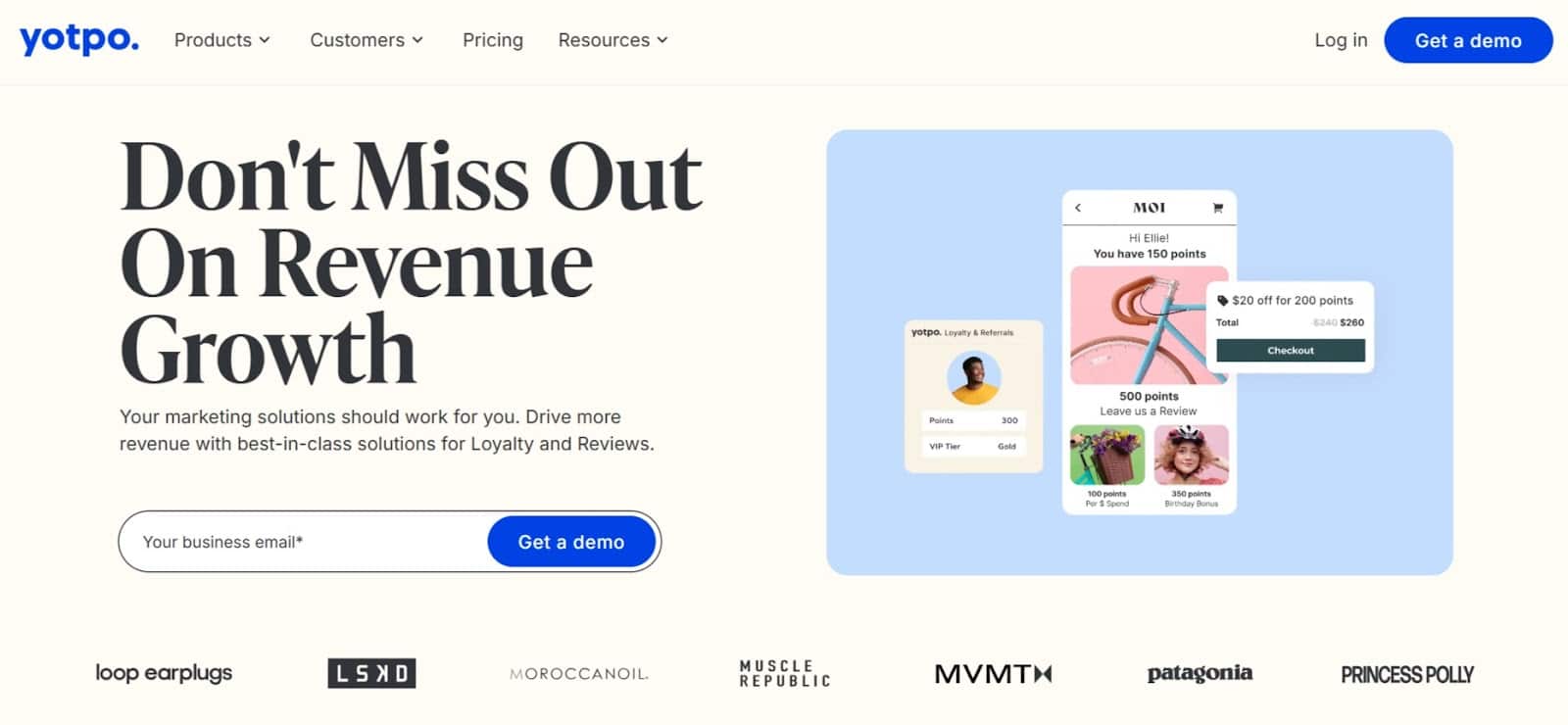
To successfully execute an AEO strategy, brands should continuously feed generative engines with fresh, authentic, and highly structured data. Yotpo Reviews and Yotpo Loyalty work in tandem to provide this critical infrastructure. By utilizing intelligent review collection tools—such as smart prompts and SMS review requests powered through key integrations like Klaviyo or Attentive—brands can capture the precise, conversational user-generated content that LLMs rely on for consensus.
Simultaneously, Yotpo Loyalty helps incentivize the ongoing creation of this rich content through customizable, tier-based rewards, ensuring your brand maintains the omnipresent authority and continuous stream of fresh insights required to support AI-driven discovery.
Conclusion
The architecture of online discovery is transforming, prompting brands to think beyond standard ranking metrics. Answer Engine Optimization focuses on achieving undeniable clarity, structuring data so artificial intelligence confidently presents your product as the ideal solution.
By adopting conversational copywriting, establishing algorithmic consensus through syndicated reviews, and treating structured data as premium digital real estate, you align your business with the mechanics of generative synthesis. Brands that proactively implement an AEO AI approach will be well-positioned to capture the highly qualified, high-intent buyers navigating this evolving digital landscape.
FAQs: AEO AI Approach for Ecommerce Brands
What exactly is Answer Engine Optimization (AEO)?
Answer Engine Optimization is the practice of structuring your website’s content and data specifically for Large Language Models (LLMs) and AI Overviews. Instead of optimizing just for traditional search engine rankings, AEO focuses on providing clear, factual, and direct answers that generative AI can easily extract and cite.
How does Generative Engine Optimization (GEO) differ from traditional SEO?
While traditional SEO emphasizes keyword density and building backlink profiles to rank higher on search engine results pages, GEO prioritizes entity relationships, structured data, and natural language formatting. The goal is fact-level extraction by AI rather than just page-level ranking.
Why do high-ranking organic pages sometimes not appear in AI Overviews?
This occurs due to the “citation gap.” Generative engines often look for highly specific, structured sub-query answers rather than broad domain authority. An AI may cite a lower-ranking page if that page provides a more direct, conversationally formatted answer to the user’s specific question.
How can user-generated content influence AI search results?
LLMs are programmed to seek consensus across the web to verify information. Syndicated reviews and high-quality user-generated content act as third-party validation, helping to build the algorithmic trust needed for an AI engine to confidently recommend your product.
Will AI Overviews completely eliminate website traffic for ecommerce brands?
While top-of-funnel organic traffic may see a dip due to the zero-click paradox, AI Overviews typically filter out low-intent researchers. The visitors who do click through are usually highly qualified and closer to making a purchase, often leading to better conversion rates.
What role does structured data play in an AEO strategy?
Structured data, such as JSON-LD schema, acts as your digital shelf space. It removes ambiguity, allowing AI engines to parse complex information—like pricing, availability, and specific product attributes—with absolute clarity and mathematical certainty.
How should I change my product page copywriting for AI engines?
Consider transitioning to conversational copywriting that utilizes clear Q&A formats. Focus on answering long-tail, multi-variable prompts naturally, ensuring your text directly addresses the nuanced questions shoppers are asking AI assistants.
Can I still rely on email to collect reviews for AEO consensus?
Email remains valuable, but integrating SMS review requests can significantly boost your data collection. SMS requests generally yield higher conversion rates, helping you maximize the volume and freshness of the reviews that AI engines require for consensus.
What are “AI Audits” and how do they help ecommerce strategy?
AI Audits are high-level strategic conversations designed to assess a brand’s current digital footprint. They help you understand how LLMs perceive your products across the web and identify areas where your data structure can be improved for better generative discovery.
How are paid advertisements changing within generative search interfaces?
As generative search evolves, paid ad placements are beginning to integrate directly within or alongside AI Overviews. This compresses organic visibility, making it prudent for brands to prepare a hybrid strategy that combines strong GEO practices with targeted paid campaigns.











 Join a free demo, personalized to fit your needs