








What is an RFM Analysis? Your Guide to Understanding Customers Better
Imagine you have a lemonade stand. You want to know who your best customers are so you can make them happy and keep them coming back. Do you remember the kid who buys lemonade every day? What about the one who bought a super big pitcher last week? Or maybe the one who hasn’t visited in a long time? Understanding these different types of customers is super important for any business, big or small. This is exactly what an RFM analysis helps businesses do! It’s like having a special superpower to understand your customers better, helping you make smarter choices.
RFM stands for Recency, Frequency, and Monetary. These three words are like clues that tell a story about each customer. When businesses use RFM analysis, they’re looking at how recently someone bought something, how often they buy, and how much money they spend. It’s a simple yet powerful way to sort customers into groups so a business can treat them just right.
Why is RFM Analysis Important for Businesses?
Think about your favorite toy store. If they know who their best customers are, they can send them special offers or new product alerts. This makes those customers feel valued and happy, which means they’re more likely to keep shopping there! An RFM analysis helps businesses do exactly that. It’s a smart way to:
- Treat customers specially: By knowing who buys often or spends a lot, businesses can offer them unique deals or early access to new items. This makes customers feel appreciated and important.
- Keep customers happy: When customers feel valued, they tend to stick around longer. This is known as customer retention, and it’s a big deal for businesses. Happy customers often become loyal customers.
- Save money: Instead of sending ads to everyone, RFM helps businesses target only those customers who are most likely to respond. This is like only inviting people who love to play board games to your board game party, instead of inviting everyone in town!
- Make smarter decisions: Businesses can decide which customers need a “we miss you” message and which ones deserve a “thank you for being awesome” gift. This helps them spend their time and resources wisely.
In simple terms, RFM analysis helps businesses know their customers inside and out, leading to happier customers and a more successful business. It’s all about understanding what makes each customer tick and then responding in a way that truly resonates with them.
Diving Deeper: The Three Pillars of RFM
Let’s break down each part of RFM so you can understand what each “clue” really means.
Recency: How Recently Did a Customer Buy?
Recency is all about how fresh a customer’s last purchase is. Did they just buy something yesterday? Or was it a few months ago?
Imagine your friend who just shared a new game with you. You’re probably still excited about it and might want to play it again very soon. Customers are often similar. Someone who bought something very recently is usually still interested in the business and its products. They are often easier to connect with again.
Businesses measure recency by looking at the date of a customer’s most recent purchase. A customer who bought yesterday would have a higher (better) recency score than someone who bought six months ago. Businesses know that recent buyers are more likely to respond to new offers or even make another purchase soon. That’s why it’s a super important clue!
Frequency: How Often Does a Customer Buy?
Frequency tells businesses how many times a customer has bought from them in a certain period. Does someone buy once a week, once a month, or just once a year?
Think about your favorite snack. If you buy it every time you go to the store, you’re a frequent buyer of that snack! For a business, a customer who buys often shows strong interest and loyalty. These customers are gold because they keep coming back.
Businesses keep track of how many orders each customer places. A customer who has made ten purchases in a year has a much higher frequency score than a customer who has only made two purchases. High-frequency customers are often the best candidates for loyalty programs. These programs can reward them for their consistent shopping, making them feel even more special and encouraging them to continue their frequent purchases.
Understanding frequency helps businesses identify their regular shoppers and build stronger relationships with them. It’s a key part of building a loyal customer base.
Monetary: How Much Money Does a Customer Spend?
Monetary focuses on the total amount of money a customer has spent with the business over time. Is it a little bit, or a whole lot?
Imagine your friend who always brings the biggest, most delicious snacks to the get-together. They contribute a lot! In the business world, some customers spend a lot more money than others. These high-value customers are incredibly important because their spending contributes significantly to the business’s success.
Businesses calculate the total amount of money each customer has spent. A customer who has spent $500 over time would have a higher monetary score than a customer who has spent only $50. High monetary value customers are often VIPs, and businesses want to make sure they are extra happy.
Knowing who the big spenders are helps businesses understand who their most valuable customers are. They might get exclusive offers or special perks through loyalty programs designed for high spenders. This encourages them to keep shopping and spending more, which is a win-win for everyone.
How Does RFM Analysis Work?
Putting RFM into action is like solving a puzzle, but a fun one that helps businesses grow. Here’s how it usually works:
Step 1: Get Your Customer Data
First, a business needs to gather information about all its customers’ past purchases. This data usually includes:
- The exact date of every purchase.
- The number of purchases each customer has made.
- The total amount of money each customer has spent.
This information is usually stored in a business’s sales records or customer database. It’s the raw material for RFM analysis.
Step 2: Assign RFM Scores
Once the data is collected, each customer gets a score for Recency, Frequency, and Monetary. These scores are usually on a scale, like 1 to 5, where 5 is the best (most recent, most frequent, most money spent) and 1 is the lowest. Let’s look at an example:
| Score | Recency (Days Since Last Purchase) | Frequency (Total Purchases) | Monetary (Total Spend) |
|---|---|---|---|
| 5 | Very Recent (e.g., 0-30 days) | Many (e.g., 10+ orders) | High (e.g., $500+) |
| 4 | Recent (e.g., 31-60 days) | Quite a few (e.g., 6-9 orders) | Good (e.g., $250-$499) |
| 3 | Average (e.g., 61-90 days) | Average (e.g., 3-5 orders) | Medium (e.g., $100-$249) |
| 2 | Not so Recent (e.g., 91-180 days) | Few (e.g., 2 orders) | Low (e.g., $51-$99) |
| 1 | Not Recent at all (e.g., 180+ days) | Very few (e.g., 1 order) | Very Low (e.g., $0-$50) |
So, a customer who bought yesterday, has made 15 purchases, and spent $1000 would get a score like 5-5-5. That’s a top-tier customer!
Step 3: Segment Your Customers
Once every customer has an RFM score, businesses group them into different segments. These segments are like teams, and each team needs a different strategy. Here are some common customer segments:
-
Champions (5-5-5 or similar high scores)
These are your best customers! They buy often, spend a lot, and bought recently. They love the business.
What to do: Thank them, reward them, and ask them to share their positive experiences. Businesses often ask Champions to leave reviews or refer friends. Yotpo Reviews helps businesses easily gather these amazing stories and display them for everyone to see, boosting trust and attracting new customers.
-
Loyal Customers (high F and M, good R)
These customers buy frequently and spend good money, even if their last purchase wasn’t yesterday. They are very reliable.
What to do: Keep them happy with loyalty programs and special offers that encourage continued engagement. Yotpo Loyalty allows businesses to create exciting reward programs that make these customers feel special and ensure they keep coming back.
-
New Customers (high R, low F and M)
They just made their first purchase! They’re still getting to know the business.
What to do: Welcome them, help them discover more products, and encourage a second purchase. A quick follow-up asking for a review can also be a good way to engage them early on.
-
At-Risk Customers (low R, decent F and M)
These customers used to buy often and spend well, but they haven’t bought anything recently. They might be thinking about leaving.
What to do: Try to win them back with special discounts or personalized “we miss you” messages. Understanding what they bought previously can help craft a relevant offer.
-
Churned Customers (very low R, low F and M)
These customers haven’t bought in a very long time and likely won’t come back easily.
What to do: While it’s harder to get them back, some businesses might try a final, very tempting offer, or simply focus their efforts on more active customers.
By segmenting customers in this way, businesses can create targeted plans that speak directly to the needs and behaviors of each group.
How Yotpo Helps with RFM Insights and Action
Understanding your customers through RFM is powerful, but acting on those insights is where the real magic happens. That’s where tools like Yotpo Reviews and Yotpo Loyalty come into play, helping businesses transform RFM data into real customer relationships and growth.
Understanding Your Customers with Yotpo Reviews
RFM analysis tells you what your customers are doing (how recently, how often, how much). But sometimes, you also need to know why they do it, or what they think about their purchases. This is where Yotpo Reviews becomes an invaluable part of your customer understanding strategy.
Yotpo Reviews helps businesses gather and show off customer feedback, like ratings, written reviews, and even photos or videos from customers. This feedback is super helpful when you’re looking at your RFM segments. For example:
- Your Champions segment likely leaves glowing reviews. Businesses can use Yotpo Reviews to easily collect these amazing stories. These positive reviews then become a powerful tool to attract new customers and reinforce the trust your best customers have in you. Asking for reviews from these happy customers is a natural next step.
- For At-Risk Customers, their past reviews (or lack thereof) might give clues on how to improve and win them back. Maybe they mentioned a small issue that could be fixed, or they simply haven’t felt engaged.
- Even for New Customers, seeing product reviews from others can build confidence and encourage them to make a second purchase, moving them towards becoming loyal customers.
By combining the quantitative data from RFM with the qualitative insights from Yotpo Reviews, businesses get a much clearer picture of their customers’ journey and their feelings, allowing for more targeted and empathetic engagement.
Building Loyalty with Yotpo Loyalty
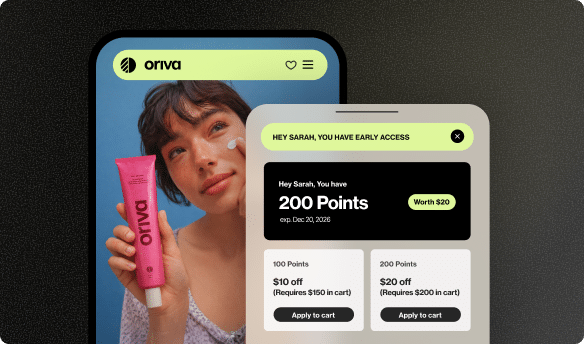
Once you know who your Champions and Loyal Customers are through RFM analysis, Yotpo Loyalty helps you reward them effectively. These programs are all about making your best customers feel special, encouraging them to keep coming back, and even spending more.
With Yotpo Loyalty, businesses can create flexible and exciting reward programs tailored to different RFM segments:
- For your Champions and Loyal Customers, you can offer exclusive perks, early access to sales, or special discounts that acknowledge their consistent support. This reinforces their loyalty and encourages continued high-frequency and high-monetary behavior. You can even reward them for referring new friends to the brand.
- For New Customers, a loyalty program can provide an incentive for their second purchase, helping to quickly move them up the RFM ladder.
- Even for At-Risk Customers, a special loyalty offer, like bonus points for their next purchase or a unique reward, can be a compelling reason to reconnect with the brand. This directly supports your ecommerce retention efforts.
Yotpo Loyalty provides the tools to build best-in-class loyalty programs that nurture customer relationships, helping businesses retain customers and increase their lifetime value.
Combining Reviews and Loyalty for Better Results
Imagine a Champion customer identified by RFM analysis. Yotpo Loyalty rewards them for their purchases, making them feel valued. Feeling appreciated, they’re often more likely to leave a glowing review using Yotpo Reviews. This powerful review not only boosts trust for new shoppers (which helps with ecommerce conversion rates) but also further solidifies that Champion’s connection to the brand. This creates a cycle where loyalty drives positive reviews, and reviews enhance the overall brand experience, leading to more loyal customers. It’s a fantastic example of word-of-mouth marketing in action.
Real-World Examples of RFM in Action
Let’s see how a business might use RFM in everyday situations:
-
Sending a special treat to a “Champion” customer:
A clothing store identifies Maya as a “5-5-5” customer. She buys new clothes frequently, spends a lot, and just bought a new dress last week. The store sends her an email with an exclusive preview of their new collection and a small “thank you” gift code for her next purchase. They also encourage her to share her feedback using Yotpo Reviews, knowing her opinion is highly valued. -
Bringing back an “At-Risk” customer:
A pet supply shop sees that Leo used to buy food and toys every month, but hasn’t made a purchase in three months (low recency). They identify him as “At-Risk.” The shop sends Leo an email with a friendly “We miss you!” message and a special 15% off coupon for his next order. They might also highlight new products for pets that they think Leo’s furry friend would love, based on past purchases. -
Encouraging a “New Customer” to become “Loyal”:
A coffee bean company sees Sarah just bought her first bag of beans (high recency, low frequency, low monetary). They want to encourage her to become a regular. A week later, they send her a welcome email, explaining their loyalty program and offering bonus points if she makes a second purchase within a month. They also invite her to leave a review of her first purchase, making her feel included and valued. -
Rewarding “Loyal Customers” with exclusive access:
A beauty brand uses RFM to spot customers like Chloe, who consistently buys their products and spends good money. Through Yotpo Loyalty, Chloe is part of a special tier. When a new limited-edition product is released, Chloe and other loyal customers get an exclusive email with a secret link to buy it a day before anyone else. This makes them feel like VIPs and reinforces their dedication to the brand.
These examples show how RFM analysis helps businesses personalize their approach, making customers feel seen and appreciated, which is key to building lasting relationships.
Tips for Using RFM Analysis
Using RFM analysis effectively doesn’t have to be complicated. Here are some simple tips for any business:
- Start Simple: Don’t try to create too many segments at once. Begin with the main ones like Champions, Loyal, At-Risk, and New Customers. You can always add more detail later.
- Keep an Eye on Your Scores: Customer behavior can change! Regularly update your RFM scores (monthly or quarterly) to see if customers are moving between segments. This helps you react quickly.
- Don’t Forget New Customers: While RFM is great for existing customers, remember to have a strategy for turning those first-time buyers into frequent shoppers. Welcome programs and early loyalty incentives are key.
- Always Listen to Your Customers: RFM tells you what people are doing, but listening to their feedback helps you understand why. Tools like Yotpo Reviews let customers share their thoughts, which can inform your RFM strategies and help you improve.
- Reward Your Best Customers: Your Champions and Loyal Customers are priceless. Make sure they know it! Use Yotpo Loyalty to create programs that truly appreciate their dedication and keep them engaged.
By following these tips, businesses can use RFM analysis to build stronger relationships with their customers and encourage them to become even more connected to their brand.
Conclusion
RFM analysis is a super smart tool that helps businesses understand their customers better by looking at three simple things: how recently they bought (Recency), how often they buy (Frequency), and how much they spend (Monetary). It’s like having a special map that shows you who your best customers are, who might need a friendly reminder, and who you should thank extra specially.
By grouping customers into different segments based on their RFM scores, businesses can create personalized experiences. This means sending the right message to the right person at the right time, making customers feel valued and understood. And when customers feel valued, they’re more likely to stick around, become loyal fans, and tell their friends about their great experiences.
Tools like Yotpo Reviews help you gather important customer feedback that complements your RFM data, giving you the full picture of what your customers think and feel. Meanwhile, Yotpo Loyalty empowers you to build amazing reward programs that celebrate your best customers and encourage them to stay engaged. Together, these tools help businesses act on their RFM insights, turning data into delightful customer relationships and ultimately, greater success. It’s all about making every customer feel like a VIP!










 Join a free demo, personalized to fit your needs