






“Yotpo is a fundamental part of our recommended tech stack.”
 Laura Doonin, Commercial Director

AI is reshaping how products get found and bought. These 10 tactical moves will help you win both AI and humans: 5 to win agent visibility and 5 to build the loyalty that makes your brand impossible to leave.

Here’s the problem with agentic commerce: the better AI gets at finding products, the easier it becomes for brands to disappear. Agents don’t care about your story. They care about your data and if it’s structured, fast, and accurate. If you’re not optimized for them, you’re not in the conversation. But if you only optimize for them, you become interchangeable. Just another SKU in a sea of SKUs. That’s not a hypothetical, it’s the direction every major platform is moving.
By 2030, nearly half of online shoppers will use AI agents, adding $115B to US ecommerce.
That means brands now face two buyers with fundamentally different needs: agents that discover you through data and humans that choose you and stay because of connection.
Agents may become the new gatekeepers of product discovery, but humans still decide what deserves their loyalty. Anyone can compete on price, specs, or availability, but loyalty is the one advantage AI can’t replicate.
To win the next era of ecommerce, brands will need to do both: make their data agent-ready and build a loyalty program that turns customers into repeat buyers and advocates.
This playbook shows you how. Inside are 10 actionable ways to win both buyers: the agents discovering your products and the humans deciding which brands are worth staying with.

The entire history of ecommerce has been about capturing human attention. SEO, paid search, influencer marketing, product photography, conversion rate optimization. All of it designed around humans who browse, compare, get distracted, and eventually buy.
Agents don’t work that way. They query, evaluate, and transact. When a human shops, they care about dozens of subjective factors. Does the brand feel premium? Do I trust this company? When an agent shops, the decision function is simple: can this product solve the user’s problem? Is it in stock? What’s the price? What do verified reviews say? How fast can it ship?
The only thing that matters to the agent is whether your product data is structured, accessible, and accurate. And if it’s not, you don’t exist.
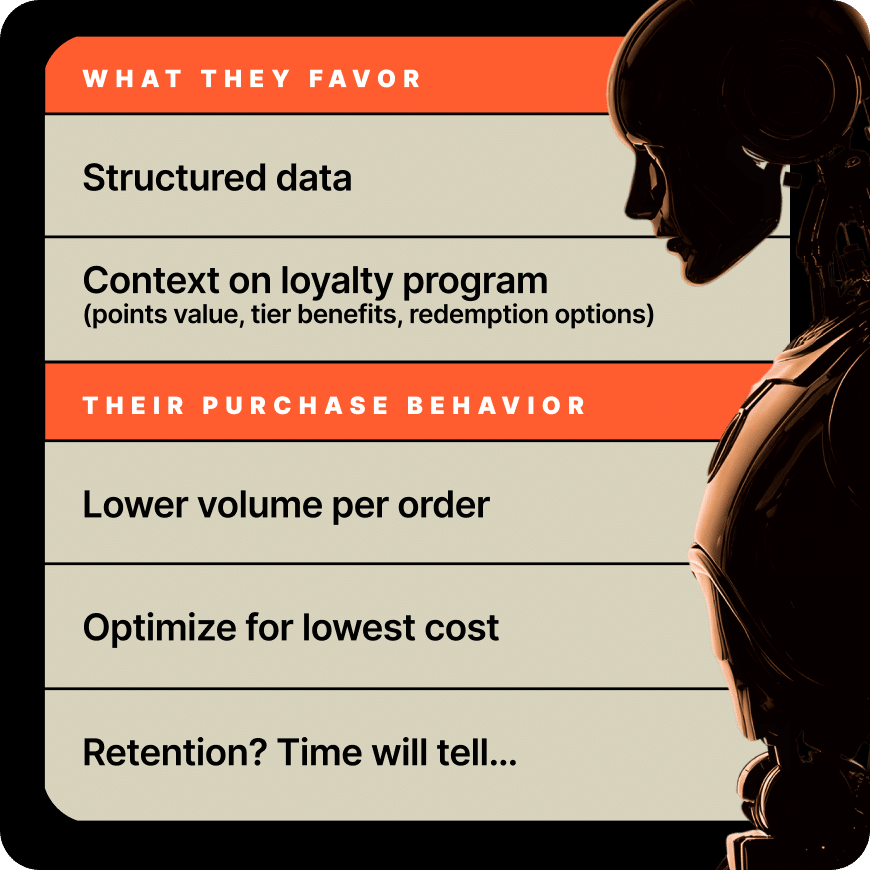
Here are 5 actions you can take right now to make sure agents find, evaluate, and recommend your brand:
Make your loyalty data machine-readable and API-accessible. Agents will start to factor loyalty into their purchase decisions. They need to know: does this customer have points? What tier are they? What can they redeem?
If that data isn’t exposed through structured feeds or APIs, your loyalty program doesn’t exist in their world. Here’s what’s at stake: when an agent is comparing two similar products at the same price point, the one that can surface “this customer has 2,000 points ready to redeem” or “free shipping for VIP members” wins. Your loyalty program becomes a competitive advantage in the recommendation, not just a retention tool after the sale. It’s the difference between being one of five options and being the obvious choice.
To do this, your loyalty page itself needs to be structured so AI engines can read it. Here’s what agents are looking for:
Program benefits. List your perks explicitly on your loyalty page and in your terms: discounts, birthday gifts, free shipping, early access, tier-up rewards. Clear benefit text lets AI engines extract and summarize what members get, so when a shopper asks “is their loyalty program worth it?” the agent has an answer.
How to join. Make enrollment instructions direct and actionable. Clear CTAs, signup incentives (“Join now, get 100 points”), and whether it’s automatic or account-based. If an AI assistant can’t tell a shopper how to join your program in one sentence, you’re losing that moment.
Rewards structure. Spell out your earning and redemption rates in plain, structured language. 10 points per $1 spent. 1,000 points = $10 reward. VIP thresholds and what each tier unlocks. Agents need to compute and explain point math to shoppers. If your structure is buried in marketing copy or hidden behind a login, it doesn’t exist to them.
Value proposition. Give AI engines the language to sell your program on your behalf. Concrete perks paired with clear messaging. Not “join our amazing rewards family” but “free shipping on every order, 10% off your first purchase, early access to drops.” The more specific and structured, the more likely an agent surfaces your program as a reason to buy from you over a competitor.

Here’s what to check right now:
Your loyalty program can tip an agent’s recommendation in your favor, but only if the agent knows it exists and what it offers. And building that visibility starts with who you’re working with for loyalty. Google has already confirmed that loyalty integration is coming to agentic shopping. That means the platforms agents run on will soon be pulling loyalty data directly into purchase decisions. The brands working with a leading loyalty provider that’s already building for this shift will have earlier access and a head start.
If you’re not already optimizing for Google Shopping and Facebook Shops, start there. Complete attributes, accurate specs, real-time inventory. This isn’t optimization, it’s table stakes for showing up. Meta’s shopping agents will pull from Instagram Shops and Facebook Marketplace, where product data is already structured. Google’s AI shopping will use Merchant Center feeds. Amazon’s conversational commerce will query their existing product catalog. The common thread is structured, machine-readable product data, not marketing copy or lifestyle photography. Data that can be queried, filtered, and compared programmatically. If your product catalog isn’t in these feeds with complete, accurate attributes, you won’t make it into the initial query response, and the sale is lost before any evaluation happens.
Here’s what to check right now:
AI engines cross-reference your product details across your brand site, retailer listings, and review platforms. When information matches across trusted sources, the model gains confidence in your product and is more likely to recommend it. Inconsistent data, missing specs, or broken schema make products drop out of contention fast. Syndicate your product data consistently across every surface AI models read: your site, your retail partners, your marketplaces.
Move specs out of marketing copy and into structured fields. Agents can’t parse “lightweight and responsive” into a recommendation. They need attributes they can evaluate like weight: 283g, drop: 8mm, cushioning: neutral.
This is fundamentally different from SEO. With SEO, poor optimization means you rank on page 3 instead of page 1. With agent discovery, poor data structure means you’re not evaluated at all. The agent queries a product database looking for structured data, retrieves results that match the shopper’s request, evaluates those options and selects from them. If your product didn’t make it into that initial response because your specifications were buried in paragraph copy instead of structured fields, you were never in the running.
Shoppers are also changing how they search. Instead of typing short keywords, they describe exactly what they want in detail: “best neutral running shoe for marathon training under $180”
For AI to match your product to queries like that, it needs clear attributes to evaluate. Every attribute you publish online, from dimensions to use cases, helps AI connect your product to real questions.
That includes details like: dimensions and weight, materials and/or ingredients, compatibility or use case, performance attributes, category-specific specs (like cushioning, battery life, or SPF.)
Having readable text is not enough, you need to make sure your product pages use structured schema markup so those attributes can be interpreted programmatically. Specifications should live in fields that can be filtered, compared, and queried.
Here’s what to check right now:
The more clearly your product attributes are defined, the easier it is for AI to match your products to real shopper intent. So you need to be going deeper than keywords and adding use-case and category context. That way agents can understand what your product is, and when/why it should be recommended.
When an agent queries for product recommendations, response time matters. If your product feed takes 3 seconds to return results while a competitor’s returns in 200 milliseconds, the agent will deprioritize your catalog. Speed is part of the evaluation function, and reliability works the same way. If your inventory data is frequently wrong (showing items as in stock when they’re not, or listing incorrect specifications), agents will learn to deprioritize your catalog. Accuracy is a weighted variable in the scoring function for product recommendations.
Here’s what to check right now:
We’re already seeing this pattern in AI-powered search: when ChatGPT or Perplexity cite sources, they favor sites with consistent, accurate, structured data. The same logic will apply to product recommendations.
Do you show up? If you’re not surfacing, now you know where to start. Knowing you’re invisible is only step one, fixing it is step two. Yotpo Discover is the first AEO platform built for ecommerce. It integrates into your commerce stack to track how your products rank across AI engines by product, category, market, and funnel stage.
You see exactly where you appear, where you don’t, which competitors rank ahead of you (including ones that aren’t on your traditional radar), and what’s driving their position. It shows you where your visibility gaps are, then it helps you close them.
On-site, its specialized AI agents identify where your pages need stronger coverage and generate optimized content informed by real customer reviews and search themes.
Off-site, it activates your real reviewers and loyalty communities to build authority across the ecosystems AI engines reference, from publisher sites and retail marketplaces to forums. All powered by over a decade of real data from billions of ecommerce transactions, authentic reviews and loyalty data, not synthetic content.
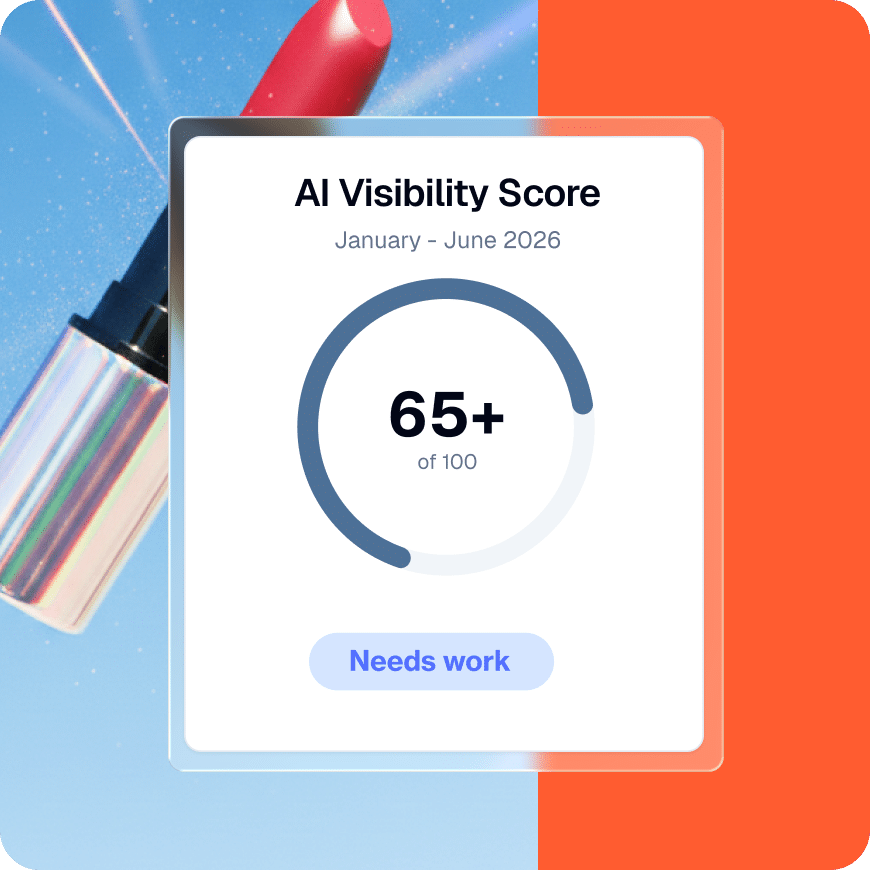
The result: your products show up more often, compete more effectively, and you gain real control over how AI surfaces your brand.
Try it for yourself, get early access to the first AI visibility platform built for ecommerce: Yotpo Discover
As agents get better at finding products, brands risk becoming more interchangeable. Discovery gets outsourced to algorithms, customers convert without ever visiting your site and differentiation collapses.
Unless you build something an agent can’t replicate.
The entire history of loyalty has been about transactions: points earned, discounts redeemed, repeat purchases tracked. That’s not where real lasting loyalty lives. When a human chooses to come back to your brand, the decision function is different from an agent’s. They are looking for something deeper than price or specs. Shoppers want to feel like the brand gets them, that the experience feels personal and gives them a reason to stay that goes beyond the rational.
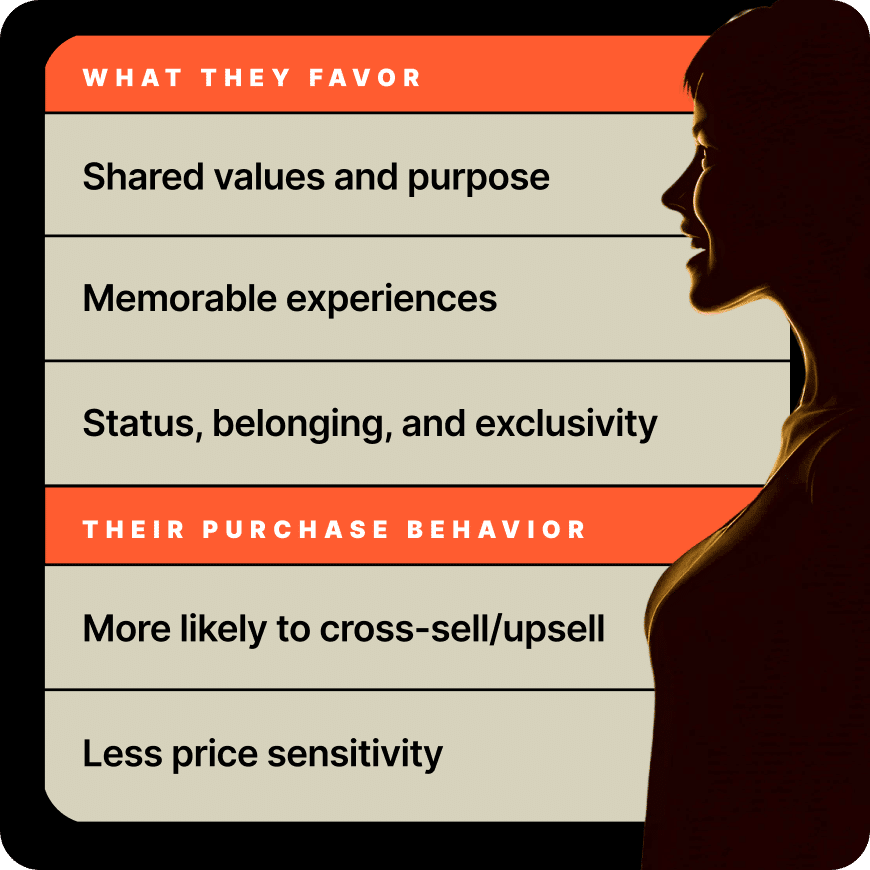
64% of shoppers define loyalty as choosing a brand over competitors even when cheaper alternatives exist.¹ That kind of commitment isn’t bought with points alone, it’s earned through connection.
That’s why brands that incorporate experiential loyalty into their retention strategy see a 57% increase in engagement and a 14% lift in AOV compared to purely transactional programs.²
That gap will only widen as agentic commerce grows, because the brands investing in human connection are building the one thing that can’t be algorithmically commoditized.

Here are 5 actions you can take right now to make your loyalty program the reason your brand is chosen again and again:
Build your loyalty program around what uniquely motivates your customers, not what works for someone else’s audience. Half of all shoppers say their decision to join a loyalty program depends on what brand¹ it is, so your program should reflect what your customers actually care about.
When designing or updating your program, you shouldn’t guess what customers want, you need to actually ask them. Use surveys, reviews, and direct feedback to understand what experiences, rewards, or perks would actually make them feel valued. Then validate those insights with behavior. Your loyalty data shows you what customers actually respond to. Segment your most engaged members and analyze which rewards get redeemed, which tiers drive the most repeat purchases, and where drop-off happens.
The combination of what customers tell you and what they do gives you a clear blueprint for designing a program that keeps them coming back.
Motivation today goes beyond discounts. Once you understand what drives your customers, the most effective loyalty programs turn those motivations into experiences. That means you need to be layering in experiential perks. Now, the exact perks will look different for every brand, but the goal is the same: turn what your customers care about into experiences that make them feel like insiders.
That might mean:
The possibilities are truly endless, but what matters more than anything is that the experience is tailored to reflect your brand and what your customers value most.
260 Sample Sale did exactly this. They aligned their loyalty perks with sample sale psychology, giving VIPs early or exclusive access to shopping events and priority spots in line. They built around what their customers actually cared about and saw a 24% increase in returning customer rate since launching 260 Inner Circle.
Goodr took a different route. Their customers are runners and active community members, so the brand built loyalty experiences around that lifestyle. Instead of relying on discounts alone, Goodr leaned into what motivates their audience most: community and belonging.

Your relationship with your customers doesn’t begin and end at checkout. The strongest loyalty programs recognize the moments between purchases, when customers are exploring products, engaging with your brand, and sharing their experiences. Reward those moments, give points for writing reviews, taking quizzes, following on social media, referring friends, signing up for email/sms, or celebrating milestones.
These actions signal commitment long before the next transaction happens. When you reward engagement instead of spend alone, you recognize the full relationship, not just the receipt, and you build loyalty in places AI can’t operate.
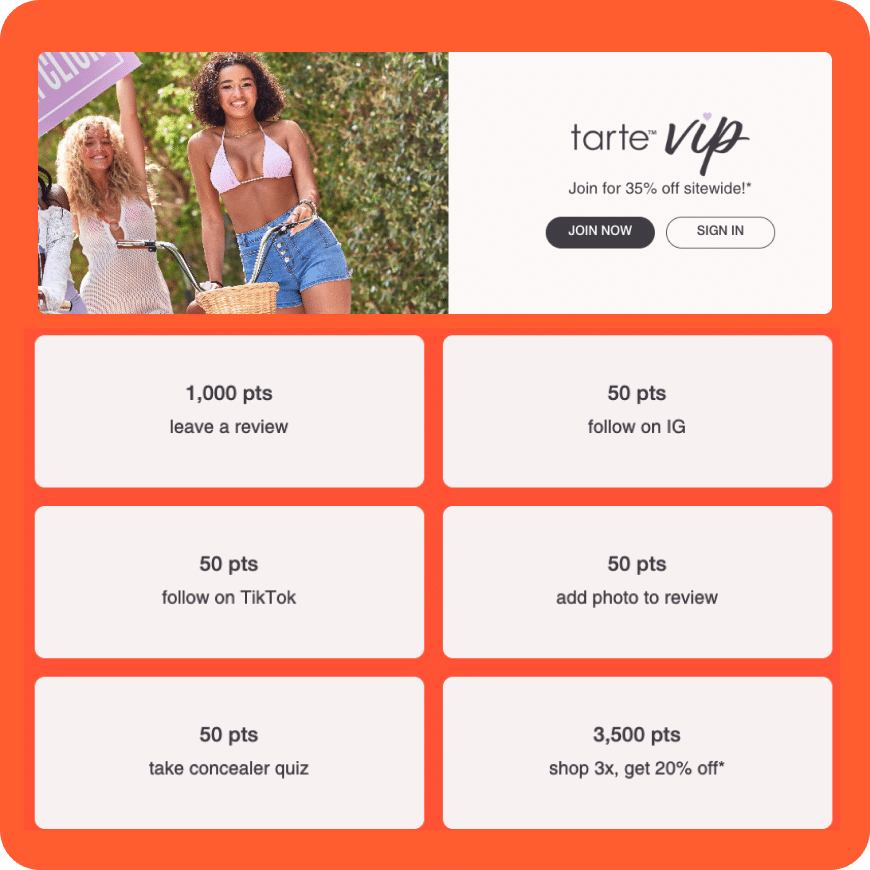
Tarte is a great example of the success that can come from rewarding members for more than how much they spend. The brand gives shoppers points for actions like taking product quizzes, following them on social media, opening emails, and writing reviews.
Members can earn 50 points for completing a product quiz or for following Tarte on social media. That means a two-minute quiz or a social follow earns the same number of points as spending $5.
By rewarding curiosity, engagement, and feedback, Tarte turns everyday brand interactions into loyalty moments. The result is a program that encourages customers to participate, leading to 20% higher lifetime value among loyalty members.
You can also layer in campaigns like double-points weekends or tier-specific promotions to keep the program feeling fresh and give customers new reasons to engage while feeling noticed and appreciated for their loyalty.
Your tier structure can reinforce this too. Love Wellness designed their program so that each tier unlocks more to enjoy, and non-transactional points make moving up attainable, not just for big spenders. When customers can earn points for writing reviews, referring friends, and engaging with the brand between purchases, the path from the New Love tier to the Endless Love tier feels like a natural progression of the relationship, not a spend threshold to grind toward. That’s the key: tiers should feel like a deepening connection, not a paywall. The more ways customers can earn, the more they engage. The more they engage, the more invested they become. And invested customers don’t leave when an agent suggests a cheaper alternative.
The fastest way to turn buyers into believers is to hand them the pen. Let your top tiers vote on upcoming products, colorways, features. When customers have a hand in shaping what you make, they have a reason to stay that no competitor (or AI) can match.
Influence doesn’t have to stop at product design. It can include early feedback on new launches, community voting on limited editions, or direct conversations with the people building the brand. Co-creation builds ownership, and ownership builds advocacy.
Fleur du Mal takes this literally. Their Mile High Club tier members get to design an exclusive 3-piece lingerie set with the Fleur du Mal NYC team. That’s not a perk, it’s a partnership.
Use your VIP tiers to gate these opportunities. Your highest-tier members should feel like insiders with access to exclusive consultations, product previews, and the ability to shape what comes next. Design tier thresholds and benefits that reward your most committed customers with access and influence in addition to discounts.
Beekman 1802 shows what this looks like when it’s done with intention. What started on a farm in upstate New York is now the world’s largest goat milk skincare company. Their loyalty program goes beyond points and discounts, offering top-tier members exclusive perks that feel like an invitation into the brand itself. Once customers experience that, they’re emotionally invested in a way no discount can replicate.

Customers don’t think in channels. They don’t see a difference between your website, your store, your mobile app, or a partner retailer. To them, it’s all one brand experience. But many loyalty programs still operate in silos. Omnichannel loyalty means one customer, one profile, and one rewards experience everywhere someone interacts with your brand. Whether they shop online, visit a store, buy through a partner retailer, or engage on mobile, their activity should contribute to the same relationship. To make this work, you need to connect your in-store and online loyalty infrastructure.
Integrate your POS so loyalty members are instantly identified at checkout with their points and tier status ready to go. Set up in-store earning rules that let you create point multipliers and bonus rewards for physical purchases. Enable receipt scanning so customers who buy from wholesale or retail partners can still earn points by uploading their receipt. The goal is simple: no matter where someone buys from you, it counts.
Colorescience proves what this looks like when it works. With a model that spans DTC online and dermatologist and medical spa offices, they reward customers who purchase direct no matter if it is on site or in-office with points on every purchase, early sale access, members-only offers, and double points events. The result: redeemers showed a 30% repeat purchase rate versus 10% for non-redeemers. Tangible rewards across channels kept customers choosing Colorescience again and again in an oversaturated market.
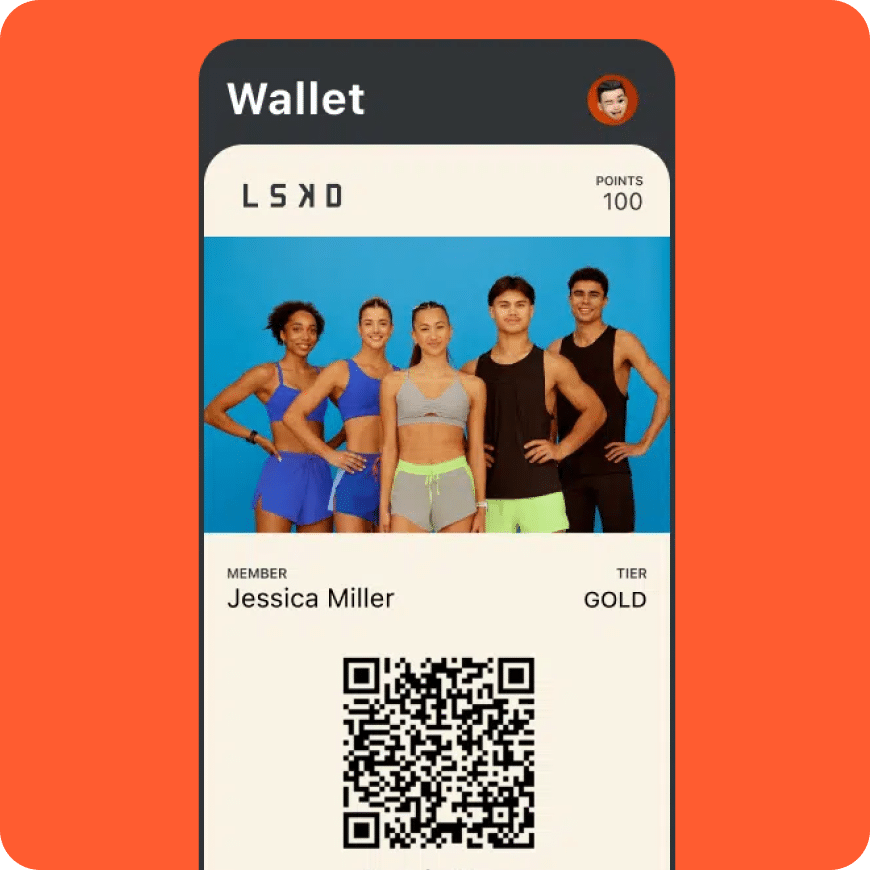
Put your loyalty program in their pocket. Mobile wallet passes keep your brand visible on your customers’ phones every day, even when they’re not shopping.
Members can save their tier status and points balance directly to Apple Wallet or Google Pay, with push notifications that remind them about available rewards, nearby store offers, or early access drops. It turns a passive loyalty membership into an active, always-on touchpoint.
LSKD is a perfect example of the impact loyalty that lives in your customers wallet can have. They rolled out Novel wallet passes across their retail locations so shoppers could scan a QR code at checkout, create an account in seconds, and get an instant reward. No friction, no forms. Weekly scans grew fast, staff had a new tool to actively engage shoppers, and the brand captured in-store data they’d previously only been able to get online all while making the customer experience as smooth as possible. The result: a 41.2% repeat customer rate and a 39.35% increase in sales from repeat customers.
Walk your customer journey from confirmation email to second purchase and find the gaps. Those are the moments where a well-timed human touch (a handwritten note, a surprise upgrade, a check-in) turns a transaction into a relationship. The connection you build here is what makes the difference between a one-time buyer and a repeat customer.
Think about what happens after the first order and use your loyalty program to create moments that make the customer feel noticed and special. Trigger milestone rewards, send early access to your best customers, or activate your referral program to turn one happy buyer into two.
Fenwick built their loyalty structure around this idea. Every member gets priority booking for in-store events and access to members-only shopping experiences. Top-tier members get exclusive brand previews and partner events. The result: customers who feel like VIPs at every touchpoint, not just at checkout. Fenwick proves that the post-purchase experience is where that feeling gets built.
Outcast takes this even further. Their loyalty program surprises customers when they least expect it. Top-tier members receive custom merch boxes twice a year without any advance notice, curated based on their previous purchases. For Valentine’s Day, the brand hand-selected products for each VIP and shipped them as a gift. Beyond that, Outcast merges influencer events with loyalty experiences, inviting their top members to attend the same events as influencers so they get to experience the brand at its most exciting. The program extends into offline branded events, festivals, and activations, bringing loyalty to life beyond the screen. It’s proof that when you build surprise, belonging, and real-world connection into the post-purchase experience, loyalty stops being a program and starts being a relationship.
Agents will keep getting smarter. They’ll get faster at comparing prices, parsing specs, and routing purchases. That’s not a threat, it’s the landscape. The threat is having nothing left to offer once the algorithm has done its job. Investing in human connection now gives your brand an advantage AI can’t compete with, it gives every customer a reason to come back even when every agent says there’s a cheaper option.
So you need to start optimizing for agents so that your brand gets discovered, yes, but investing in human connection is what will make your brand chosen, again and again. The brands that win the next five years won’t pick one side. They’ll run both playbooks: structured data for the agent, experiential loyalty for the human. But the ones who will move the fastest? Those will be the ones working with a loyalty provider who understands how to optimize for both audiences.
Yotpo has spent over a decade building loyalty programs for thousands of ecommerce brands, from emerging DTC to global enterprise. That experience means we understand what drives retention at every stage, and we’re already building the infrastructure to make loyalty data agent-ready. From structured, machine-readable program data to experiential tier design and omnichannel connectivity, Yotpo is built for what’s next: helping brands stay visible to agents while deepening the human relationships that keep customers coming back.
Start with the 10 actions in this playbook and build from there.
Check how AI ranks your products with Yotpo Discover, and explore how Yotpo Loyalty can help you build the program that keeps humans choosing you.
¹ From Yotpo’s 2025 Global Shopper Survey
² From Yotpo analysis of 25,000+ brands running active loyalty programs
“Yotpo is a fundamental part of our recommended tech stack.”
Laura Doonin, Commercial Director




 Join a free demo, personalized to fit your needs