






“Yotpo is a fundamental part of our recommended tech stack.”
 Laura Doonin, Commercial Director

CommerceGPT: edition 04

The fight for product discovery is moving from search bars to smart summaries. As Google AI and ChatGPT become the new front doors to eCommerce, brands must rethink how they show up—or risk disappearing before the first click.
TL;DR
Last thing before we dive in:
this chapter is built upon the topics we reviewed in the previous newsletters, so if you haven’t already, I suggest you to read edition 02- Why You Should Care About Bing & Chapter 3 – The Invisible Brands of ChatGPT
Even if your first instinct is, “But who even uses Gemini? I’m all-in on ChatGPT,” don’t overlook what’s happening right under your nose. Google is quietly, yet powerfully, changing the way we discover products—and Gemini is at the heart of it, whether you realize it or not.
Think about it: Have you recently searched for something on Google and noticed a concise, conversational summary popping up right above the usual blue links? That’s Google’s new AI Overview in action. It effortlessly pulls in key quotes, product suggestions, and quick insights before you even click a link. You probably didn’t even realize Gemini was behind it, but this AI-driven snapshot is quickly becoming your brand’s new first impression.
AI Overview:
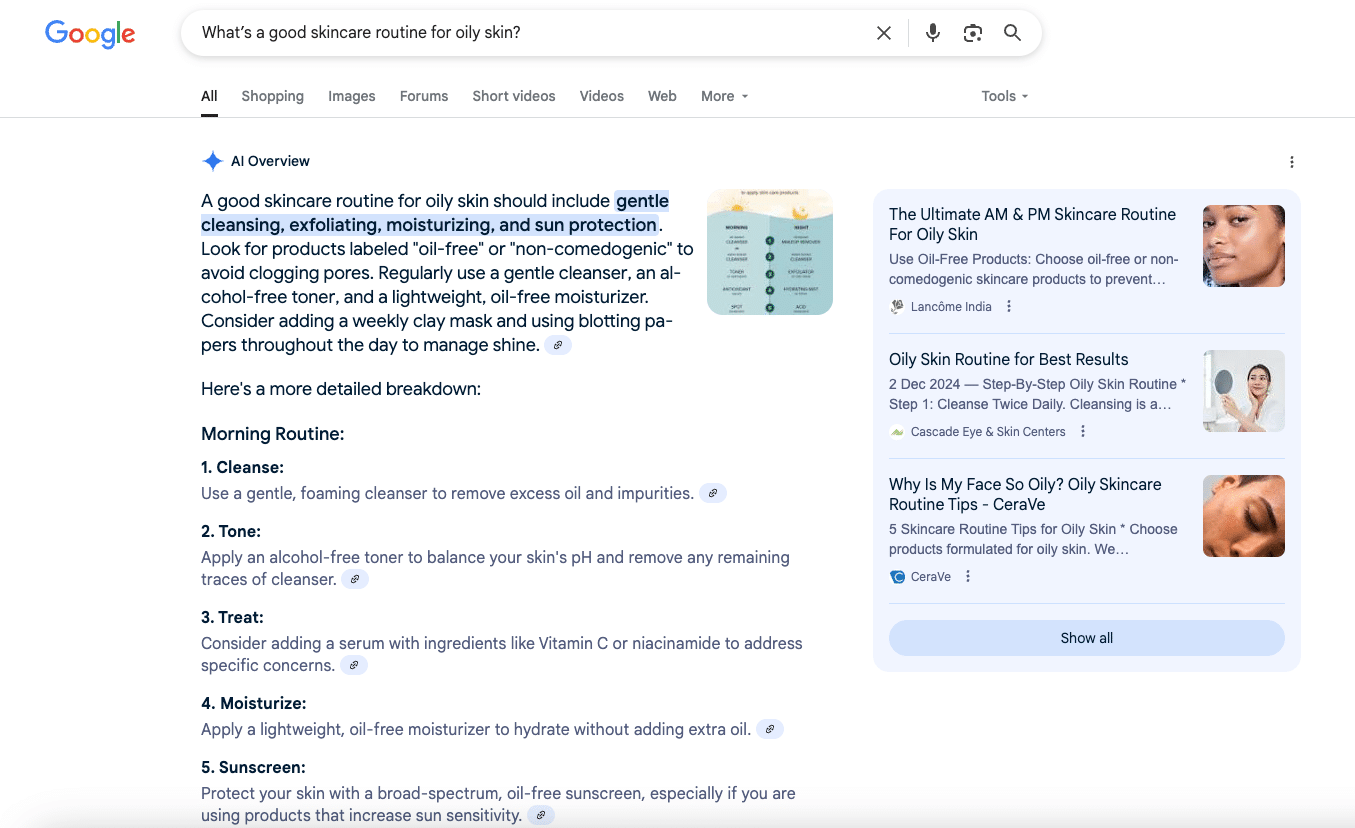
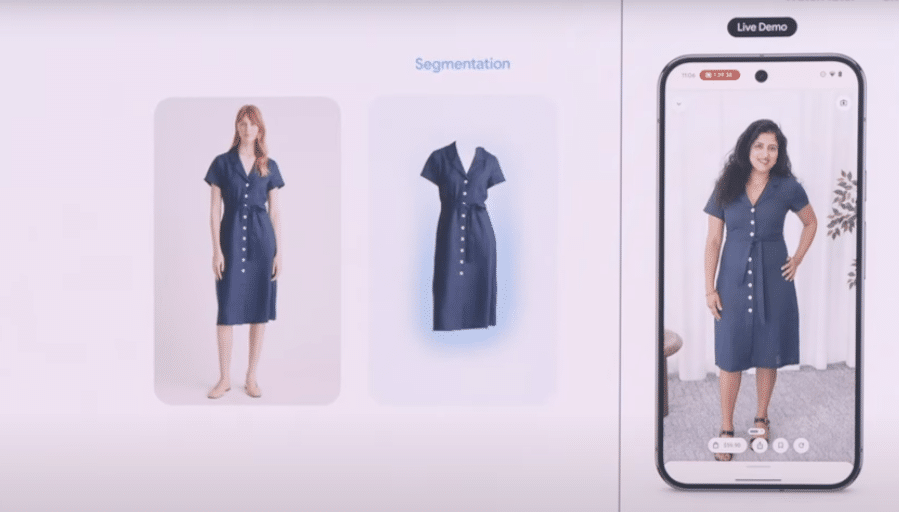
Or maybe you’ve seen a tab labeled “AI” while searching for products. That’s Google’s AI Mode, which takes product discovery to another level. Imagine searching for a dress and being able to virtually try it on, compare different styles, track price changes, and even complete your purchase—all without ever leaving that one AI-powered tab. While this feature is currently rolling out and available only in the US, its potential to reshape global shopping experiences is clear.
AI Mode:
The bottom line? Even if you don’t consciously use Gemini, it’s already woven into the Google Search you use daily. So showing up in Gemini-powered results is the new front line of SEO, ignore it, and your brand vanishes before shoppers even click.
How People Discover
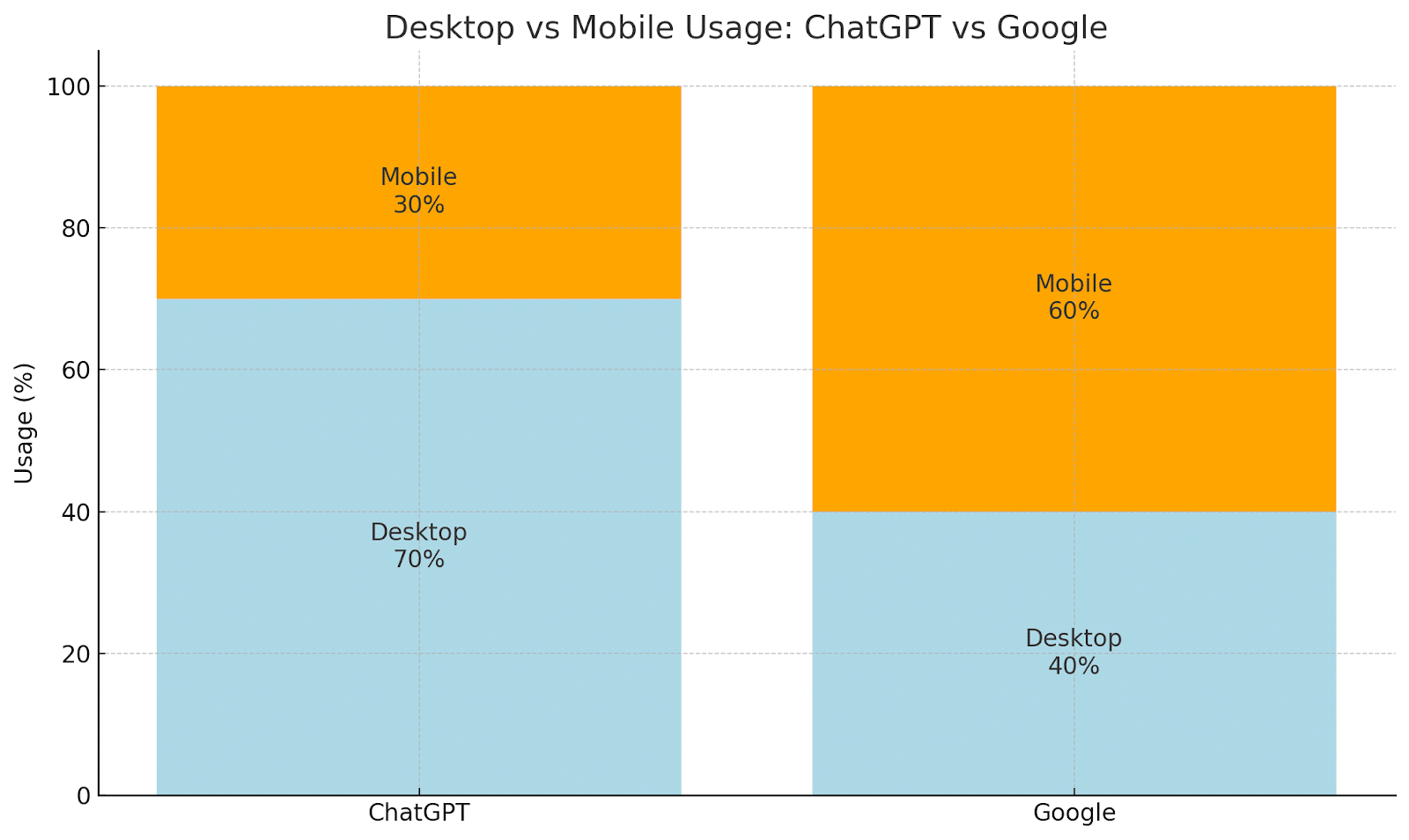
Google AI: Users still fire off short, functional queries, about 4 words on average, like “cheap rainproof commuter backpack” or “best budget DSLR.” Most of this happens on mobile, about 60% of Google traffic comes from mobile, so these searches hit when people are out and about. The vibe is: “Find it fast, check it out, maybe buy it now.”
ChatGPT: Users treat it like an expert sidekick. Prompts are longer, about 23 words on average, stuffed with context, constraints, and style cues, like: “What’s a sleek waterproof commuter backpack under $200 that fits a 15-inch laptop and has good back support?” They go deep, refining with follow-up questions in the same thread. It’s a multi-turn research session, not a quick hit, and it’s mostly happening at a desk: 70% of ChatGPT visits come from desktop, so people sit down and research properly.
💡 Takeaway: Products often purchased after careful consideration or detailed research can gain significant advantage from strong ChatGPT optimization. Those typically chosen quickly, driven by immediacy or convenience, benefit most from robust Google AI presence. But don’t box your brand in—recognize that nearly every product has both quick-hit and deep-research buyers so prioritize strategically rather than exclusively.
Who Feeds the Machine?
Google AI: Google’s AI Mode and AI Overviews pulls fresh answers from a wide net of live search result documents, not just the top 10 blue links. Its real-time Shopping Graph, with 50 billion listings, refreshed billions of times an hour, means it knows exactly what’s in stock and how much it costs, right now.
ChatGPT: ChatGPT’s shopping answers are built from three moving parts: its static training data, live Bing search results, and direct product feeds (rolling out). Its crawler, OAI-SearchBot, fetches fresh pages, blogs, and reviews to layer new info on top of what it already “knows.” It works like a trust triangle: brand’s structured data, third-party expert reviews, and user chatter all shape what gets mentioned back to the shopper.
💡 Takeaway: Both engines work the same core way: they don’t trust just you, they cross-check you against what others say about you and how real people talk about you. They stitch multiple sources into one neat answer. If your structured product data, expert mentions, and authentic user buzz don’t line up, you don’t exist in their eyes. And don’t sleep on Bing: ChatGPT pulls live data directly from Bing’s index. If Bing can’t find you, neither can ChatGPT shoppers.
Personalization in the Background
Google AI: Google personalizes results using your location, device, search history, and sometimes your Gmail and Maps (if you allow it). This powers everything from local product suggestions to showing you that rainproof backpack because you booked a flight to rainy Portland last week. There’s a built-in “remarketing loop”: once you click a brand, you’re more likely to see it again in AI Overviews for related searches.
ChatGPT: ChatGPT gets personal through live conversation, its Memory feature, and your Custom Instructions. It remembers what you’ve told it in past chats (if enabled) and folds that into answers automatically. For example, if ChatGPT knows a user cares deeply about the environment (either through previous conversations or explicit Custom Instructions), it will proactively suggest eco-friendly products—like backpacks made from recycled ocean plastic or organic materials—without needing the user to repeat this preference each time.
💡 Takeaway: Google’s AI sees your entire digital footprint; ChatGPT learns you in the moment and over time—plus whatever custom “rules” you set. For e-commerce, this means your brand needs a footprint that’s visible before the search (Google) and a voice that feels trustworthy inside the conversation (ChatGPT). Brands that stick in memory get picked again.
Bonus: Get your customers to actively add your brand to their ChatGPT Memory or Custom Instructions, it’s retention on autopilot. Literally teach loyal shoppers how: “Want eco-friendly picks first? Add: ‘I prefer [Brand] for sustainable gear’ to your ChatGPT Custom Instructions.” Drop that CTA in post-purchase emails, loyalty dashboards, and FAQs, anywhere they’ll see it when they’re happiest with you.
Paid Ads
Google AI: Google already integrates Search and Shopping ads directly into AI Overviews and AI Mode. Paid results appear seamlessly alongside organic recommendations, allowing brands immediate visibility through targeted advertising.
ChatGPT: ChatGPT’s product recommendations are currently 100% organic—OpenAI explicitly states, “they are not ads.” However, CEO Sam Altman has acknowledged that advertising and paid placements are possibilities for the future.
💡 Takeaway: Today, Google AI lets you buy visibility immediately; with ChatGPT, you must earn it organically. But keep an eye on the horizon—advertising may soon reshape ChatGPT’s recommendations too.
Measurement & Visibility:
Google AI: Google recently started adding AI Overview data directly into your regular Search Console metrics. Right now, it’s mixed in with standard search results, so you’ll have to look closely to spot the AI-driven clicks and impressions. Google has also confirmed that soon you’ll get a dedicated “AI Overview” report, clearly showing exactly how often your content appears in AI answers, the questions triggering it, and how users interact with your brand.
ChatGPT: Unlike Google, ChatGPT still doesn’t offer an official analytics dashboard. But you can find clues by looking at your traffic reports—ChatGPT tags outgoing clicks with “chatgpt.com,” which you’ll see clearly in tools like Google Analytics. Another hidden signal: your website’s server logs, which record every time ChatGPT fetches your pages. While you wait for official tools, tracking these two signals (plus customer surveys asking, “Where did you hear about us?”) is your best bet.
💡 Takeaway: Google gives you immediate (though blended) visibility data, while ChatGPT currently makes you play detective. To get the full picture of your AI-driven traffic, watch your analytics closely, keep an eye on tagged clicks, and stay ready—clearer insights from both tools are on the horizon.
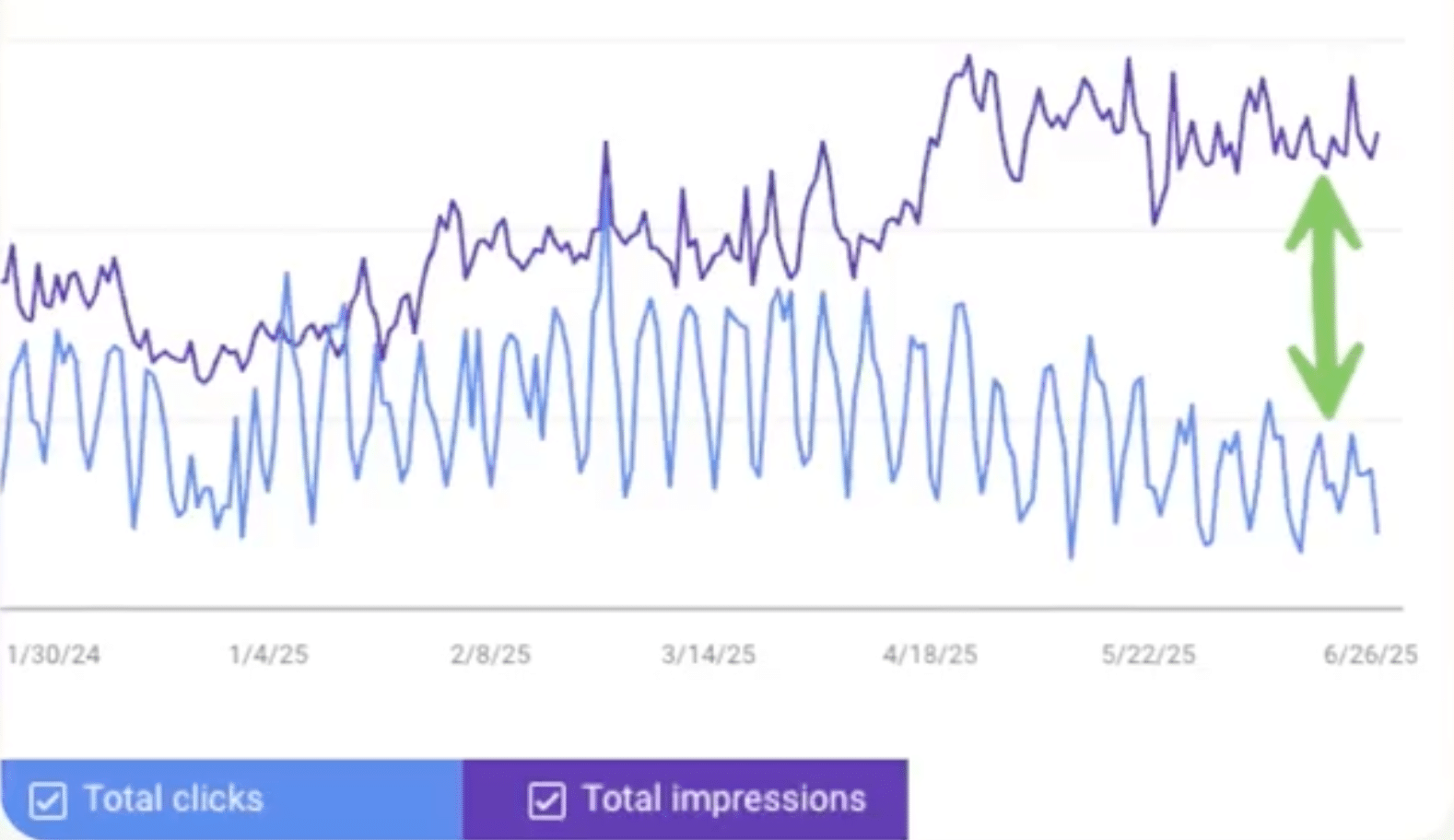
Reality Check – Real Brands, Real Data: Yotpo’s own SEO team is already seeing this shift play out: since Google rolled out AI Overviews, our visibility and rankings are up, but clicks are down. Impressions hit their highest point since January 2024, yet CTR keeps dipping because the AI box answers so many questions before visitors reach the site.
The upside? Those same top spots now get us cited directly inside the AI Overview, keeping the brand in the conversation even when the click never happens. The new game: presence and influence matter as much as clicks, so showing up inside the answer is your insurance policy when traffic leaks away.
Make Sure AI Can See You
✅ Check Crawler Access: Don’t accidentally hide your products. Google and ChatGPT both need permission to read your pages. For Google, your site must be open and easy to crawl by Googlebot. For ChatGPT, make sure you don’t block OpenAI’s ‘OAI-SearchBot’, if you do, you’re invisible.
✅ Keep Pages Fast & Mobile-Ready: When AI does send shoppers your way, slow or clunky sites kill trust fast. A good experience makes that click worth it.
Feed Them the Right Product Info
✅ Use Complete Product Feeds: For Google, keep your products updated in Google Merchant Center, that’s how your items show up in AI shopping results. For ChatGPT, what shows in Bing matters too, so keep Bing’s Merchant listings up-to-date.
✅ Get Ready for Direct Feeds: OpenAI plans to accept direct product catalogs soon, brands can already register here to get early access. Get your feeds clean, detailed, and ready now to be among the first in.
Make Your Product Pages AI-Friendly
✅ Add Complete Product Details: Don’t just show the basics, add details that make it clear what you’re selling. Include the brand, stock status, sizes, colors, and unique codes like GTIN (the global barcode number) or SKU (your store’s internal product ID). If your product details are incomplete, AI skips your product and picks the next brand that clearly spells everything out. Missing details mean missing visibility, and ultimately, you lose the click.
✅ Use Structured Data So AI Understands It: Add structured data (also called “schema markup”) to your pages, it’s a bit of hidden code that explains your product in a language AI can easily read. Use clear and descriptive headings (H1, H2, H3) to break content into logical sections. If your competitors provide structured data and you don’t, AI sends customers directly to them, costing you sales you can’t afford to lose.
✅ Write Like a Human: answer real questions, focus more on benefits and use cases and not only on specs, add FAQs on your product pages, think about what real people ask in ChatGPT and Google. Consider including a “TL;DR” or “Key Takeaways” section at the beginning of an article to provide a pre-synthesized summary that an AI can easily leverage.
Be Quoted in the Right Places
✅ Get Mentioned Off-Site: Both AIs check what others say about you. Aim to show up in trusted reviews, “top 10” lists, Reddit threads, or niche blogs.
✅ Encourage Real Reviews: Detailed customer reviews (with things like fit, style, or use cases) help AI pull rich, quotable proof that your product is legit. This is exactly where UGC solutions shine: they collect, organize, and showcase reviews, star ratings, Q&A, and customer photos in a way that makes your product pages a goldmine for both shoppers and AI crawlers. More fresh reviews, more rich snippets, more off-site citations, all feeding GEO and AI discoverability.
The new frontiers of product discovery are no longer ruled by keywords alone. They’re driven by how well your brand shows up in synthesized answers, intelligent feeds, and personalized conversations. Whether it’s Google AI serving instant answers mid-scroll or ChatGPT guiding a thoughtful shopping journey, the brands that win are the ones that meet AI halfway—feeding it clear, rich, and real-world-reinforced data.
You don’t need to choose sides. Optimize smartly, plant flags in both ecosystems, and let your brand be the one AI recommends—no matter where the shopper starts their journey.
— Tomer

“Yotpo is a fundamental part of our recommended tech stack.”
Laura Doonin, Commercial Director




 Join a free demo, personalized to fit your needs